The Definitive Guide to the Best Arm Workout Machines for Growth
You have likely spent hours in the free weight section, grinding out barbell curls and skull crushers until your joints ache. Yet, the tape measure around your biceps isn't moving. This is a common plateau. While free weights are king for stabilization, they lack one thing that the best arm workout machines provide: constant, unwavering tension throughout the entire range of motion.
Using machines isn't 'cheating.' It is a strategic way to isolate the biceps and triceps, removing momentum from the equation so the target muscle has no choice but to grow. Let’s break down the mechanics of machine-based hypertrophy.
Quick Summary: The Most Effective Equipment
If you are looking for a quick answer on which equipment delivers the highest return on investment for hypertrophy, here is the breakdown based on biomechanics:
- Cable Stations (Functional Trainer): The absolute gold standard for constant tension and versatility.
- Preacher Curl Machine: Best for isolating the short head of the bicep and preventing 'body English' (swinging).
- Assisted Dip Machine: The best machine for arms and chest combined, allowing for high-volume tricep overload.
- Smith Machine: Underrated for 'drag curls' and close-grip bench presses with safety stops.
Why Mechanics Matter More Than Weight
When looking for the best workout machines for arms, you need to understand the resistance curve. With a dumbbell, gravity only pulls straight down. At the top of a curl, the tension on your bicep actually decreases. Machines solve this.
The best arm workout machine utilizes cams or pulleys to ensure that the resistance remains heavy at the bottom and the top of the movement. This increases the 'time under tension,' which is a primary driver of muscle growth.
The Heavy Hitters: Bicep Focused Machinery
The Preacher Curl Station
This is arguably the best arm machine for strict isolation. By locking your elbows against a pad, you eliminate the ability to use your front delts to help lift the weight.
The Science: This position places the shoulder in flexion, which creates active insufficiency in the long head of the bicep but puts the short head in a prime position to work. If you want that inner bicep thickness, this is non-negotiable.
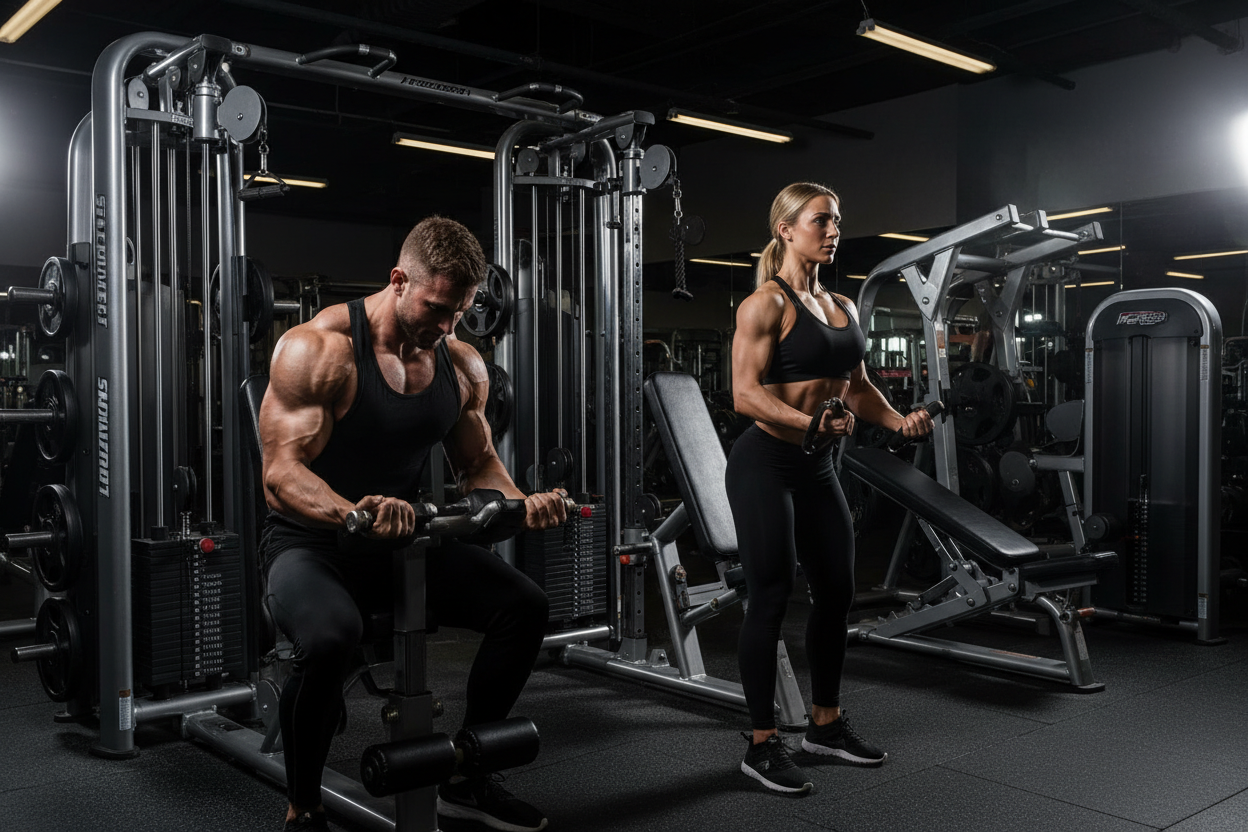
The Cable Tower
If you have limited space or budget and need the best arm toning machines (a marketing term for 'muscle building plus fat loss'), the cable tower is it. It allows for face-away curls, rope hammer curls, and overhead extensions.
The Mass Builders: Tricep & Compound Machines
The Assisted Dip Machine
Many lifters ignore this, thinking it is for beginners. They are wrong. This is the best machine for arms and chest development. By using the counterbalance, you can perform dropsets that are impossible with bodyweight dips. You can fatigue the triceps safely without worrying about your shoulders giving out first.
The Smith Machine
While not exclusively an arm machine, the Smith Machine allows for the 'Drag Curl.' This is where you drag the bar up your torso, keeping your elbows back. It removes the front delt almost entirely. It is also the safest way to perform heavy close-grip bench presses for tricep mass without a spotter.
My Personal Experience with Best Arm Workout Machines
I want to be real about the transition from free weights to machines. The first time I seriously committed to a machine-only arm block, I was using an older plate-loaded preacher curl machine in a warehouse gym. It wasn't glamorous.
Here is the unpolished truth: The pivot points rarely match your elbow perfectly. On that specific machine, if I didn't align my elbow joint exactly with the machine's axis, I felt this distinct, grinding sheer force in my forearm rather than a burn in my bicep. Also, the vinyl pad was cracked, and when the sweat started pouring during a dropset, my arms would slide around in the mixture of sweat and old leather, ruining my leverage. I learned the hard way that you have to bring a towel to create friction, and you have to spend two minutes adjusting the seat height before your first rep. If you just jump on and lift, you're going to hurt your joints, not build your arms.
Conclusion
Building impressive arms requires a mix of heavy compound movements and strict isolation. The best workout machine for arms is ultimately the one that fits your biomechanics and allows you to feel the muscle contracting without joint pain. Don't shy away from the cables or the lever machines; use them to finish off your workout when your stabilizers are shot.
Frequently Asked Questions
1. Can I build big arms using only machines?
Yes, you can. While free weights are excellent for overall strength, machines provide superior isolation. Many bodybuilders switch almost exclusively to machines closer to competitions to minimize injury risk while maximizing muscle stimulation.
2. What is the best arm toning machine for beginners?
'Toning' is simply building muscle while losing fat. The cable station is the most versatile choice here. It allows for fluid movement patterns that are easier on the joints than rigid lever machines, making it ideal for beginners.
3. How often should I use arm machines?
Because machines cause less systemic fatigue (central nervous system stress) than heavy free weights, you can typically use them more frequently. Training arms 2 to 3 times per week with machine isolation is a standard protocol for hypertrophy.