The Biggest Mistake Strength Training Athletes Make in a Garage Gym
I remember the day I finally hit a 400-pound squat in my drafty double-car garage. I felt like a absolute machine until I tried to play a pickup game of soccer that weekend. My legs felt like concrete pillars, my lateral movement was non-existent, and I realized I had become a specialist in a sport I wasn't even competing in. For strength training athletes, the home gym is a double-edged sword. It is easy to get sucked into the 'more weight equals more better' trap when you are alone with a barbell and a PR board, but for most of us, that heavy iron is supposed to be a tool, not the destination.
- Stop testing 1RMs every month; start measuring how fast you move the bar.
- Prioritize single-leg work to fix the imbalances that lead to non-contact ACL tears.
- Leave room in your budget and floor plan for plyometric space, not just more plates.
- Focus on Rate of Force Development (RFD) over absolute load to keep your speed on the field.
You Are Not a Powerlifter (So Stop Training Like One)
Powerlifting is a specific sport where the only goal is to move a massive amount of weight a few inches. If you are a soccer player, a fighter, or a weekend warrior on the basketball court, your needs are completely different. You need to move your own body weight through space with violent efficiency. Sport strength training is about building a chassis that can absorb impact and redirect force without snapping. If you spend all your time grinding out slow, grinding triples, you are teaching your nervous system to be slow.
True weightlifting for athletes focuses on transferability. Can you take that strength and turn it into a higher vertical or a faster first step? Chasing a 500-pound deadlift might look cool on Instagram, but if it takes you five seconds to lock it out, that slow-twitch force isn't helping you beat a defender to the ball. You need to be explosive. You need to be agile. Most importantly, you need to be resilient enough to survive a long season without your joints feeling like they are filled with glass.
The One-Rep Max Trap in Sport Strength Training
Constantly testing your one-rep max is the fastest way to fry your central nervous system (CNS). When your CNS is toasted, your reaction time slows down and your risk of injury skyrockets. Weight training for athletes should live mostly in the 70-85% range where you can move the weight with genuine intent and speed. I have seen guys who can deadlift a house get out-driven on the course or out-sprinted on the pitch because they lack the 'snap' found in a weight training for golf the ultimate guide pdf approach. It is about force per unit of time, not just total force.
Lifting for athletes should prioritize sub-maximal velocity. If the bar slows to a crawl, you are no longer training for athletic performance; you are training for grind. In my experience, once the bar speed drops below 0.5 meters per second on a primary lift, the athletic benefit starts to diminish while the recovery cost triples. Save the max-out days for once or twice a year. The rest of the time, focus on moving 80% of your max like it weighs 50%.
What Actually Matters When Programming Lifting for Athletes
Rate of Force Development (RFD) is the king of athletic strength. It is not about how much you can lift, but how quickly you can access that strength. This is why movements like cleans, snatches, or even just 'dynamic effort' squats with bands are vital. You want to teach your muscles to fire all at once. If you are just doing slow, controlled bodybuilding tempos, you are building 'show' muscles that do not know how to go. Strength for athletes requires a mix of heavy resistance and high-speed movements.
Unilateral movements—think Bulgarian split squats, single-leg RDLs, and lunges—are non-negotiable. Most sports happen on one leg at a time. If you only train bilateral movements like the standard back squat, you are leaving a massive hole in your performance and inviting a hamstring or groin tear. Single-leg work forces your stabilizers to wake up and fixes the left-to-right imbalances that most of us develop. It is harder, it hurts more, and it is exactly what you need to be a better athlete.
Setting Up Your Garage Gym for Athletic Speed and Power
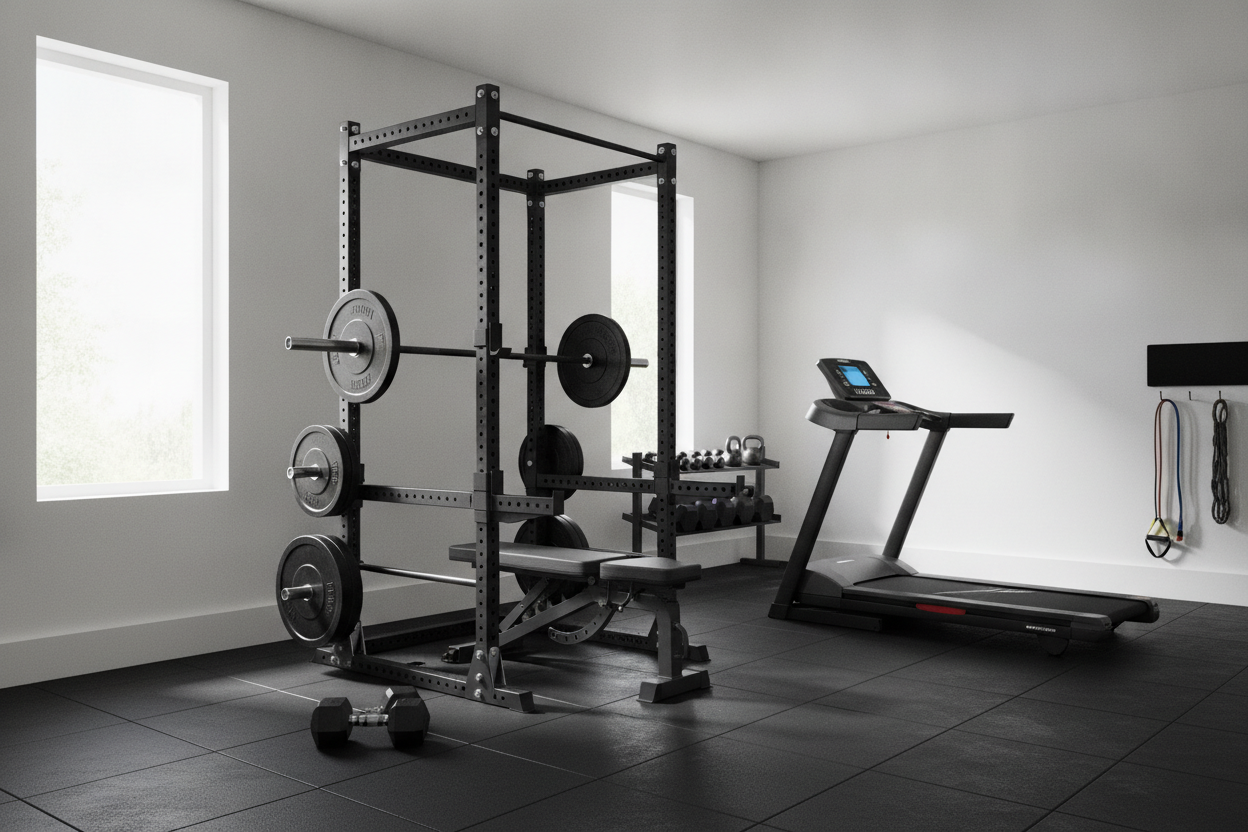
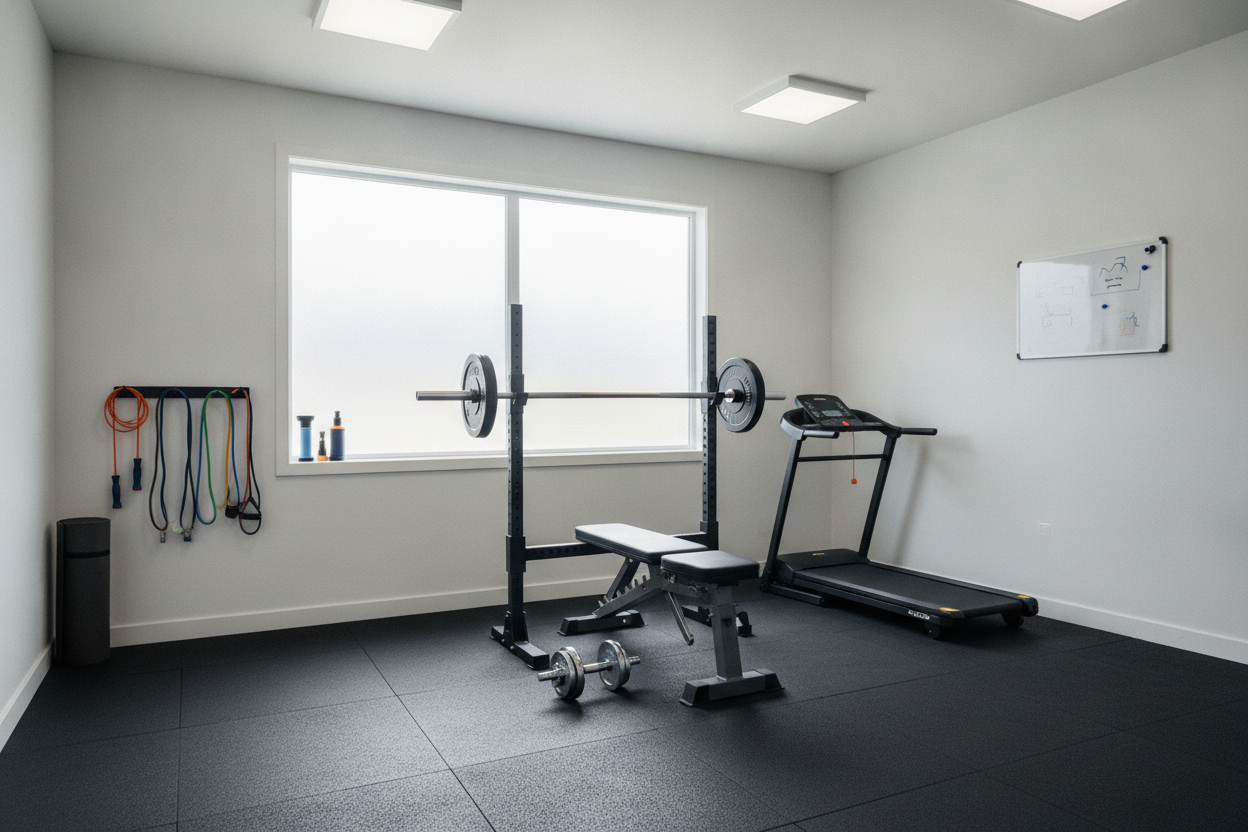
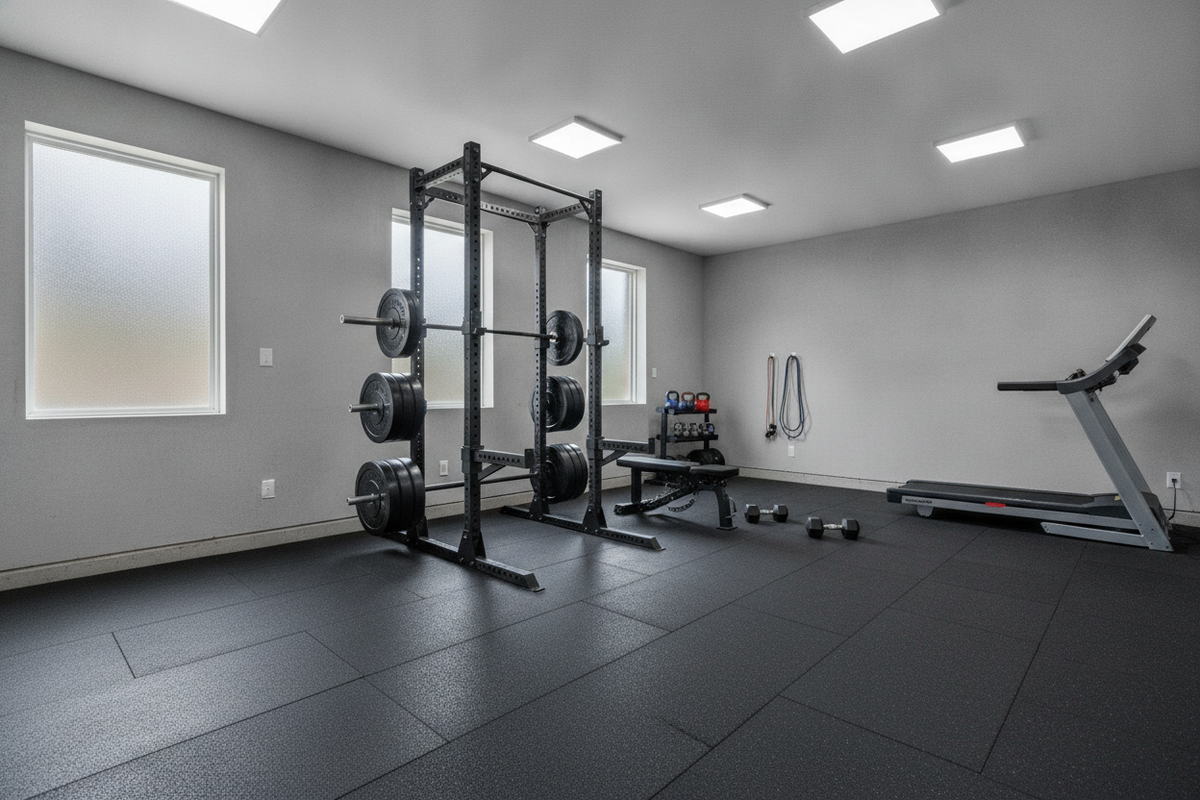
Most people buy a massive power rack that takes up 60% of their floor space. That is a mistake for anyone focused on strength training for sports performance. When choosing the best strength and weight training equipment for your goals, remember that you need room to move. A massive rack is great for a powerlifter, but an athlete needs space for lateral bounds, medicine ball slams, and sprint starts.
You need a dedicated area with high-quality gym flooring for home workout sessions. I made the mistake of lifting on bare concrete for a year; my shins and lower back paid the price. You need shock absorption for plyometrics. A smaller, wall-mounted rack or a slim squat stand often serves an athlete better than a six-post monster because it opens up the floor for movement. If you cannot jump and land safely in your gym, it is not an athlete's gym—it is just a weight room.
A Sample Weekly Split for Real Athletic Performance
This 3-day split balances strength training for athletic performance with the recovery needed to actually play your sport. It focuses on big movements, explosive power, and unilateral stability.
- Day 1: Lower Body Power & Strength - Hang Cleans (5x3), Rear-Foot Elevated Split Squats (3x8 per leg), Goblet Squats with a fast ascent (3x10), and Plank Variations.
- Day 2: Upper Body Power & Stability - Push Press (5x3), Weighted Pull-ups (3x6), Medicine Ball Chest Throws (4x5), and Face Pulls for shoulder health.
- Day 3: Full Body Agility & Resilience - Jump Squats (4x5), Kettlebell Swings (3x15), Lateral Lunges (3x10 per side), and Single-Leg RDLs (3x12).
Keep the volume moderate. You should leave the garage feeling like you could go play a game, not like you need to crawl into bed. Strength training for athletes is about supplementing your sport, not replacing it. If your lifting is making you too sore to practice your skills, you are doing it wrong.
Personal Experience: The 'Heavy' Lesson
I spent two years chasing a 500-pound deadlift while playing recreational rugby. I finally hit the number, but I also ended up with a herniated disc and lost my starting spot because I could no longer turn the corner on a sprint. I had become 'weight room strong' but 'field weak.' I had to strip my ego away, sell half my plates to make room for a turf strip, and start focusing on jumps and sprints again. My joints haven't felt this good since I was 19, and I'm actually faster now than I was when I was 50 pounds lighter.
FAQ
Do I need a platform for Olympic lifts?
If you are doing cleans or snatches, yes. You need a dedicated surface that can take the drop and keep your feet stable. Bare concrete will destroy your plates and your joints over time.
How often should I change my routine?
Athletes should think in seasons. Build a base in the off-season with higher volume, then switch to high-intensity, low-volume maintenance when your sport is in full swing. Don't change the exercises every week; change the intent.
Are dumbbells better than barbells for athletes?
Neither is 'better,' but dumbbells allow for more natural movement patterns and unilateral work. A good athlete's gym should have a heavy barbell for the big lifts and a solid set of dumbbells for everything else.