
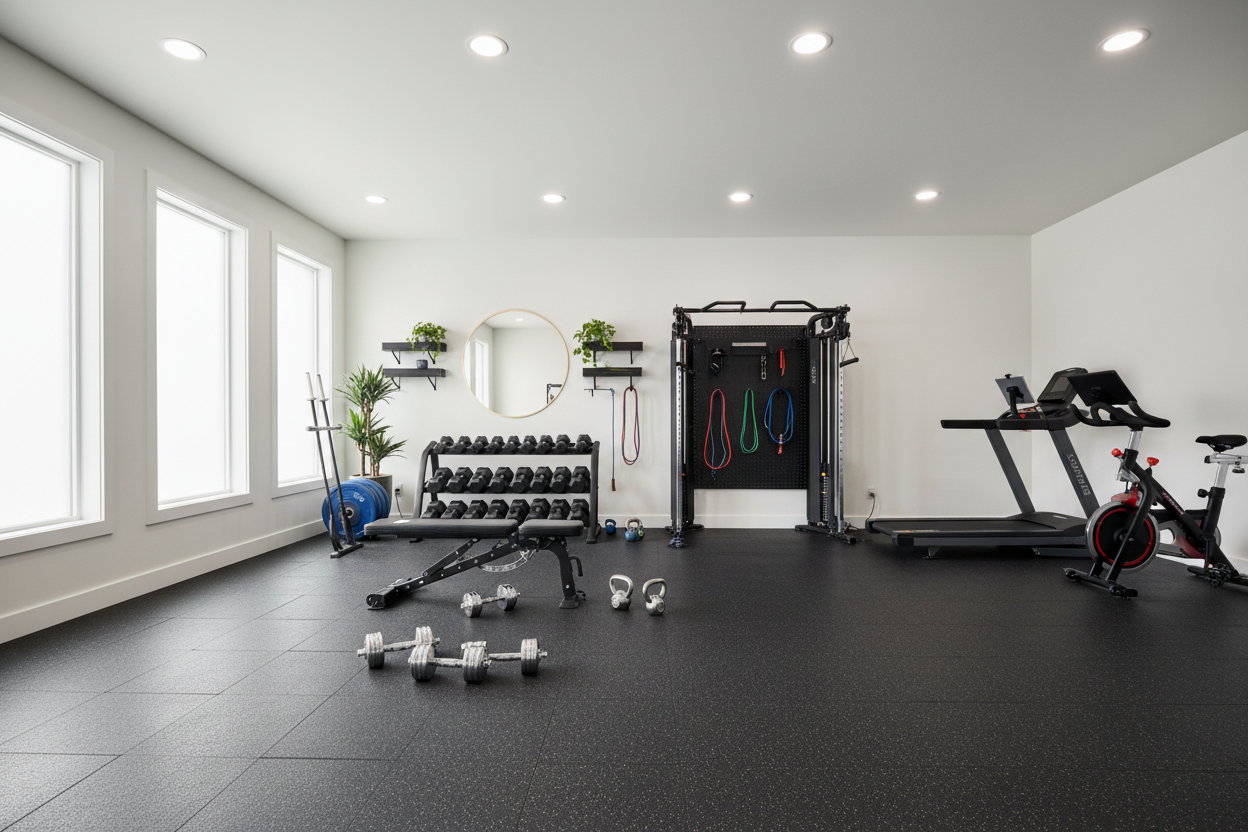
The Best Training Program for a Multi-User Home Gym Setup
I remember setting up a garage gym for a family of four last year. The dad wanted to build strength, the mom was focused on mobility, the teenage son wanted to pack on muscle for football, and the 65-year-old grandfather just wanted to keep up with the dog. They had a 10x12 foot space, a solid squat rack, and a whole lot of confusion. They were all trying to follow completely different routines at the exact same time. It was chaos.
If you are trying to turn your spare bedroom or garage into a family fitness hub, you need a unified approach. Trying to juggle four different routines in 120 square feet usually ends with someone getting frustrated and quitting. Finding the best training program isn't about hyper-specific isolation work; it is about finding a scalable template that everyone can do together safely.
Quick Takeaways
- Unifying your household under one core routine saves time and prevents equipment bottlenecks.
- Scaling exercises by changing leverage or resistance allows a teenager and a senior to train side-by-side.
- Focus on the big five movement patterns: squat, hinge, push, pull, and carry.
- Invest in easily adjustable equipment like bands and dumbbells rather than single-use machines.
The Challenge of Programming for a Shared Space
When multiple people share a single home gym, the biggest hurdle isn't square footage—it is scheduling and equipment hoarding. If one person is running a heavy powerlifting block that requires tying up the squat rack for 45 minutes, and another is trying to do a high-intensity interval circuit, they cannot train at the same time. This leads to midnight workouts, skipped sessions, and household resentment.
I have seen this play out dozens of times. A husband and wife will buy a beautiful setup, but because they are running conflicting routines, they end up working out in shifts. This kills the motivation that comes from training with a partner. Furthermore, specialized programs often require specialized equipment. If you are buying a leg extension machine just for one person's bodybuilding split, you are wasting valuable space that could be used for versatile, multi-user gear.
The solution is simple but requires an ego check: everyone needs to get on the same basic page. You do not need four different programs. You need one solid, universal template where the only things changing are the weight on the bar, the range of motion, or the tempo of the rep. This keeps everyone moving together, allowing you to run circuits seamlessly without anyone standing around waiting for a pair of 20-pound dumbbells.
Defining the Best Training Program for Multiple Users
A household routine needs to be adaptable. A highly specialized six-day body part split is going to fail in a shared space. Instead, the most effective approach is a standardized template that hits all the major muscle groups in a single session. This is why I always start my family clients on a three-day-a-week, full-body routine.
When you use a comprehensive template, you eliminate the guesswork. Everyone knows that Monday is a squat and horizontal push day. Wednesday is a deadlift and vertical pull day. Because everyone is doing the same basic movement pattern, you can share stations. While one person is resting, the next person is working.
This shared structure is exactly what makes the best full body training program so powerful for a home setting. It strips away the fluff and focuses on compound movements that deliver the highest return on investment for your time.
I usually program these sessions to last about 45 minutes. We use supersets—pairing an upper body movement with a lower body movement—to keep heart rates elevated and maximize the use of the equipment. For example, pairing a goblet squat with a dumbbell row means two people can work simultaneously on different ends of the room, then simply swap places. It is efficient, it builds camaraderie, and it keeps the gym from feeling like a crowded commercial facility.
Why the Best All-Around Fitness Program Relies on Scaling
The secret sauce to making one routine work for a 16-year-old athlete and a 60-year-old grandparent is scaling. The best all-around fitness program doesn't force everyone to do the exact same exercise variation; it keeps the movement pattern identical but adjusts the difficulty.
Let's take the push-up as an example. The teenager might be doing explosive plyometric push-ups on the floor. The mom might be doing strict standard push-ups. The grandfather might be doing elevated push-ups with his hands resting on a 24-inch plyo box to reduce the load on his shoulders. Everyone is training the horizontal push pattern simultaneously, but at a level that challenges them safely.
To pull this off effectively, you need to rely on quick-change gear. I constantly have my clients swap in strength training accessories like loop resistance bands to modify movements on the fly. If someone cannot do a pull-up, they just loop a heavy green band around the bar for assistance. If someone needs more resistance on a goblet squat but the heavy dumbbells are taken, they can step on a band to add accommodating resistance. Scaling makes the program universally applicable without needing a warehouse full of machines.
Structuring the Universal Family Workout
Organizing a 45-minute session for two to four people requires a bit of traffic control. I like to break the workout down into three blocks: the warm-up, the primary strength circuit, and the conditioning finisher.
The warm-up should take 5 to 8 minutes and require zero equipment. Think bodyweight lunges, arm circles, planks, and dynamic stretching. Everyone does this together in a circle. It sets a positive tone for the session.
Next is the primary strength block, which usually lasts 25 to 30 minutes. Here, I assign stations. Station A is a lower body push (like a squat). Station B is an upper body pull (like a row or pull-up). Station C is a core movement (like a dead bug or farmer's carry). We set a timer: 40 seconds of work, 20 seconds of transition. Everyone rotates through the stations for four or five rounds. Because the work periods are time-based rather than rep-based, the faster, stronger teenager can hit 15 reps while the beginner might focus on 6 slow, controlled reps. No one is waiting on anyone else to finish their set.
Finally, we hit the conditioning finisher. This is 5 to 10 minutes of high heart-rate work. Kettlebell swings, jump rope, or burpees work perfectly here. Again, it is time-based. This structure ensures everyone gets a complete, balanced workout while staying completely out of each other's way.
Foundational Movements Everyone Should Master
You don't need a massive exercise library to build functional strength and improve body composition. The core of your family program should revolve around five basic human movements: the squat, the hinge, the push, the pull, and the carry.
The squat pattern builds quad and glute strength. This can be a barbell back squat for the advanced lifter or a simple bodyweight box squat for a beginner learning mechanics.
The hinge pattern, which includes deadlifts and kettlebell swings, is crucial for strengthening the posterior chain (hamstrings and lower back). This is often the most important movement for older adults looking to prevent back pain.
Pushing movements cover everything from overhead presses to push-ups, targeting the chest, shoulders, and triceps.
Pulling movements counteract our modern, hunched-over posture. Rows, pull-downs, and pull-ups build a bulletproof back.
Finally, the carry. Simply picking up heavy things and walking with them (like a 50-pound farmer's carry) builds grip strength, core stability, and cardiovascular endurance. If your program covers these five bases, you are delivering a complete stimulus to every person in the room.
Equipping the Space for Safe, Inclusive Training
When outfitting a gym for multiple users, versatility is your top priority. A leg press machine might be great, but it takes up a massive 8x5 foot footprint and only does one thing. For a shared space, you need gear that multiple people can use for dozens of different exercises.
I always recommend starting with a high-quality adjustable dumbbell set ranging from 5 to 52.5 pounds. They take up the space of a single pair of shoes but replace a whole rack of weights. Pair that with a sturdy flat bench, a few kettlebells (16kg and 24kg are great starting points), and a suspension trainer. If you want a deeper dive into versatile gear, check out this guide on selecting the best fitness training equipment for a home setup.
When testing a 4-person circuit in a tight 12x12 basement gym last year, I found that relying too heavily on barbell work created a severe bottleneck. Only one person could use the rack at a time. The honest downside to shared workouts is that you have to compromise on specialized barbell lifts. I shifted the group to a dumbbell and kettlebell-heavy routine. The change was immediate—the flow of the workout improved, and nobody was standing around getting cold between sets.
The most overlooked aspect of a shared gym is the flooring. When you have two or three people doing kettlebell swings, jumping rope, or dropping dumbbells at the same time, a bare concrete floor is a recipe for joint pain and shattered equipment. You need a continuous, shock-absorbing surface. Rolling out the best large exercise mat over your garage or basement floor instantly transforms the space. It gives everyone enough room to stretch out, provides traction for heavy lifts, and absorbs the impact of plyometrics so your knees don't ache the next morning.
Tracking Progress Across Different Household Goals
It is totally normal for a husband to want to drop 20 pounds while his wife wants to add 10 pounds of muscle to her frame. The beauty of the best all around fitness program is that both people can achieve their goals using the exact same workout. The difference lies in the kitchen and the logbook.
I have my clients use a simple shared whiteboard in the gym. Next to each person's name, they track their specific metrics for the month. For the person chasing strength, they track the weight they used on their main compound lifts. For the person chasing endurance, they might track how many rounds they completed in the 10-minute conditioning finisher.
By tracking individual metrics on the same board, you create a supportive environment. You get to celebrate your partner's new deadlift personal record while they celebrate your improved mile time. The program remains the anchor, but the individual execution drives the specific results.
Frequently Asked Questions
How do we handle different strength levels safely?
Use time-based sets (like 40 seconds of work and 20 seconds of rest) instead of rep targets. This lets the stronger user hit 15 reps while the beginner focuses on 6 slow, safe reps without feeling rushed.
Can teenagers and older adults really do the same workout?
Yes, by scaling the movements. A teen might do a loaded goblet squat with a 50-pound dumbbell while an older adult does a bodyweight box squat. The core movement pattern remains identical.
What is the minimum space needed for a two-person workout?
You can comfortably run a two-person circuit in an 8x10 foot space if you utilize adjustable dumbbells, resistance bands, and skip bulky single-use machines.


