The Best Exercise Plan to Gain Muscle Fits on an Index Card
I spent three hours last Tuesday scrolling through a 14-tab spreadsheet, trying to calculate if my accessory work should be 3x8 or 4x10 at exactly 72.5% of my one-rep max. By the time I finished 'optimizing' my month, I was too mentally fried to actually hit the garage. That is the trap. We buy the fancy apps and the undulating periodization templates because they make us feel like scientists, but the **best exercise plan to gain muscle** is usually the one you can write down on a 3x5 index card while drinking your pre-workout.
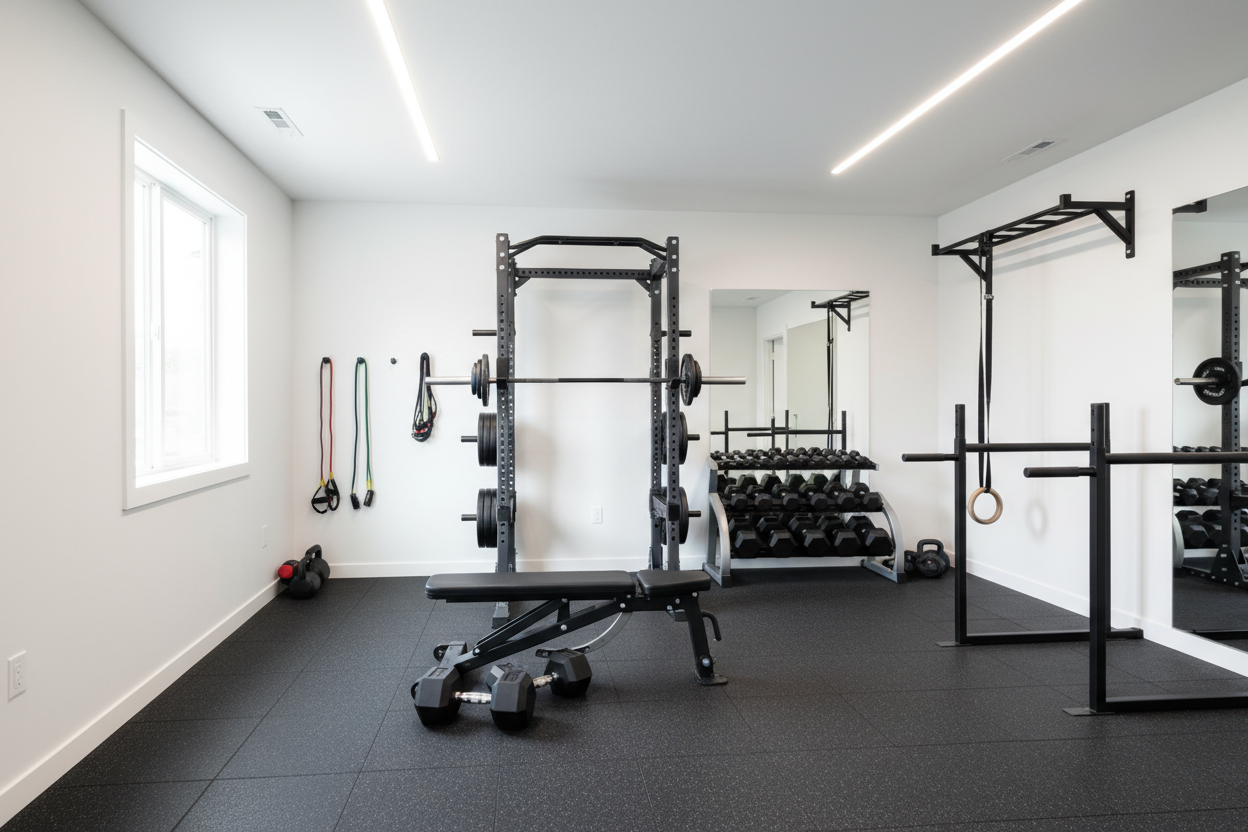
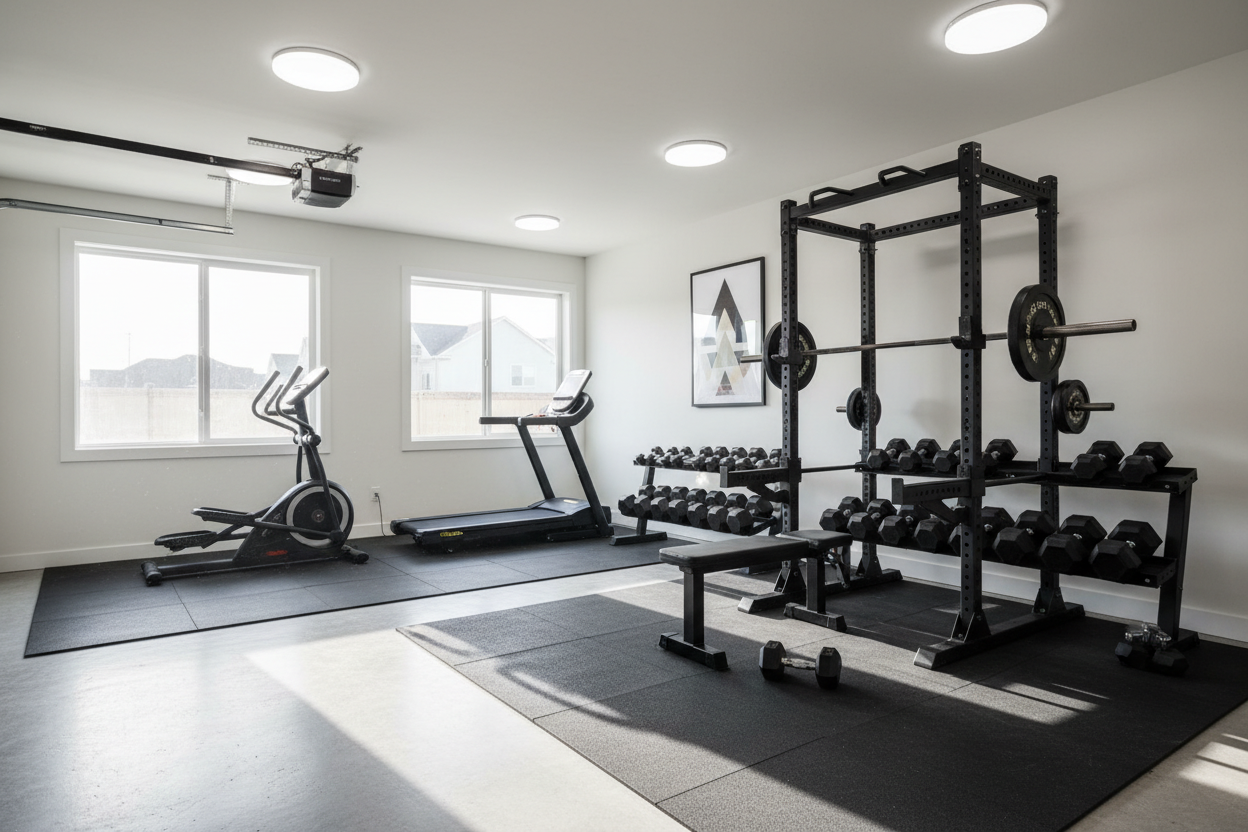
If you are training in a garage or a spare bedroom, you do not need a complex algorithm. You need a barbell, a rack, and a ruthlessly simple routine that you can repeat until your neighbors start asking why your shirts don't fit anymore. Most people fail because they confuse 'complex' with 'effective.' Real hypertrophy is about load progression, not variety.
Quick Takeaways
- Ditch the apps; use a physical index card to track your top sets.
- Focus on four primary movement patterns: Push, Pull, Squat, and Hinge.
- Hypertrophy is driven by adding weight or reps to the same movements every week.
- A stable lifting surface is mandatory for heavy, multi-joint lifts.
Your Spreadsheet is Killing Your Gains
Analysis paralysis is the silent killer of the home gym lifter. I see it all the time in the forums—guys spending weeks debating the 'best gym workout routine for muscle gain' without ever breaking a sweat. They want the perfect 12-week peak, but they haven't even mastered the basic mechanics of a heavy row. When you have too many variables, you can't tell what is actually working. Is it the tempo work? The drop sets? The weird Bulgarian split squat variation?
The best muscle gain workout plan strips away the fluff. If your routine requires you to check your phone between every set to see what's next, you are losing intensity. You should know exactly what you are doing before you even step onto the mat. The goal is to spend your energy on the lift, not the logistics. Stop trying to be an accountant and start being a lifter. A simple 3x5 or 5x5 approach on big movements has built more mass than any $99-a-month subscription app ever will.
Why the Best Exercise Plan to Gain Muscle is Boring
The truth that most influencers won't tell you is that the best muscle growth workout plan is incredibly boring. It’s the same 4 or 5 lifts, week after week, month after month. You don't need 'muscle confusion.' You need muscle adaptation. Your body doesn't want to grow; it wants to stay the same. You force it to change by hitting it with the same stressor—just slightly heavier—every single session.
When you use the best training program for muscle gain, you stop looking for the 'new' thing. You look for the 'more' thing. More weight on the bar, or more reps with the same weight. If your daily routine requires an instruction manual to decipher, you have too many moving parts. A true best training program to build muscle relies on repeating the same heavy movements until you literally cannot add any more weight. Only then do you change the routine. If you are still adding 5 lbs a week to your squat, why would you change a single thing?
The 4-Pattern Rule for Your Index Card
To keep things simple, your index card should only have four categories. This is the best workout plan build muscle mass because it covers every major muscle group without the need for 15 different isolation machines. You need a Push (Press or Bench), a Pull (Rows or Chins), a Hinge (Deadlift or Kettlebell Swing), and a Squat. That is it. Everything else is just seasoning on the steak.
For the lower body, you need to stop overthinking. The best leg workout to build muscle is almost always built around a heavy squat and a hinge. If you are hitting those two patterns with intensity, your quads, hamstrings, and glutes will grow. This is the best workout plan for gaining muscle because it forces you to use the most taxing, high-reward movements. Don't waste time on three different types of calf raises if you haven't squatted your body weight yet.
Locking Down Your Lifting Environment
You cannot execute the best workout plans to build muscle if you are sliding around on a dusty concrete floor. When you start pushing for a new PR on a heavy overhead press or a back squat, stability is everything. I learned this the hard way when I tried to max out on a cheap, thin yoga mat—my back foot slipped, and I nearly put a barbell through my drywall. You need a foundation that stays put.
I personally use a 6x8ft exercise mat in my own setup because it gives enough space for a full power rack and extra room for deadlifts. Having a dedicated, high-traction surface means you can focus entirely on the leg drive instead of worrying about your feet shifting. Whether you're running the best workout program to build muscle or a high-intensity bodybuilding split, your floor shouldn't be the weakest link in your gym.
How to Actually Use the Card Next Week
Take your 3x5 card and write down your lifts for the day. Under each lift, write the weight and reps you did last time. Your only job is to scratch those numbers out and write something higher. This is the best workout program to gain muscle mass because it provides visual proof of progression. There is something visceral about physically crossing out a number and replacing it with a heavier one. It beats a digital log every time.
This simple method ensures you are following the best workout program to gain muscle without the mental fatigue of 'programming.' You are just competing against the card. This approach maximizes whatever you have in your rack, making it the best home workout equipment strategy for guys who want results without the headache. Keep the card in your pocket. Sweat on it. When it gets too beat up to read, you’ve probably gained ten pounds of muscle.
Personal Experience: My 6-Day Failure
A few years ago, I fell for the 'more is better' trap. I started a 6-day-a-week high-volume bodybuilding routine I found online. It had 12 different exercises per day, including three types of bicep curls. By week three, my elbows hurt, my sleep was trashed, and I actually lost strength on my bench press. I was doing 'the best muscle gain workout' on paper, but I couldn't recover. I went back to a 3-day full-body split on an index card, focused on the big four, and my strength exploded. I realized that for a natural lifter, intensity and recovery beat volume every time.
FAQ
What is the best gym workout routine for muscle gain?
The best routine is usually a 3 or 4-day split focusing on compound movements like squats, presses, and rows. Consistency and progressive overload (adding weight) are more important than the specific exercises you choose.
How many sets and reps should I do to build muscle?
For most lifters, 3 to 5 sets of 5 to 10 reps is the sweet spot. This range allows you to use heavy enough weight to build strength while providing enough volume to trigger hypertrophy.
Can I build muscle with just a few exercises?
Yes. In fact, focusing on 4 or 5 big compound movements allows you to become highly proficient and strong in those lifts, which leads to more muscle growth than doing 20 different exercises poorly.
Do I need to change my workout routine every few weeks?
No. You should stick with the same routine as long as you are still making progress. Only change the exercises when you have legitimately plateaued for several weeks despite proper sleep and nutrition.