The Best Beginners Gym Routine Shouldn't Leave You Sweaty
I remember walking into my first commercial gym, watching a guy nearly pass out on a leg press while I struggled to figure out which way the safety bar on the rack turned. I thought that to get results, I had to be a shivering, sweaty mess by the time I hit the locker room. I was wrong. The best beginners gym routine isn't a heart-rate torture test; it is a masterclass in control.
Quick Takeaways
- Sweat is a cooling mechanism, not a progress bar for strength.
- Neurological adaptation—teaching your brain to move—is the goal of the first month.
- A 3-second lowering phase (eccentric) is the best way to forced good form.
- Floor-based movements are safer and more effective for building initial tension.
The 'More Sweat Equals More Results' Trap
Social media has convinced everyone that if you aren't drenched, you didn't work. For a novice, chasing exhaustion is a trap. When you're tired, your form is the first thing to go. You start rounding your back on deadlifts or cutting your squat depth short. This leads to early burnout and, worse, injuries that sideline you before you even see a vein in your bicep.
A good beginners gym workout should leave you feeling energized, not destroyed. The best workouts for beginners at the gym focus on the quality of the rep rather than the quantity of the calories burned. I often tell people that the best gym advice for beginners isn't about lifting weights—it is about learning to manage your effort so you actually want to come back on Wednesday.
Why Early Strength Training Should Feel a Little Boring
The first four weeks of training are about your nervous system. Your muscles aren't actually growing much yet; your brain is just learning how to fire them more efficiently. If you keep changing exercises or trying to 'shock' your body with high intensity, you never master the basics. You need repetition.
I have seen people get incredible results following what looks like the dumbest exercise routine in gym for beginners simply because they did the same five movements for a month straight. Boring works. It builds a foundation that allows you to lift much heavier weights six months down the road without your joints screaming at you.
Mastering Tension on the Floor First
Gravity is a jerk when you're a beginner. Standing up to do lunges or overhead presses requires a lot of stability that most novices haven't developed. By moving your routine to the floor, you eliminate the balance struggle and can focus entirely on the muscle you're trying to hit. Whether it's a floor press or a dead bug, the ground provides instant feedback on your spinal alignment.
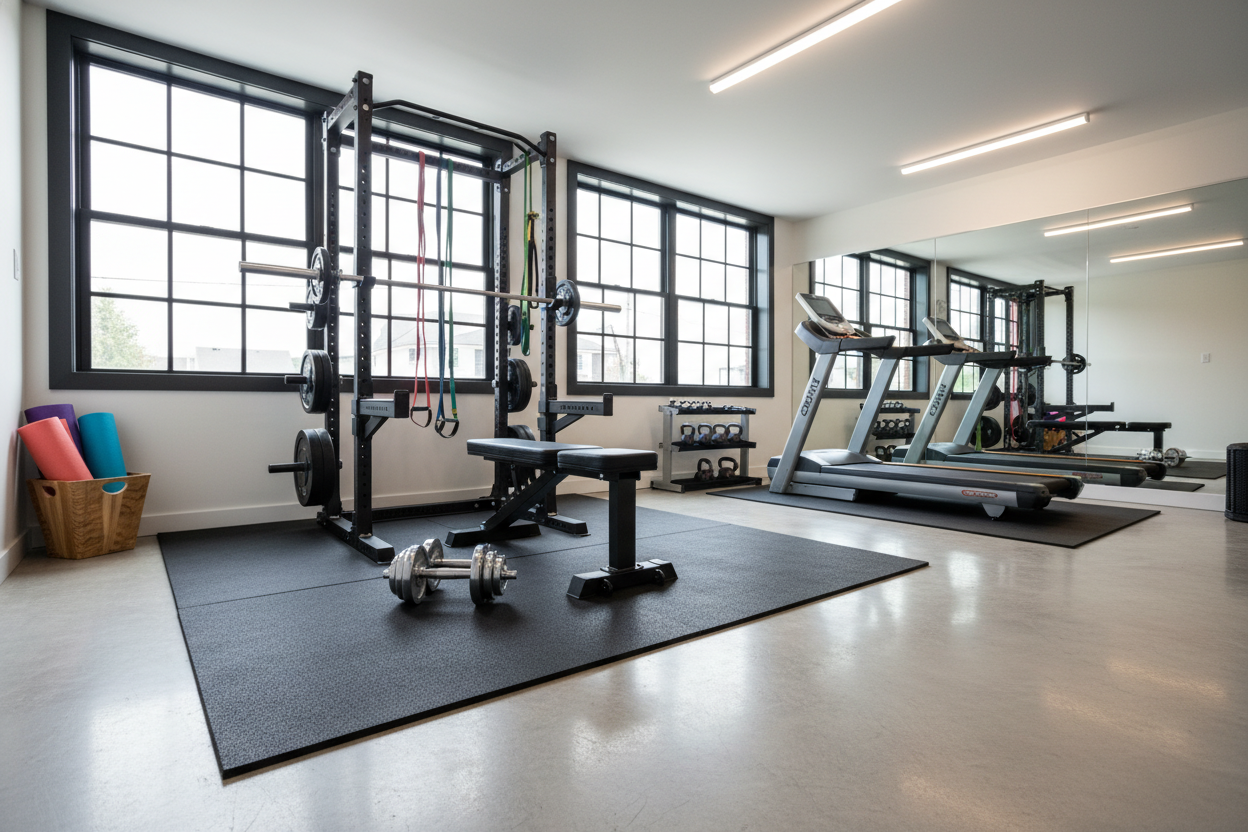
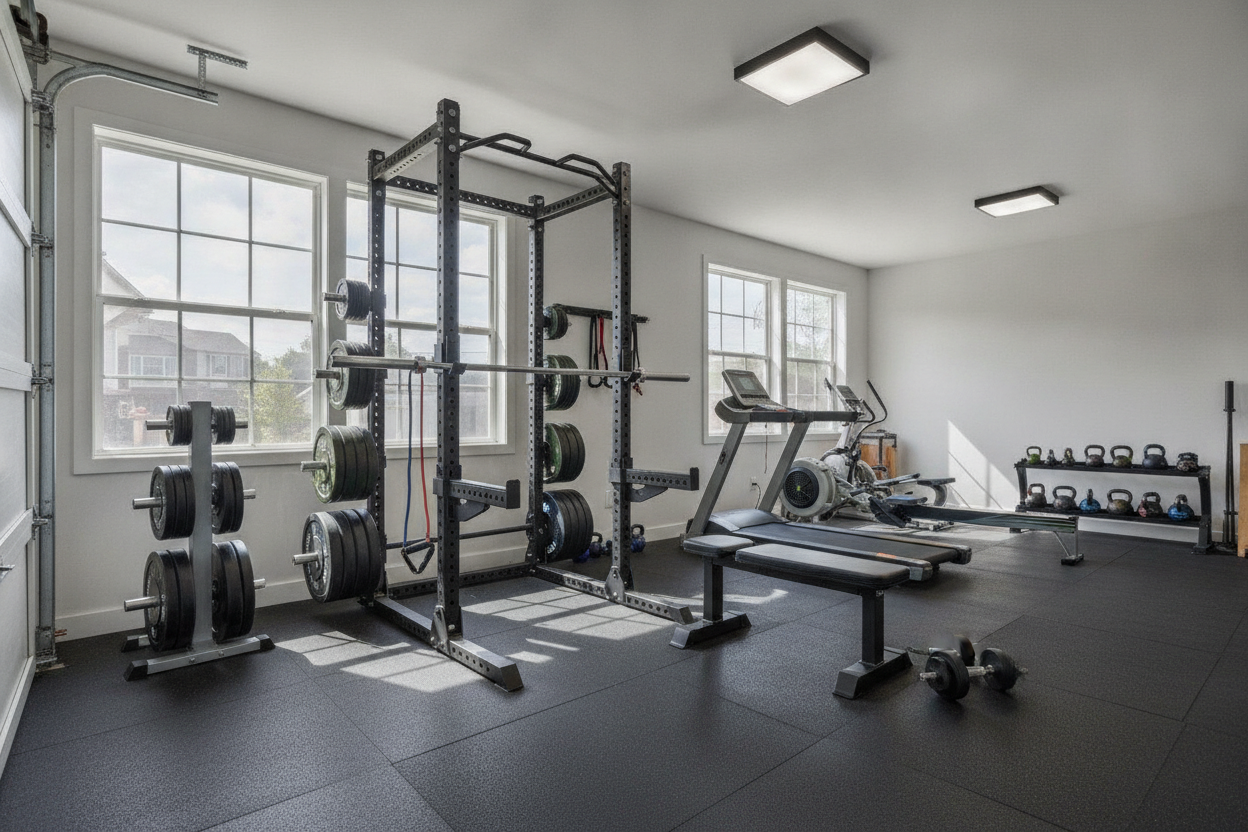
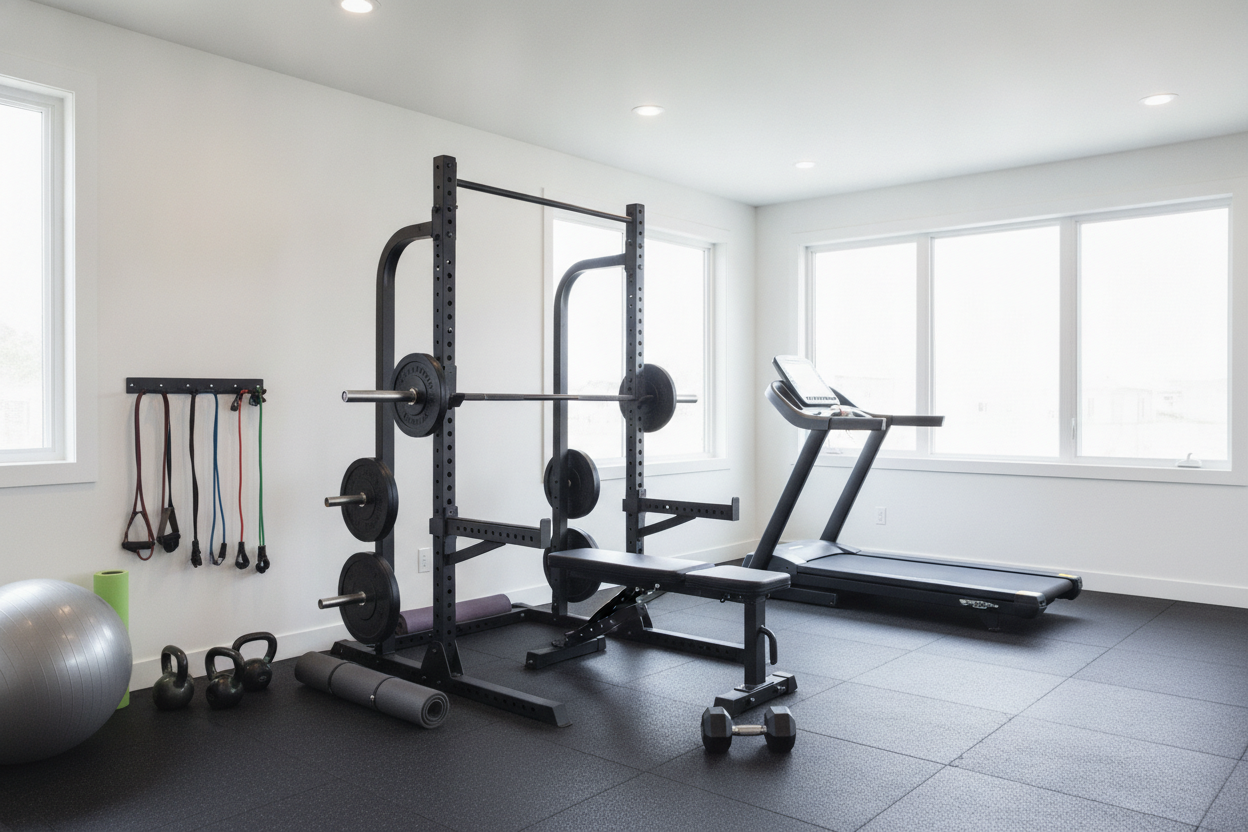
I recommend laying out a 6x8ft exercise mat in your garage or living room. It gives you enough space to move without feeling restricted by the edges of a standard yoga mat. Plus, having that dedicated 'work zone' helps you stay focused on the movement practice rather than the distractions of the house.
The 'No-Sweat' Starter Framework (What to Actually Do)
Stop overcomplicating your split. You don't need a 'leg day' and a 'back day' yet. You need a full-body template: one squat pattern (like a goblet squat), one hinge (like a glute bridge), one push (like a floor press), and one pull (like a one-arm row). That is it.
The rule for every rep is a strict 3-second negative. If you're doing a floor press, count 'one-one-thousand, two-one-thousand, three-one-thousand' as you lower the weight to your chest. This eliminates momentum and forces your muscles to do 100% of the work. If you're doing this on a large exercise mat for home gym, you'll find that the extra cushion allows you to really dig in and find your stability without bruising your elbows or knees.
How to Measure Progress Without a Puddle of Sweat
If you're not using sweat as a metric, what should you look for? First, joint health. If you wake up the day after a workout and your knees don't hurt, that's a win. Second, stability. When you go to do a lunge, are you wobbling less than you were last week? Third, rep smoothness. A pro's first rep looks exactly like their last. When your movement becomes 'quiet' and controlled, you're making real progress.
My Honest Mistake
When I started, I thought 'intensity' meant 'pain.' I did a high-rep squat program that left me so sore I couldn't walk down stairs for five days. I thought I was a warrior. In reality, I was just an idiot who couldn't train for a week. I lost more progress by being 'hardcore' than I would have by just doing three sets of ten controlled, 'boring' reps. Don't be me.
FAQ
Should I do cardio too?
You can walk or bike, but don't do it right before your strength work. You want your brain fresh for the lifting. Save the cardio for the end or a separate day.
How do I know if the weight is too heavy?
If you can't maintain that 3-second lowering phase, it's too heavy. Ego is the enemy of a good beginner routine. Drop the weight and find the control.
Do I need a squat rack right away?
No. You can do a massive amount of work with just dumbbells or a single kettlebell on a good floor mat. Master the movement before you start buying big iron.