The Best Arm Exerciser Setup for Maximum Growth (2025 Guide)
You want sleeves that fit tighter, but you are tired of doing endless dumbbell curls with mediocre results. Finding the best arm exerciser—whether it's a dedicated gym station or a compact home tool—can change the trajectory of your training. The reality is that while free weights are fantastic, machines offer constant tension and stability that dumbbells simply cannot match.
If you are looking to isolate your biceps and triceps without cheating the movement, mechanical tension is your friend. This guide breaks down exactly which equipment actually works and which gadgets you should leave in the informercial graveyard.
Key Takeaways: Quick Summary
- Cable Machines are Superior: They provide constant tension throughout the entire range of motion, unlike free weights where tension drops at the top/bottom.
- Preacher Curl Stations: The best choice for isolating the bicep peak and preventing "body English" (swinging).
- Tricep Dip Machines: Essential for adding heavy mass to the back of the arm safely.
- Home Hydraulic Twisters: A surprising but effective budget option for high-repetition pump work at home.
- Compound Movements First: Always prioritize heavy compound machines (like rows or presses) before isolation tools.
Why Use Machines for Arm Training?
Many purists argue against using arm exercise machines, claiming free weights are the only path to growth. They are wrong. While stabilizers are important, the goal of hypertrophy is to fatigue the target muscle. Gym machines for arms remove the stability requirement, allowing you to push closer to absolute failure safely.
When you use arm strength equipment like a cable stack or a lever machine, you can manipulate the resistance curve. This means the weight remains heavy even at the peak of the contraction, a feat gravity-dependent dumbbells struggle to achieve.
Top Gym Equipment for Arms
1. The Cable Station (Functional Trainer)
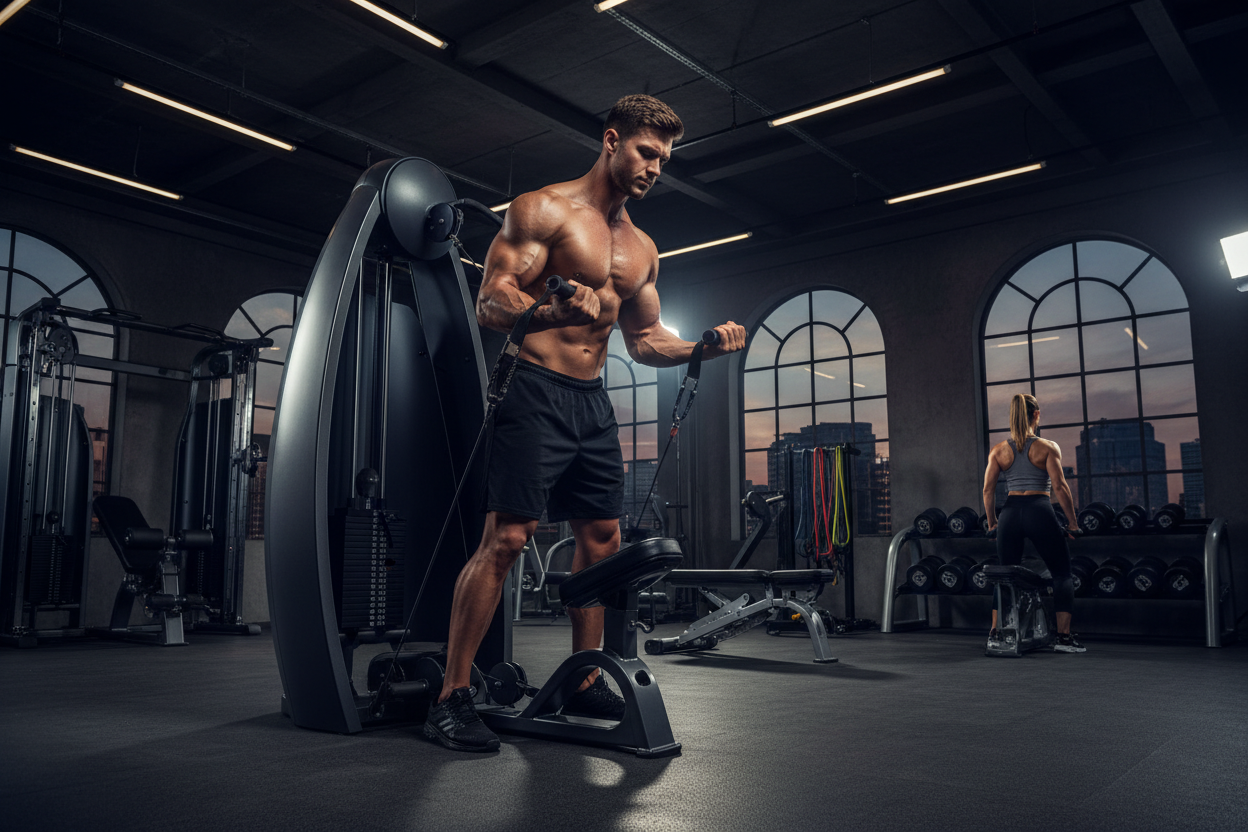
If you have access to arm machines at the gym, the cable station is the MVP. It is arguably the most versatile workout machine for arms because it allows for drag curls, tricep pushdowns, and overhead extensions.
Why it works: The cable provides continuous tension. During a cable bicep curl, the weight is pulling you back even at the very top of the squeeze. This constant time-under-tension triggers metabolic stress, a key driver for muscle growth.
2. The Preacher Curl Machine
Often called the bicep curl machine, this piece of gym equipment for arms locks your elbows in place. It forces the biceps to do 100% of the work by eliminating your ability to use your hips or back to swing the weight up.
Pro Tip: When using this arm lifting machine, do not let the weight stack slam at the bottom. Keep tension on the muscle even at full extension to avoid bicep tendon strain.
3. The Assisted Dip Machine
For the back of the arms, the tricep dip machine is king. While bodyweight dips are great, they can be hard on the shoulders for beginners. This gym machine for arms allows you to load the triceps heavily while maintaining an upright posture, targeting all three heads of the tricep.
Best Arm Exerciser for Home Use
Not everyone has a gym membership. If you are looking for an arm exercise machine for home, you have to be selective. Avoid the cheap plastic gadgets that promise instant results.
Hydraulic Power Twisters
These are modern versions of the old spring bars. Adjustable hydraulic arm toning equipment allows you to squeeze handles together against resistance. They are excellent for chest and bicep compression work. Unlike springs, hydraulic cylinders don't snap back dangerously, making them a safer arm workout tool.
Resistance Band Systems
While not a "machine" in the traditional sense, a wall-mounted anchor system turns bands into a cardio machine for arms. You can replicate almost any gym arm workout female machines or heavy male hypertrophy routines by adjusting the band thickness.
Designing Your Routine: Machine Selection
When walking onto the gym floor, the variety of weight machines for arms can be overwhelming. Here is a simple framework for your arm day machines selection:
- Start Heavy: Use a compound shoulder and arm workout machine (like a chest press or row) to pre-fatigue the muscles.
- Mid-Range Isolation: Move to the preacher curl machine or tricep extension machine for 8-12 reps.
- Finisher: Use cables or arm weight machines with drop sets to pump blood into the muscle.
My Personal Experience with Arm Machines
I have spent over 15 years in weight rooms, ranging from gritty garage gyms to high-end fitness clubs. I used to be a "free weights only" snob until I tore a rotator cuff. That injury forced me to rely on arm exercise machines for rehab, and that is when my arm growth actually exploded.
Specifically, I remember using an old Nautilus bicep machine—the kind with the kidney-shaped cam. The friction on the chain drive was gritty; you could actually hear the chain clicking as you curled. But that specific cam profile made the weight feel light at the bottom (protecting my injury) and incredibly heavy at the top. The pump was agonizing in a way dumbbells never achieved.
On the flip side, I bought one of those cheap "spring twisters" from a generic online retailer for home use during lockdown. The recoil was so violent it nearly hit me in the jaw during a failure rep. Lesson learned: when buying exercise equipment for arms, quality engineering matters. Stick to hydraulic resistance or commercial-grade cables if you value your teeth.
Conclusion
The best arm exerciser isn't a magic wand; it's the tool that allows you to apply the most tension with the best form. Whether you choose gym machines for biceps and triceps or a simple home hydraulic unit, the key is consistency and progressive overload. Stop swinging weights and start forcing the muscle to work.
Frequently Asked Questions
What is the best gym machine for flabby arms?
The best machine for arms to tighten "flabby" areas (usually the triceps) is the cable rope pushdown station. It targets the back of the arm effectively. However, remember that "toning" is largely a result of reducing body fat through diet while building muscle.
Can I build big arms using only machines?
Absolutely. Many bodybuilders strictly use weight machine workouts for arms to avoid injury and maximize isolation. Machines like the preacher curl and tricep press-down allow you to lift heavy loads safely without stabilizing muscles giving out first.
How often should I use arm machines?
Because the arms are smaller muscle groups, they recover relatively quickly. You can use arm fitness equipment 2 to 3 times per week. Just ensure you aren't overtraining them if you are also doing heavy back and chest days, as those compound movements also work the arms.