The Bare Minimum Equipment for a Home Gym to Actually Get Strong
I remember my first attempt at building a training space. I spent three weeks comparing different shades of powder-coated steel and looking at neon signs for the wall. I eventually bought a cheap, bolt-together rack that swayed every time I tried to rack a squat over 225 pounds. It was a mess. When you are hunting for equipment for a home gym, the noise of the marketing machine is usually louder than a dropped deadlift. You do not need a 12-post bridge rack or a dedicated turf strip to see progress.
Quick Takeaways
- Prioritize 11-gauge steel for your rack to ensure it stays upright when you are lifting heavy.
- A quality 20kg Olympic barbell is the single most important investment you will make.
- Skip the fancy machines; free weights provide the best equipment to build muscle at home.
- Don't forget the floor—standard garage concrete will crack under repeated impact.
Ditch the Influencer Setup (Why Less is Actually More)
Social media has done a number on our brains. It has convinced us that unless your gym looks like a boutique CrossFit box with color-coded plates and custom lighting, you are somehow failing. This leads to decision fatigue and, eventually, a garage full of expensive dust-collectors. The reality is that a minimalist setup is psychologically superior. When you have fewer options, you spend more time lifting and less time adjusting cables.
Starting small is the smartest move you can make for your wallet and your gains. By focusing on the real essentials for a home gym, you avoid the trap of buying 'all-in-one' machines that do ten things poorly instead of two things well. I have seen too many people drop three grand on a multi-gym only to realize they hate the fixed range of motion. Buy the basics first, master them, and only expand when your progress actually demands it.
The Iron Foundation: A Rack and Barbell That Won't Fail
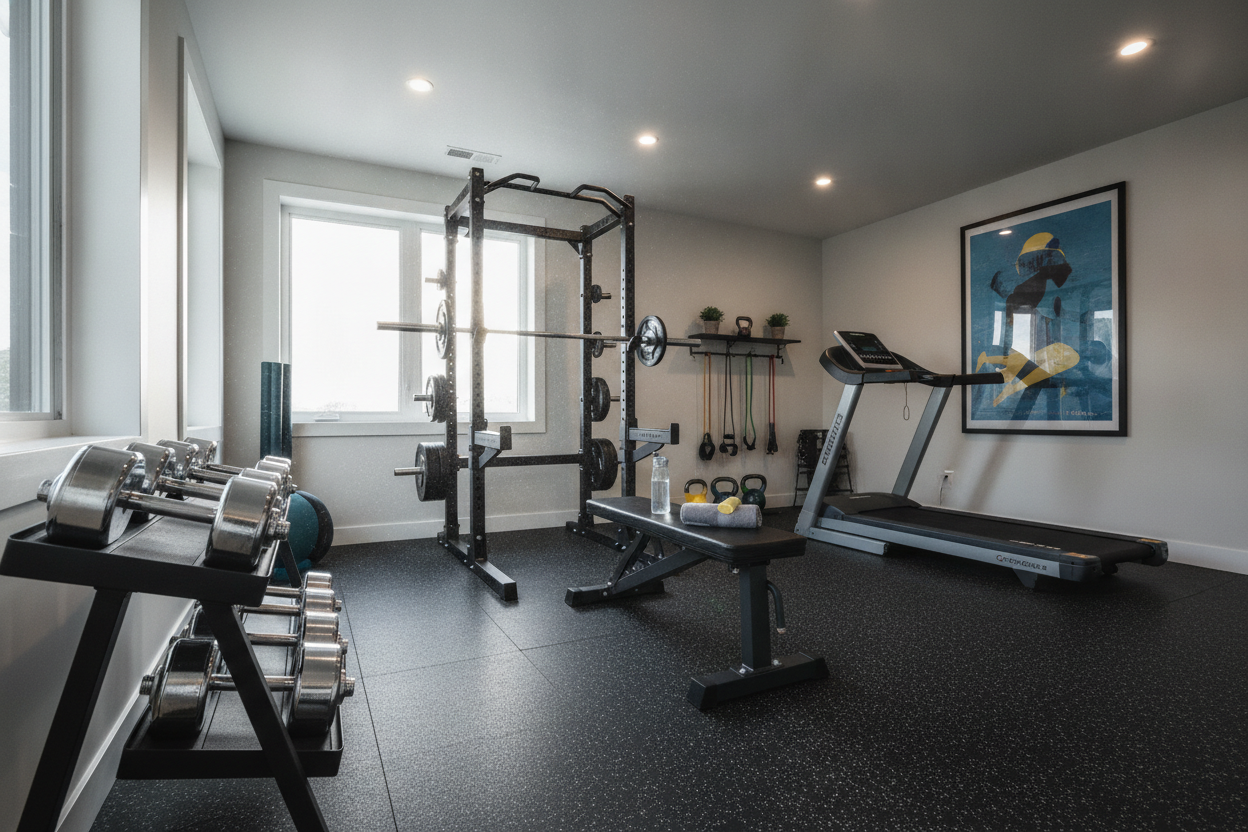
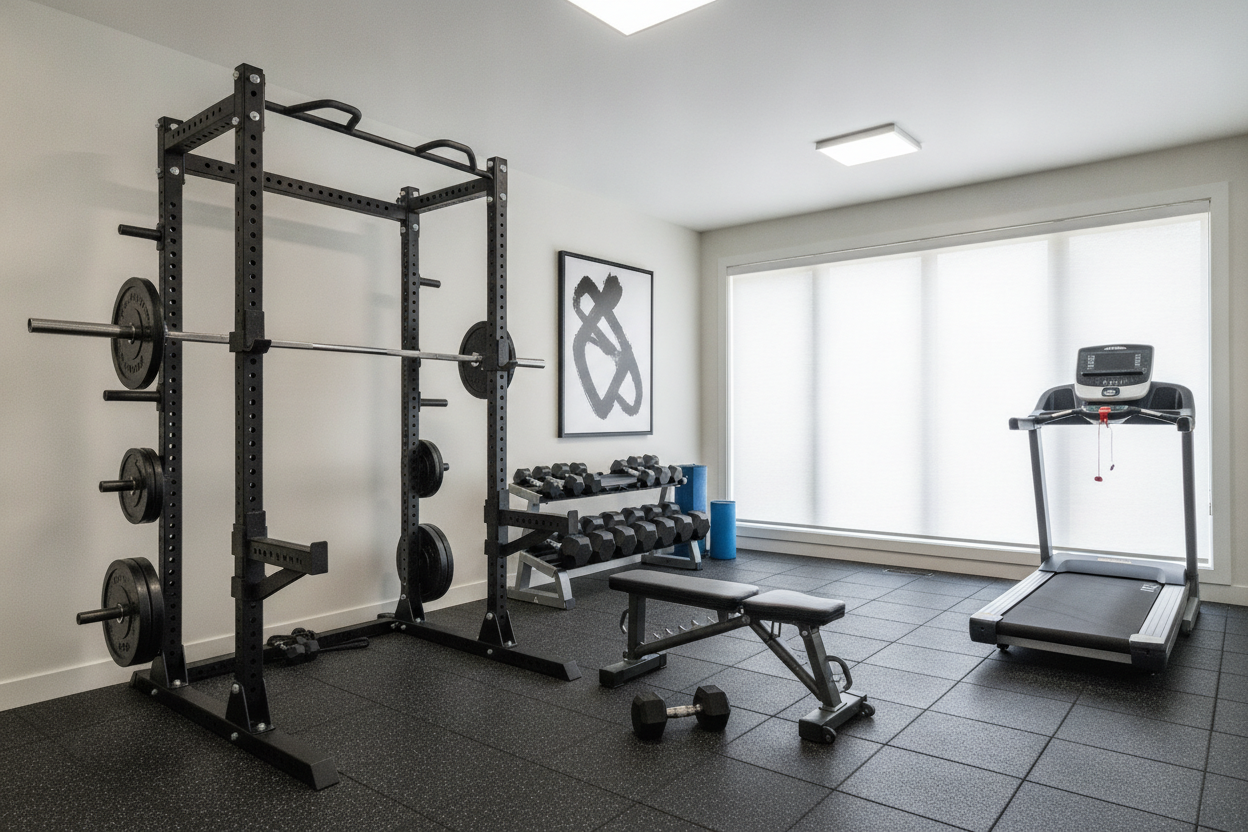
The core of any serious setup is the rack and the barbell. These are your must-have home gym equipment items. I always tell people to look for a rack made of 2x3 or 3x3 11-gauge steel. If the manufacturer doesn't list the steel gauge, run away. Thinner 14-gauge steel is fine for a coat rack, but it's sketchy for a heavy squat. You want a rack with 5/8-inch or 1-inch holes so you can actually find attachments later on.
Then there is the barbell. Do not buy a bar from a big-box sporting goods store. Those bars usually have hex bolts in the sleeves that loosen over time and knurling that feels like wet soap. Look for a 20kg bar with a tensile strength of at least 190,000 PSI. This ensures the bar has a good 'whip' but won't permanently bend when you load it up. If you are smart about finding home gym equipment deals, you can often find a B-grade bar from a top manufacturer that has a tiny cosmetic scratch but performs like a $600 piece of equipment.
A Bench That Doesn't Wobble When You Press
A cheap bench is a safety hazard. I have used benches that felt like they were made of cardboard and hope. If you are lying down with a loaded bar over your face, you need to trust the platform beneath you. A solid flat bench is often better than a cheap adjustable one. Flat benches are lighter, easier to move, and generally have a higher weight capacity for the price. They are a home gym essential for anyone serious about the big three lifts.
If you must go adjustable, ensure it has a 'ladder' style adjustment rather than a pin-and-pop system, which can fail under load. Look for a pad width of at least 11 or 12 inches. Anything narrower and your shoulders will be hanging off the sides, which is a recipe for a rotator cuff tweak. This is one of those gym things to buy where spending an extra fifty bucks actually buys you peace of mind.
Protecting Your Floors Before You Drop Heavy Weight
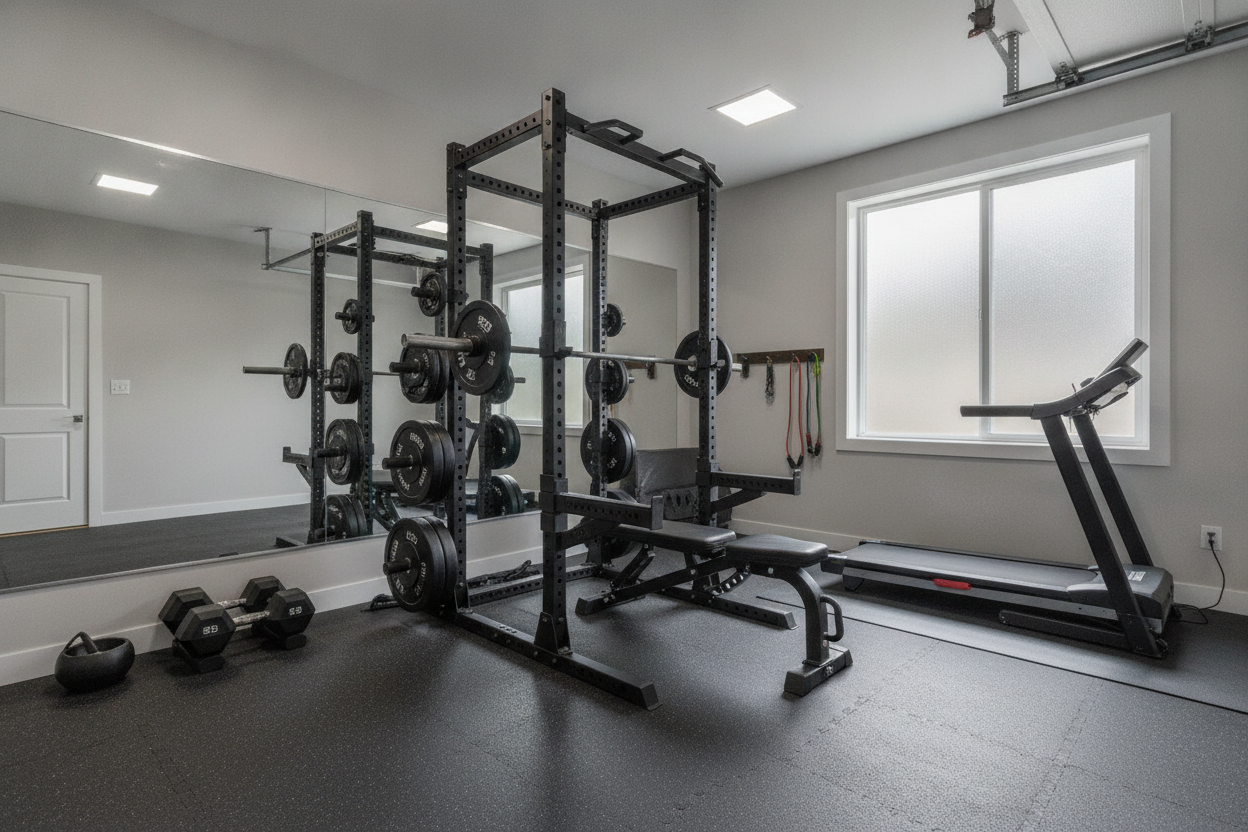
Most people forget about the floor until they see the first crack in their garage slab. Concrete is strong, but it is brittle. Dropping a pair of 45-pound iron plates from hip height will eventually win the battle against your floor. Proper flooring is a necessary home gym equipment item that most people overlook in favor of more iron. It deadens noise, saves your equipment from getting beat up, and provides the traction you need for heavy pulls.
I am a big fan of laying down a heavy-duty exercise mat or horse stall mats. You want at least 3/4-inch thickness. Foam tiles are for yoga and playrooms; they will compress and slide around the moment you try to do a heavy goblet squat. High-density rubber is the only way to go if you plan on doing any kind of serious strength work. It’s an at home gym necessity that pays for itself the first time you miss a lift and don't have to call a mason.
The 'Nice to Haves' (Buy These Later)
Once you have the rack, bar, plates, and bench, you have 90% of what you need. This is your essential home exercise equipment foundation. Everything else is just a luxury. Once you have been training consistently for six months, you can start looking at top home workout equipment upgrades like adjustable dumbbells or a landmine attachment. These are great home workout equipment ideas to keep things fresh, but they aren't the reason you'll get strong.
A simple home gym equipments list for your second phase might include a set of resistance bands for accessory work or a single heavy kettlebell for conditioning. But don't rush it. The beauty of a home gym is that it can grow with you. I started with a barbell and a pair of squat stands in a shed. It wasn't pretty, but it worked. Focus on the key gym equipment first and ignore the fluff.
My Personal Lesson in Cheap Gear
I once bought a 'deal' on a set of cast iron plates that were so poorly cast they actually weighed different amounts. One '45' was 43.2 pounds and the other was 47.1. I spent three months wondering why my squat felt lopsided before I finally put them on a scale. It was a massive headache. The lesson? Buy once, cry once. It is better to have two high-quality plates than a full rack of junk that isn't accurate.
FAQ
Is a power rack better than a squat stand?
If you train alone, a power rack with safety bars is always better. It allows you to push to failure without worrying about getting pinned. Squat stands are great for saving space, but they offer zero protection if you drop the bar.
Do I really need bumper plates?
Only if you are doing Olympic lifts (cleans, snatches) or if you are extremely worried about noise. For standard powerlifting, iron plates are thinner, allowing you to fit more weight on the bar, and they are significantly cheaper.
How much space do I actually need?
A standard Olympic barbell is 7 feet long. You need at least 8 feet of width to comfortably load plates, and about 8 to 10 feet of depth for the rack and your movement space. A standard 10x10 bedroom is usually plenty for a basic setup.