The 6-Month Beginner Muscle Building Routine I Give My Friends
I remember standing in my garage three years ago, staring at a pair of rusty 25-lb dumbbells and a bench that wobbled every time I breathed. I was overwhelmed by 'fitness influencers' telling me I needed a 6-day split and twelve different types of bicep curls. It’s a lie. You don’t need a complex map; you need a beginner muscle building routine that respects the biological goldmine you’re currently sitting on.
Quick Takeaways
- Your first six months are a one-time 'biological cheat code' for growth.
- Consistency beats variety; stop changing your exercises every week.
- Focus on the four big movement patterns: Squat, Hinge, Push, and Pull.
- A solid foundation (literally, your floor) is as important as the weights you lift.
The 'Newbie Gains' Window (And How You're Ruining It)
If you are new to lifting, your body is primed to build muscle at a rate you will never see again. This is the 'Novice Honeymoon.' During this phase, your central nervous system is learning how to fire muscles efficiently, and your protein synthesis is through the roof. Most people waste this era by 'program hopping'—trying a new TikTok workout every three days.
When you jump from one random workout to another, you never master the movements. You spend your energy learning how to balance instead of actually stressing the muscle. If you want real results, you need to find a structured plan in our complete workout hub and stick to it until the wheels fall off. Randomness is the enemy of growth.
Stop Changing Exercises Every Single Week
The myth of 'muscle confusion' was invented to sell fitness magazines. Your muscles don't get 'bored'; they get stronger through repeated exposure to the same stimulus. To run a successful beginners workout plan for building muscle, you should keep the same 5 to 7 exercises for at least 12 to 24 weeks. This allows you to track progressive overload accurately.
If you did 135 lbs for 8 reps last week, and you do 135 lbs for 10 reps this week, you’ve grown. If you change the exercise entirely, you have no baseline. Sometimes, you’ll hit a wall where you can’t add more plates to the bar. I’ve written before about why I stopped adding weight and focused on tempo and density instead—it’s a vital skill for when your home gym inventory is limited.
The Core Movements That Actually Put on Size
You don't need a 45-degree leg press or a cable crossover machine to get big. A simple muscle building workout revolves around four patterns. Squat (goblet squats or back squats), Hinge (deadlifts or kettlebell swings), Push (overhead press or floor press), and Pull (rows or pull-ups). These compound movements recruit the most muscle fibers and trigger the biggest hormonal response.
I usually recommend three full-body sessions a week. It sounds low, but for a beginner muscle building workout, it’s the sweet spot for recovery. If you’re terrified of free weights or have an old injury, you might consider a machine only workout program for beginners at a local gym. But if you’re at home, stick to the basics and keep the intensity high.
Building a Home Setup That Won't Hold You Back
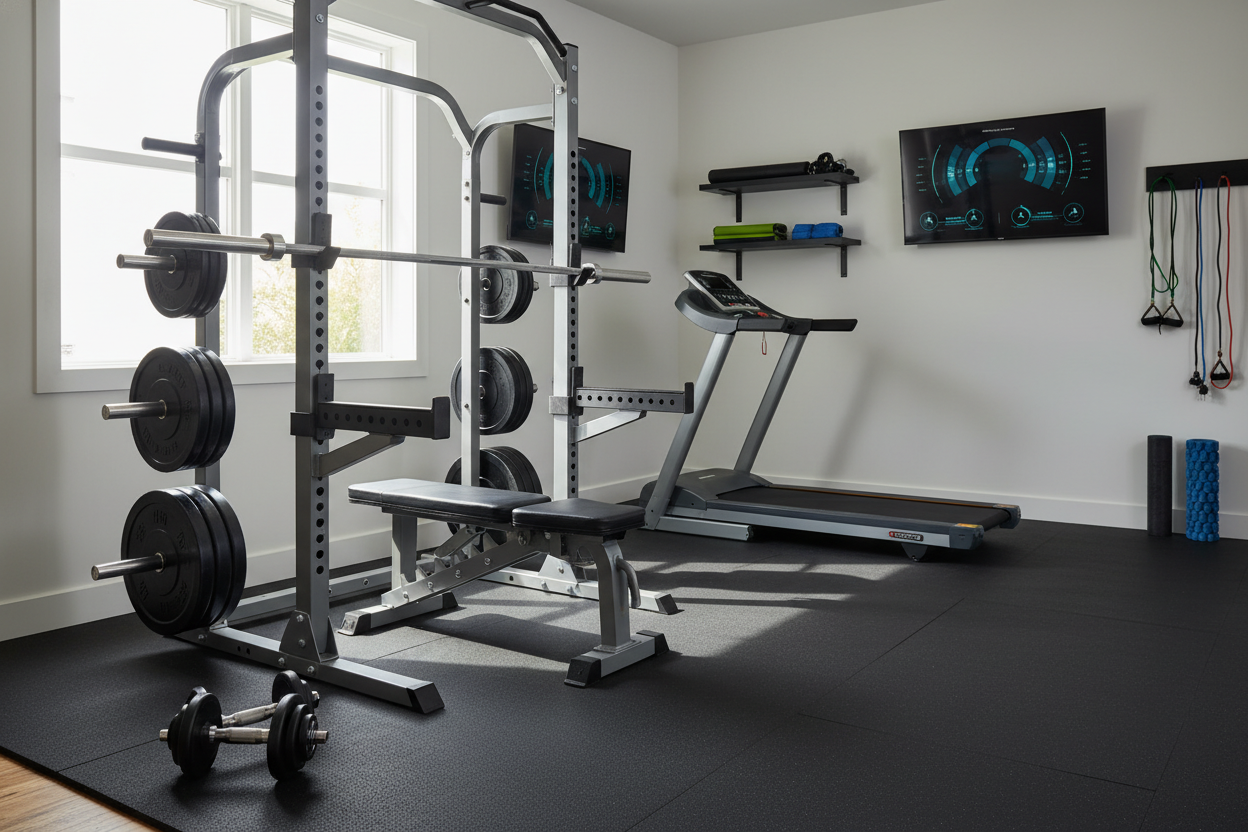
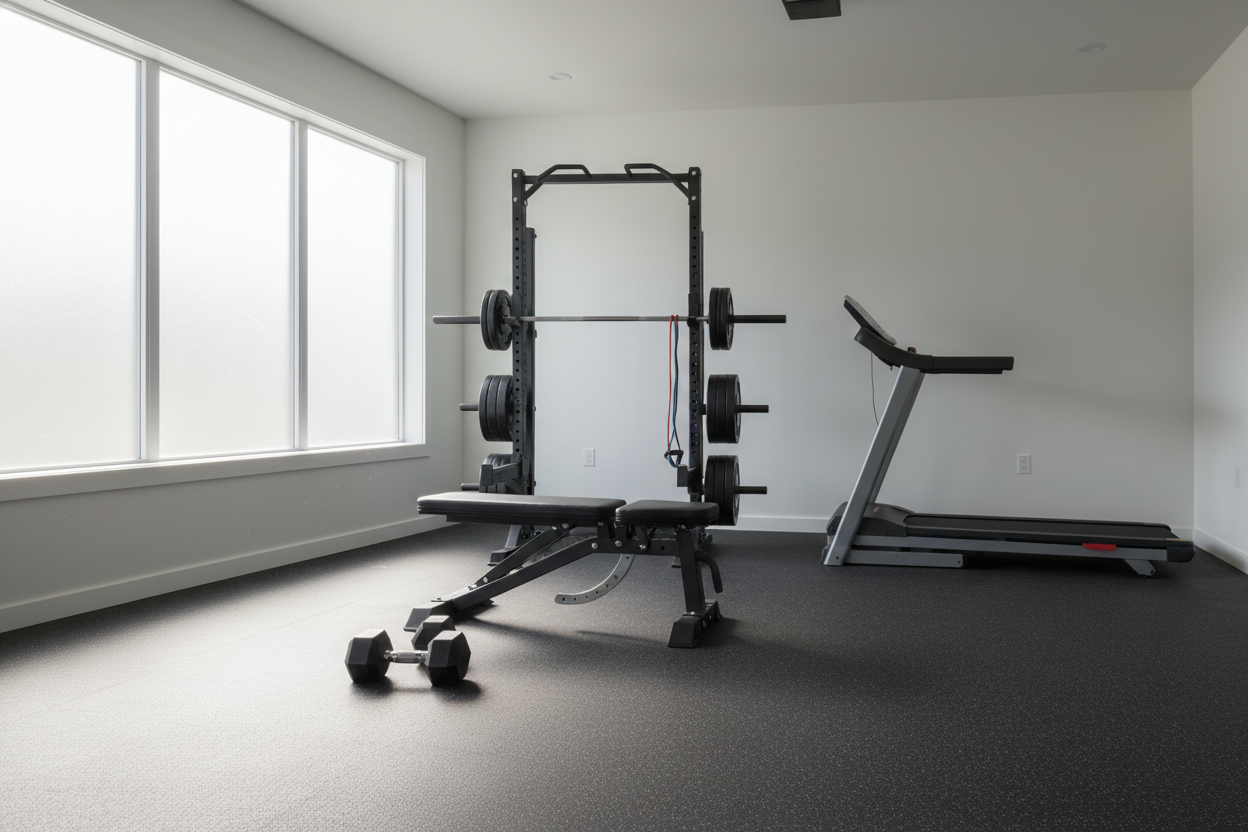
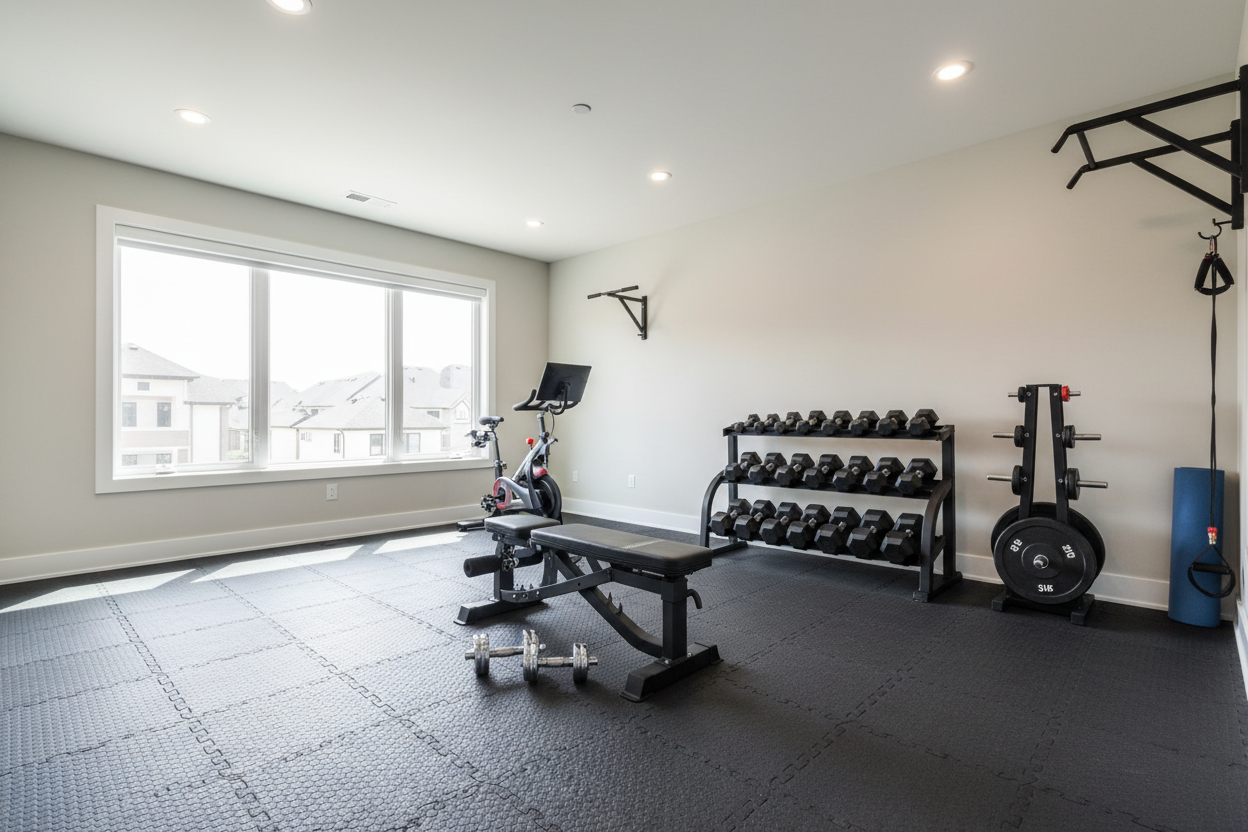
You don’t need a $5,000 power rack to start a muscle gain routine for beginners. You do, however, need gear that doesn't make you feel like you're going to die. A cheap, skinny barbell will whip and bend under even moderate loads, and lifting on bare concrete or thin carpet is a recipe for a slipped disc or a cracked foundation. Trust me, I’ve seen enough cracked garage floors to know better.
Invest in a high-density base. Having proper gym flooring for home workout isn't just about protecting the house; it’s about stability. When you’re grinding out a heavy set of squats, you need your feet glued to the floor, not sliding on a yoga mat that’s bunching up. Get a 6x8 ft mat that stays put, a decent bench, and a set of adjustable dumbbells or a basic Olympic bar.
How to Tell if Your Routine is Actually Working
The scale is a liar. If you’re running a beginner mass workout, you might be losing fat and gaining muscle simultaneously, which keeps the weight the same. Look for 'Performance Proxies' instead. Are the weights moving faster? Does your 'mind-muscle connection' feel stronger? Do your shirt sleeves feel tighter around your triceps?
Muscle building is a slow game of inches. If you’re hitting your reps and feeling a 'pump' in the target muscles, the beginner muscle building program is working. Don't let a bad day on the scale derail six months of progress. Consistency is the only supplement that actually works.
My Personal Experience: The 'Ego' Mistake
When I started, I thought a muscle building routine for beginners meant lifting the heaviest weight possible, regardless of form. I spent three months 'deadlifting' with a rounded back that looked like a frightened cat. I ended up with a strained lower back and two weeks on the couch. The lesson? Master the movement with an empty bar first. Once your form is locked in, then—and only then—do you earn the right to add weight. I wasted my first three months of 'newbie gains' being injured. Don't be me.
FAQ
How many days a week should a beginner lift?
Three days is plenty. A Monday-Wednesday-Friday full-body split allows for maximum recovery. Remember, you grow while you sleep, not while you're lifting.
Do I need protein powder to build muscle?
No. You need protein, but it can come from chicken, eggs, or beans. Powder is just a convenience. Aim for about 0.8g to 1g of protein per pound of body weight.
Can I build muscle with just dumbbells?
Absolutely. A beginner workout for muscle gain can be done entirely with dumbbells, provided you have enough weight to keep challenging yourself as you get stronger.