The 5 Gymnasium Exercises I Actually Miss in My Garage
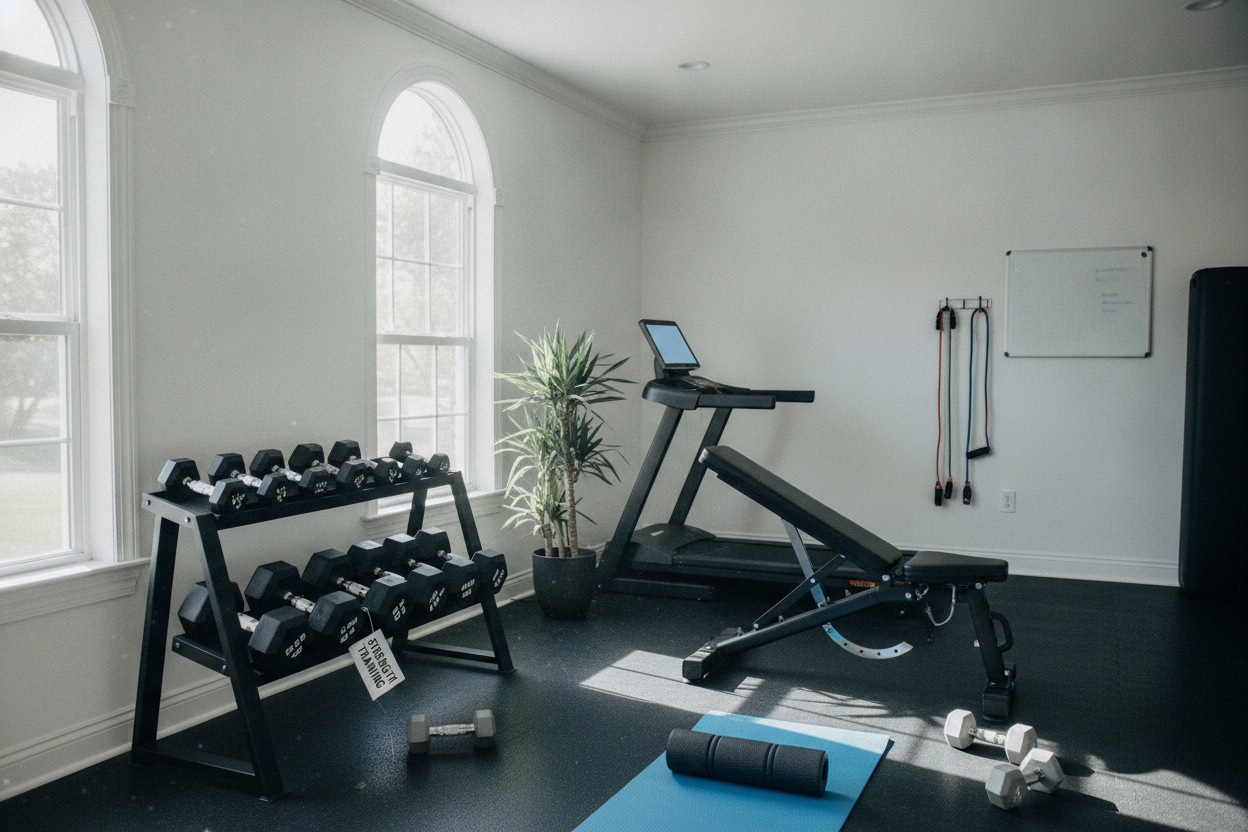
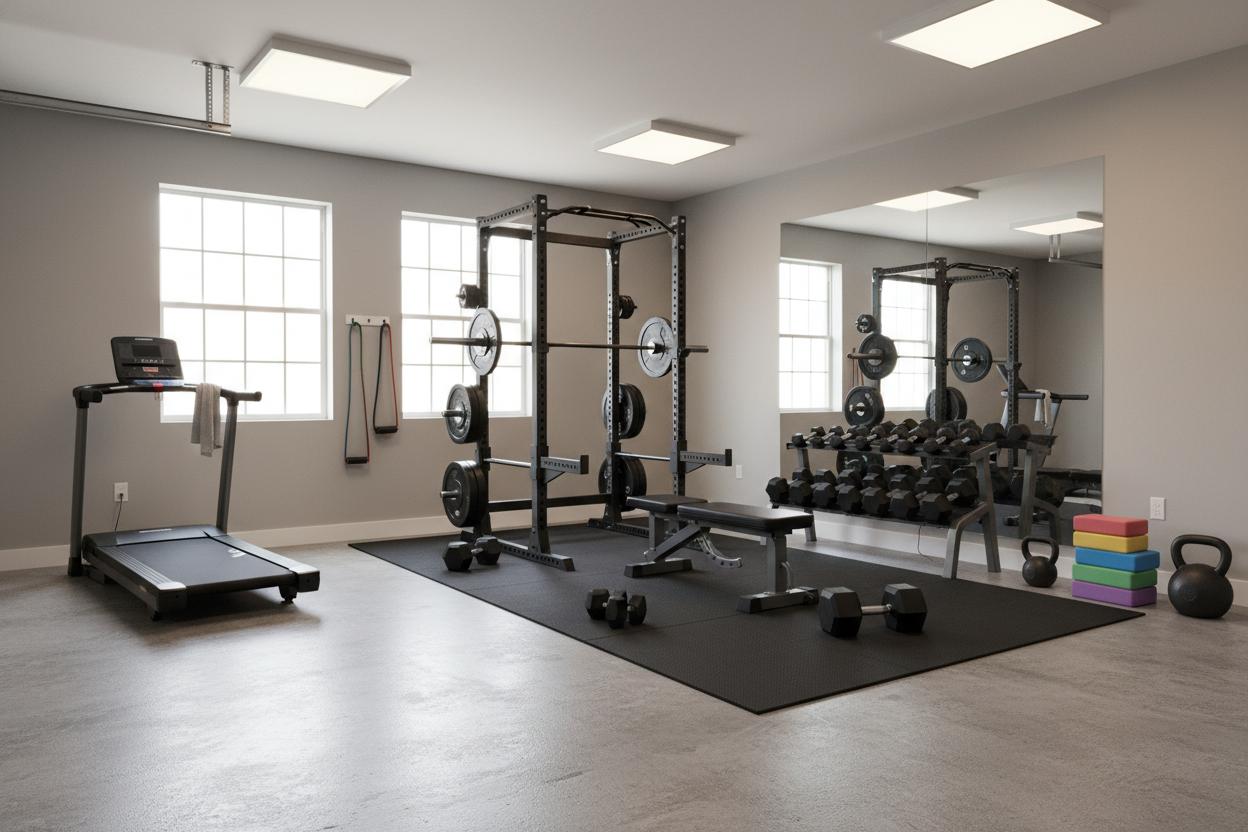
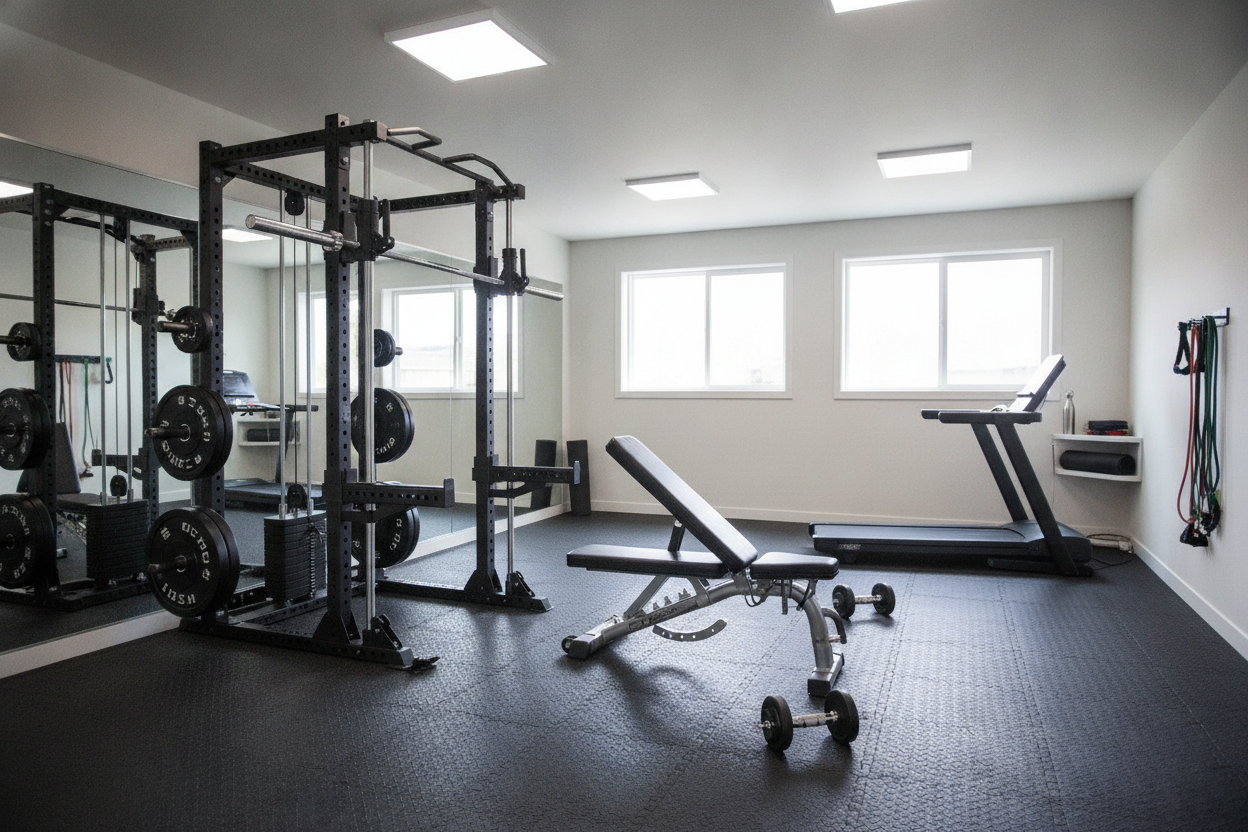
I’ve spent the last five years and a small fortune building a garage gym that would make most people’s eyes water. I have the 11-gauge steel rack, the competition-grade plates, and a barbell with knurling so aggressive it could shave a bear. But I’ll be honest: some days, I stare at my power rack and wish I had a 50,000-square-foot commercial floor at my disposal for specific gymnasium exercises.
Quick Takeaways
- Machines provide constant tension that dumbbells and barbells physically cannot replicate.
- Isolation movements are often safer and more effective on dedicated commercial equipment.
- The 45-degree leg press is the gold standard for quad hypertrophy without spinal loading.
- You can hack some of these at home with bands, but the stability of a 500-lb machine is hard to beat.
The Garage Gym Bubble (And Why I Occasionally Pop It)
Training at home is the dream until you realize you’re trying to do a chest fly with a pair of 50-lb dumbbells. You get all the tension at the bottom when your pecs are stretched, and then—nothing. At the top of the movement, you’re just balancing weight over your joints. That’s the garage gym bubble. We convince ourselves that a barbell and a bench are all we need, but biomechanics doesn’t care about our minimalist aesthetic.
Commercial facilities have a distinct advantage: specialized leverage and fixed paths. When I’m at my local black-iron gym, I can push a set of hacks squats until my vision gets blurry because I’m not worried about a bar crushing my windpipe. In my garage, I have to hold back 5% for safety. That 5% is where the real growth happens. Certain movements are just better when the machine handles the stability, leaving you to handle the effort.
The Gymnasium Exercises You Simply Can't Fake at Home
You can try to mimic these with bands, pulleys, or floor sliders, but it’s never quite the same. These are the movements where commercial machines completely outclass free weights because of their engineered tension curves and rock-solid stability. If you have access to these, they are great gym exercises to prioritize.
The True Constant-Tension Cable Crossover
Dumbbell flys are a shoulder injury waiting to happen if you get greedy with the weight. The resistance is highest when your arms are wide and your muscle is at its weakest point. A dual cable tower fixes this. Because the weight stack is pulled via a cable, the tension remains identical from the start of the squeeze to the very end.
This is a staple in any complete guide to chest exercises you can do in the gym. You get that deep, skin-splitting pump because you can actually cross your hands at the midline, something a dumbbell physically won't let you do. It’s one of the few ways to get true isolation without your triceps taking over the movement.
The 45-Degree Leg Press (Without the Spine Crush)
I love back squats. I’ve spent years chasing a 400-lb squat, but my lower back has a finite capacity for punishment. The 45-degree leg press is one of those good exercises in the gym that allows you to absolutely demolish your quads without loading your vertebrae. You can play with foot placement—high, low, wide, or narrow—to target different parts of the leg in a way that’s nearly impossible with a bar on your back.
The Dedicated Machine Pec Deck
People love to hate on machines, but the pec deck is a masterpiece of engineering. It keeps the elbows in a fixed position, removing the biceps and front delts from the equation. It’s a movement that is highly recommended for anyone looking to build a better mind-muscle connection. This is why it’s a feature in many routines, including a chest day for women proven exercises to build strength and shape at home or in the gym, because it’s so easily scalable for any strength level.
The Seated Leg Curl
Lying leg curls with a dumbbell between your feet are a joke. I’ve tried it; the dumbbell usually ends up falling on my calves. A seated leg curl machine puts the hamstrings in a pre-stretched position, which is scientifically superior for hypertrophy. The stability of the lap pad allows you to pull through the heel with maximum force.
The High-Mass Lat Pulldown
Yes, I have a pull-up bar. Yes, I do weighted pull-ups. But a 300-lb commercial lat pulldown stack allows for a level of volume and controlled eccentrics that your body weight just doesn't provide. Being able to strip the pin for a drop set is a luxury you don't appreciate until it's gone.
How to Hack These Movements If You're Stuck at Home
If you aren't ready to drop $3,000 on a functional trainer, you have to get creative. For chest flys, I use heavy resistance bands looped around the uprights of my power rack. It’s not a 1:1 replacement, but the variable resistance of the band actually mimics the cable’s tension curve better than a dumbbell does.
For leg work, I’ve found that sliding leg curls are surprisingly effective. If you have a large exercise mat for home gym use, you can use furniture sliders or even a towel to perform curls. It’s brutal on the hamstrings and doesn't require a $1,200 machine. For the leg press feel, try 'Landmine' squats or Bulgarian split squats—they offer that stability and quad-focus without the same spinal load as a traditional back squat.
Are These Good Exercises in the Gym Worth a Commute?
Is it worth the 20-minute drive and the $60 monthly fee just to use a leg press and a cable crossover? For most, probably not. I’ll take the convenience of my garage 90% of the time. However, I usually keep a 'day pass' or a cheap 'basic' membership at a local commercial spot for those days when my joints are feeling beat up and I need the stability of machines. Missing out on that final 10% of optimal machine stimulus isn't a dealbreaker, but knowing when to pop the garage bubble can keep your training fresh and your injury risk low.
My Personal Experience: The DIY Disaster
Early in my home gym journey, I tried to build a DIY leg press using a plywood platform and some heavy-duty drawer slides. It was a disaster. The first time I loaded it with 200 lbs, the slides buckled, and I nearly pinned myself to the floor. It taught me an expensive lesson: some things are worth the commercial-grade price tag. Now, I respect the engineering that goes into a real leg press. If I can't do it safely at home, I save it for my monthly visit to the 'big' gym.
FAQ
Can I build muscle without gym machines?
Absolutely. Barbells and dumbbells are the foundation of any physique. Machines are just the 'polish' that helps you isolate specific muscles once you've done the heavy lifting.
Why do cables feel different than dumbbells?
Gravity only pulls down. A dumbbell only provides resistance in the vertical plane. Cables use pulleys to redirect that resistance, allowing for horizontal tension throughout the entire range of motion.
Is the leg press 'cheating' compared to squats?
No. It’s a different tool for a different job. Squats build total-body strength and stability; the leg press builds massive quads with less systemic fatigue. Use both.