The 3-Step Setup for a Heavy Hip Thrust at Home (That Actually Works)
I remember the first time I tried to go heavy in my living room. I propped my back against a designer chair, loaded a 70-pound dumbbell on my lap, and immediately shot backward across the hardwood like a rocket. Not exactly the glute pump I was after. Learning hip thrust at home isn't just about the movement; it's about engineering a setup that doesn't crumble under load.
- Wall-brace your bench or couch to prevent sliding.
- Use a high-friction surface for your feet.
- Prioritize a thick pad to protect your hip bones.
- Focus on tempo and pauses if you lack heavy plates.
Why Your DIY Glute Setup Is Probably Failing
Most people fail at how to do hip thrust at home because they underestimate physics. Friction is your best friend, and right now, you probably don't have enough of it. If you're on hardwood or cheap laminate, your bench is essentially a sled. Every time you drive through your heels, you're pushing the bench away from you.
Then there's the height issue. A standard dining chair is usually too high, forcing your ribcage to flare and shifting the load into your lower back. If your pivot point isn't locked at the bottom of your shoulder blades, you aren't training your glutes—you're just practicing a bad back extension. You need a stable, low-profile anchor that won't budge when you start moving real weight.
The 3-Step Formula for a Rock-Solid Anchor
To stop the sliding, you need to create a closed system. First, shove your bench or plyo box directly against a wall or a heavy piece of furniture that isn't going anywhere. If you're using a couch, make sure it’s backed up against a corner.
Second, address the floor. Even with a wall brace, your feet can still slip forward. Placing your bench and feet on a continuous, large exercise mat for home gym completely eliminates the sliding issue. These mats provide the necessary grip so your heels stay glued to the floor, allowing you to drive straight up rather than pushing yourself away from the bench.
Third, get a real pad. A rolled-up yoga mat is better than nothing, but once you cross the 100-pound mark, it feels like a cheese wire across your pelvis. A dedicated 1.5-inch thick foam squat sponge is the best $20 you'll ever spend on your home setup.
Scaling the Weight: Hip Thrust Exercises at Home
You don't need a 400-pound barbell to see growth. If you're working with limited gear, you have to get creative with hip thrust exercises at home. I've found that a single 50-pound adjustable dumbbell can be brutal if you switch to a B-stance (one foot slightly forward) or add a 3-second isometric hold at the top of every rep.
If you're outgrowing your dumbbells, it's time to look at hip thrust variations actually worth doing to keep the intensity high. Resistance bands are a massive help here. Doubling up a heavy long-loop band over your hips and anchoring it under your feet adds a peak contraction that even a barbell can't quite replicate.
Upgrading to Barbell Work in the Garage
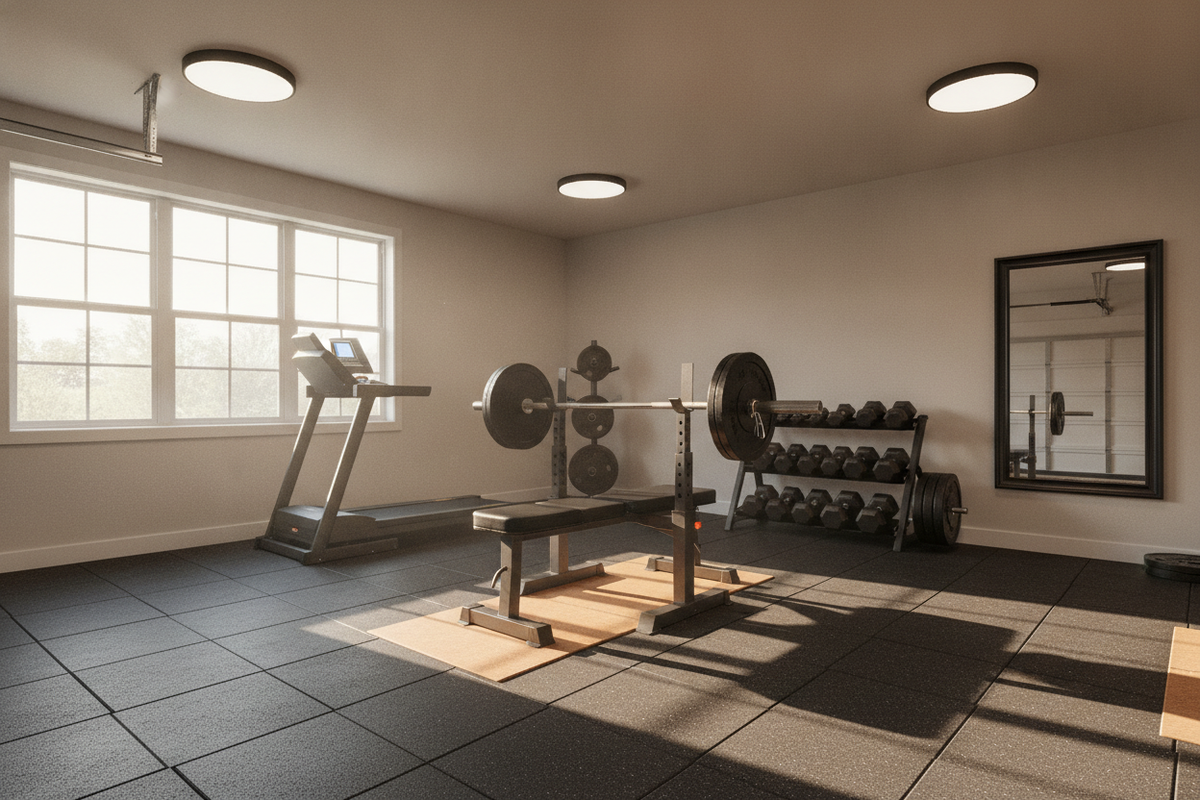
For those of you with a garage setup, the barbell is king. But even with a bar, the bench-sliding problem persists. I like to 'plate-block' my bench by placing a pair of 45-pound bumper plates on the floor directly behind the bench legs. This creates a physical stop that even a 315-pound thrust won't move. If you're ready to get serious about your setup, you can build a bulletproof barbell hip thrust station using a few sandbags and a dedicated floor-bolted bench.
How to Program a Brutal Hip Thrust Home Workout
A solid hip thrust home workout doesn't need to be complicated, but it does need to be intense. Since you likely aren't maxing out with five plates in your living room, you need to use 'mechanical tension' and 'metabolic stress' to your advantage. Try this template: 4 sets of 12 reps, but with a twist. The first 8 reps are normal, and the final 4 reps include a 5-second hold at the top and a 3-second slow descent.
By the time you hit that fourth set, your glutes will be screaming. This approach builds muscle without requiring you to turn your bedroom into a commercial weight room. Focus on the squeeze, keep your chin tucked, and don't let your hips sag at the top.
Personal Experience: My Living Room Disaster
I once tried to use a standard folding chair for my thrusts. It seemed sturdy enough until my third set of 135 pounds. The legs buckled inward, the bar rolled onto my shins, and I ended up with a bruised tailbone and a very confused dog. I learned the hard way that if the equipment isn't rated for at least 300 pounds of total load (you plus the weight), it doesn't belong in your setup. Now, I stick to a heavy-duty plyo box or a dedicated weight bench pushed against my power rack.
FAQ
Can I use my couch for hip thrusts?
Yes, but only if it's heavy enough not to slide. If it's a light sofa, brace the back of it against a wall. Use a firm cushion; if you sink too deep, you'll lose the leverage needed to lock out your hips.
What if I don't have a bench or a couch?
Floor bridges are your best bet. They have a shorter range of motion, but you can make them harder by doing them single-legged or by elevating your feet on a stable chair or stairs.
How do I stop the bar from hurting my hips?
Use a dedicated barbell pad or a thick foam mat. If you're in a pinch, a thick rolled-up towel or even a firm pillow can work, but they tend to shift around more than a Velcro pad.