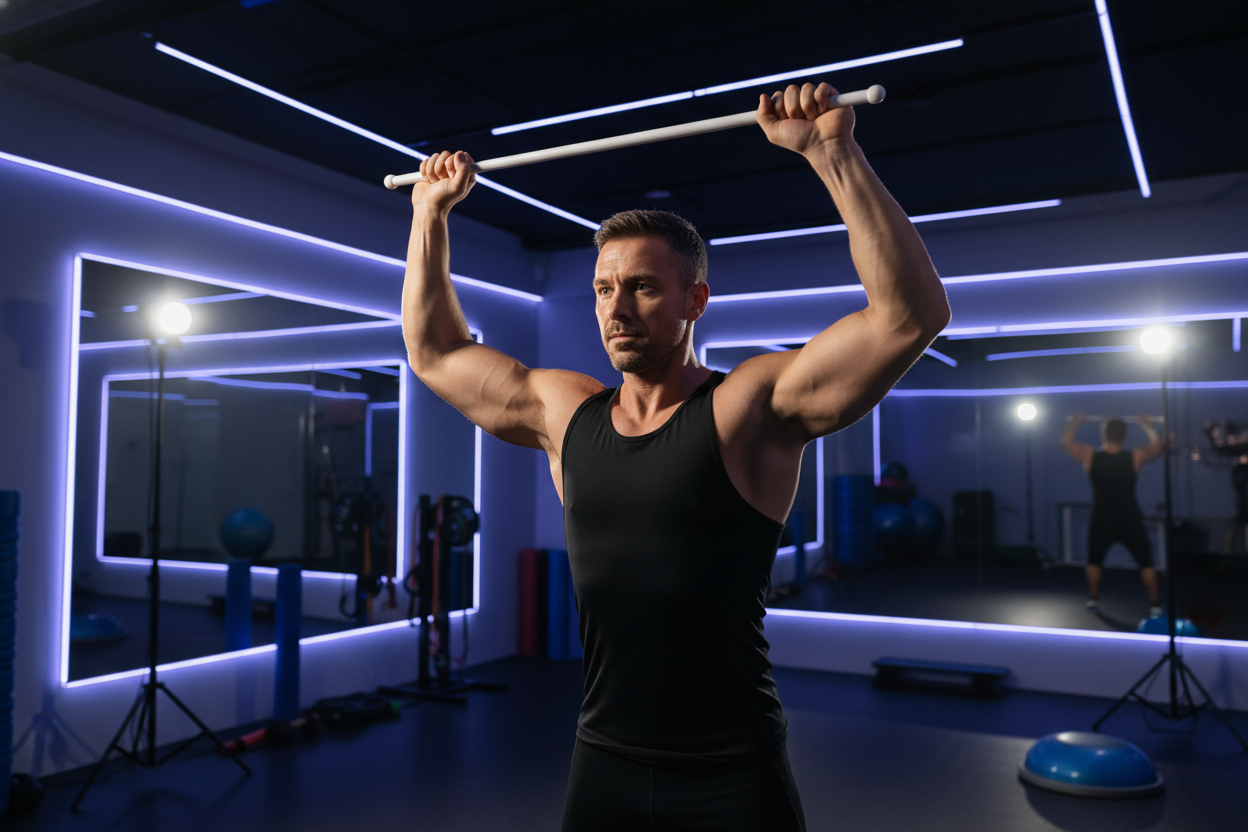
Targeted Workouts: Fixing Muscle Imbalances at Home
I still remember the cramped 8x10 spare bedroom I converted into a makeshift gym back in 2020. I had a flat bench, a pair of adjustable dumbbells, and a burning desire to just keep moving. But after six months of heavy pressing and crunches, my shoulders were permanently rolled forward. I looked in the mirror and realized I had built the posture of a caveman.
That is when I realized I needed a massive shift in my training. I stopped just trying to sweat and started programming targeted workouts to fix the damage. When you train at home, it is incredibly easy to fall into the trap of only working the muscles you can see in the mirror.
To fix those hunched shoulders and aching lower backs, you have to get specific. Let's break down exactly how to identify your imbalances and use precise isolation movements to build a resilient, pain-free body right in your living room.
Quick Takeaways
- Home routines heavily favor pushing movements, leading to severe anterior dominance and poor posture.
- Isolation exercises are critical for bulletproofing joints and activating dormant muscles like the rhomboids and glutes.
- Knowing specific exercises and what they target allows you to prescribe yourself the exact movement needed to fix an imbalance.
- You don't need massive machines; a 5-52.5 lb adjustable dumbbell set and a $20 pack of resistance bands are enough for corrective work.
The Trap of Mirror Muscle Home Routines
When you set up a home gym, your first instinct is usually to buy a bench and start pressing. It is satisfying, it builds a massive chest, and it feels like a real workout. But doing endless push-ups, bench presses, and front raises creates a massive structural problem. You are overdeveloping your anterior chain—the chest and front deltoids—while completely neglecting your posterior chain.
Over time, those tight chest muscles physically pull your shoulders forward. Your upper back stretches out, becomes weak, and suddenly you have a constant dull ache between your shoulder blades. I see this constantly with clients who run older, high-volume home DVD programs. They do a thousand push-ups a week and wonder why their rotator cuffs are screaming.
If you are moving toward modern P90X similar workouts, you need to be hyper-aware of this trap. High-intensity home circuits are notorious for anterior bias. To counteract this, we have to pull back on the generic volume and start focusing on the muscles that are actually shutting down.
Why You Need Targeted Workouts
Isolation training gets a bad reputation in functional fitness circles. People think if you aren't doing heavy squats or deadlifts, you are wasting your time. But when you are dealing with muscle imbalances, isolation is exactly what you need. A targeted workout isolates a specific, weak muscle group and forces it to fire without larger muscles taking over.
Think about a heavy barbell row. If your lats and traps are weak, your biceps and lower back will take over the movement to get the weight up. You think you are training your back, but you are just reinforcing a bad movement pattern. Isolation strips away the ego.
I learned this the hard way when testing a budget cable pulley system in my garage last year. I loaded up 50 pounds for a row, felt my shoulder pinch, and realized my lower traps were completely dormant. By dropping the weight to 15 pounds and doing strict isolation work, I finally got the right muscles to engage. It is crucial for injury prevention and joint health in a home gym setting, where you don't always have a coach watching your form.
Common Exercises and What They Target
To fix your posture, you have to know exactly which tools to pull from your toolbox. Understanding specific exercises and what they target is the foundation of corrective home training. Let's look at three essential movements you should be doing.
First, the banded face pull. This is non-negotiable for anyone who sits at a desk or does heavy bench pressing. You anchor a resistance band at eye level, grab the ends, and pull your hands toward your ears while driving your elbows back. This directly targets the rear deltoids, rhomboids, and external rotators of the shoulder. I recommend using a light band—around 15 to 30 pounds of tension—and hitting high rep ranges of 15 to 20 to build endurance in those postural muscles.
Next is the glute bridge. Sitting all day causes your hip flexors to shorten and your glutes to effectively fall asleep. When you try to squat, your lower back takes the brunt of the load. Lying on your back and driving your hips to the ceiling isolates the gluteus maximus. Hold the top for a two-second count. It targets hip extension without compressing the spine.
Finally, the dumbbell reverse fly. This is another upper back savior. Hinging at the hips and raising light dumbbells out to the side targets the mid-traps and rear delts. The trick is keeping the weight painfully light. If you try to heave a pair of 25-pound dumbbells, you will use momentum. Stick to 5 or 10 pounds and focus entirely on the squeeze between your shoulder blades.
Mapping Out Workouts and What They Target
Knowing the movements is only half the battle. You have to program them logically. When building a weekly split, you need to understand how to structure your workouts and what they target so that no muscle group is left behind. A great home gym schedule balances pushing, pulling, and leg days with a heavy emphasis on the pulling.
I usually start my clients on a 2:1 pull-to-push ratio. For every pressing workout you do, you should do two pulling or posterior-focused workouts. A sample week might look like Monday for chest and shoulders, Tuesday for upper back and rear delts, Thursday for legs and glutes, and Friday for a full-body corrective session.
During that Friday session, you aren't trying to set personal records. You are doing face pulls, single-leg Romanian deadlifts, and planks. As you get stronger in these isolated movements, you will need to progressively overload them safely. This is where calculating your percentage workouts becomes essential. You can't just guess the weight; you need to map out your 1-rep max for your main lifts and use strict percentages to ensure you are progressing without burning out your central nervous system.
Home Gym Gear for Precise Isolation
You don't need a commercial facility footprint to fix your imbalances. A 6x6 foot space in the corner of a room is plenty if you have the right gear. Budget-friendly equipment is actually fantastic for isolation work.
A quality set of adjustable dumbbells is your best investment. Look for a pair that ranges from 5 to 52.5 pounds. The ability to increase weight in small 2.5-pound increments is vital for small muscles like the rear delts. If you jump from 10 to 15 pounds too quickly, your form will break down.
Resistance bands are the other must-have. They provide constant tension, which is incredible for mind-muscle connection. However, I will be honest about their one major downside: bands lose tension at the bottom of the movement. When your arms are fully extended during a face pull, there is almost zero resistance. To fix this, just step back a few inches to keep the band slightly taut at all times.
Transitioning to a Balanced Training Plan
Fixing a muscle imbalance doesn't happen overnight. It requires you to check your ego at the home gym door and commit to the small, tedious movements that actually stabilize your joints.
Your action plan for this week is simple. Take one of your generic, high-volume pressing routines and swap it out for a targeted corrective session. Spend 45 minutes focusing purely on your upper back, glutes, and core stability. Keep the weights light, the reps high, and the rest periods short. Your shoulders will thank you, your posture will improve, and your main lifts will eventually skyrocket because you finally built a stable foundation.
Frequently Asked Questions
How long does it take to fix a muscle imbalance?
With consistent targeted training 2-3 times a week, you will typically start noticing postural improvements and pain relief within 4 to 6 weeks. Severe imbalances may take several months to fully correct.
Can I do isolation exercises every day?
While postural muscles like the rear delts recover quickly, doing them every day can lead to overuse injuries. Stick to 3 or 4 days a week to allow for proper recovery and tissue repair.
Do I need heavy weights for corrective exercises?
No. In fact, heavy weights usually ruin corrective exercises. Small postural muscles respond best to lighter weights (5-15 lbs) and higher rep ranges (12-20 reps) where you can maintain perfect form.