
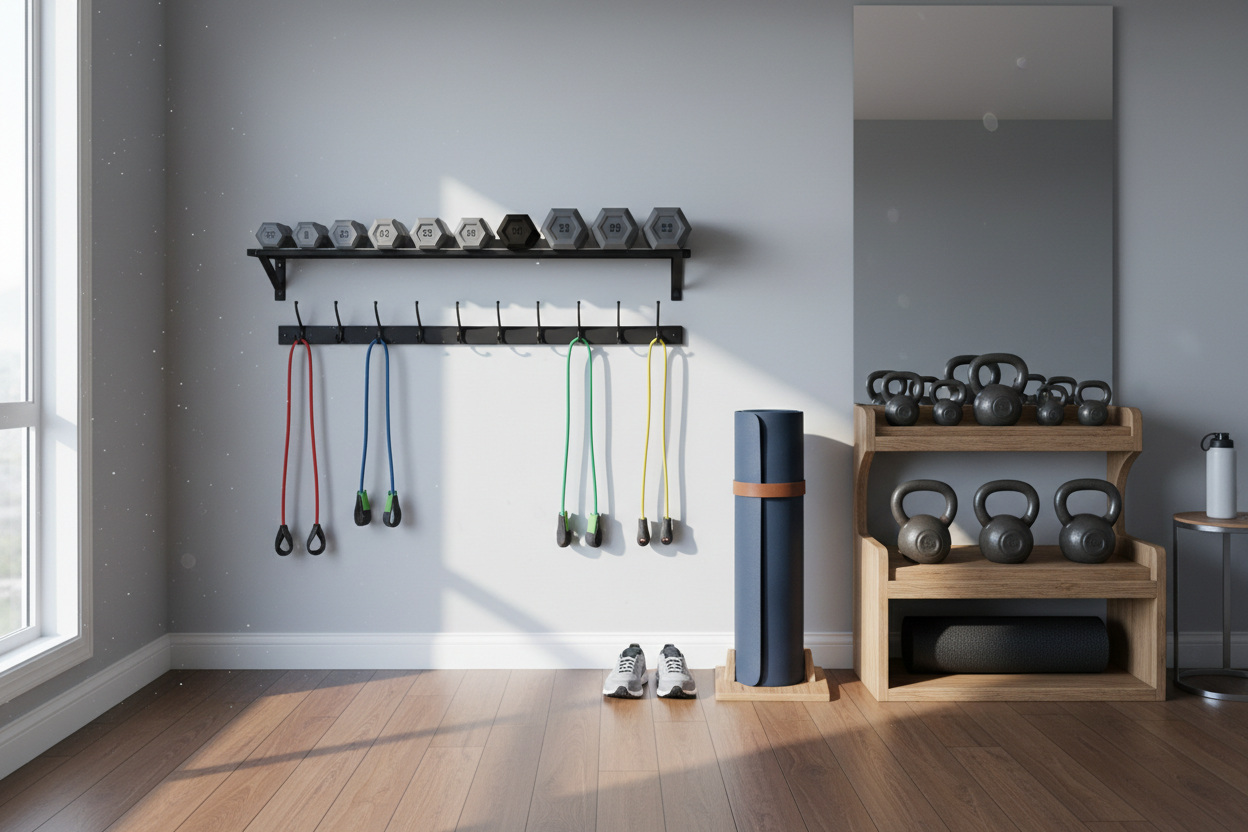
Taming the Chaos: A Realist's Guide to Home Gym Organization and Equipment
You can only dodge a 25-pound hex dumbbell on your living room floor so many times before you realize you have a problem. Building a home gym usually starts with enthusiasm and a single pair of weights, but it quickly evolves into a sprawling mess of iron and rubber that threatens your toes every time you walk past. The solution isn't just about aesthetics; it is about safety and efficiency. If you are spending twenty minutes looking for the matching 15-pounder, you aren't working out. You are just rummaging.
Most people assume they need to order from high-end specialty fitness retailers to get organized, paying shipping fees that cost as much as the equipment itself. However, big-box retailers have quietly stepped up their game. Finding a reliable storage solution or a starter rig at a local store is easier than it used to be, provided you know what you are looking for and what realistic limitations exist.
The Hunt for the Right Storage
Organization is the backbone of a functional training space. When you start looking for a weight rack target carries, you are generally going to find equipment geared toward the recreational lifter rather than the competitive powerlifter. This distinction matters. The racks found in these aisles are typically designed for standard home use—think dumbbells up to 50 pounds and standard plates rather than calibrated kilogram disks.
I learned this the hard way a few years ago. I had accumulated a mismatched collection of neoprene and cast-iron weights that lived in a pile in the corner of my garage. I decided to buy a generic rack online, and it collapsed under the weight of my gear within a week. That was when I drove to the store to see what I could physically inspect before buying. I needed something that wouldn't wobble, and seeing the construction in person made a massive difference.
Understanding Dumbbell Storage Options
If you are primarily using hand weights for HIIT or circuit training, your storage needs are specific. A target dumbbell rack usually comes in two main configurations: the A-frame or the horizontal tier. The A-frame is excellent for tight spaces, like a corner of a bedroom or a small apartment living room. It holds weights vertically, minimizing the footprint. However, these can be tricky if you have dumbbells with thick handles or odd shapes.
The horizontal tiered racks are better if you have a larger collection or heavier weights. When evaluating a dumbbell rack target has on the shelf, check the weight capacity rating immediately. Many of the brands carried in general retail stores, such as All in Motion or Ignite by SPRI, are designed for neoprene or lighter hex dumbbells. If you try to load a light-duty rack with a full set of 50-pound iron weights, you are asking for a bent frame. Always calculate the total weight of your set before purchasing the rack.
Stepping Up to Heavy Lifting
Moving beyond simple storage, many home gym owners eventually want to get under a barbell. This is where the search for a target squat rack gets interesting. Unlike specialized strength shops, you won't typically find 3x3 inch steel uprights with laser-cut holes in a general retail aisle. Instead, you will likely find two-piece squat stands or lighter-duty power towers, often available through their online inventory rather than on the sales floor.
These racks serve a very specific demographic. They are perfect for the general fitness enthusiast who squats or presses moderate weights. If your max squat is under 300 pounds, these racks are generally sufficient and cost significantly less than commercial-grade options. They are also lighter, making them easier to move if your home gym doubles as a guest room or garage parking spot.
However, stability is the trade-off. A lighter rack might shift when you re-rack a heavy barbell. If you decide to go this route, I highly recommend weighing down the base of the rack with sandbags or plate weights to ensure it stays planted during your set. It transforms a budget piece of equipment into something much more secure.
Integrating Equipment into Your Routine
Once you have the hardware, the layout of your gym dictates your workout flow. Don't just shove the rack against the wall and forget it. You need clearance. If you are using a weight rack target sold you, ensure you have at least two feet of clearance on either side to load and unload plates or grab dumbbells without banging your elbows against the wall.
My current setup involves an A-frame rack tucked near the door for my lighter accessory weights and a heavier stand for the big lifts. This separation keeps the traffic flow open. I don't have to step over a barbell to grab a 10-pound weight for lateral raises. The mental clarity that comes from a clean floor cannot be overstated. When the environment is orderly, the workout feels more focused.
Quality vs. Convenience
There is a valid debate about whether buying fitness gear from a general retailer is wise. The answer depends entirely on your goals. If you are training for a Strongman competition, you need gear rated for thousands of pounds. But for 90% of the population looking to stay fit, build some muscle, and burn calories, the gear available at accessible retailers is perfectly adequate.
The advantage of picking up a target dumbbell rack locally is the return policy and the immediacy. You can set it up this afternoon. There is no waiting for freight shipping or dealing with damaged boxes left in the rain. Just be realistic about the assembly. These items almost always come flat-packed. Do yourself a favor and use a real socket set instead of the flimsy little wrench included in the blister pack. Tightening the bolts properly is the single biggest factor in whether your rack feels solid or shaky.
Ultimately, the best gym equipment is the equipment you actually use. A $2,000 rack that takes up too much space and makes you hate your room is a waste of money. A modest, affordable rack that cleans up your floor and makes your weights accessible is an investment in your health. Start with what you need, organize what you have, and upgrade only when your strength outgrows your gear.
Frequently Asked Questions
What is the typical weight capacity for retail store dumbbell racks?
Most standard racks found at general retailers are rated for between 200 and 400 pounds. Always check the manual, as A-frame racks often have lower limits per hook compared to the total capacity of horizontal tiered racks.
Can I use standard sized plates on a rack designed for Olympic plates?
Generally, no. Olympic plates have a 2-inch center hole, while standard plates have a 1-inch hole. If you buy a target squat rack or plate tree, verify the post diameter, as most modern racks are designed for 2-inch Olympic plates, meaning standard plates won't fit over the storage pegs.
Do I need to bolt my squat stand to the floor?
While commercial gyms bolt racks down, most home squat stands sold at big-box retailers are designed to be freestanding. However, for maximum safety, especially if you are lifting near the rack's weight capacity, weighing down the base or pushing it flush against a wall (if the design permits) adds necessary stability.


