Stronger Legs: The Blueprint for Building Athletic Power
Most people treat leg training as a necessary evil. They skip it, or they rush through a few sets of leg extensions and call it a day. But if you want a physique that functions as well as it looks, building stronger legs is not optional—it is the foundation of total body power.
Whether you are an athlete looking to improve your vertical or simply want to carry groceries without getting winded, the approach is the same. You need a strategy that moves beyond simple aesthetics and focuses on force production and structural integrity.
Key Takeaways
- Prioritize Compound Movements: Isolation exercises (like curls) are secondary; squats and hinges are the primary drivers of growth.
- Unilateral Training is Mandatory: You must train one leg at a time to fix imbalances and improve stability.
- Progressive Overload: You cannot get stronger lifting the same weight every week. Track your numbers.
- Tempo Matters: Controlling the eccentric (lowering) phase is where the real muscle fiber damage and subsequent repair happen.
The Anatomy of Powerful Legs
To understand how to build stronger legs, you have to look beyond the mirror. What do strong legs look like? They aren't just puffy and large; they are dense. They possess a balance between the quadriceps (front), hamstrings (back), glutes (power center), and calves.
True lower body strength creates a look of density and alignment. When you see an athlete, their legs look like coiled springs. That is the goal. We are training for "go," not just "show."
Compound Lifts: The Hierarchy of Mass
If you want to know how to get strong legs fast, the answer lies in recruitment. You need exercises that recruit the maximum amount of motor units in your central nervous system.
The Squat Pattern
This is non-negotiable. Whether it is a barbell back squat, a goblet squat, or a front squat, you must bend the knees and hips simultaneously under load. This hits the quads and glutes primarily.
The Hinge Pattern
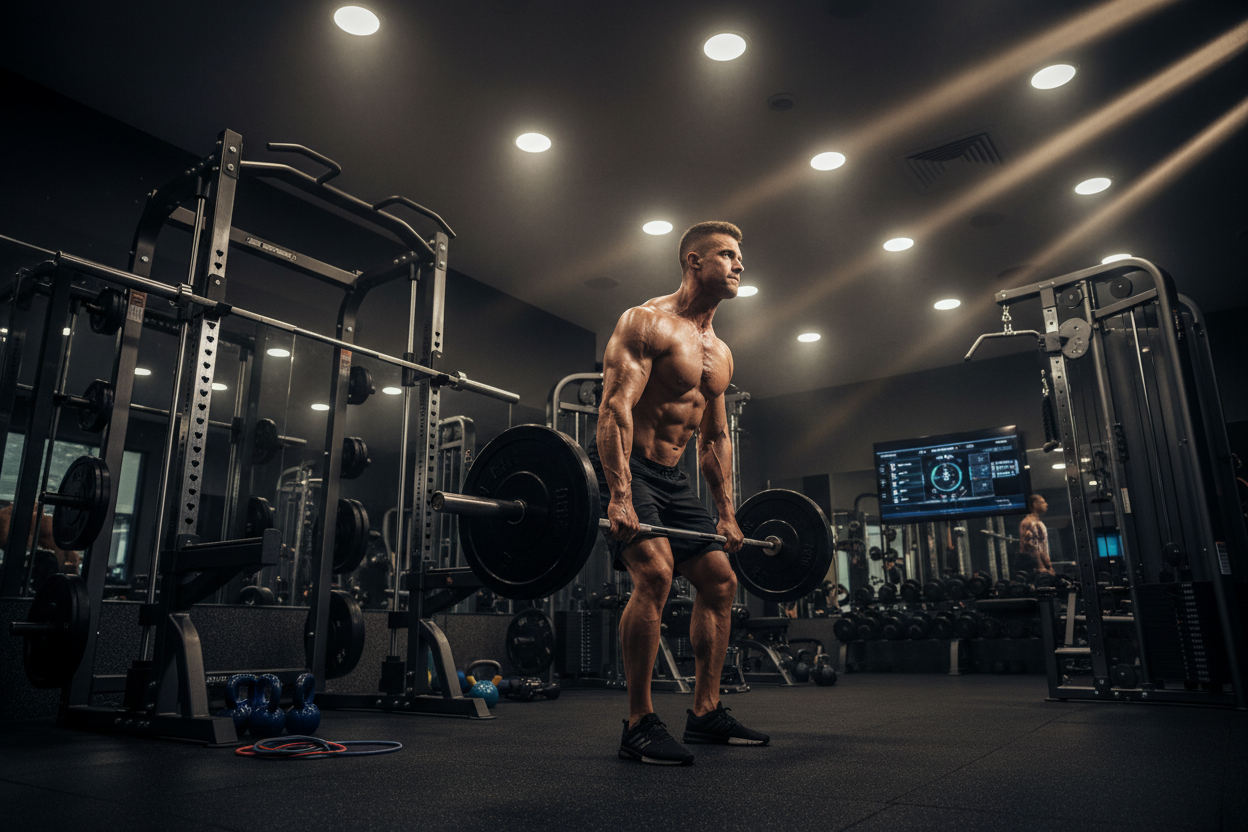
Building stronger legs requires a massive posterior chain. Deadlifts (Romanian or conventional) target the hamstrings and glutes. Neglecting this leads to knee injuries and a physique that looks incomplete.
The Secret Weapon: Unilateral Training
Here is how to have stronger legs that are actually functional: train them separately. Most people have a dominant side. If you only do bilateral squats, your strong leg will take over, and your weak leg will lag further behind.
Incorporate Bulgarian Split Squats or heavy lunges. These movements force stabilizers to fire and expose weaknesses immediately. If you want how to get athletic legs, this is the shortcut. It improves balance, proprioception, and core stability simultaneously.
Velocity and Plyometrics
Strength is the ability to exert force; power is the ability to exert force quickly. To get powerful legs, you need to move fast.
Once you have built a base of strength, add jumps (box jumps or broad jumps) to your routine. This trains the nervous system to fire rapidly, giving you that athletic "snap" that bodybuilders often lack.
My Training Log: Real Talk
I want to be honest about what it takes to get stronger legs. It isn't glamorous. I remember a specific training block last winter where I focused solely on the Bulgarian Split Squat.
It wasn't the burn that I remember most; it was the specific, annoying cramp in the arch of my stabilizing foot. It's that moment when you are three reps deep, your glute is screaming, and you feel your balance waver just slightly to the left. You have to mentally fight the urge to just drop the dumbbell. There is also a distinct "waddle" you do walking out of the gym—where lifting your foot to get into the car feels like a max-effort lift. That specific level of discomfort, where you question why you are doing this, is usually the indicator that the session actually worked.
Conclusion
Building the lower body takes grit. It requires you to embrace the heavy, uncomfortable movements that most people avoid. But the payoff is a body that is resilient, athletic, and capable. Stop looking for shortcuts and start loving the heavy iron.
Frequently Asked Questions
How often should I train legs for maximum strength?
For most natural lifters, training legs twice a week is the sweet spot. This allows for high frequency to stimulate growth while providing roughly 48 to 72 hours for recovery.
Can I get strong legs without weights?
You can build a base with bodyweight, but to get truly stronger legs, you eventually need external resistance. However, pistol squats and hill sprints are excellent ways to build strength if you lack equipment.
Why do my knees hurt when I squat?
Knee pain often stems from poor ankle mobility or weak glutes, forcing the knees to take the load. Focus on warming up your hips and ankles properly before your heavy sets.