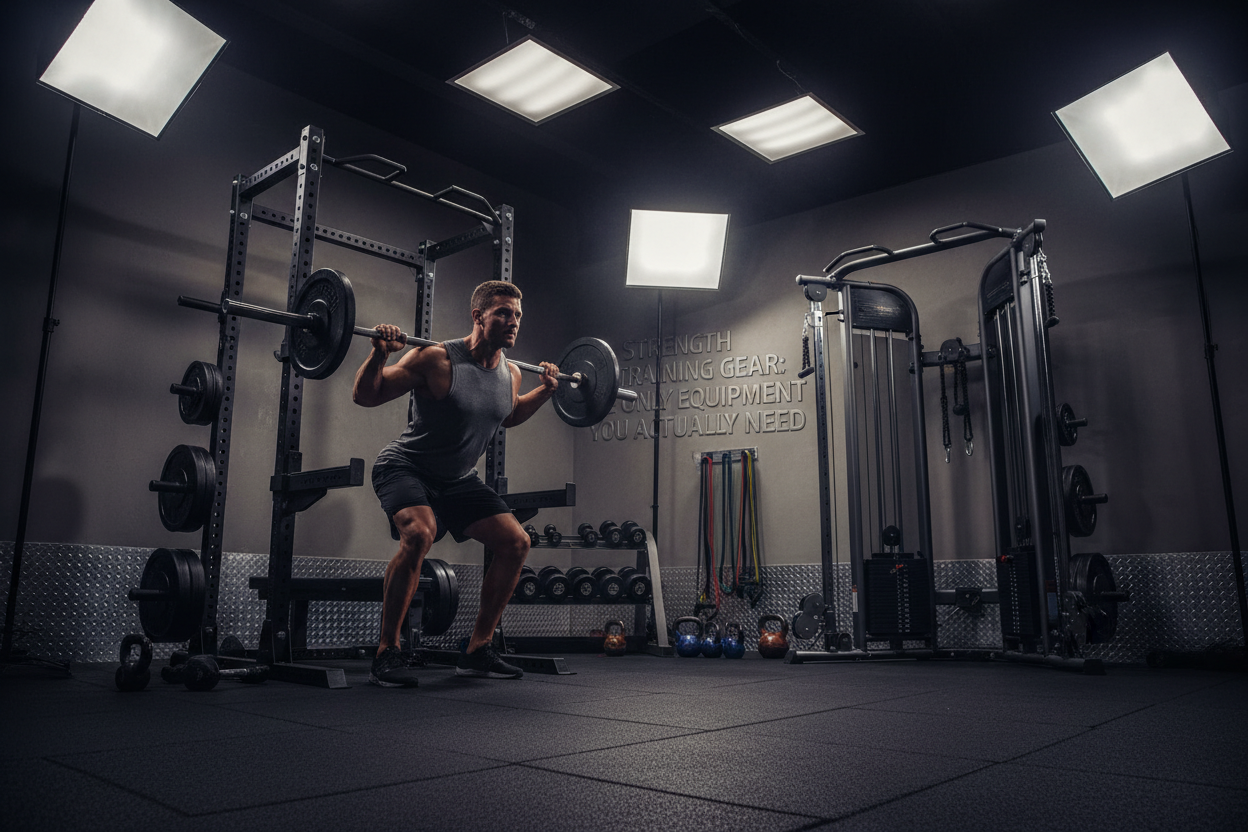
Strength Training Gear: The Only Equipment You Actually Need
Walking onto a gym floor can feel like entering a cockpit without flight training. You are surrounded by pulleys, levers, and iron, all promising to transform your physique. But here is the truth: you do not need every piece of strength training gear to build a powerful body.
In fact, relying on the wrong tools can stall your progress. Whether you are building a home garage setup or trying to navigate a commercial facility, understanding the mechanics behind the metal is crucial for long-term growth.
Key Takeaways
If you are looking for the fast track to understanding what equipment matters, here is the core breakdown:
- Free Weights (Barbells/Dumbbells): Essential for compound movements that recruit stabilizer muscles and build functional power.
- Cable Systems: Vital for constant tension throughout the range of motion, unlike gravity-dependent weights.
- Select Machines: Best for hypertrophy and isolating specific muscles safely without systemic fatigue.
- Support Gear: Belts and straps should be used to enhance performance, not mask weak mechanics.
Free Weights vs. Strength Training Machines
The debate between iron and mechanics is as old as bodybuilding itself. To make an informed choice, you have to look at the biomechanics.
The Case for Free Weights
Barbells and dumbbells are the kings of strength workout equipment. When you squat with a barbell, you aren't just pushing weight up; your body is fighting to keep that weight centered over your midfoot.
This recruits stabilizer muscles that a fixed path cannot touch. If your goal is athletic transfer and raw power, free weights are non-negotiable.
When to Use a Strength Training Machine
Don't demonize the machines. A well-designed strength training machine removes the stability requirement. This sounds like a negative, but it is actually a benefit for hypertrophy (muscle growth).
Because you don't have to balance the load, you can push a muscle closer to true failure safely. If your lower back is fried but your quads need more work, a leg press is superior to another set of squats.
The Essential Home Setup
Building a home gym requires maximizing utility per square foot. You don't need a massive footprint to get strong.
The Foundation: Rack and Barbell
Your centerpiece should be a power rack or a weight lift station. This allows you to bench and squat safely without a spotter. Look for a rack with heavy-gauge steel (11-gauge is standard) and reliable safety pins.
Adjustable Dumbbells
Instead of buying a wall of iron that costs thousands, invest in high-quality adjustable dumbbells. They serve as compact equipment for strength training that allows for unilateral work, fixing muscle imbalances that barbells might hide.
Navigating Commercial Gym Equipment
Big box gyms are filled with strength fitness machines that look impressive but offer little value. Knowing what to skip saves you time.
The "Must-Use" Machines
Focus on training machines that offer a fixed path of motion for hard-to-target areas. The Lat Pulldown, Leg Curl, and Hack Squat are invaluable. They allow you to load heavy weights onto specific tissues without the risk of technical breakdown associated with fatigue.
The "Maybe" Machines
Be wary of the complex strength exercise machine that tries to do too much. If a machine forces your joints into unnatural angles, skip it. Your anatomy is unique; if the machine doesn't adjust to your limb length, it will cause injury rather than growth.
My Training Log: Real Talk
Let's step away from the manual for a second. I want to tell you about the time I cheaped out on a barbell for my garage gym. I bought a generic "standard" bar online to save fifty bucks.
Big mistake. The first time I tried to deadlift heavy, the knurling (the rough grip pattern) was so passive it felt like holding a wet pipe. I had to use so much chalk just to hold on that I made a mess of the floor. Even worse was the lack of "whip" or flex in the bar. When I squatted, the bar felt like a dead, rigid rod digging into my traps, rather than flexing slightly to absorb the momentum.
And don't get me started on cheap benches. I once used a budget bench that wobbled every time I pressed the dumbbells up. Instead of focusing on my chest, I was terrified the bolt was going to shear off. Quality gear isn't about vanity; it's about the confidence to push hard without the equipment failing you.
Conclusion
The best gear is the stuff that gets used. Whether you are using high-end power workout equipment or a rusty barbell in a basement, the principle remains the same: progressive overload.
Don't get lost in the specs. prioritize equipment that fits your body mechanics, allows for safe failure, and stands the test of time. Start with the basics, master them, and add the specialized tools later.
Frequently Asked Questions
What is the single best piece of gym equipment strength training requires?
If you can only choose one, the barbell is the undisputed king. It allows for infinite progression on squats, deadlifts, presses, and rows. No other single item offers the same versatility for total body loading.
Are strength building machines safer than free weights?
Generally, yes, but context matters. A muscle training machine locks you into a fixed path, reducing the risk of dropping weights or losing balance. However, if the machine is set up incorrectly for your body size, it can cause repetitive strain injuries over time.
Can I build muscle with just a multi-gym station?
Yes. A high-quality strength machine or multi-station can build significant muscle if you apply progressive overload. The key is ensuring the weight stack is heavy enough to challenge you in the 8-12 rep range as you get stronger.