Stop Wasting Time: The Real Way to Build Stronger Legs and Glutes
You have probably seen the endless stream of social media influencers doing kickbacks with a light resistance band, promising a complete lower body transformation. The reality of building a powerful physique is a bit grittier and involves a lot more sweat. If you want to change the shape of your lower body, you need to prioritize compound movements that force your muscles to adapt to stress. Focusing on the synergy between your glutes legs development and overall strength is the only path to sustainable results.
The Mistake I Made Early On
I spent my first year in the weight room obsessed with the leg press and leg extension machine. I thought that if my quads were burning, I was doing enough. I completely neglected the posterior chain. The result? I had decent quad definition, but my posture was suffering, my lower back hurt constantly, and I had zero explosive power. It wasn't until a mentor pulled me off the machines and forced me under a barbell that things changed. I learned the hard way that isolation exercises are the icing on the cake, but heavy compound lifts are the batter. Once I shifted my focus to movements that integrated my hips and hamstrings, my physique balanced out, and my strength numbers skyrocketed.
Understanding the Lower Body Connection
Many people treat leg day as a checklist of individual muscles: quads, then hamstrings, then calves. This compartmentalization is a mistake. Your lower body functions as a unit. When you perform a squat, your quads extend the knee, but your glutes and adductors are fighting to extend the hip and stabilize the pelvis. Ignoring this connection leads to imbalances.
To build a truly aesthetic and functional physique, you must train movements, not just muscles. The most effective training splits acknowledge that glutes legs training are inseparable. You cannot have a massive squat without strong glutes, and you cannot have powerful glutes without stable legs to support them.
The Essential Compound Movements
If we look at the most effective leg glutes exercises, we see a pattern of heavy, multi-joint movements. These exercises recruit the maximum amount of muscle fibers and trigger the greatest hormonal response for growth.
The Barbell Squat
The squat is non-negotiable. It is the primary driver of lower body growth. Whether you choose high-bar, low-bar, or front squats, the mechanism is the same: deep knee flexion combined with hip extension. For glute emphasis, ensure you are hitting proper depth—breaking parallel—where the glute max is most stretched and under the highest tension.
The Romanian Deadlift (RDL)
While the squat creates quads, the RDL builds the posterior chain. This is a hip-hinge movement. Imagine trying to close a car door behind you with your butt while holding a heavy weight. This movement places a massive stretch on the hamstrings and glutes. Unlike a conventional deadlift, you don't reset the weight on the floor between reps, keeping constant tension on the muscle.
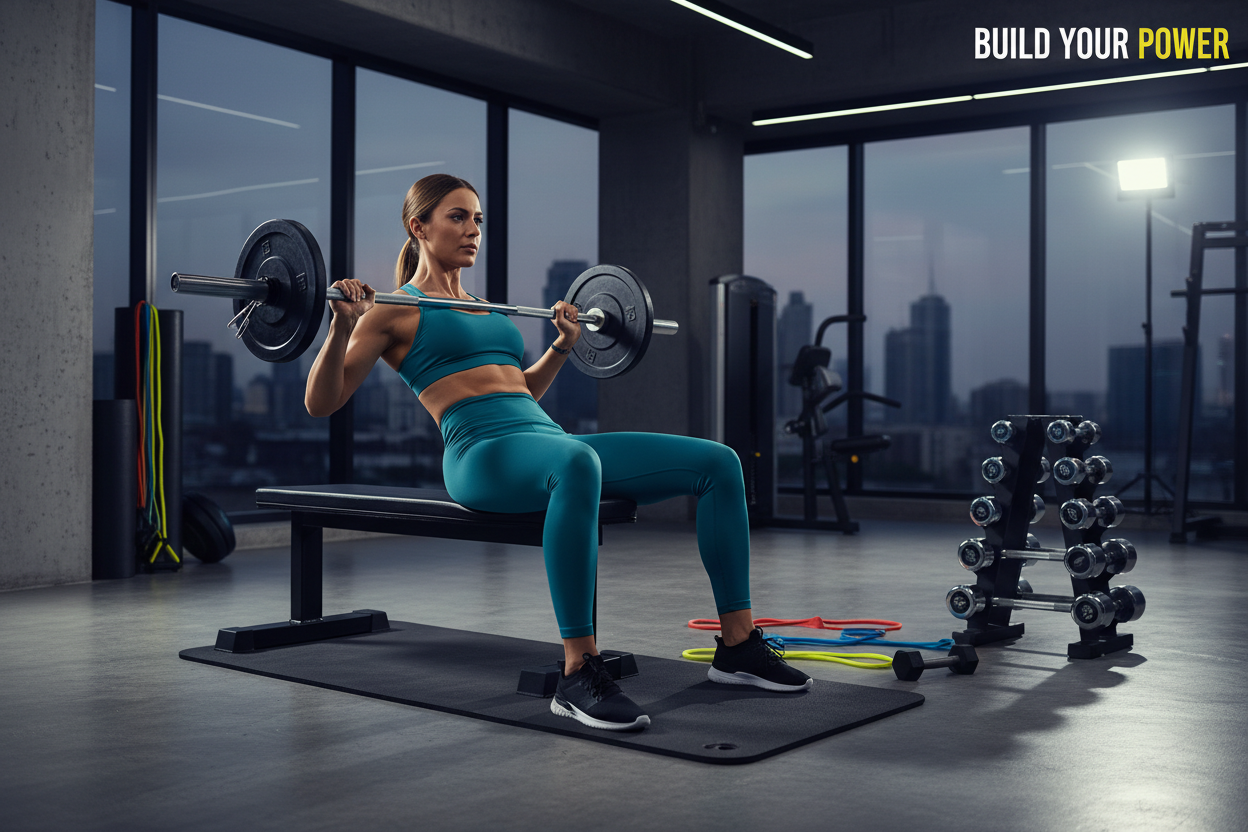
The Hip Thrust
For years, the squat was considered the only king of booty building, but the hip thrust has earned its place on the throne. Because your knees remain bent, the hamstrings are largely taken out of the equation (active insufficiency), forcing the glutes to do almost all the heavy lifting. It allows for peak contraction at the top of the movement that squats simply cannot provide.
Bulgarian Split Squats
This is the exercise everyone loves to hate. Unilateral training (training one side at a time) is crucial for fixing imbalances. If your right leg is stronger than your left, a barbell squat will mask that imbalance until you get injured. Split squats expose weaknesses immediately. They also require immense stabilization from the glute medius, the muscle responsible for hip width and stability.
Structuring Your Routine for Hypertrophy
Randomly selecting exercises is a recipe for stagnation. Structuring leg workouts glutes respond to requires a balance of volume, intensity, and recovery. A good rule of thumb is to start your workout with your heaviest compound lift when your central nervous system is fresh.
Begin with squats or deadlifts in the 5-8 rep range. This builds raw strength and mechanical tension. Follow this with a secondary compound movement, like walking lunges or leg press, in the 8-12 rep range for hypertrophy. Finally, finish with isolation movements like leg curls or glute bridges in the 12-15 rep range to induce metabolic stress (the "pump").
Progressive overload is the engine of growth. You cannot do the same workout with the same weight for six months and expect your body to change. You must add weight to the bar, do more reps, or decrease rest times. Track your lifts. If you squatted 135lbs for 8 reps last week, aim for 9 reps or 140lbs this week.
Nutrition and Recovery Factors
You break muscle down in the gym; you build it in bed and in the kitchen. No amount of perfect leg glutes exercises will compensate for a diet lacking protein. To support muscle repair, aim for roughly 0.7 to 1 gram of protein per pound of body weight. Carbohydrates are also your friend here; they spare protein and fuel the intense glycogen demands of a heavy leg day.
Sleep is equally critical. Deep sleep releases growth hormone. If you are training legs hard twice a week but only sleeping five hours a night, you are driving a car with the parking brake on. Listen to your body. If your soreness impairs your movement for more than two days, look at your recovery protocols before adding more volume.
Common Pitfalls to Avoid
Ego lifting is the quickest way to snap a tendon or herniate a disc. Half-reps on the leg press might look impressive to the uninitiated, but they do very little for muscle growth compared to full range of motion with lighter weight. Control the eccentric (lowering) portion of every lift. That is where the micro-tears in the muscle occur, which eventually heal bigger and stronger.
Another issue is "junk volume." Doing 30 sets for legs in one session is usually counterproductive. After a certain point, the quality of your reps degrades, and you are just accumulating fatigue without stimulating growth. Focus on quality over quantity. Four high-intensity exercises executed perfectly are worth more than eight exercises done with sloppy form.
Frequently Asked Questions
How often should I train my legs and glutes?
For most natural lifters, training legs twice a week is optimal. This frequency allows you to hit the muscles again just as the protein synthesis from the previous session is tapering off, maximizing growth potential without overtraining.
Can I grow my glutes without growing my thighs?
It is difficult to completely isolate the glutes without engaging the quads and hamstrings, as they work together in almost all functional movements. However, you can bias your training by prioritizing hip-dominant movements like hip thrusts and RDLs over knee-dominant movements like squats and lunges.
Why do I feel squats in my lower back instead of my legs?
This usually indicates a form breakdown or a weak core. If you lean too far forward or let your lower back round (butt wink), the load shifts from your legs to your lumbar spine. Work on your hip mobility and brace your core tightly before every rep to fix this.