Stop Wasting Time on Leg Day: How to Actually Build Your Quads and Glutes
You want definition, strength, and shape in your lower body, but endless repetitions of unweighted squats aren't getting you there. The secret to a defined lower body isn't doing more exercise; it's doing the right exercise with enough intensity to force your muscles to adapt. To truly sculpt your legs, you must combine compound movements that target the quadriceps with hip-dominant exercises that wake up the glutes, all while applying progressive overload. Whether you have a full gym membership or a living room floor, the biomechanics remain the same: stress the muscle, feed it, and let it recover.
The Anatomy of a Balanced Lower Body Session
Many people treat leg training as a monolithic activity, but your legs are a complex system of opposing muscle groups. If you are quad-dominant—meaning your thighs take over during most movements—you might find your glutes lagging behind. Conversely, if you have weak quads, your knee stability suffers. A balanced routine addresses both.
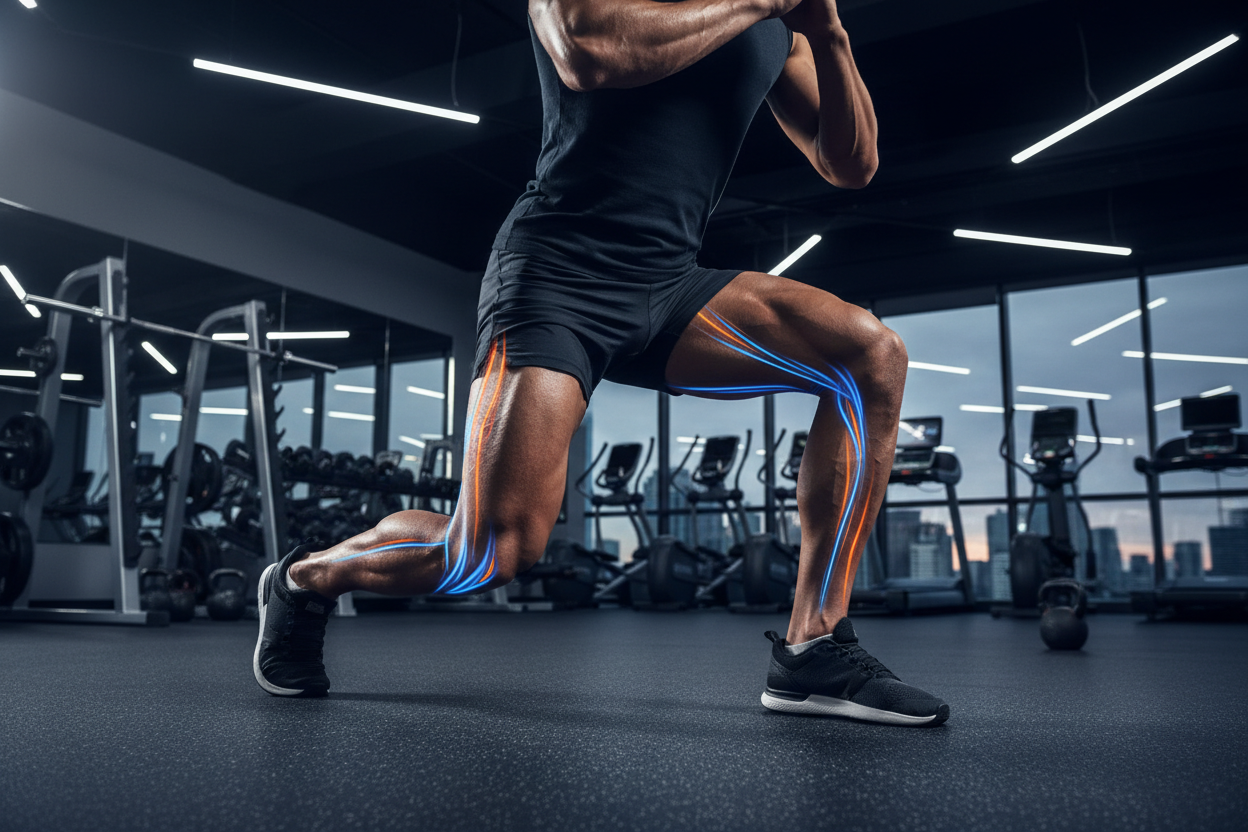
For an effective women's quad and glute workout, you need to stop thinking about "toning" and start thinking about building. Muscle tissue is what provides the shape and firmness you are looking for. The quadriceps (front of the thigh) are best stimulated by knee flexion exercises like squats and lunges. The glutes (buttocks) respond best to hip extension movements like thrusts and deadlifts. The magic happens when you pair these together in a single session.
Mastering the Glute and Quad Workout at Home
There is a misconception that you cannot build significant muscle without a squat rack. While heavy barbells are fantastic tools, your muscles do not know the difference between iron plates and gravity manipulation. You can execute a high-intensity glute and quad workout at home by manipulating tempo and leverage rather than just adding external weight.
If you are training in your living room, the single best adjustment you can make is switching to unilateral training. Working one leg at a time instantly doubles the relative load on that limb. A standard bodyweight squat might feel easy for 20 reps, but a Bulgarian Split Squat with just your body weight will have your quads trembling by rep 10. Furthermore, home workouts require a focus on the "eccentric" phase—the lowering part of the movement. Slowing your descent to a count of three or four seconds increases time under tension, triggering muscle growth signals even without heavy dumbbells.
The Essential Compound Movements
Regardless of your equipment, a few non-negotiable exercises should form the core of your routine. These offer the highest return on investment for your time.
1. The Goblet Squat
This is the king of simultaneous quad and glute engagement. Holding a weight (a dumbbell, kettlebell, or even a heavy water jug) at chest height forces your core to engage and keeps your torso upright. This upright posture shifts more emphasis onto the quads while allowing you to squat deeper, which stretches the glutes under load. Deep squats are essential for full muscle recruitment.
2. Bulgarian Split Squats
This is the movement everyone loves to hate because it works. By elevating your rear foot on a bench or couch, you isolate the front leg. If you keep your torso upright, you target the quads. If you lean your torso forward slightly (hinging at the hips), you shift the tension to the glute of the working leg. It fixes muscle imbalances and builds incredible stability.
3. Romanian Deadlifts (RDLs)
While often considered a hamstring exercise, the RDL is a powerhouse for the glutes. The focus here is the hip hinge—pushing your hips back as far as possible while keeping a slight bend in the knee. This stretches the glutes and hamstrings. The contraction at the top comes from driving the hips forward, not arching the lower back.
My Transition from Cardio to Lifting
I spent years running on the treadmill, convinced that pounding the pavement was the only way to get the legs I wanted. I was chasing a look that cardio simply couldn't provide. I remember being terrified of picking up anything heavier than 10 pounds because the magazines at the grocery store checkout warned me about getting "bulky." It wasn't until I stalled completely—feeling weak and seeing zero changes in the mirror—that I finally listened to a strength coach. I swapped three days of running for three days of heavy compound lifting. The scale went up slightly, but my waist got smaller, and for the first time, my jeans fit the way I wanted them to. The fear of bulk is the biggest barrier to progress; unless you are taking specific performance-enhancing supplements, lifting heavy will simply make you look athletic, not massive.
Optimizing for Women's Physiology
When designing a women's quad and glute workout, we have to consider the Q-angle (the angle of the hips to the knees). Women generally have wider hips, which can increase the risk of knee valgus—where the knees collapse inward during a squat. This places stress on the ACL.
To counter this, glute medius activation is vital. This is the side of your butt that stabilizes the hip. Incorporating banded lateral walks or clamshells as a warm-up isn't just busy work; it fires up the stabilizers that keep your knees safe during heavy squats. If your knees cave in, your glutes turn off. Keep the knees tracking over the toes to ensure the load goes to the muscles, not the joints.
Progressive Overload: The Only Way to Grow
You cannot do the same workout for six months and expect different results. Progressive overload is the non-negotiable law of fitness. This doesn't always mean adding weight. If you are doing a glute and quad workout at home with limited equipment, you can progress by:
- Adding reps (doing 12 reps instead of 10).
- Reducing rest time between sets (30 seconds instead of 60).
- Improving form (going deeper in the squat).
- Adding pauses (holding the bottom of a lunge for 2 seconds).
Track your numbers. If you did 3 sets of 10 split squats last week, aim for 3 sets of 11 this week. That small increase is the signal your body needs to build new tissue.
Nutrition and Recovery
You break muscle down in the gym; you build it in the kitchen. No amount of squatting will change your physique if you aren't eating enough protein to support repair. Aim for a protein source at every meal—eggs, chicken, tofu, or greek yogurt. Carbohydrates are also necessary as they are the primary fuel source for high-intensity anaerobic training like leg day. Don't fear food; it is the construction material for the body you are building.
Frequently Asked Questions
Can I build my glutes without growing my thighs?
It is difficult to completely isolate the glutes without involving the quads and hamstrings, as they work together in most functional movements. However, you can emphasize the glutes by choosing hip-dominant exercises like hip thrusts, glute bridges, and 45-degree back extensions, which recruit less quad muscle than squats.
How many times a week should I train legs?
For most people, training legs twice a week is the sweet spot. This frequency allows for sufficient volume to stimulate growth while providing enough rest days (48 to 72 hours) for the muscles to repair and recover. Training them once a week is often not enough stimulus, while every day leads to burnout.
Do I need to be sore for the workout to count?
No, soreness (DOMS) is not an accurate indicator of a good workout; it is often just a sign of a novel stimulus or dehydration. You can have a highly effective workout that stimulates muscle growth without feeling crippled the next day. Focus on performance progression rather than pain.