Stop Wasting Sets: The Real Blueprint for Building a Fuller Chest
Building a thick, defined chest is rarely a result of simply pushing the heaviest weight possible from point A to point B. If your goal is hypertrophy, the most effective approach involves mastering tension, understanding fiber orientation, and selecting movements that challenge the muscle through its full range of motion. To build a significant chest, you must move beyond ego-lifting and focus on targeting both the clavicular (upper) and sternocostal (lower) heads through a strategic mix of compound presses and isolation movements that emphasize a deep stretch and a hard contraction.
Many lifters spend years grinding out bench press reps without seeing significant changes in their physique. The disconnect usually happens because the load is being shifted to the front deltoids and triceps rather than the intended target. Effective fitness for chest development requires a shift in mindset: you aren't just lifting a weight; you are using a weight to mechanically strain a specific tissue. This nuance is the difference between a powerlifter who moves massive weight with efficient leverage and a bodybuilder who builds a balanced, aesthetic physique.
My Struggle with the "Flat Chest" Plateau
For the first few years of my lifting journey, Monday was strictly for the flat barbell bench press. I was obsessed with the numbers on the bar. I managed to get my bench up to respectable numbers, yet my chest remained frustratingly flat, particularly the upper portion. My shoulders, however, were growing rapidly, and my rotator cuffs were constantly nagging me. It wasn't until I checked my ego and dropped the weight significantly that things changed. I swapped the flat barbell for low-incline dumbbells and focused entirely on the stretch at the bottom. Instead of bouncing the weight, I paused. The burn was completely different. Within six months of prioritizing the sensation over the weight, my shirt fit differently. That experience taught me that training for chest muscles is about internal stimulus, not external validation.
Understanding the Chest Workout Muscle Groups
Before diving into specific routines, it helps to visualize what you are trying to build. The pectoralis major is a fan-shaped muscle with two primary heads. The clavicular head (upper chest) attaches to the collarbone, while the sternocostal head (lower/mid chest) attaches to the sternum. While they always work together, you can shift the emphasis based on the angle of your arm.
There is also the pectoralis minor, a smaller muscle underneath the major, which helps with shoulder stability. When you design chest muscles and workouts, you must also account for the supporting cast: the anterior deltoids and the triceps brachii. A common error is allowing these stronger supporting muscles to take over the movement. If your triceps burn out before your chest does during a press, your grip might be too narrow, or your elbows might be flaring too much. Proper alignment ensures the tension stays where it belongs.
The Compound Foundation: Pressing for Mass
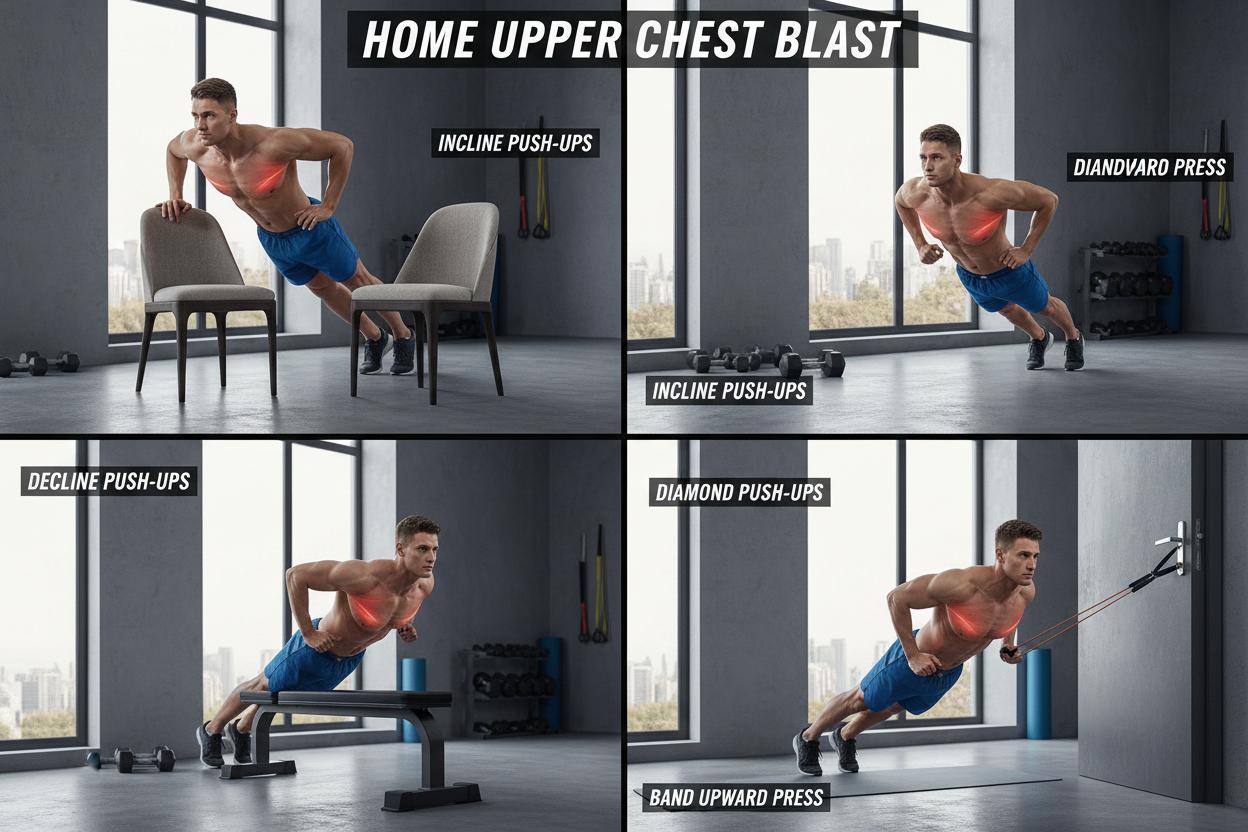
Compound movements are the bedrock of chest development because they allow for the greatest mechanical tension. However, the angle is everything. The incline dumbbell press is arguably the most valuable tool in your arsenal. The upper chest is often the most underdeveloped area, and filling it in creates that "armored" look that links the chest to the shoulders. Using dumbbells allows for a freer range of motion than a barbell, letting you tuck your elbows slightly to protect the shoulders while getting a deeper stretch at the bottom.
The flat bench press still has its place, but consider using a slight decline or a machine press if you struggle with shoulder pain. Machine presses offer stability, allowing you to push near failure safely without a spotter. When executing these moves, retract your scapula (pinch your shoulder blades together) against the bench. This creates a stable base and protrudes the chest, ensuring the pecs do the work rather than the shoulders.
Dips are another powerhouse often overlooked. When performed with a slight forward lean, dips effectively target the lower portion of the pecs. They provide a tremendous stretch that is hard to replicate with weights alone. If bodyweight becomes too easy, adding a dip belt can drive significant strength and size gains.
Isolation and the Art of the Squeeze
Heavy pressing builds the mass, but isolation exercises carve the detail. This is where you focus on adduction—bringing the arm across the body. When selecting chest muscles and exercises for isolation, cables are generally superior to dumbbells. A dumbbell fly has zero tension at the top of the movement because gravity pulls straight down through the joint. Cables, however, provide constant tension throughout the entire arc.
The cable crossover or fly allows you to manipulate the angle of resistance. Setting the pulleys high targets the lower pecs, while setting them low emphasizes the upper chest. The cue here is to imagine you are hugging a wide tree trunk. Keep a slight bend in the elbows to protect the joint, but drive the movement by bringing your inner elbows together, not just your hands. This mental visualization helps work chest muscles fully into the shortened position.
The Pec Deck machine is another excellent isolation tool. It removes the stability requirement entirely, allowing you to focus purely on the hard contraction at the peak of the movement. It is particularly useful as a finisher to pump blood into the muscle and fatigue the fibers without risking injury from dropping heavy weights.
Structuring Your Routine for Growth
A well-balanced routine shouldn't just be a list of exercises; it needs a logical flow. Start with your heavy compound movement while your energy systems are fresh. This is where you chase progressive overload—adding a little weight or an extra rep each session. Follow this with a secondary pressing movement at a different angle. For example, if you started with flat barbell press, follow up with incline dumbbells.
After your pressing is done, move to isolation work. This is where you increase the rep range (12-15 reps) and decrease rest times. The goal here is metabolic stress. You want to chase the pump and feel the muscle working. Doing flys before presses (pre-exhaustion) is a valid technique, but generally, saving them for the end allows you to maximize the load on your compounds.
Frequency matters as much as intensity. Hitting the chest once a week (the classic "International Chest Day") might not be enough for natural lifters. Training the chest twice a week allows for higher quality volume. You might do a heavy session early in the week and a hypertrophy-focused, higher-rep session later in the week. This frequency keeps muscle protein synthesis elevated more often.
Common Pitfalls to Avoid
The fastest way to halt progress is injury. The shoulder joint is the most mobile joint in the body, which also makes it the most unstable. Flaring the elbows out at 90 degrees during pressing places immense stress on the rotator cuff. Tucking the elbows slightly (roughly 45 to 60 degrees from the body) is safer and actually puts the pectoralis major in a stronger mechanical position.
Another issue is range of motion. Half-reps result in half-results. The bottom portion of a press, where the muscle is stretched under load, is the most hypertrophic part of the lift. If you cut the rep short, you are robbing yourself of growth. Lower the weight if you have to, but ensure you control the eccentric (lowering) phase and touch the chest or get the dumbbells deep enough to feel a stretch.
Frequently Asked Questions
Should I use a barbell or dumbbells for the best chest growth?
Dumbbells are generally better for hypertrophy because they allow for a greater range of motion and more natural wrist rotation, which reduces shoulder strain. However, barbells are easier to load progressively for maximum strength. A combination of both yields the best results.
How many times a week should I train my chest?
For most intermediate lifters, training chest twice a week is optimal. This allows you to split the volume (e.g., 10-12 sets per session) rather than doing 20+ sets in one day, which often leads to "junk volume" where performance degrades toward the end of the workout.
Why do I feel my shoulders taking over during bench press?
This usually happens due to poor scapular retraction or flaring the elbows too wide. Ensure you pinch your shoulder blades together against the bench to create a solid shelf, and keep your elbows tucked at a 45-degree angle to force the pecs to do the heavy lifting.