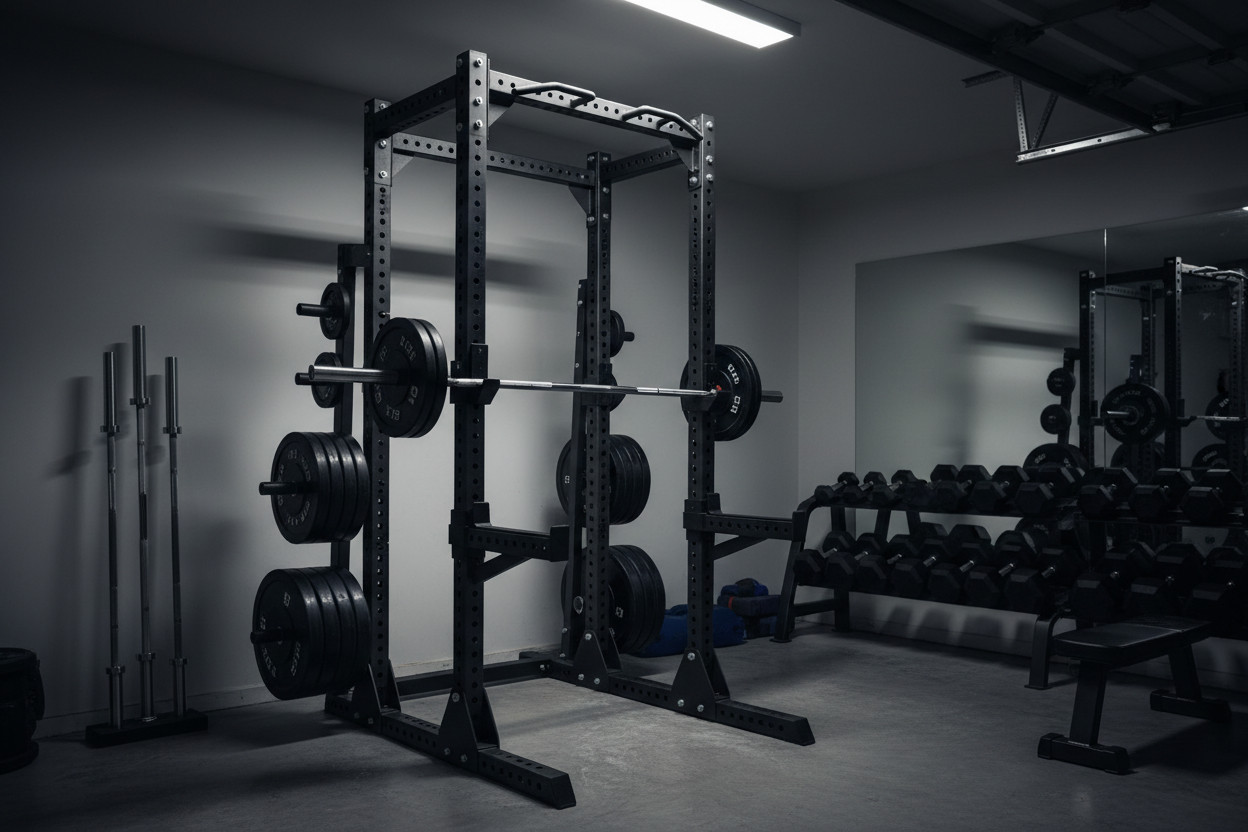
Stop Wasting Money on Flimsy Gear: Why a Solid Rack Is the Only Gym Upgrade That Matters
Building a home gym usually starts with a burst of enthusiasm and a credit card, but it often ends with a garage full of equipment that collects dust. People tend to buy the flashy cardio machines or adjustable dumbbells first, ignoring the one piece of equipment that actually dictates how safe and effective your training will be. If you are serious about strength training, the centerpiece of your setup needs to be a high-quality rack. This isn't just about having a place to rest the barbell; it is about creating an environment where you can push your physical limits without the genuine fear of getting crushed under a failed rep.
I remember the first time I tried to max out on a bench press alone in my basement. I was using a cheap, two-piece squat stand I had bought off a classified ad. As I lowered the weight, the separate stands started to shift slightly on the concrete floor. My focus snapped from the lift to the terrifying realization that if I missed the J-hooks on the way back up, the barbell was coming down on my throat. I racked the weight—barely—and realized immediately that my training was capped by my equipment, not my strength. That was the day I decided to invest in a proper setup. The peace of mind provided by a sturdy enclosure completely changed my lifting trajectory.
The Safety Factor: Why Enclosure Matters
The primary function of a rack is safety. When you are lifting alone, you don't have the luxury of a spotter grabbing the bar if your muscles give out. This is where the power rack squat cage shines. Unlike open stands or half-racks, a cage surrounds you with four vertical uprights. The magic lies in the horizontal safety pins or straps that run between these uprights.
You set these safeties just below your bottom range of motion. If you get stuck at the bottom of a heavy squat, you simply lower your hips another inch, and the rack takes the load. You crawl out, ego bruised, but body intact. This mechanical spotter allows you to train to failure safely. Without that assurance, you will naturally hold back, leaving potential gains on the table because your brain is subconsciously protecting you from injury.
Bringing the Commercial Feel Home
One of the biggest shocks for people transitioning from a public fitness center to a home setup is the difference in stability. You unrack a weight at the local gym, and the equipment feels like it is bolted to the earth. You try the same weight on a budget home setup, and everything rattles. To replicate that solid feeling, you need to look for a commercial gym rack standard, even for residential use.
The secret is in the steel gauge and the dimensions of the uprights. Most high-end racks use 11-gauge steel with 3x3 inch uprights. This creates a heavy, rigid frame that doesn't wobble when you slam a 400-pound squat back into the hooks. While lighter, cheaper racks exist (often using 14-gauge steel and 2x2 uprights), they lack the torsional rigidity needed for heavy lifting. If the rack sways when you do pull-ups or dips, it creates an unstable environment that distracts you from the lift. Investing in heavier steel means you buy it once, and your grandchildren will probably end up inheriting it.
The Full Cage vs. Half Rack Debate
Space is often the enemy of the home gym owner. This leads many to consider half racks or wall-mounted folding racks. While those have their place, a full cage power rack offers advantages that open designs simply cannot match. The most obvious is the contained footprint. While it looks larger visually, a full cage often takes up a similar amount of floor space as a half rack once you account for the necessary working area around the bar.
More importantly, the full cage allows for band work and more versatile attachment placement. You can attach resistance bands to the bottom or top of the cage to alter the strength curve of your lifts, a staple in powerlifting programs. Because you are working inside the four posts, the center of gravity remains within the footprint of the rack, making it significantly harder to tip over compared to a half rack where the weight hangs off the front.
Versatility and the Evolution of the Rack
Years ago, a rack was just a steel box with holes in it. Today, the engineering has evolved to turn a single footprint into a complete training ecosystem. A modern high-quality cage functions as a multi purpose weight rack that eliminates the need for several other machines. By utilizing the uprights, you can attach dip bars, landmine pivots for rotational work, leg rollers for split squats, and even cable pulley systems.
This modularity is why the initial investment is justified. You aren't just buying a squat stand; you are buying a skeleton that you can flesh out over years. One month you might add a lat pulldown attachment; the next year you might add jammer arms for explosive pressing. This approach saves massive amounts of floor space. Instead of having a separate dip station, pull-up tower, and cable crossover machine, everything lives on the central rack.
Hole Spacing and J-Hooks
When shopping for your setup, pay close attention to the hole spacing on the uprights. This is often overlooked but critical for bench pressing. You want to look for what is known as "Westside spacing" in the bench zone. This means the holes are spaced 1 inch apart rather than the standard 2 inches. That single inch can make the difference between a lift off that feels smooth and one that requires you to un-shrug your shoulders, losing your tightness before the rep even starts.
Similarly, the quality of the J-hooks (the hooks that hold the bar) matters. Cheap steel hooks will destroy the knurling on your barbell over time. Look for hooks lined with UHMW plastic. This protects your expensive bar from metal-on-metal contact, preserving the grip and the finish. It also reduces the noise, which is a significant factor if you are lifting early in the morning while the family sleeps upstairs.
Building a home gym is a journey, but the foundation must be solid. Don't blow your budget on fancy plates or specialty bars until you have a safe, stable, and versatile place to use them. A quality rack is the only piece of equipment that will literally support you every step of the way.
Frequently Asked Questions
Do I need to bolt my power rack to the floor?
Ideally, yes. Bolting the rack to the concrete or a lifting platform provides maximum stability and safety, especially if you are using heavy weights or doing dynamic movements like kipping pull-ups. However, many heavy-duty racks with "flat foot" bases are designed to be stable without bolting, provided you aren't swinging wildly on them.
What is the minimum ceiling height needed for a home gym rack?
You generally need at least 84 to 90 inches of ceiling height for a standard rack to clear the uprights and allow for pull-ups. If you have low ceilings (like in a basement), look for "short" or "compact" versions of racks, which are typically around 72 to 80 inches tall, but remember this might restrict overhead press movements.
Can I use a squat stand instead of a full power rack?
You can, but you sacrifice safety and versatility. Squat stands are great for portability and small spaces, but they lack the enclosed safety pins of a full cage. If you plan on lifting heavy without a spotter, a full rack or at least a half rack with long spotter arms is significantly safer.