Stop Wasting Money on Cardio Machines: Why a Heavy-Duty Cage Is the Only Investment That Matters
If you are building a home setup or upgrading a commercial facility, the temptation to buy flashy cardio equipment or selectorized machines is strong. However, the cornerstone of any serious strength training environment isn't a treadmill or a leg press; it is the safety cage. The ability to lift heavy weights without the fear of injury is the single biggest factor in long-term progression. A high-quality cage allows you to push your limits on compound movements like squats and bench presses safely, acting as a mechanical spotter that never gets tired or distracted.
Many lifters stall in their progress simply because they are afraid to fail. When you don't have a safety net, you naturally hold back a rep or two, leaving gains on the table. By installing a proper cage, you remove that psychological barrier. You can test your one-rep max or push for that final, grinding repetition knowing that if gravity wins, the steel pins will catch the bar, not your ribcage.
The Moment I Realized I Needed a Safety Net
I spent years training in commercial gyms where spotting was common, so I took safety for granted. When I finally transitioned to training in my garage, I bought a cheap pair of independent squat stands to save money. That decision nearly cost me a hospital visit. I was attempting a heavy squat PR, alone, with nothing but those flimsy stands and a concrete floor. On the ascent, my hip drive failed, and I got pinned. I had to dump the bar backward, which damaged my floor and left me with a strained lower back and a bruised ego. The very next day, I started researching heavy-duty equipment. I realized that saving a few hundred dollars wasn't worth the risk of a serious injury. That incident completely changed how I view gym safety; the peace of mind provided by four solid uprights and steel safety pins is priceless.
Understanding the Architecture of Strength
The market is flooded with equipment, and distinguishing between high-quality gear and cheap imitations can be difficult. When browsing racks gym enthusiasts often get overwhelmed by the jargon: gauge steel, hole spacing, and footprint dimensions. The structural integrity of your equipment dictates what you can do with it. You want to look for 11-gauge steel or thicker. The lower the gauge number, the thicker the metal. A 3x3 inch steel upright made of 11-gauge steel is the gold standard for modern strength equipment. It provides a rigidity that feels immovable, even when you are racking 500 pounds.
Stability is another non-negotiable factor. Cheaper racks often wobble when you re-rack a heavy bar, which can be unnerving. A solid unit should sit flat and heavy on the floor. If you are lifting in a garage or a basement, you might not want to bolt the unit to the ground. In that case, a flat-footed rack with a wider base is essential to prevent tipping during dynamic movements like kipping pull-ups or aggressive re-racking.
Selecting the Right Power Rack for Gym Setups
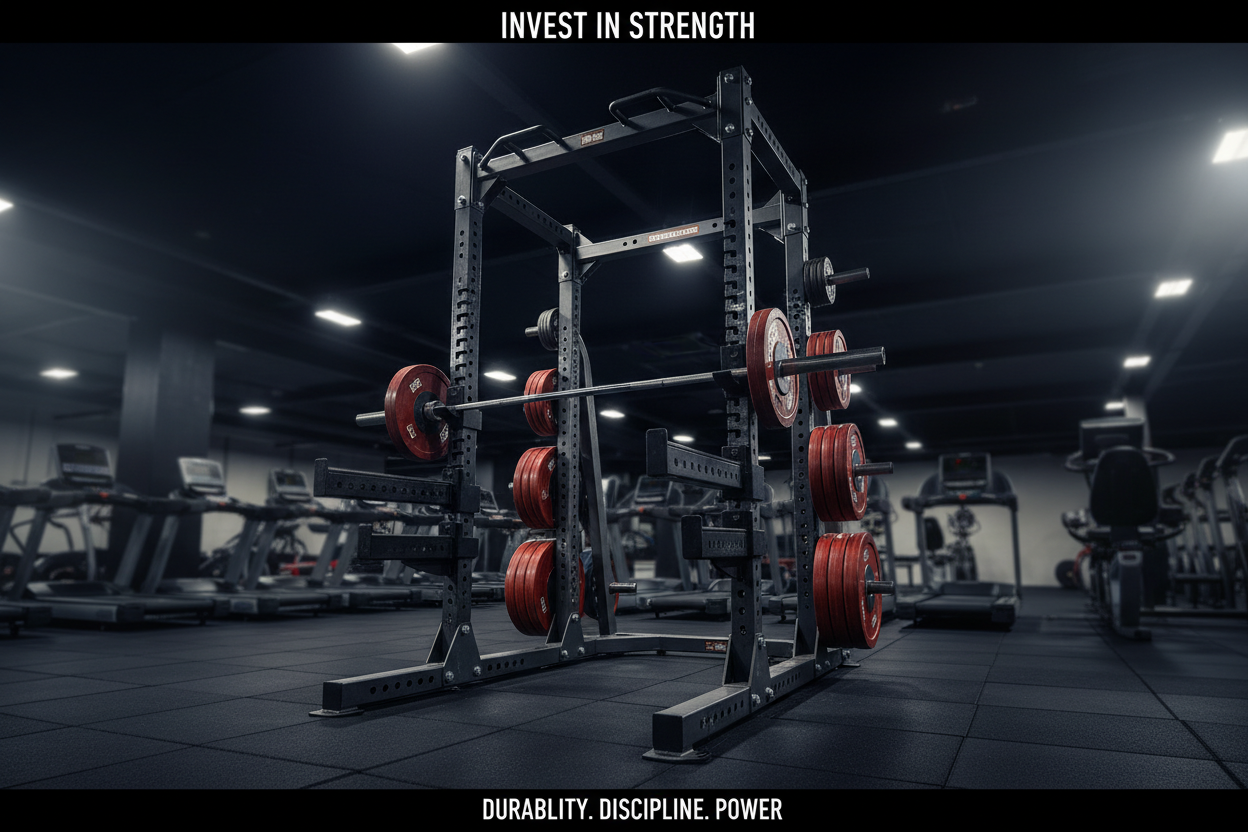
Choosing the specific model depends entirely on your training style and available space. A full power rack for gym usage offers the highest level of safety because you are lifting inside a four-post enclosure. If you lose control of the bar forward or backward, the safeties are there. This is ideal for powerlifters and those training alone. The downside is the footprint; these units take up a significant amount of real estate.
Alternatively, half racks or wall-mounted folding racks are excellent for tighter spaces. A half rack usually has two main uprights and spotter arms that extend out. While they save space, you have to be more disciplined. You must keep the bar over the spotter arms. If you stumble backward out of the zone, you are on your own. For most people, the full cage is the superior choice if space permits, simply because it eliminates that margin for error.
The Importance of Hole Spacing
One feature that often gets overlooked is hole spacing, specifically through the bench press zone. You should look for "Westside" hole spacing, which places the holes 1 inch apart in the lower portion of the uprights. Standard spacing is often 2 inches. This might not sound like much, but when setting up safety pins for a bench press, a 2-inch gap can be the difference between the pin being too high (limiting your range of motion) or too low (crushing your chest if you fail). Precise adjustments allow you to set the safeties just millimeters below your chest level, maximizing both safety and range of motion.
Versatility Beyond the Big Three
Modern cages are modular ecosystems, not just steel boxes. Years ago, a rack was just for squatting and benching. Today, the attachment ecosystem is a major selling point. You can add dip stations, landmine attachments, lat pulldown towers, and multi-grip pull-up bars. This modularity turns a single footprint into a complete gym.
Think about the flow of your workout. With the right attachments, you can superset squats with pull-ups, or bench press with face pulls, all without leaving the rack. This efficiency is crucial for home gym owners who don't have the luxury of multiple machines. When you invest in a power rack for gym purposes, you are essentially buying a skeleton key that unlocks hundreds of exercises. It is far better to buy a base unit that can grow with you than to buy a cheap unit you will have to sell on a marketplace a year later.
Making the Final Decision
Building a gym is a journey of accumulation. You start with the essentials and expand. The rack is the one piece of equipment you should never compromise on. It holds the weight that could otherwise hurt you. It supports the attachments that add variety to your training. It is the hub of your fitness life.
Prioritize heavy steel, verified weight capacities, and a reputable manufacturer with a good ecosystem of attachments. Ignore the flashy cardio machines until you have this foundation in place. Your future self, stronger and injury-free, will thank you for making the smart investment today.
Frequently Asked Questions
Do I need to bolt my rack to the floor?
If you are using a standard four-post rack and plan on doing heavy lifting or dynamic movements like kipping pull-ups, bolting it down is highly recommended for stability. However, many manufacturers offer "flat-foot" racks that are designed to be stable without bolting, which is a better option if you cannot drill into your floor.
What is the minimum ceiling height required for a home gym cage?
Most standard racks are between 80 and 90 inches tall, so you generally need a ceiling height of at least 8 feet to clear the uprights and allow for pull-ups. If you have low ceilings, look for "short" versions of racks, which are typically around 72 inches tall, though this may limit your ability to do overhead presses inside the cage.
Can I use a half rack instead of a full cage for heavy squats?
Yes, you can squat heavily in a half rack as long as it has high-quality, long spotter arms. The main difference is that you must be careful to walk the weight out and stay directly over the safeties, whereas a full cage provides a contained environment where you cannot accidentally walk past the protection.