Stop Waiting for the Squat Rack: How to Build Massive Legs with Just Dumbbells
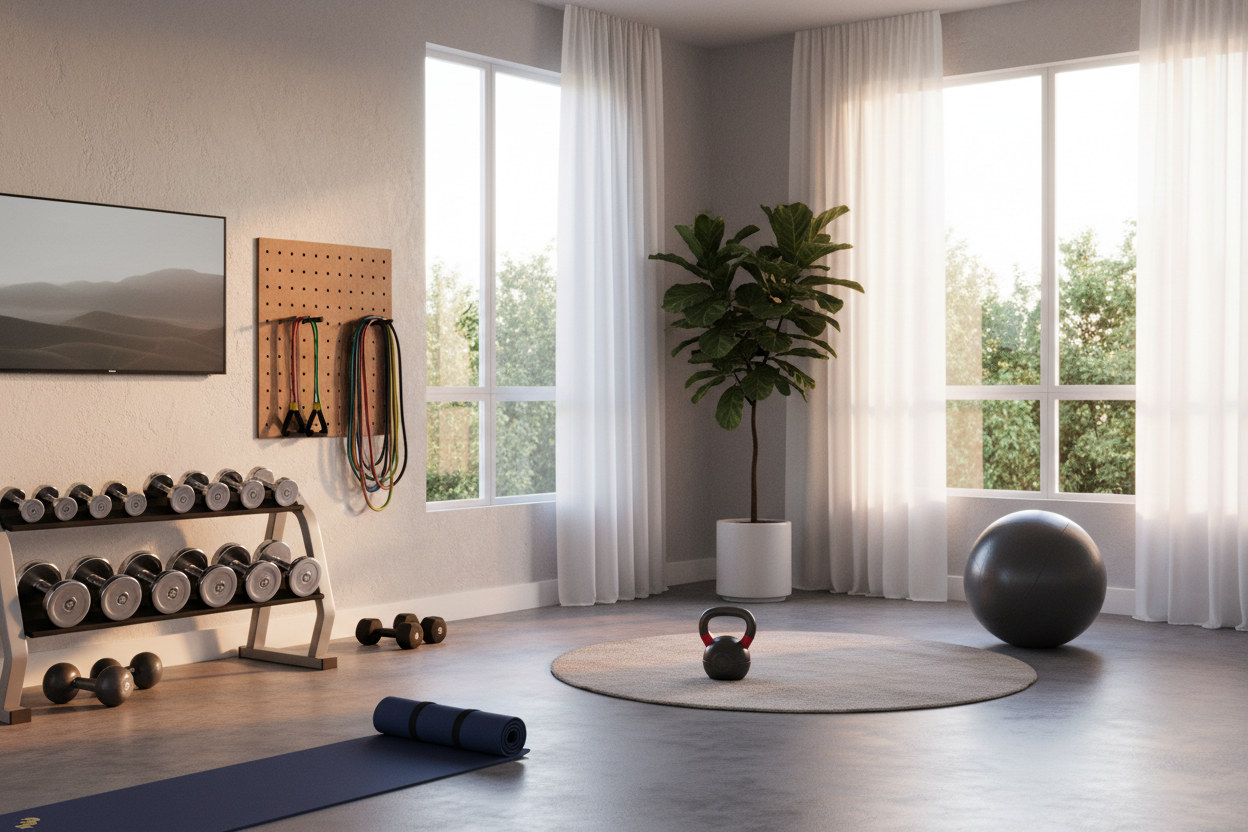
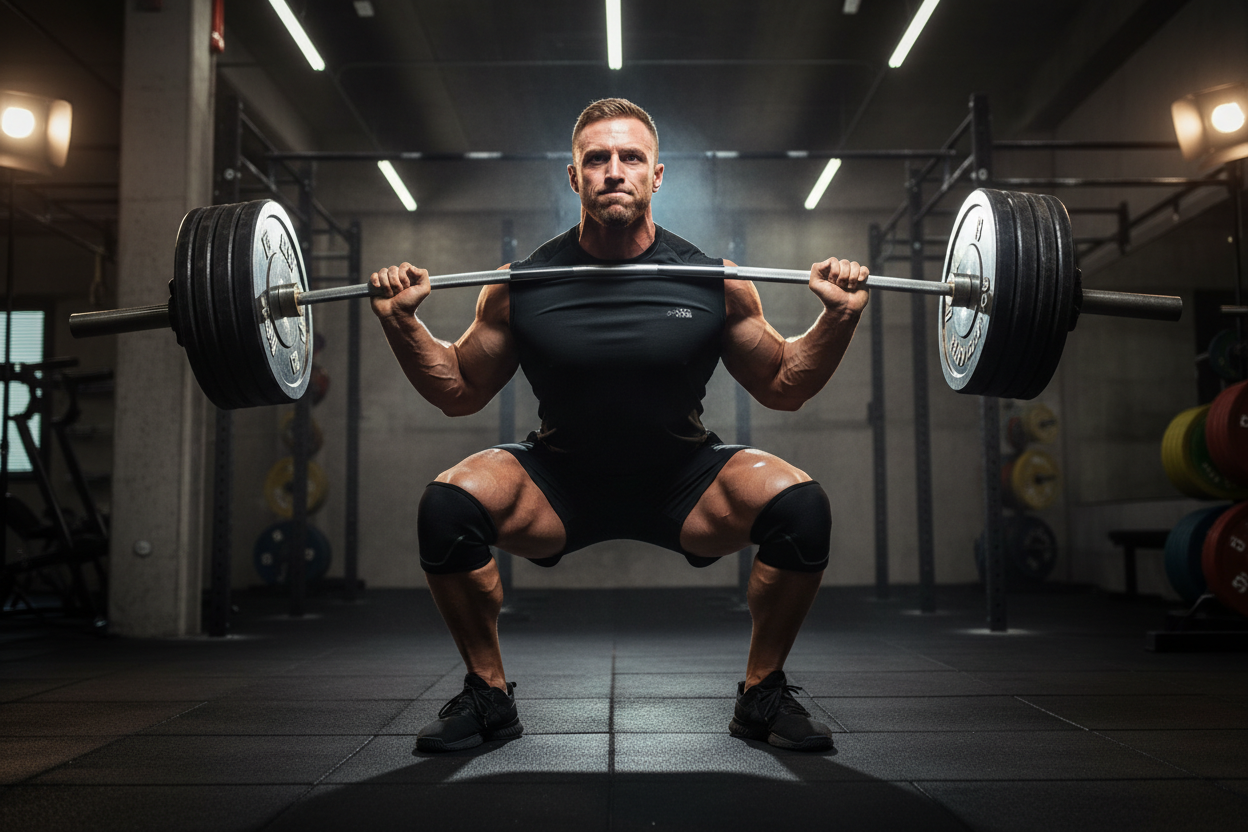
Walk into any commercial gym on a Monday evening, and you usually find the squat racks occupied by a line of people checking their phones between sets. The common belief is that if you aren't loading a barbell across your back, you aren't really training legs. This mindset limits your potential. You do not need a barbell to build thick, powerful quads and hamstrings. In fact, relying solely on bilateral barbell movements can hide muscular imbalances and limit your range of motion. With the right intensity and selection of movements, a pair of iron weights is all you need to trigger serious hypertrophy.
Building mass comes down to mechanical tension and metabolic stress, neither of which is exclusive to a barbell. By manipulating tempo, increasing volume, and focusing on unilateral movements, you can stimulate growth that rivals any machine-based workout. If you are ready to leave the ego lifting behind and focus on pure muscle exhaustion, grabbing a pair of dumbbells offers a superior path to lower body development.
My Realization in the Garage Gym
I learned this lesson the hard way a few years ago. After a minor lower back tweak made axial loading (putting a heavy bar on my spine) impossible for a few months, I was forced to train at home with a modest rack of dumbbells. I assumed my legs would shrink. I thought I was just doing maintenance work until I could get back to "real" training.
I was wrong. I started hammering split squats and stiff-legged deadlifts with a focus on a slow, controlled eccentric phase. Within eight weeks, my pants were tighter around the thighs than they had been during my heaviest squatting cycles. The instability of the dumbbells forced my stabilizers to work overtime, and because I couldn't rely on my stronger right leg to take over, my left leg finally caught up. That experience shifted my entire philosophy on hypertrophy. It proved that muscle confusion isn't the goal; tension is, and dumbbells provide a unique way to apply it.
Why Dumbbells Create Superior Muscle Separation
The primary advantage of using free weights in each hand is the freedom of movement. A barbell locks your hips and shoulders into a fixed position. While great for moving maximum poundage, this doesn't always translate to maximum muscle fiber recruitment for every body type. Dumbbells allow you to make micro-adjustments to your wrist and hip angles, letting you find the groove that hits the muscle belly rather than stressing the joint.
Furthermore, a heavy dumbbell leg workout exposes weaknesses immediately. When you perform a lunge or a step-up, you cannot compensate for a weak glute or quad. You have to drive through the target muscle to complete the rep. This isolation within a compound movement is the secret sauce for aesthetic leg development, creating that deep separation between the quadriceps muscles that bodybuilders chase.
The Essential Dumbbell Leg Exercises for Mass
Selection is everything. You want movements that allow you to load heavy safely while taking the muscle through a full range of motion. Fluff exercises like light glute kickbacks won't cut it here. We are looking for compound movements that wreck the central nervous system and tear down muscle fibers.
The Bulgarian Split Squat
This is arguably the most hated and most effective leg exercise in existence. By elevating your rear foot, you place nearly the entire load on the front leg. This removes the lower back from the equation almost entirely, allowing you to fail because your quad gave out, not because your spine got tired. Keep your torso upright to bias the quads, or lean forward slightly to torch the glutes. You don't need massive weight here; even moderate dumbbells feel incredibly heavy after eight reps.
Dumbbell Romanian Deadlift (RDL)
For hamstring thickness, the RDL is non-negotiable. Unlike the barbell version, holding dumbbells at your sides allows you to keep the weight closer to your center of gravity, reducing shear force on the lumbar spine. Focus on shoving your hips back as far as possible. The goal isn't to touch the floor; it is to feel a painful stretch in the hamstrings. Once your hips stop moving back, the rep is over. Squeeze your glutes to return to the starting position.
Heels-Elevated Goblet Squat
Holding a single heavy dumbbell against your chest acts as a counterbalance. This allows you to sit much deeper into a squat than you typically could with a bar on your back. By elevating your heels on a small plate, you increase knee flexion, which places significantly more stress on the vastus medialis (the teardrop muscle above the knee). This is one of the premier dumbbell leg exercises for mass when performed with high volume.
Walking Lunges
Dynamic movement adds a metabolic conditioning element to the hypertrophy work. Walking lunges require coordination and stability. As you fatigue, your core has to fight to keep you upright. This exercise is best saved for the end of the workout as a finisher. Aim for distance or high reps rather than maximum weight to fully deplete the glycogen in the legs.
Structuring Your Heavy Dumbbell Leg Workout
To get the most out of these tools, you need to structure your session around intensity. Since you aren't limited by a squat rack, you can move quickly between exercises, keeping your heart rate up and increasing metabolic stress.
A solid approach is to start with your heaviest unilateral movement while you are fresh. This ensures your stabilizers are not pre-exhausted. Follow this with your posterior chain work (hamstrings), and finish with a bilateral squat variation to fully burn out the legs.
- Bulgarian Split Squats: 3 sets of 8-10 reps per leg. Rest 90 seconds.
- Dumbbell RDLs: 4 sets of 10-12 reps. Focus on a 3-second lowering phase.
- Walking Lunges: 3 sets of 12 steps per leg.
- Goblet Squats: 2 sets to failure (aim for 20+ reps).
Overcoming the Grip Strength Limit
One valid criticism of dumbbell training is that your hands often give out before your legs do. Your quads might have five more reps in them, but your forearms are screaming. This is a common bottleneck.
The solution is simple: use straps. There is no honor in cutting a leg workout short because of grip fatigue. Straps allow you to lock onto heavy dumbbells and continue the set until your legs genuinely fail. If you are training for leg size, your grip strength is secondary. Strap up and keep going.
Progressive Overload Without Adding Weight
Eventually, you might max out the dumbbells available in your home gym or hotel fitness center. If the 50lb dumbbells are the heaviest ones you have, you can still grow. You just have to change the variable of progression.
Slow your reps down. Instead of a standard one-second up, one-second down cadence, try a four-second eccentric (lowering) phase. Pause for two seconds at the bottom of every squat. This increases the time under tension exponentially. A 50lb goblet squat performed with a slow tempo and a pause is significantly harder than a 100lb squat bounced off the bottom. You can also decrease rest periods to 45 seconds, forcing your body to recruit more muscle fibers to handle the fatigue.
Consistency Wins
Building massive legs is a marathon of discomfort. It requires embracing the burn and pushing through the mental barrier that tells you to stop. Whether you are using a rusty pair of dumbbells in a garage or high-tech machines in a wellness center, the effort determines the outcome. Don't let a lack of equipment be the excuse for skipping leg day. Grab the heaviest dumbbells you can handle and get to work.
Frequently Asked Questions
Can I really get the same size with dumbbells as I can with barbells?
Yes, muscle tissue cannot distinguish between a barbell and a dumbbell; it only understands tension and fatigue. As long as you are applying progressive overload by increasing weight, reps, or intensity over time, you can achieve comparable hypertrophy with dumbbells, often with better symmetry.
What should I do if my gym's dumbbells aren't heavy enough?
If you have maxed out the weights, increase the intensity by manipulating tempo or rest times. Slow down the lowering phase of the lift to 3-4 seconds, add pauses at the bottom of the movement, or pre-exhaust your legs with isolation exercises like lunges before moving to squats.
How often should I perform a heavy dumbbell leg workout?
For most lifters, training legs twice a week allows for optimal frequency and recovery. Since dumbbell workouts often place less stress on the central nervous system than heavy barbell spinal loading, you may find you can recover slightly faster, making a twice-weekly frequency highly effective.