Stop Using the Bench Press Machine Like This (Read First)
There is a massive misconception in the lifting community that machines are only for beginners or rehabilitation. If you walk into a serious bodybuilding gym, you’ll see the biggest guys heading straight for the bench press machine after their heavy compounds. Why? Because raw strength and hypertrophy (muscle growth) require different stimuli.
When you use a barbell, a significant amount of your energy goes toward stabilizing the bar. When you switch to a machine, that stability is provided for you. This allows you to direct 100% of your output into contracting the pectorals. However, most people get the setup wrong, turning a chest-builder into a shoulder-wrecker.
Key Takeaways
- Isolation Over Stabilization: Machines remove the need to balance the weight, allowing for greater mechanical tension on the pec fibers.
- Safety First: A bench machine is the safest way to train to failure without a spotter, making it ideal for solo training.
- Fixed Path Mechanics: The predetermined path prevents form breakdown during the final, grinding reps of a set.
- Drop Set Capability: Selectorized machines allow for rapid weight changes, increasing metabolic stress for growth.
The Mechanics of Hypertrophy
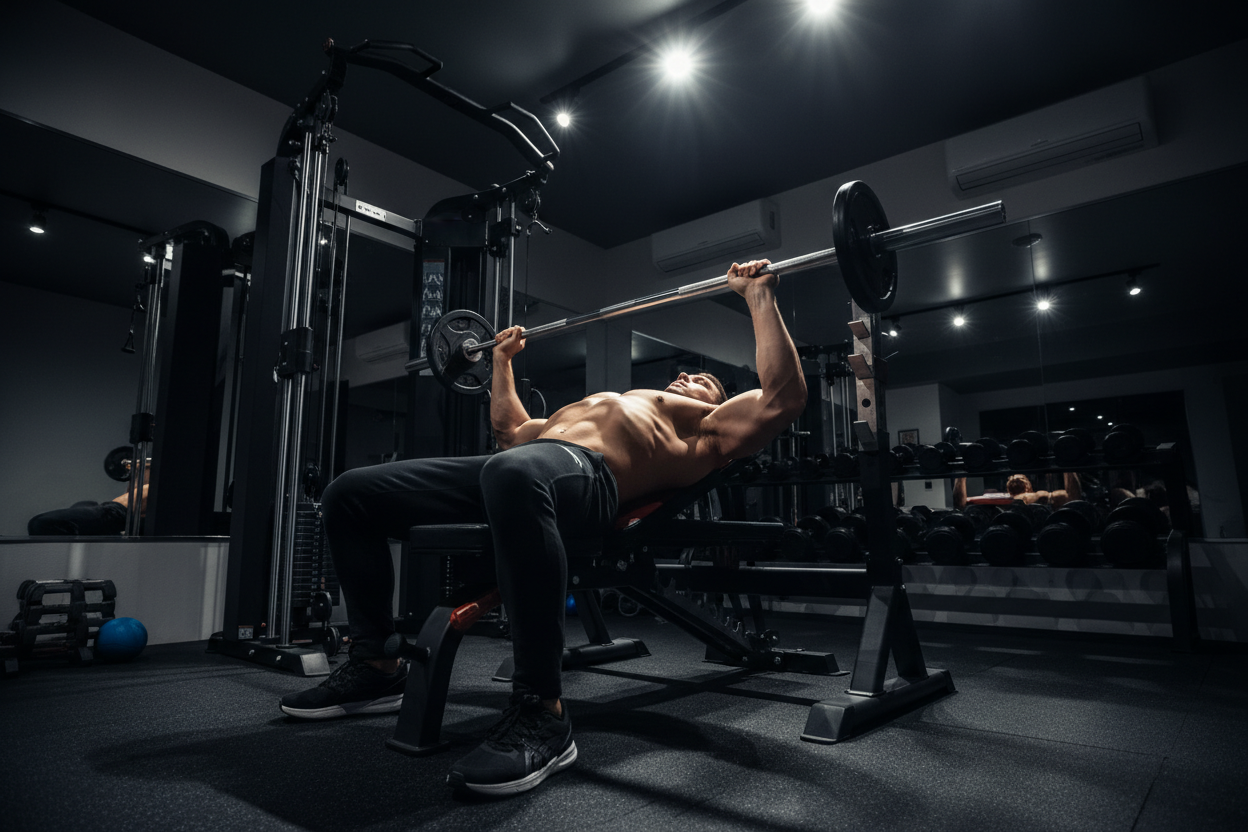
To build a big chest, you need to understand the difference between moving weight and working muscle. The barbell bench press is a skill. You have to manage the bar path, leg drive, and arch. The bench machine simplifies this equation.
By locking you into a fixed range of motion, the machine allows for a "mind-muscle connection" that is often lost under a heavy barbell. You can squeeze at the top without worrying about the weight drifting over your face. This constant tension creates the metabolic damage necessary for muscle growth.
The Seat Height Mistake
The most common error I see is ignoring seat adjustment. If the seat is too low, the handles will align with your shoulders. When you press, this puts your rotator cuff in a compromised position. You want the handles aligned with your mid-chest (nipple line) so your elbows can tuck naturally at a 45-degree angle.
Choosing a Bench Press Machine for Home
Building a garage setup? The search for a bench press machine for home is different than outfitting a commercial facility. Space is your premium currency. You generally have two options: selectorized (weight stack) or plate-loaded.
A home gym chest press that uses a weight stack is convenient but heavy and expensive to ship. For home users, I almost always recommend a plate-loaded leverage machine. These mimic the strength curve of free weights better than cables and allow you to use the weight plates you likely already own.
Leverage vs. Cable
A leverage bench machine (often called a Hammer Strength style) moves in a converging arc. As you press out, your hands come closer together. This mimics the natural function of the pecs—adduction (bringing the arm across the body). Standard vertical press machines often just push straight out, which is less effective for full chest activation.
Identifying the Best Bench Press Machine
If you are looking for the best bench press machine, ignore the flashy branding and look at the pivot points. A high-quality machine places the pivot point behind your shoulders to create a natural pressing arc.
Additionally, look for independent arms. If the machine has a single bar connecting both handles, your dominant side will take over. Independent arms force both sides of your chest to work equally, correcting imbalances that years of barbell pressing might have created.
My Training Log: Real Talk
I want to be honest about the transition to machines. The first time I bought a budget leverage press for my garage, I hated it. On paper, it looked like the commercial grade stuff, but the reality was gritty—literally.
Without high-end bearings, the movement felt scratchy. I remember specifically the "dead zone" at the bottom of the rep where the resistance felt like it vanished, only to jerk back on halfway up. It threw off my rhythm completely. Also, cheap vinyl pads are slippery. I recall trying to grind out a heavy set and sliding up the back pad because the material offered zero grip against my shirt.
Now, I keep a strip of grip tape on the back pad of my home unit. It ruins the aesthetic, but it keeps my scapula retracted and glued to the bench so I don't bleed power. If you're buying for home, don't just look at the max weight rating; look at the bearing quality. That smooth motion is the difference between a pump and joint pain.
Conclusion
The bench press machine isn't a replacement for the barbell; it's a strategic partner. It allows you to safely take your muscles to absolute failure, drop set with ease, and isolate the chest without stabilizer fatigue. Whether you are at a commercial gym or building a home setup, prioritize the setup height and the convergence of the handles. Master the machine, and your free weight numbers will likely go up too.
Frequently Asked Questions
Is a bench press machine as effective as free weights?
For pure strength, free weights are superior because they utilize more stabilizer muscles. However, for hypertrophy (muscle growth), a bench press machine can be more effective because it allows you to isolate the chest and train to failure safely without a spotter.
Can I build a big chest with just a home gym chest press?
Yes. Your muscles do not know if you are holding a metal bar or a machine handle; they only understand tension. If you apply progressive overload (increasing weight or reps over time) on a home machine, your chest will grow.
What is the difference between a chest press and a bench machine?
The terms are often used interchangeably. However, a "bench machine" usually implies a supine position (lying on your back), mimicking the barbell bench press. A "chest press" is often seated upright. The lying position generally offers better back support and reduces spinal compression.