Stop Using Powerlifting Math in Programming for Bodybuilding
I spent years staring at my power rack, wondering why my lats looked like thin sheets of paper despite my 400-pound deadlift. Most garage gym owners fall into the same trap: we buy the big rack, the aggressive knurled barbell, and the calibrated plates, then wonder why we don't look like we actually lift. Real programming for bodybuilding isn't about the math of a 1-rep max; it is about the physics of tension. If your goal is a physique rather than a total, you have to stop training like a powerlifter in disguise.
Quick Takeaways
- Muscle growth requires local fatigue, not just central nervous system (CNS) exhaustion.
- 'Stability Cost' is the hidden tax that ruins most home workouts.
- Machines and floor-based bracing are often superior to standing free weights for hypertrophy.
- Stop chasing 'functional' and start chasing mechanical tension.
The Problem With Powerlifting Programs in Disguise
Walk into any home gym forum and ask for a routine. You will get pointed toward popular bodybuilding programs that are actually just strength routines with three sets of curls tacked on at the end. These routines focus heavily on the 'Big Three'—squat, bench, and deadlift. While those moves are great for moving heavy loads, they are incredibly taxing on your nervous system. By the time you finish five heavy sets of squats, your brain is cooked, your lower back is pumped, and your quads have barely reached their actual limit.
Bodybuilding is about isolating the target tissue. If you are constantly chasing a PR on the deadlift, you are training your body to be efficient at moving weight. Hypertrophy requires the exact opposite: you want to be inefficient. You want to make a 30-pound dumbbell feel like 60 pounds by removing momentum and leverage. Most top bodybuilding programs fail because they prioritize the load on the bar over the tension on the muscle fibers. If your spine is the limiting factor in your leg training, your legs will never reach their potential.
The Hidden 'Stability Cost' of Pure Free Weights
Every time you pick up a weight, your brain performs a 'stability audit.' If you are standing on one leg doing overhead presses with a shaky dumbbell, your nervous system will literally throttle the power output to your muscles to prevent you from falling over. This is the 'Stability Cost.' In top bodybuilding programs, the goal is to drive that cost to zero. When you are locked into a seated press or braced against a solid bench, your brain gives you the 'green light' to recruit every motor unit available.
Trying to build massive pecs with nothing but wobbly, heavy dumbbells is a recipe for shoulder impingement and mediocre gains. You spend so much energy just keeping the weight from drifting that you lose the mind-muscle connection. This is why pros use machines. They aren't lazy; they are seeking the stability required to push a muscle to absolute failure without their stabilizers giving out first. If you're training in a garage, you have to find ways to manufacture this stability manually.
How to Structure Proper Programming for Bodybuilding at Home
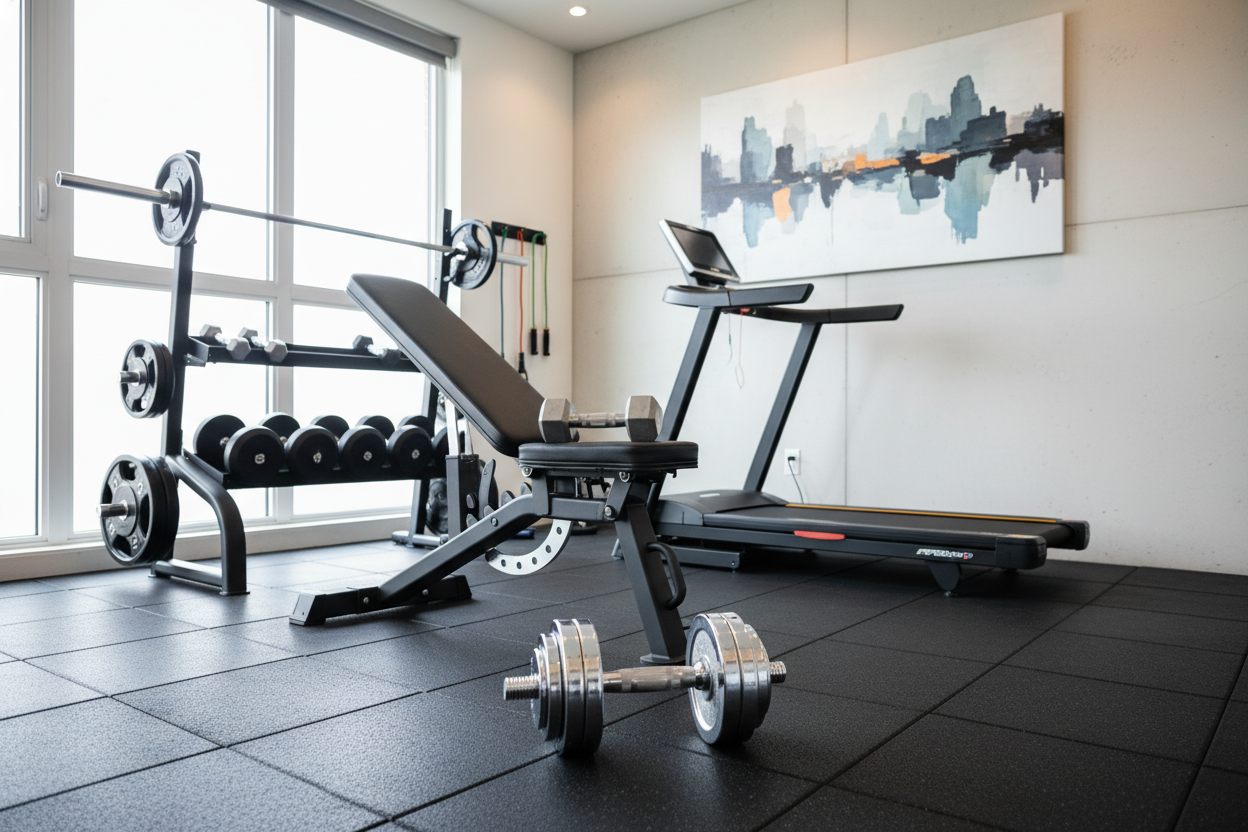
To fix your routine, you need to reverse-engineer your equipment. Don't just download the best free bodybuilding program you find on a PDF; those are usually written for people with access to a $50,000 commercial gym. You need to select top gym equipment for bodybuilding that allows for bracing. If you only have a rack and a bar, stop doing standing rows. Do chest-supported rows by leaning against your incline bench. This removes the 'lower back limit' and lets you actually torch your lats.
Structure your workouts by starting with your most stable movement where you can move the most weight safely, then move toward higher-rep, lower-stability work. For example, instead of starting with a heavy standing barbell press, start with a seated dumbbell press where your back is supported. You will find that you can handle more weight for more reps because you aren't fighting to stay upright. Your home gym programming should be built around what you can stabilize, not just what you can lift.
Machines vs. Free Weights: The Home Gym Compromise
I used to be a barbell purist. I thought machines were for people who didn't want to work hard. I was wrong. If you want to grow, you need to embrace the machine—or at least machine-like movements. Integrating top home gym machines for strength and bodybuilding into a tight space is easier than you think. A simple plate-loaded cable tower or a high-quality functional trainer takes up less than 10 square feet but provides the constant tension and stability that a barbell simply cannot match.
If you don't have the floor space for a dedicated leg press, look at a sissy squat bench or a high-quality landmine attachment. The goal is to find tools that guide the path of the weight so you can focus entirely on the squeeze. Cables are the ultimate 'cheat code' for home hypertrophy because they provide tension at the top of the movement where gravity usually lets the muscle relax during a dumbbell fly or lateral raise. Don't be the guy with a 500-pound squat and no quads because you refused to use a leg extension.
Building Your Floor-Based Foundation
When you run out of machines, use the floor. The ground is the ultimate stabilizer. Floor presses are one of my favorite 'old school' bodybuilding moves because they limit the range of motion to the strongest part of the chest squeeze and completely remove the legs from the equation. To do this right, you need a high-density large exercise mat for home gym use. If you are sliding around on bare concrete or cheap foam, your stability goes out the window.
Investing in professional-grade gym flooring for home workout sessions allows you to brace your heels and back properly. Whether it's a floor press, a dead-stop row, or a Bulgarian split squat, your contact point with the ground determines how much force you can produce. If your feet are slipping, your quads aren't growing. I use a 7mm thick rubberized mat that doesn't budge, which turned my floor-based dumbbell work from a balancing act into a legitimate mass builder.
My Personal Experience: The Day I Quit the 'Big Three'
I remember hitting a 315-pound bench press for the first time. I expected to look in the mirror and see a chest like Arnold. Instead, I saw a guy with overactive front delts and a sore lower back. I realized my 'programming' was just ego-lifting. I stripped the weight back, started doing 'low-to-high' cable flyes and chest-supported rows, and my physique changed more in three months than it had in three years of powerlifting. The hardest part wasn't the lifting; it was admitting that my 'hardcore' barbell-only approach was actually holding me back.
FAQ
Do I need machines to build a bodybuilding physique?
Not necessarily, but you need stability. You can use benches, walls, and the floor to create the same effect. However, a cable machine is the single best investment for a home bodybuilding setup.
Is high-rep training better for hypertrophy?
The 'hypertrophy range' is wider than people think (8-20 reps), but the key is proximity to failure. You need to be within 1-2 reps of a technical breakdown to stimulate growth, regardless of the rep count.
Can I use a powerlifting rack for bodybuilding?
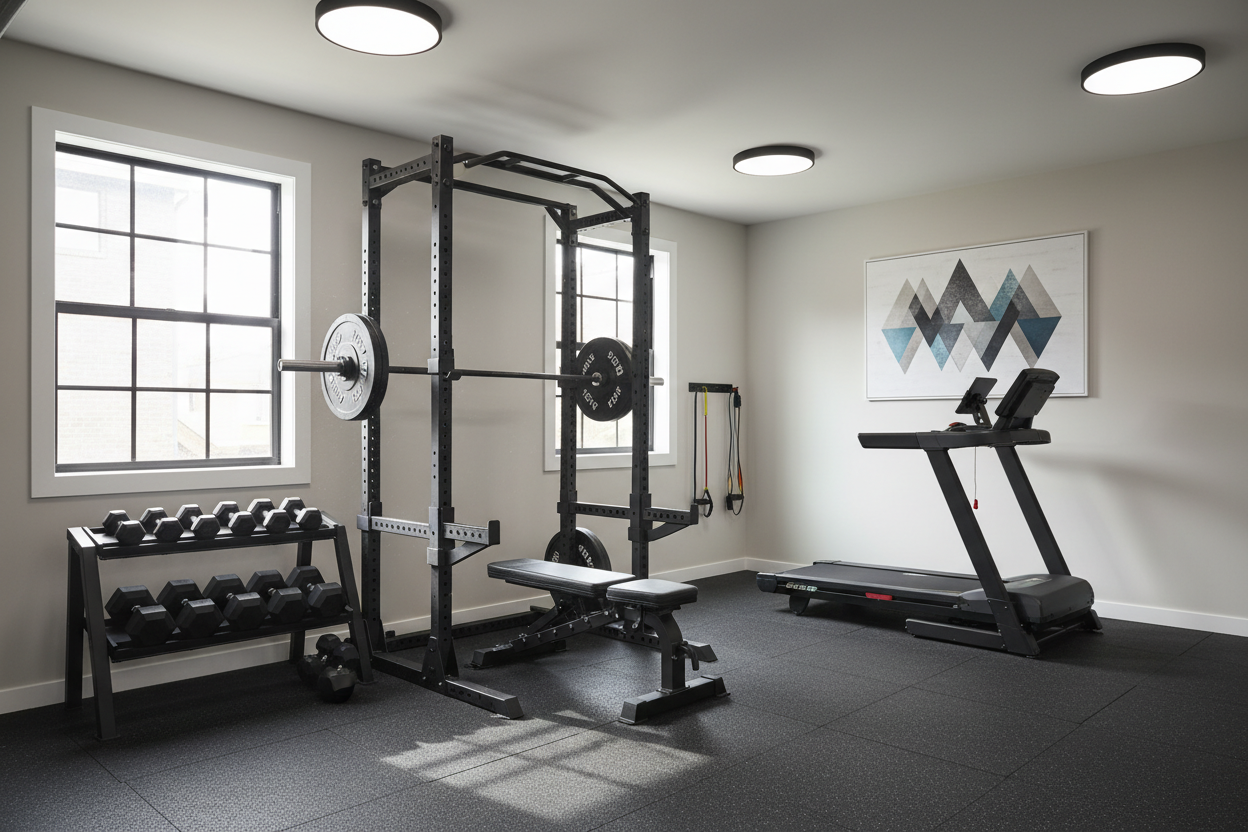
Absolutely. Just use it differently. Use the pins for rack pulls to target the upper back, or use the uprights to brace yourself during one-armed dumbbell rows. The rack is a stability tool, not just a cage.