Stop Sweating: What Actually Counts as an Exercise for Strength?
I remember standing in my garage three years ago, staring at a puddle of sweat on my plywood floor after a 20-minute 'EMOM' of burpees and light kettlebell swings. My heart was pounding, my shirt was soaked, and I felt like I’d done something. But six months of that didn't add a single pound to my bench press. I was exhausted, but I wasn't any stronger.
Most people treat an exercise for strength like a cardio session in disguise. If you want to actually move the needle on your squat or put on real size, you need to stop chasing the 'burn' and start chasing mechanical tension. Real strength isn't about how much you sweat; it's about how much force your muscles can produce against resistance.
- Strength requires load, not just a high heart rate.
- Compound movements offer the highest ROI for your time.
- Progressive overload—adding weight or reps—is the only way forward.
- Stability is key; you can't fire a cannon from a canoe.
The Difference Between 'Working Out' and Getting Strong
Most 'muscle training activities' you see on social media are just workout entertainment. They make you sore, they make you tired, but they don't force your nervous system to adapt. Real strength training is about efficiency and intensity, not just doing more work for the sake of working.
When you're choosing an getting sweaty isn't strength exercise training, you're looking for something that challenges your ability to produce force. If you can do 50 reps of it without breaking a sweat, it's probably not a strength exercise; it's endurance. Strength happens in the lower rep ranges where the weight is heavy enough to demand your full attention.
The 3 Non-Negotiable Rules of True Strength Movements
To answer 'what are strength exercises,' we have to look at the mechanics. First, it must be loadable. You need to be able to add weight—whether it's 2.5-lb plates or a 50-lb jump—over time. If you can't measure the progress, you're just guessing. I used to use those cheap adjustable dumbbells that maxed out at 25 lbs; they were useless for strength within a month.
Second, it should be a multi-joint movement. Isolation moves like curls have their place, but the heavy hitters involve your whole body working as a unit. Third, you need stability. If you're wobbling on a BOSU ball, you're ruining your muscle mass strength training because your brain will cut power to your muscles to keep you from falling. You need a solid connection to the ground to move big weight.
The Only Muscle Strengthening Workouts You Actually Need
I’ve spent thousands on fancy machines, but I always go back to the basics. The best strength training examples are the ones that have worked for a century. You don't need 40 different variations; you need five or six that you do exceptionally well. Focus on the movements that allow you to move the most weight safely.
Lower Body: Squats and Hinge Movements
The barbell back squat is the gold standard for body strengthening exercises, but it’s not the only way to build tree-trunk legs. If your lower back is fried or you're working around an old injury, a lower body strength machine like a leg press or hack squat can actually be better for driving pure hypertrophy without the systemic fatigue of a heavy bar on your spine.
Don't forget the hinge. Deadlifts and RDLs are what build the 'posterior chain'—the muscles you can't see in the mirror but that do all the heavy lifting in real life. If you aren't hinging, you aren't training for strength.
Upper Body: Pushing and Pulling Heavy
For the upper body, keep your strength training gym exercises simple: push something over your head, push something away from your chest, and pull something toward your stomach. Overhead presses build boulders for shoulders, while heavy rows keep your posture from collapsing after a day at the desk. I prefer a thick-handled row to really test the grip while I'm at it.
Building Your Bare-Bones Strength Training Exercise List
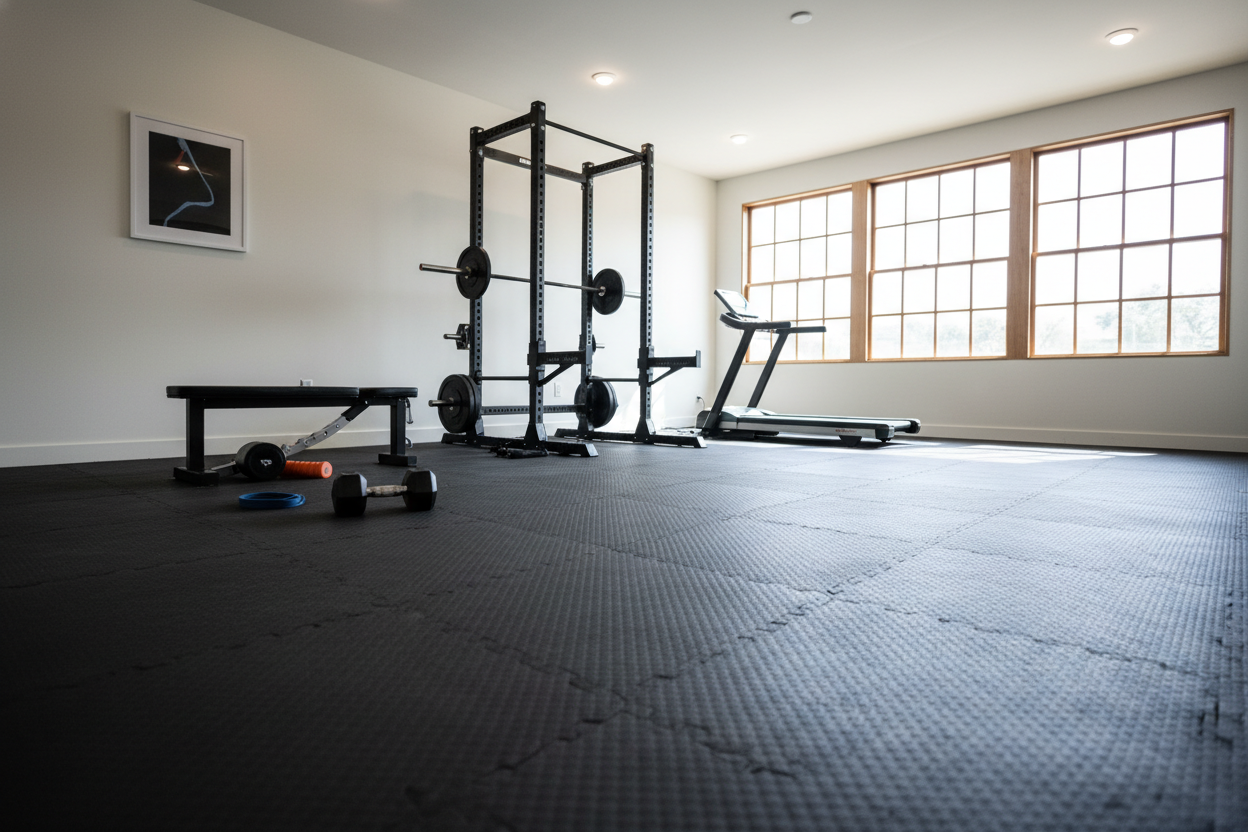
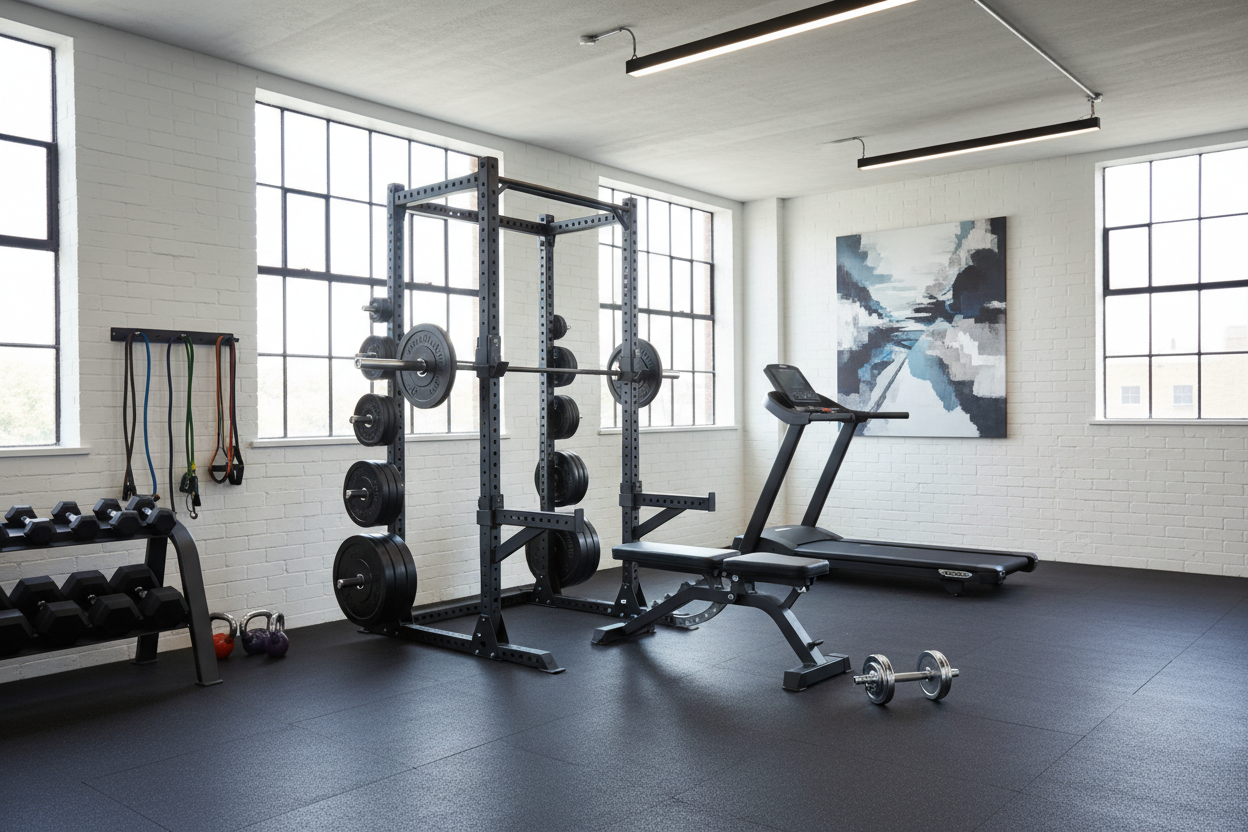
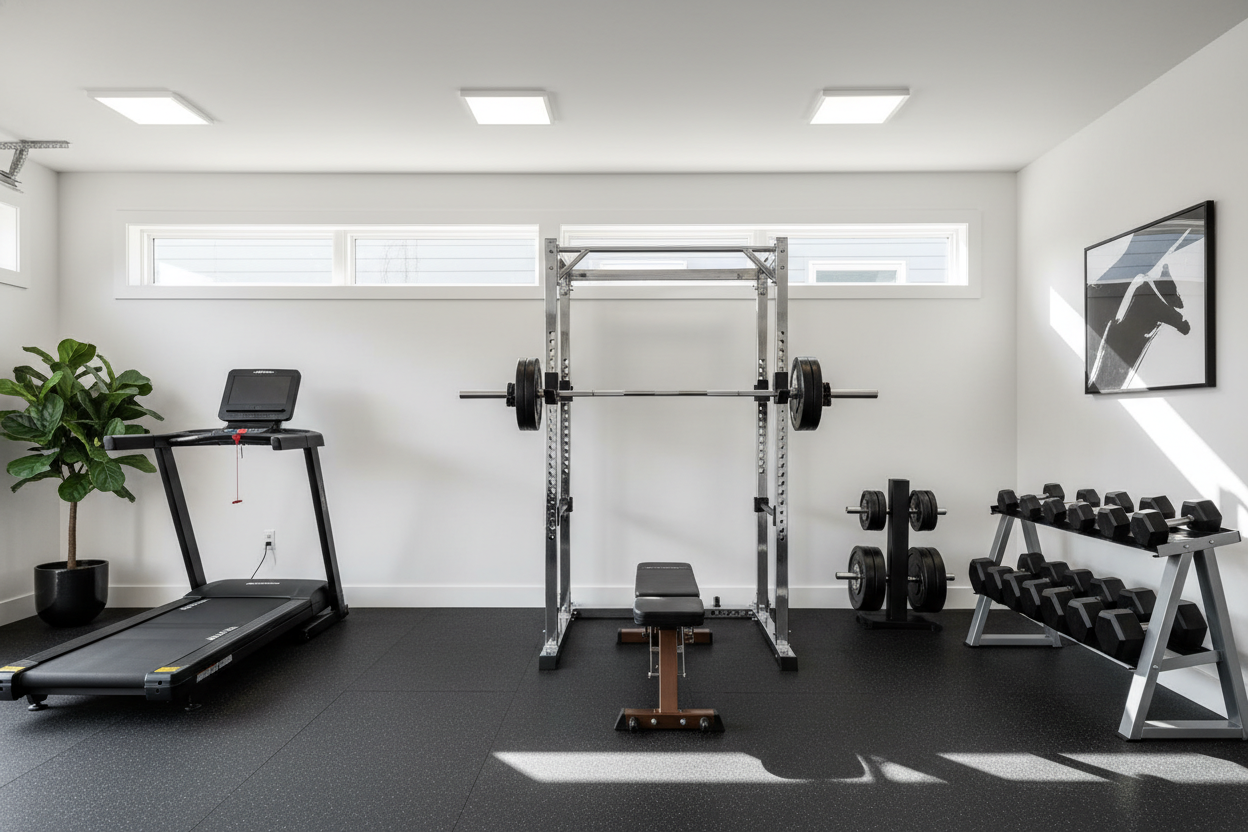
If I were starting my garage gym from scratch today, I wouldn't buy a fancy cable crossover. I'd buy a solid rack, a 20kg bar, and some gym flooring for home workout that won't slip when I'm pulling 405 off the ground. You need a stable base to generate force; trying to deadlift on carpet is a recipe for a disaster.
Your daily strengthening exercises should revolve around one main lift followed by two or three accessory moves. Keep the reps between 3 and 8 for the big stuff. If you're doing 15 reps, you're building endurance, not max strength. My biggest mistake was thinking more reps meant more muscle. It usually just meant more fatigue and less progress on the bar.
FAQ
What is strength exercises vs cardio?
Strength exercises focus on max force production against resistance. Cardio focuses on your heart's ability to pump blood. One builds muscle; the other builds endurance. You need both, but don't mistake one for the other.
What are some strength training exercises for beginners?
Start with goblet squats, push-ups, and inverted rows. They teach you how to move your own body weight and maintain tension before you start adding heavy plates to a barbell.
How often should I do muscle training exercise?
Three to four times a week is the sweet spot for most people. Your muscles don't grow while you're lifting; they grow while you're sleeping and eating. If you don't rest, you won't get strong.