Stop Stalling: The Best Exercise for Squats to Break Plateaus
You hit the rack, load the bar, and everything feels heavy. You have been stuck at the same weight for months. It is the most frustrating feeling in the gym. Most lifters think the solution to a bigger squat is simply squatting more. They are wrong.
To break through a strength plateau, you need to identify your weak link—whether it is your quads, your lower back, or your confidence coming out of the hole. Finding the best exercise for squats means looking at accessory movements that target these specific deficiencies.
If you want to add plates to the bar, you have to stop grinding through ugly reps and start building the supporting muscles that make the lift possible. Let’s break down the mechanics of getting stronger.
Key Takeaways: Quick Summary
- The Paused Squat: The absolute best variation to build starting strength and fix form breakdown at the bottom.
- Bulgarian Split Squats: Essential for fixing imbalances between the left and right leg that cause stalling.
- Good Mornings: Targets the lower back and hamstrings to prevent the torso from collapsing forward.
- Pin Squats: Overloads the nervous system and builds confidence with heavier loads.
The "King" of Accessories: The Paused Squat
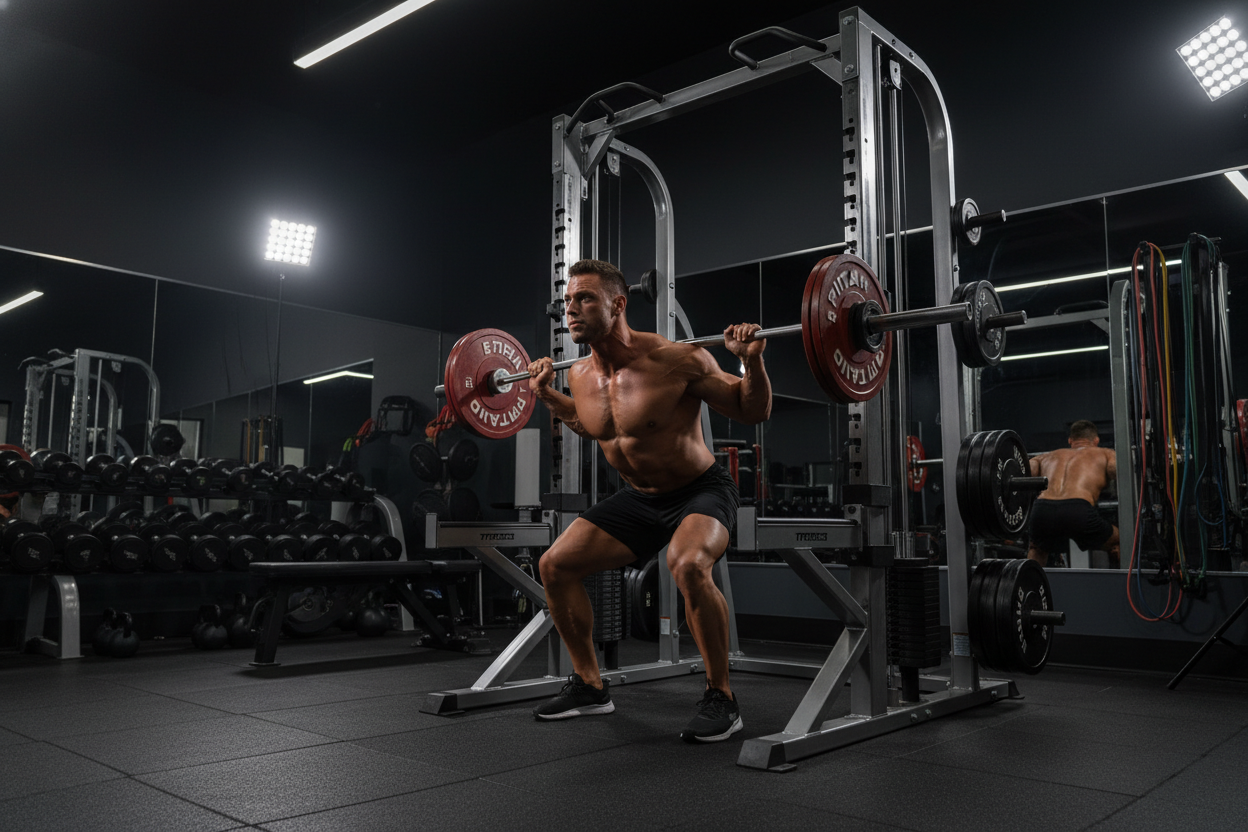
If I had to prescribe just one movement to fix a stall, this is it. The Paused Squat is widely considered the most effective of the exercises to improve squat strength because it removes the stretch reflex.
When you bounce out of the hole in a standard squat, your tendons do some of the work. By pausing for two seconds at the bottom, you force your muscles to generate pure static strength. This teaches you to stay tight under tension and drive up using raw power.
How to Execute It
Descend as normal. Once you hit depth, hold the position. Count "one one-thousand, two one-thousand." Then, explode up. Do not relax your core or let your breath out during the pause.
Unilateral Workouts to Increase Squat
You might be strong, but are you symmetrical? Often, a lifter fails a max attempt because one glute or quad is weaker than the other, causing a subtle shift in the hips. To fix this, you need best exercises to increase squat stability through single-leg work.
The Bulgarian Split Squat is the gold standard here. It isolates the quads and glutes without the spinal loading of a back squat. It is miserable to do, but it works. By strengthening each leg individually, you ensure that when you get back under the barbell, both cylinders are firing equally.
Squat Strength Exercises for the Posterior Chain
A common failure point is the "good morning squat." This happens when your hips shoot up faster than your chest, turning the lift into a lower-back strain. This indicates weak hamstrings or a weak spinal erector setup.
Exercises to increase squat mechanics must address the posterior chain. The barbell Good Morning is superior here. It mimics the torso angle of a squat failure but specifically strengthens the muscles needed to maintain an upright posture. Keep the weight light to moderate; this is about muscle control, not ego lifting.
Overloading the Nervous System
Sometimes the issue isn't muscle; it's fear. Your nervous system puts the brakes on when the weight feels too heavy on your back. Squat workout to increase max potential often involves Pin Squats (Anderson Squats).
Set the safety pins in the rack at a height where you typically stick (usually parallel or slightly above). Load the bar with 105% of your max. Unrack it, or lift it from the pins. Just feeling that weight helps desensitize your nervous system to the heavy load, making your regular working weights feel lighter by comparison.
My Training Log: Real Talk
I want to be transparent about my own struggles with this. A few years ago, I was chasing a 405lb squat. I was stuck at 365 for what felt like an eternity. Every time I hit the hole, my knees would cave slightly, and my lower back would round just enough to kill my drive.
I started incorporating Paused Squats, and I hated them. I remember the specific feeling of the knurling digging into my traps while I sat in the hole, counting seconds that felt like hours. My legs would shake violently—not the good kind of shake, but the "my nervous system is panicking" wobble.
But the real game-changer was the Bulgarian Split Squats. I remember the nausea. There is a specific, distinct burn in the glute-ham tie-in that only split squats produce. It felt like my lungs were bleeding. But after six weeks of that misery, I went for 405. The weight didn't feel lighter on my back, but when I hit the bottom, I felt like a hydraulic press. I didn't bounce; I drove. That stability came directly from the accessory work, not the main lift.
Conclusion
Stop banging your head against the wall by doing the same 5x5 routine hoping for a different result. The workouts to increase squat maxes are rarely just more squats. They are the targeted, difficult accessory movements that bring up your weak points.
Pick one of the exercises above—preferably the one you want to do the least—and add it to your program for the next four weeks. Your new PR is waiting on the other side of that work.
Frequently Asked Questions
What is the single best exercise to improve squat depth?
Goblet Squats are excellent for improving depth. Holding the weight in front of your chest acts as a counterbalance, allowing you to sit back deeper into your hips without falling backward, while simultaneously teaching you to keep your chest upright.
How often should I do accessory exercises to increase squat?
You should include 1 to 2 accessory movements after your main compound lift. If you squat twice a week, dedicate one day to heavy variations (like Paused Squats) and the other to hypertrophy work (like Split Squats or Lunges).
Do leg presses help increase squat max?
Yes, the Leg Press is a valid tool for hypertrophy. It allows you to overload the quads with high volume without stressing the lower back. While it doesn't train the core stability needed for a heavy squat, the added muscle mass will contribute to a higher potential max.