Stop Skipping Pulls: A Real Shoulder and Back Workout for Females at Gym
I remember the first time I walked into the free-weight section of a big-box commercial gym. I felt like I was trespassing. The air smelled like stale chalk and ego, and every bench was occupied by guys doing half-rep chest presses. It is easy to feel like you should stick to the treadmill or the 'express circuit' machines, but that is exactly how you stall your progress. If you want a shoulder and back workout for females at gym environments that actually delivers results, you have to stop asking for permission to use the heavy stuff.
Quick Takeaways
- Prioritize pulling movements over pushing to fix posture and build width.
- The cable machine is your best friend for constant tension on the delts.
- Don't be afraid to use straps if your grip fails before your back does.
- Stability is key—if your feet are sliding, your lift is dying.
Why the Commercial Gym Floor Doesn't Have to Be Intimidating
The biggest hurdle to a solid upper body day isn't the weight; it is the mental tax of claiming your territory. I spent years hovering around the cable stack, waiting for a 'polite' opening that never came. Here is the reality: you pay your membership just like everyone else. If you need the lat pulldown, stand near it. If you need the 25-pound dumbbells, go grab them from the rack. Most people are too buried in their own playlists to care what you are doing anyway.
Claiming a bench or a cable station is the first step in executing a real routine. When you walk in with a plan, the intimidation fades. You aren't 'wandering'; you are on a mission. This specific workout requires you to move between the dumbbell rack and the cable machines. Don't feel bad about taking up space. That space is where the growth happens. If someone asks how many sets you have left, give them a straight answer and keep moving. No apologies needed.
The Core Rule: Pull Heavy, Press Smart
Most 'toning' routines for women focus way too much on front delts and light overhead presses. This is a mistake. Your front delts already get smashed during any chest or push-up movement. To actually build the hourglass look, you need to focus on the posterior chain—the lats, the rhomboids, and the rear delts. Widening the upper back creates the visual illusion of a narrower waist, which is the holy grail of aesthetic lifting.
Biomechanically, we are aiming for a 2:1 pull-to-push ratio. For every overhead press, you should be doing two types of rows or pulls. This balances the shoulder joint and pulls your scapula back into a proud, athletic position rather than that 'office worker slouch' we all fight. We are using heavy compound movements to move the needle, then finishing with isolation work to polish the details. This isn't about 'toning'; it's about building tissue that has a metabolic cost and structural integrity.
The Blueprint: A Real Shoulder and Back Workout for Females at Gym
This routine is designed for a standard commercial gym. You'll need access to cables, dumbbells, and a pull-up bar (or assisted machine). Rest 60-90 seconds between sets.
- Wide Grip Lat Pulldowns: 4 sets of 8-10 reps. Focus on pulling with your elbows, not your hands. If the bar is vibrating on the way up, you're losing control.
- Seated Cable Rows (Neutral Grip): 3 sets of 12 reps. Squeeze your shoulder blades together like you're trying to hold a pencil between them.
- Standing Dumbbell Overhead Press: 3 sets of 8 reps. Keep your core tight—don't let your lower back arch like a banana.
- Single-Arm Dumbbell Rows: 3 sets of 10 reps per side. Use a bench for support. Pick a weight that feels heavy by rep 8.
- Face Pulls (Rope Attachment): 4 sets of 15 reps. Pull toward your forehead and pull the rope apart at the end of the movement. This is the secret sauce for healthy shoulders.
- Lateral Raises: 3 sets of 15 reps. Lean slightly forward and think about pushing the dumbbells 'out' to the walls rather than 'up' to the ceiling.
No Cable Machine? The Shoulder and Back Workout for Females at Home
If you can't make it to the gym, you can still get it done. Transitioning to a shoulder and back workout for females at home requires a bit of creativity, but the principles remain the same. You don't need a 10-station cable jungle to build a V-taper. If you have a set of adjustable dumbbells and some resistance bands, you’re 90% of the way there.
For the home version, swap the lat pulldowns for pull-ups (use a band for assistance) or heavy bent-over dumbbell rows. Instead of seated cable rows, use a long resistance band looped around a sturdy post or even a doorway anchor. The key to this at home back and shoulder workout is tempo. Since you might not have 100-lb dumbbells, slow down the eccentric (lowering) phase to four seconds. This increases time under tension and forces the muscle to adapt without needing massive iron stacks.
Why Your Footing Matters When You're Pulling Heavy
I’ve seen people try to do heavy bent-over rows on slippery hardwood floors or shifty carpet, and it’s a recipe for a lower back tweak. When you are pulling 40 or 50 pounds in a row, your feet are your foundation. If your base is unstable, your nervous system will actually 'throttle' your strength to keep you from falling over. You'll never hit peak intensity if you're worried about your sneakers sliding out from under you.
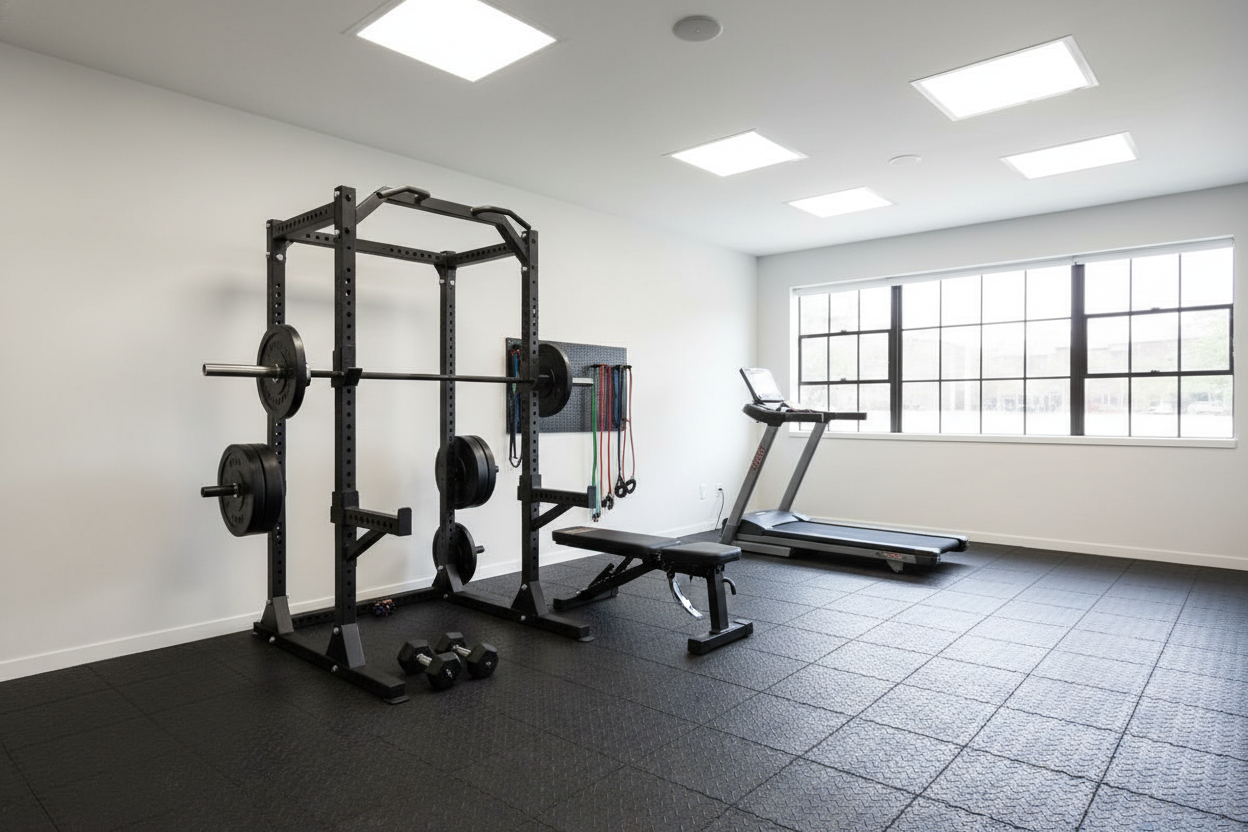
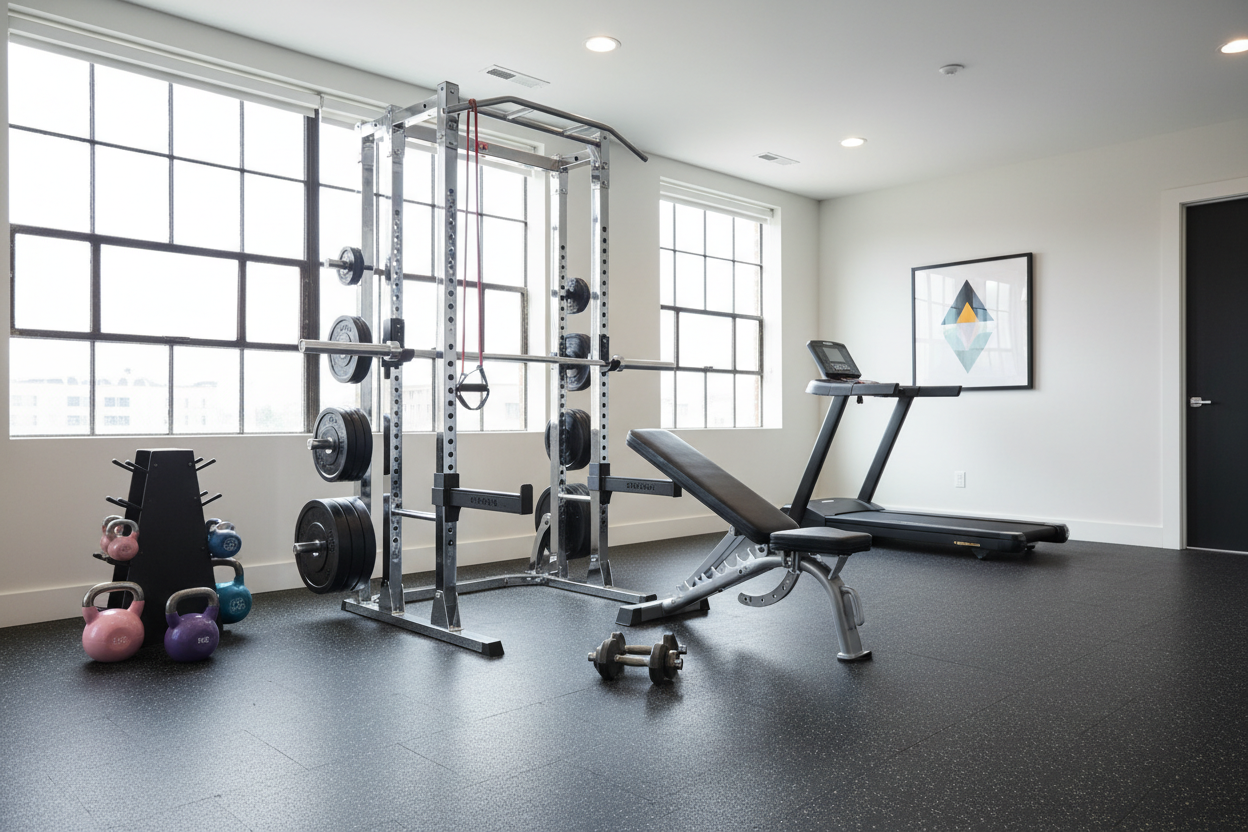
If you are training in a garage or a spare room, invest in a large exercise mat for home gym setups. You need something with a high-friction top layer that won't bunch up when you shift your weight. I’ve made the mistake of using a cheap yoga mat for heavy rows, and I ended up face-planting because the foam stretched under the load. A dense, professional-grade mat provides the ground feedback you need to drive through your heels and keep your spine neutral during heavy presses.
The One Mistake Ruining Your Upper Body Progress
The biggest killer of gains isn't your form—it's your lack of patience. I see people 'program hop' every two weeks because they didn't see a capped delt in the mirror after one workout. Stop it. Pick this routine and run it for at least eight to twelve weeks. Track your weights. If you did 20-lb presses last week, try the 22.5s today. That incremental load is the only thing that matters.
Also, eat some damn protein. You cannot build a back that looks like it belongs on an athlete if you are eating 40 grams of protein a day and living in a massive calorie deficit. Muscle is expensive for the body to maintain. Give it the building blocks (leucine, specifically) to actually repair the tissue you're breaking down in the gym. Aim for at least 0.8 grams of protein per pound of body weight. It sounds like a lot until you start seeing the definition in your rear delts.
My Personal Take
I used to be the person who only did 'abs and glutes.' My shoulders were sloped, and I had constant neck pain from sitting at a desk. When I finally started rowing heavy—I'm talking 'ugly-face-on-the-last-rep' heavy—everything changed. My posture fixed itself, and for the first time, I actually looked like I worked out even when I was just wearing a t-shirt. My biggest mistake? Using weights that were too light because I was afraid of 'bulking.' Trust me, you don't have enough testosterone to accidentally wake up looking like a pro bodybuilder. You'll just look strong.
FAQ
Do I need lifting straps for a back workout?
Only if your grip is the limiting factor. If your lats feel fresh but your hands are giving out during rows, use them. Don't let a weak grip hold back your biggest muscle groups.
Can I do this workout every day?
No. Your muscles grow while you sleep, not while you're lifting. Hit this routine twice a week with at least 48 hours of rest in between for the best results.
What if my gym doesn't have a lat pulldown machine?
Use a pull-up bar with a long resistance band for assistance, or perform 'half-kneeling' one-arm cable rows from a high pulley. Both hit the lats effectively.