Stop Searching for the Best Exercise for Glutes (You Need These 3)
I remember spending forty bucks on a 'glute guide' back in 2018 that was basically just 20 variations of air squats and fire hydrants. I felt the burn, but my actual strength didn't move an inch. Most people waste months hunting for the single best exercise for glutes like it is some hidden secret in a $90-a-month boutique gym.
The reality is simpler and harder. Your backside isn't one muscle; it is a complex group that responds to different vectors of force. If you aren't hitting all three patterns I'm about to break down, you're leaving gains on the table and likely wondering why your jeans still fit exactly the same after a year of training.
- Stop looking for one 'magic' move.
- You need horizontal loading for peak contraction at the top.
- Deep stretches under load are the biggest drivers of muscle mass.
- Single-leg work is non-negotiable for stability and fixing imbalances.
Why the 'Holy Grail' Glute Movement Is a Complete Lie
Social media likes to pretend that one specific cable kickback or a fancy new machine is the ultimate solution. It is nonsense. Your gluteus maximus is the largest muscle in your body, and it doesn't just do one thing. It extends the hip, it abducts the thigh, and it externally rotates the leg.
If you only do squats, you're missing the peak tension that comes from horizontal loading. If you only do bridges, you're missing the muscle-building magic of a deep stretch. To find the best exercises glutes actually respond to, you have to stop thinking about 'exercises' and start thinking about 'force vectors.' You need to hit the muscle from the front, the bottom, and the side to see real physical changes.
Pattern 1: The Heavy Horizontal Thrust (The Builder)
If you want to move heavy weight, you have to get comfortable with the hip thrust. This is the king of horizontal loading. Unlike a squat where the hardest part is at the bottom, the thrust puts the most tension on your glutes when they are fully shortened—right at the top of the move where you lock out.
I’ve seen people transition from light band work to a 225-lb hip thrust and see more change in three months than they did in three years. The truth about exercises for a firmer buttocks is that you have to load the movement. If you aren't using a barbell, a heavy sandbag, or a dedicated thrust machine, you aren't maximizing the 'builder' phase of your training. You need that direct, horizontal resistance to force the muscle fibers to adapt.
Pattern 2: The Deep Stretch Under Load (The Missing Link)
Thrusts are great, but they don't provide much tension when the muscle is stretched. This is where the Romanian Deadlift (RDL) or a deep, paused squat comes in. Research consistently shows that training a muscle at long lengths—meaning when it is stretched—is a massive driver for hypertrophy. This is the 'missing link' for most people who only do floor bridges.
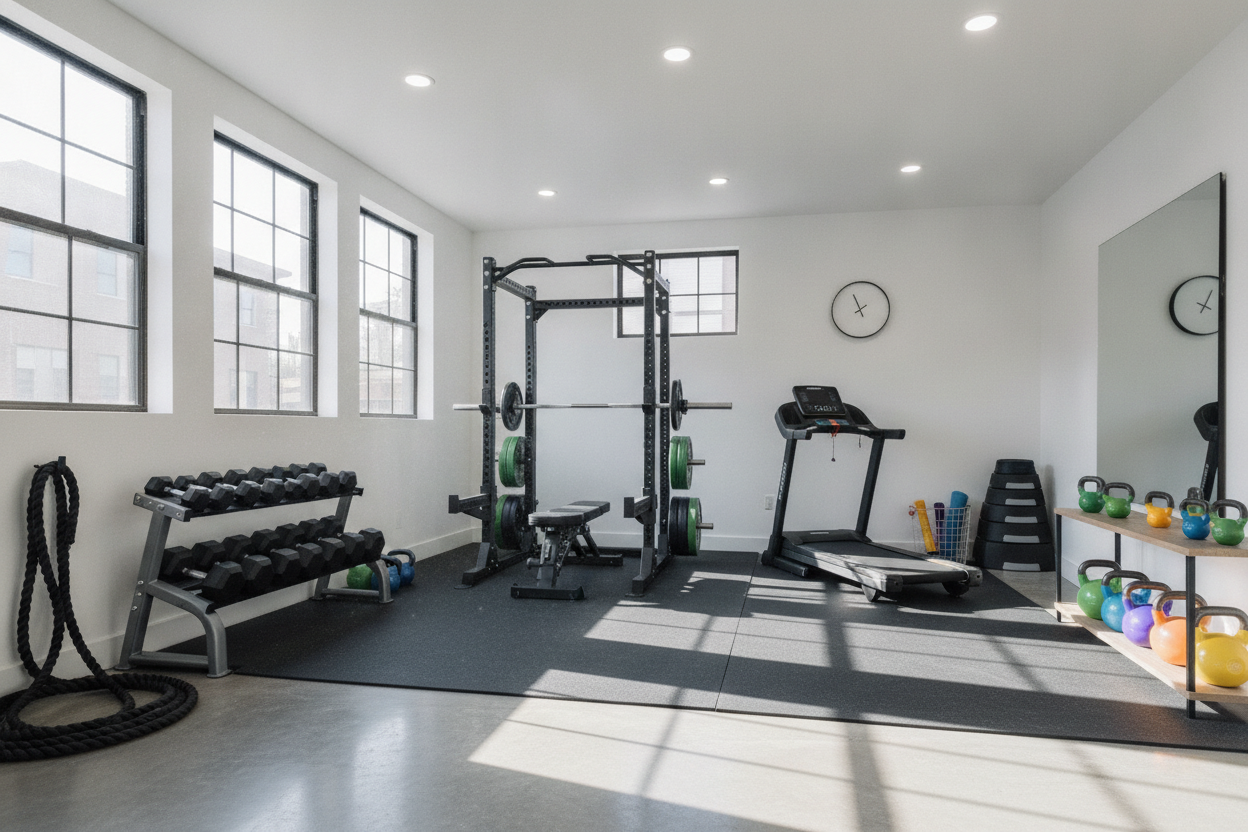
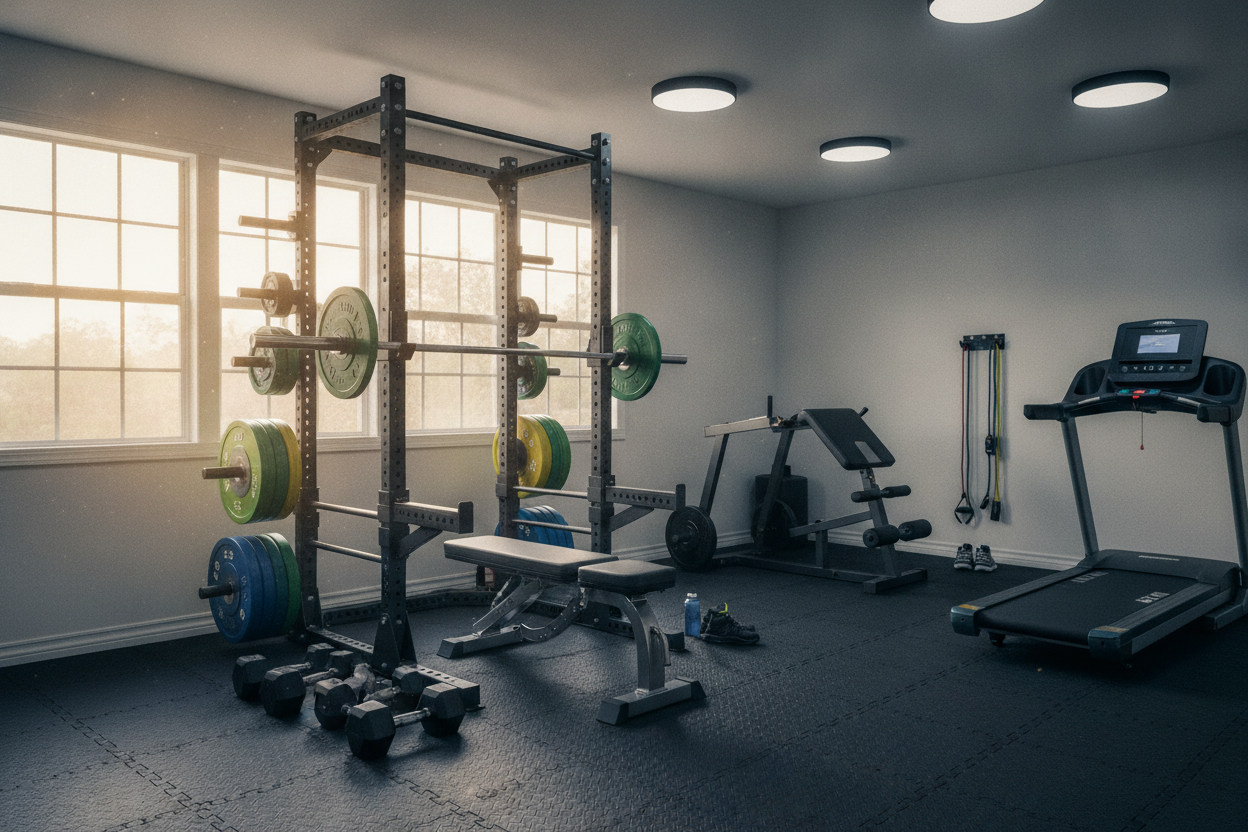
When I'm pulling 315 lbs for reps on RDLs, I need to know my feet aren't going to slide. I always recommend having high-quality gym flooring for home workout setups. If your floor is squishy or slippery, your brain will subconsciously cut your power output to keep you from falling. A solid, non-slip surface lets you sit back into your hips and get that deep stretch that actually triggers growth.
Pattern 3: Unilateral Stability Work (The Imbalance Fixer)
Most of us have a 'dumb' side. One hip is tighter, or one glute just doesn't fire as hard. If you only do bilateral lifts (two legs), your strong side will take over. This leads to hip shifts and eventually lower back pain. Unilateral work like Bulgarian split squats or deficit reverse lunges forces each side to pull its own weight.
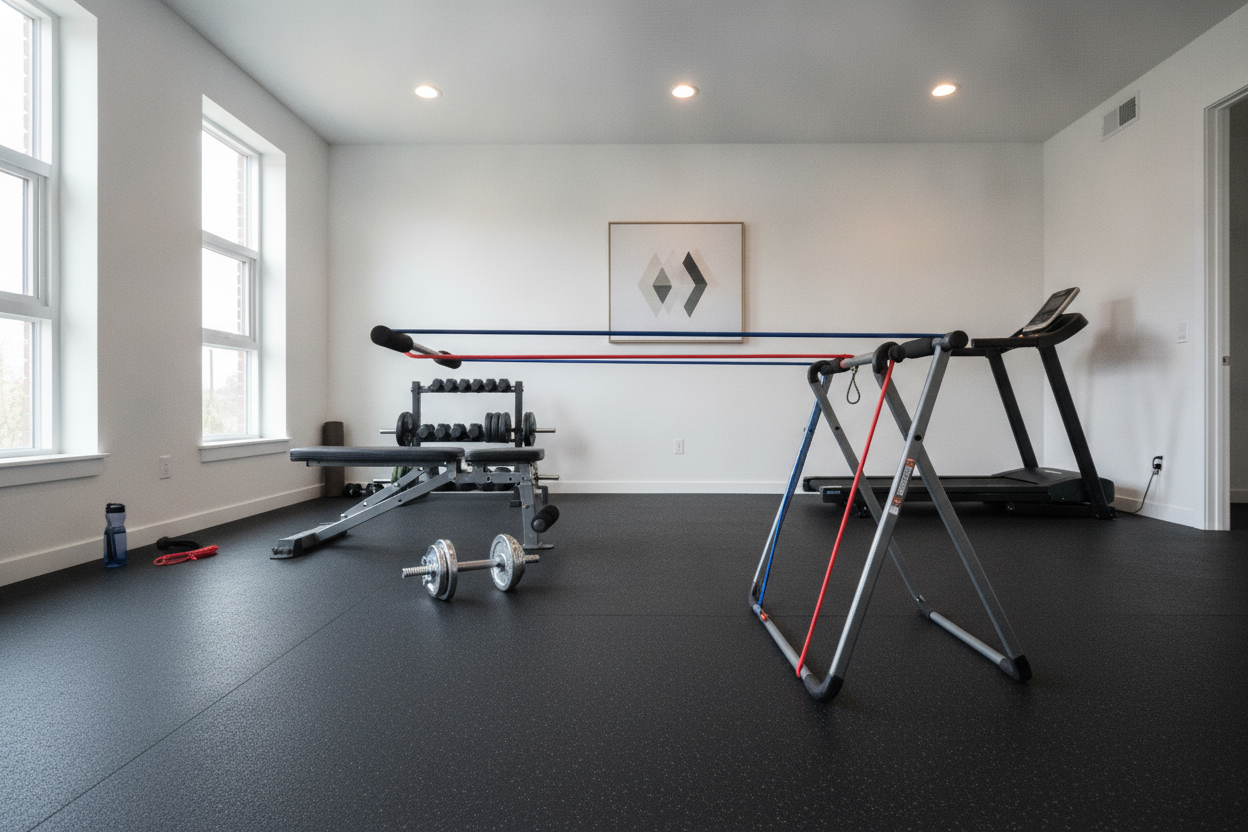
These movements are also where you will feel your glute medius—the muscle on the side of your hip—working overtime to keep you upright. Since balance is the limiting factor here, I suggest using the best large exercise mat you can find. You need enough space to step back deeply without falling off the edge of a tiny yoga mat. Stability is the foundation of force; if you're wobbling, you aren't growing.
Putting It Together: A No-Nonsense Leg Day Routine
Don't overcomplicate this. You don't need twelve different exercises. Pick one from each category and hammer them. Start with your heavy 'stretch' movement (like RDLs) while your central nervous system is fresh. Follow it up with a heavy 'thrust' movement to hit that peak contraction. Finish with a high-rep unilateral move to burn out the stabilizers.
A lot of people think they need 'toning' moves, but the best exercises for glutes women and men should focus on are the ones that allow for progressive overload. If you can't add 5 lbs or one extra rep every two weeks, the exercise isn't doing its job. Ditch the 3-lb ankle weights and pick up something that actually challenges your strength.
Personal Experience: My Biggest Mistake
For two years, I avoided hip thrusts because they looked 'weird' in my local gym. I stuck to squats and lunges. My legs got bigger, but my glutes stayed flat. The day I swallowed my pride and started thrusting 135 lbs—and eventually 400+ lbs—everything changed. My lower back pain vanished because my glutes were finally doing their job. Don't let ego or embarrassment keep you from the movements that actually work.
FAQ
How many times a week should I train glutes?
Two to three times is the sweet spot. Any more and you aren't recovering; any less and you aren't providing enough stimulus for growth.
Do I need a barbell for these?
Not necessarily. You can use heavy dumbbells or kettlebells, but eventually, you will want a barbell to keep the weight moving up as you get stronger.
Why do I feel RDLs in my lower back?
You're likely reaching with your arms instead of hinging with your hips. Keep the weight close to your shins and stop the descent when your hips stop moving backward.