Stop Scared Lifting: Why a Power Rack Is the Only Gym Partner You Need
You are lying on a bench, staring up at a loaded barbell. The weight is heavy—heavier than you've touched before. In a commercial facility, you might glance around hoping a stranger notices your struggle, or you might skip that last rep entirely to avoid the embarrassment of getting pinned. This hesitation is the single biggest killer of progress. The solution isn't a better playlist or more pre-workout; it is the physical assurance that you can fail safely. That is the primary job of a gym power rack.
Many people mistake these steel cages for torture devices or equipment reserved for competitive powerlifters. In reality, they are the cornerstone of any serious strength setup because they replace the need for a human spotter. If you want to get stronger, you have to push your muscles to near-failure. Doing that without safety mechanisms is reckless. Doing it inside a cage allows you to test your limits without risking a trip to the emergency room.
The Moment I Realized I Needed a Cage
I spent years training with a simple squat stand. It was cheap and took up very little space in my garage. One rainy Tuesday, I decided to go for a personal record on the bench press. I was alone. The descent was fine, but halfway up, my triceps quit. The bar stalled. I didn't have safety spotter arms, and I hadn't put collars on the bar, so I had to perform the "roll of shame," tilting the bar to slide the plates off one side. The bar whipped up, nearly taking out a window, and the plates crashed onto the concrete.
That noise was the sound of luck running out. I bought a full cage the next day. The difference in my training was immediate. Knowing that a lifting rack has heavy-duty safety pins set just an inch below my chest meant I could grind through that sticky point in a lift. If I missed, the steel caught the weight, not my ribcage. My bench press numbers went up 20 pounds in two months simply because the fear factor was gone.
Understanding the Mechanics of Safety
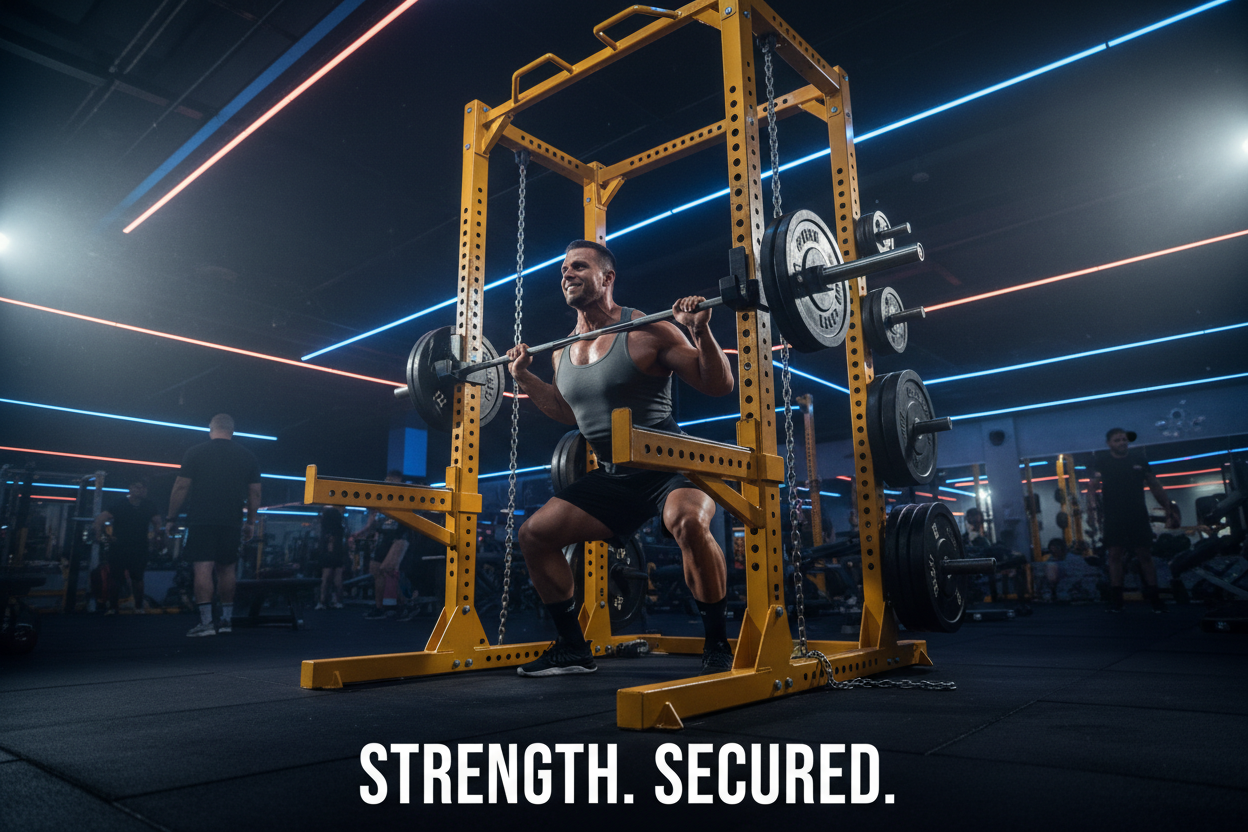
Safety isn't just about catching a falling bar; it is about the structural integrity of your environment. When you look at high-quality weight lifting racks, you are looking at a system designed to handle vertical force. The four-post design ensures that the center of gravity remains within the footprint of the equipment. Unlike independent squat stands which can tip if you rack the bar aggressively, a full rack stays planted.
This stability is crucial when you are moving heavy loads. The safety systems usually come in two forms: pin-and-pipe safeties or strap safeties. Pin-and-pipes are rigid. If you drop a loaded barbell on them, the bar might bend, but the safety will hold. Straps are more forgiving to your barbell's knurling and help dampen the noise, which is a massive benefit if you train early in the morning while family members sleep.
Hole Spacing Matters
When selecting a rack, look at the hole spacing through the bench zone. This is often called "Westside spacing," where the holes are spaced 1 inch apart rather than the standard 2 inches. This granular adjustment allows you to set the safeties at the exact height needed—high enough to catch the bar if you fail, but low enough that they don't touch the bar while you are arching and pressing.
More Than Just a Squat Station
While safety is the headline feature, versatility is the economic argument for owning one. A rack transforms a 4x4 foot space into a complete gymnasium. It acts as the anchor for almost every movement pattern. Obviously, you squat and bench inside it. But with the addition of a pull-up bar (usually standard), you cover vertical pulling. Add a dip attachment to the upright, and you have vertical pressing.
You can also use the frame for band work. attaching resistance bands to the bottom of the rack and looping them over the bar creates "accommodating resistance," making the lift harder at the top. This is difficult to replicate with standard dumbbells or machines. The uprights also serve as an anchor point for suspension trainers, allowing for bodyweight rows, face pulls, and tricep extensions. You aren't just buying a place to rack a bar; you are buying a skeleton key for functional fitness.
Managing Space and Stability
A common concern is the footprint. People worry a cage will dominate the room. While it does have a visual presence, it actually organizes your space. Most racks allow for plate storage on the back uprights. Storing your power rack weights directly on the unit does two things. First, it clears your floor of clutter, removing trip hazards. Second, and more importantly, the weight of the stored plates acts as ballast.
If you have 300 pounds of plates stored on the rear posts, that rack is virtually immovable. This means you might not even need to bolt the unit to the floor, depending on the manufacturer's recommendations and your lifting style. This self-stabilizing feature is excellent for renters or those who don't want to drill into their concrete slab. However, if you plan on doing dynamic movements like kipping pull-ups or heavy rack pulls, bolting it down is still the gold standard for safety.
Investing in Longevity
Fitness trends come and go. Vibration plates, ab rollers, and complex cardio machines often end up as expensive clothes hangers. A steel rack is different. It has no motor to burn out and no electronics to fail. It is a static asset. 11-gauge steel will likely outlive you. When you buy quality, you are making a one-time purchase.
The market is flooded with options, but the criteria remain simple. Look for a wide base, heavy steel gauge (lower number is thicker), and a weight capacity that exceeds what you ever plan to lift. Even if you only squat 200 pounds, a rack rated for 1,000 pounds offers rigidity that a cheaper model lacks. That rigidity translates to confidence, and confidence translates to more weight on the bar.
Frequently Asked Questions
Do I really need a full power rack, or is a half rack sufficient?
A half rack saves space and is generally easier to move, but a full power rack offers superior safety because you are lifting inside the cage. If you train alone and lift heavy, the full enclosure prevents the bar from traveling outside the safety zone, making it the safer option for solo lifters.
Does a power rack need to be bolted to the floor?
Ideally, yes, especially if you perform kipping pull-ups or use heavy resistance bands. However, many modern racks are designed with flat-footed bases or allow you to store weights on the uprights to weigh them down, which can provide enough stability for static lifts like squats and bench presses without drilling into concrete.
What is the most important feature to look for in a rack?
The safety system is paramount. Look for a rack that includes reliable safety spotter arms, straps, or pins that are easy to adjust. Additionally, check for "Westside spacing" (1-inch hole spacing) in the bench press area, as this allows you to set the safeties at the perfect height to protect you without interfering with your lift.