Stop Sabotaging Your Thigh Muscle Workout (Do This Instead)
Let’s be honest: leg day is the day most people dread. It taxes your central nervous system, leaves you waddling for days, and often yields slow results despite the effort. If you have been hammering away at the squat rack without seeing significant growth or definition, the problem usually isn't your effort—it's your programming.
Building a powerful lower body requires more than just mindless reps. It requires a strategic approach to tension, volume, and recovery. This guide breaks down the science of a proper thigh muscle workout, moving beyond the basics to help you construct legs that are as functional as they are aesthetic.
Key Takeaways: The Upper Leg Blueprint
- Anterior vs. Posterior Balance: A complete routine must balance quad dominance with equal hamstring attention to prevent injury.
- Time Under Tension (TUT): Rushing reps kills gains. Slowing down the eccentric (lowering) phase recruits more muscle fibers.
- Compound First, Isolation Second: Always prioritize multi-joint movements when your energy stores are highest.
- Unilateral Training: Single-leg movements are non-negotiable for fixing strength imbalances.
The Anatomy of Effective Leg Training
To maximize hypertrophy, you need to understand what you are actually targeting. 'Thighs' is a broad term. To build a three-dimensional look, you must categorize your exercises for upper leg muscles into three distinct zones:
- The Quads (Anterior): The powerhouse extenders on the front of the leg.
- The Hamstrings (Posterior): The knee flexors on the back that give the leg its thickness from the side.
- The Adductors (Inner Thigh): Often neglected, these provide the width and stability necessary for heavy lifting.
The Compound Foundation
You cannot sculpt a pebble. You need mass first. This is where your heavy upper leg muscle exercises come into play.
The High-Bar Squat
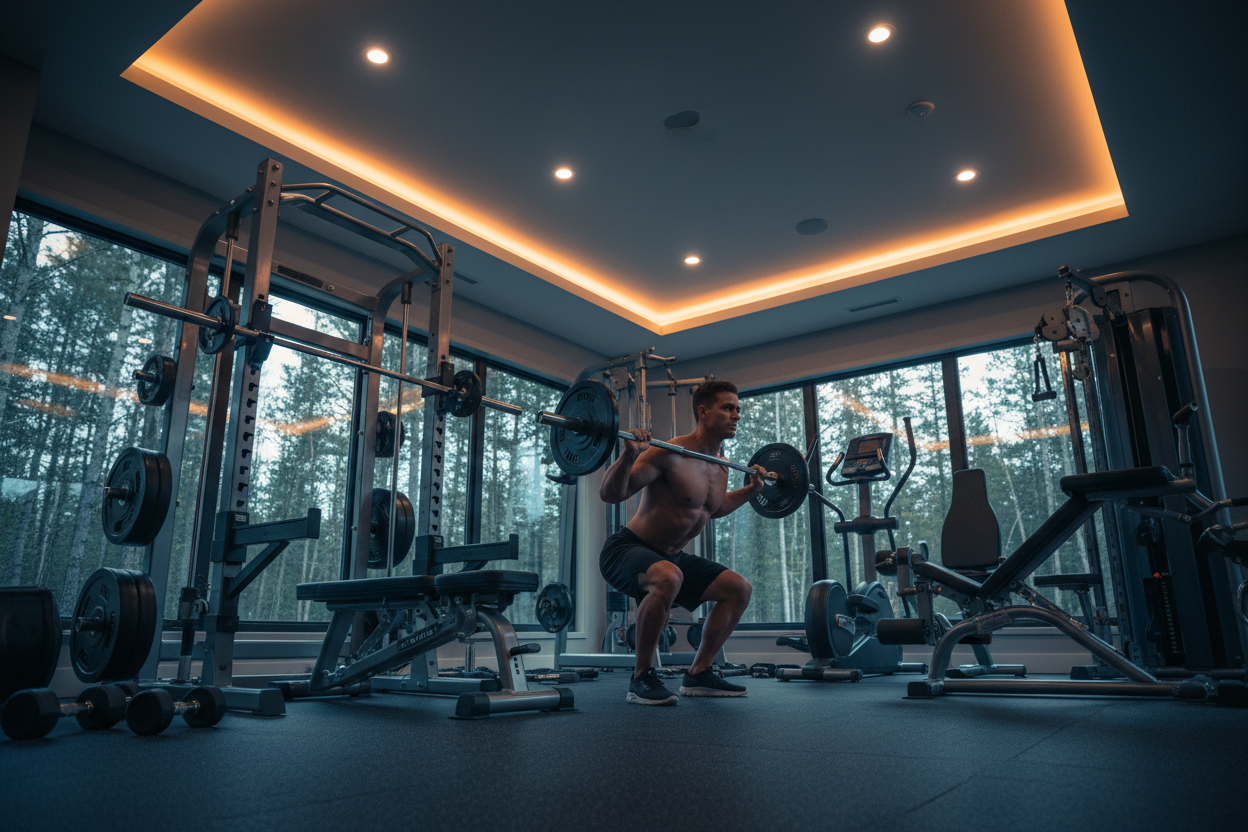
While low-bar squats allow for more weight, the high-bar position forces a more upright torso. This increases the degree of knee flexion, shifting the mechanical load directly onto the quadriceps. Focus on depth rather than ego. If your hips don't break parallel, you are shortchanging the muscle stretch.
The Romanian Deadlift (RDL)
Most lifters treat deadlifts as a back exercise. However, the RDL is the king of upper leg muscles workout routines for the posterior chain. Keep a slight bend in the knee and push your hips back as if trying to close a car door with your glutes. The goal is a deep stretch in the hamstrings, not touching the floor.
Refining with Unilateral Movements
Bilateral movements (using both legs) hide weaknesses. If your right leg is 10% stronger than your left, a standard squat will only exacerbate that imbalance over time.
Bulgarian Split Squats
These are uncomfortable, but they work. By elevating the rear foot, you isolate the front leg's quad and glute. This is one of the most effective upper thigh exercises for muscle growth because it demands stability. If you aren't wobbling slightly on your last rep, you likely aren't going heavy enough.
My Training Log: Real Talk
I want to share a specific reality of this training style that textbooks don't mention. Last Tuesday, I was finishing a high-volume leg session focusing on time under tension. I was doing leg extensions—usually seen as an 'easy' finisher.
I wasn't just kicking the weight up. I was holding the peak contraction for two seconds and taking four seconds to lower it. By the third set, the vinyl seat became a slip-n-slide because I was sweating so much, and I actually had to grip the side handles with white-knuckle intensity just to keep my butt in the seat. The burn wasn't a general ache; it was a specific, searing heat right above the kneecap (the VMO) that made walking down the gym stairs afterward feel like a high-stakes gambling match. If you don't feel that specific instability in your knees immediately after the session, you probably didn't control the eccentric phase enough.
Conclusion
Building impressive legs is a marathon, not a sprint. It requires a willingness to endure discomfort and a commitment to strict form over heavy ego lifting. Implement these strategies, focus on the eccentric portion of every lift, and ensure you are eating enough to support the repair of such large muscle groups.
Frequently Asked Questions
How often should I perform a thigh muscle workout?
For most natural lifters, training legs twice a week is optimal. This frequency allows for sufficient volume to stimulate growth while providing roughly 48 to 72 hours of recovery time between sessions, which is crucial for protein synthesis.
Can I do effective upper leg muscle exercises at home?
Absolutely. While barbells are great, you can achieve significant hypertrophy with dumbbells or kettlebells. Exercises like goblet squats, walking lunges, and Nordic hamstring curls are incredibly challenging and require minimal equipment.
What are the best upper thigh exercises for muscle definition in the inner leg?
To target the adductors (inner thigh), you need lateral movements. Cossack squats and sumo deadlifts (wide stance) are superior choices. Additionally, ensuring deep squats activates the adductors significantly as they work to stabilize the femur out of the bottom position.