Stop Rushing: The Secret to a Fit Upper Body Workout at Home
I remember staring at my 50-pound adjustable dumbbells a year ago, feeling like I had 'outgrown' them. I was blasting through sets of twelve, hitting my upper body workout men routine with the speed of a caffeinated squirrel. I thought I was strong. I wasn't; I was just really good at using momentum to hide my weaknesses. To get a truly fit upper body workout in a garage gym, you have to stop treating gravity like a suggestion and start treating it like an opponent.
The biggest mistake I see in home gyms isn't the lack of equipment—it's the lack of control. If you're rushing your reps just to check a box on your upper body workout chart, you're leaving about 40% of your gains on the rubber flooring. You don't need a $3,000 functional trainer to build a thick back and wide shoulders; you need to master the eccentric phase.
Quick Takeaways
- Slow the lowering phase of every lift to a strict 4-second count.
- Floor presses are often superior to bench presses for shoulder longevity and tricep recruitment.
- Limited weight isn't a barrier if you increase time under tension.
- A stable, non-slip floor is more important than a fancy adjustable bench.
Why You're Maximizing Momentum Instead of Muscle
Most upper body weight training workouts fail because of 'ego-speed.' When you're training at home with limited weight, there’s a natural tendency to move faster to make the set feel 'harder.' You’re bouncing the dumbbells at the bottom of a chest press or using a hip hinge to cheat your way through a row. This isn't an upper body gym routine; it's a full-body interpretive dance.
When you rush, you bypass the hardest part of the lift. Your muscles aren't actually doing the work—your tendons and momentum are. This leads to the classic plateau where you can't seem to get stronger despite 'putting in the reps.' If you're following a gym exercise upper body plan and not seeing results, your tempo is likely the culprit. You need to earn every inch of the rep, especially the part where the weight is moving toward the floor.
The Brutal Magic of the 4-Second Negative
Eccentric overload is the closest thing to a 'cheat code' for home lifters. Science tells us that we are significantly stronger during the lowering phase of a lift than the lifting phase. By slowing down the descent to a full four seconds, you force your muscle fibers to stay engaged under load for a much longer duration. This makes a 30-pound dumbbell feel like a 60-pounder real fast.
While a standard upper body weight workout routine might focus on moving weight from point A to point B, a tempo-focused upper body fitness plan focuses on the journey. This constant tension creates more micro-tears in the muscle tissue, which is the primary driver for hypertrophy. You don't need a massive rack of weights; you just need a stopwatch and some discipline. It turns a boring upper body lift workout into a grueling test of will.
Structuring Your Tempo-Based Upper Body Strength Routine
If you want a workout for upper body dominance that actually works, keep it simple. Pick four or five compound movements and apply the 4-0-1-0 tempo (4 seconds down, 0 rest at bottom, 1 second up, 0 rest at top). Start with the Floor Press. Unlike the bench press, the floor provides immediate feedback. If you drop the weights too fast, your elbows pay the price. Control the descent until your triceps barely kiss the mat, then drive up.
Follow this with Tempo Dumbbell Rows. Most people turn rows into a bicep curl/shrug hybrid. By slowing down the extension, you're forced to keep your lats engaged. For your upper body lifting routine, finish with strict Overhead Presses. No leg drive allowed. If your knees bend, the rep doesn't count. This upper body weightlifting routine isn't about how much you can lift; it's about how much you can control.
Why Your Floor Matters More Than an Expensive Bench
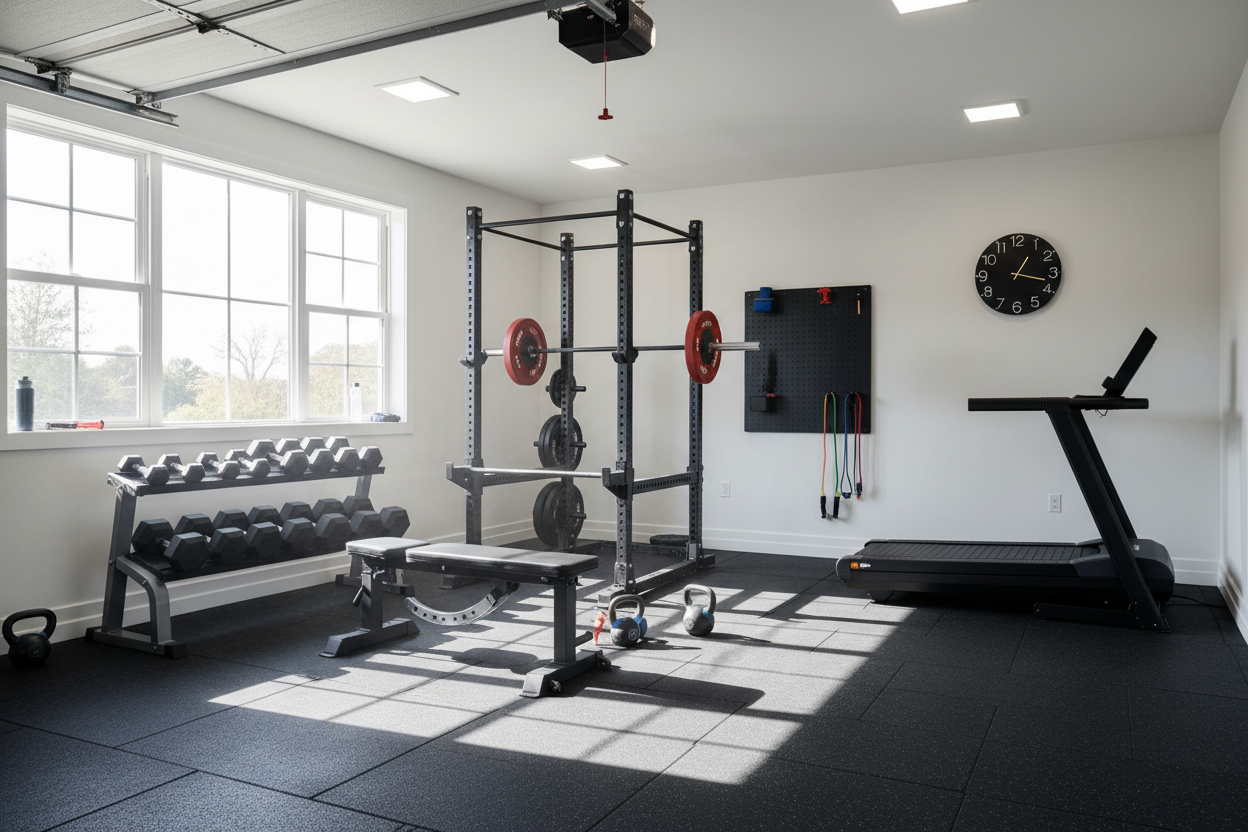
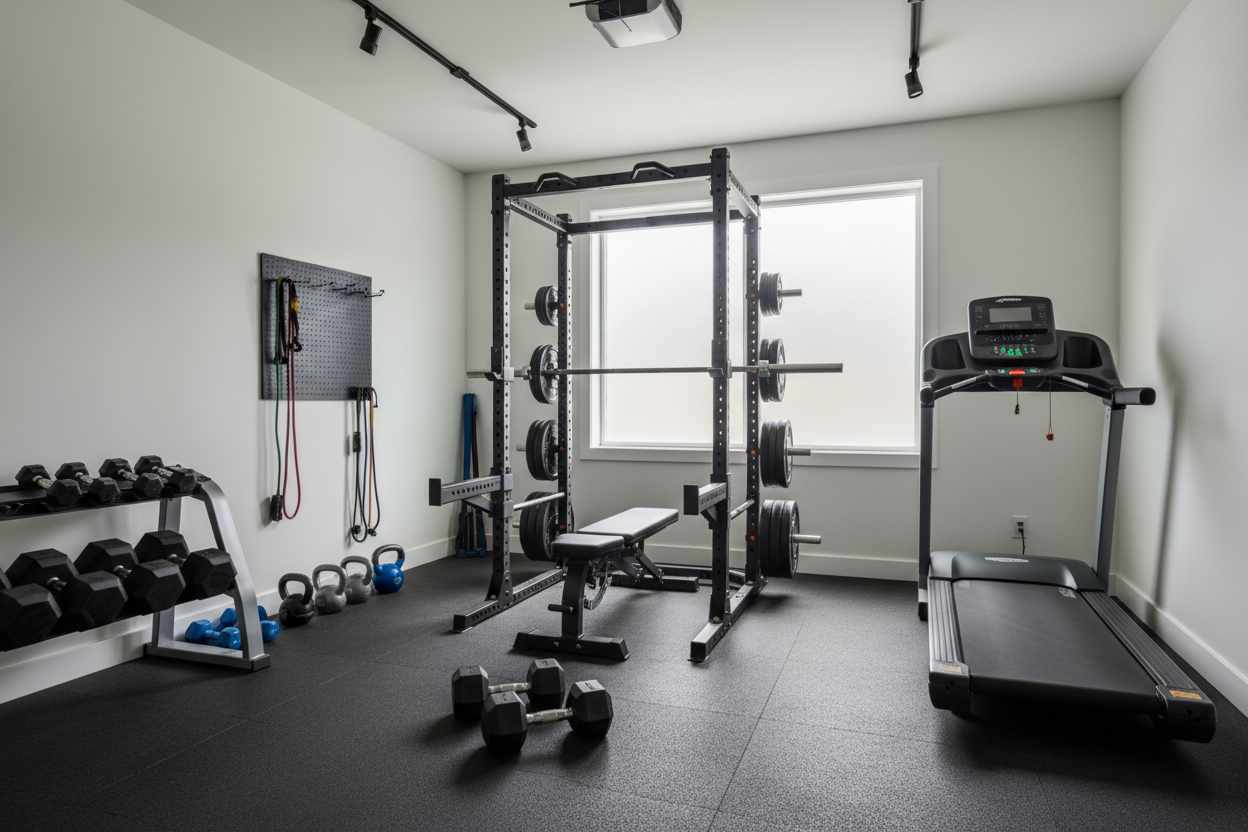
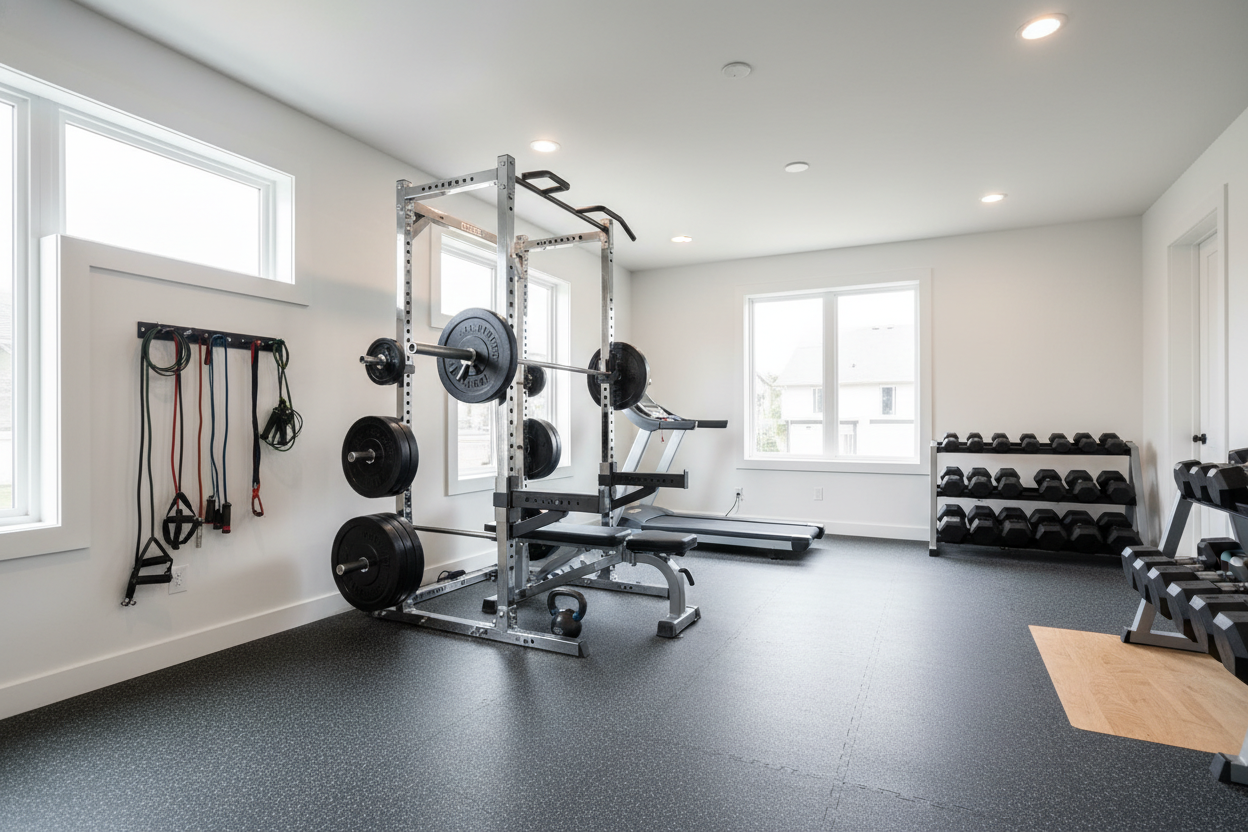
I’ve spent thousands on my garage setup, but the best investment wasn't the rack—it was the flooring. When you’re doing a heavy upper body weight training routine involving floor presses or renegade rows, you need a surface that doesn't compress or slide. If your feet are slipping during a max-effort press, your power output drops instantly. Your body won't let you exert maximum force if it doesn't feel stable.
I recommend a dense exercise mat gym flooring to provide that 'anchored' feeling. Unlike cheap foam tiles that pull apart, a high-density mat protects your elbows during those slow-tempo floor presses and keeps your dumbbells from cracking the concrete when you set them down. It’s the foundation of any serious upper body workout plan at gym or home.
Mixing Slow Tempos with High-Intensity Finishers
Tempo training is incredible for building muscle, but it can leave your heart rate a bit stagnant. To turn this into a whole upper body workout that also burns fat, I like to cap the session with a high-intensity finisher. After you've exhausted your muscles with slow eccentrics, spend 10 minutes doing something fast and explosive. This builds work capacity without sacrificing the strength gains you just worked for.
You can pair your lifting with a killer HIIT workout strength training finisher. Think mountain climbers, push-up flurries, or shadow boxing. This 'power-hour' approach ensures you're hitting all your metabolic bases. You get the muscle-building benefits of the slow-tempo upper body training plan and the cardiovascular benefits of a HIIT session in one go.
Personal Experience: The Day I Swallowed My Pride
Two years ago, I hit a wall with my bench press. My shoulders were constantly 'clicky,' and I wasn't seeing any new growth in my chest. I was obsessed with the 225-lb milestone. I finally stripped the bar down to 135 and forced myself to do 5-second negatives. It was humiliating. I could barely finish eight reps. But within six weeks, the shoulder pain vanished, and my shirts started fitting tighter in the chest and arms. I realized I hadn't been training my muscles; I'd been training my ego. Slowing down was the only way to move forward.
FAQ
Do I need heavy weights for this routine?
Not necessarily. Because the 4-second negative increases time under tension, even moderate weights feel heavy. If you only have 20-lb dumbbells, you can just slow the negative down even more—try 6 or 8 seconds. It’s about the stimulus, not the number on the plate.
How many times a week should I do an upper body day?
For most people, a twice-a-week upper body day workout plan is the sweet spot. This allows for 48-72 hours of recovery between sessions. Since tempo training is more taxing on the nervous system, you’ll need that extra rest to grow.
Can I do this if I have joint pain?
Actually, tempo training is often recommended for those with joint issues. By removing the 'bounce' and momentum, you put the stress on the muscle belly rather than the connective tissue. Just make sure your form is locked in and you're training on a supportive surface.