Stop Piecing Together Your Bodybuilder Man Workout from TikTok
You’re halfway through a set of heavy rows in your garage when a notification pops up. It’s a 30-second clip of a pro bodybuilder performing a ‘secret’ lat isolation movement using a resistance band and a step ladder. Suddenly, the workout you spent twenty minutes planning feels obsolete. You ditch the rows, grab a band, and waste fifteen minutes trying to mimic a movement that provides half the stimulus for twice the setup time.
This is the trap of the modern bodybuilder man workout. We are drowning in 'optimal' hacks while starving for basic consistency. I’ve spent a decade in drafty garages and over-leveraged commercial gyms, and I can tell you that the most impressive physiques weren't built on a rotating menu of social media trends. They were built on boring, repetitive, and brutally heavy lifting.
Quick Takeaways
- Stop changing your exercises every week; 'muscle confusion' is a myth that kills progress.
- A rigid bodybuilding workout template is superior to any 'daily' inspiration.
- Focus on big compound movements before worrying about 'peak contraction' isolation.
- Physical tracking on paper beats any app for maintaining focus and intensity.
The Frankenstein Routine Destroying Your Gains
Social media has turned us into exercise hoarders. We see a new variation, add it to the pile, and call it a body building regimen. The result is what I call the Frankenstein Routine—a chaotic mess of 'optimal' movements that lack a cohesive structure. You end up doing three different types of lateral raises but forget to do a single heavy overhead press. This isn't a gym routine bodybuilding strategy; it's a recipe for plateaus and tendonitis.
The biggest issue with this approach is junk volume. When you smash together random exercises from five different influencers, you lose track of total weekly sets. You might be hitting your front delts eighteen times a week while your rear delts haven't seen a stimulus in a month. This imbalance doesn't just look bad; it wrecks your shoulder health. A typical bodybuilder workout should be balanced, not a collection of whatever was trending on your feed this morning.
Real growth happens when you master a movement, not when you constantly introduce new ones. If you're always trying a new 'hack,' you never get past the neurological learning phase of an exercise. You're getting better at the movement, but you aren't necessarily making the muscle bigger. You need a program that stays the same long enough for you to actually get strong in the 8-to-12 rep range.
Why You Need a Rigid Bodybuilding Workout Template
The secret to the most effective bodybuilding routine isn't variety—it's boredom. You need to do the exact same lifts, in the exact same order, for at least 8 to 12 weeks. This is why a rigid bodybuilding workout template is the most valuable tool in your arsenal. It removes the decision fatigue. When you walk into your gym, you shouldn't be wondering what to do; you should be looking at what you did last week and trying to beat it by five pounds or one rep.
If you keep changing the variables, you can't track progressive overload. Did you get stronger, or did you just switch from a barbell bench to a plate-loaded machine that has a different leverage curve? You don't know. By sticking to a men's bodybuilding program that uses fixed movements, you turn your training into a data-driven process. If you're looking for a place to start without the guesswork, I suggest checking out a structured Workout Hub to find a plan that actually has some science behind it.
A solid men's bodybuilding routine focuses on the long game. Day 1 bodybuilding might feel easy because you aren't at your limit yet, but by week six, those same movements will be grueling. That’s where the growth is. Don't chase the 'pump' from a new exercise; chase the numbers on a proven template. Reliability is the foundation of hypertrophy.
How to Build a Bodybuilding Program That Actually Makes Sense
Building a complete bodybuilding program isn't about picking your favorite body parts; it's about hitting every biomechanical function of the body. You need a vertical pull (pull-ups/pulldowns), a horizontal pull (rows), a vertical push (overhead press), a horizontal push (bench press), a hip hinge (deadlifts/RDLs), and a squat pattern. If your sample bodybuilding workout plan has six different bicep curls but no hip hinge, you're building a house on a sand foundation.
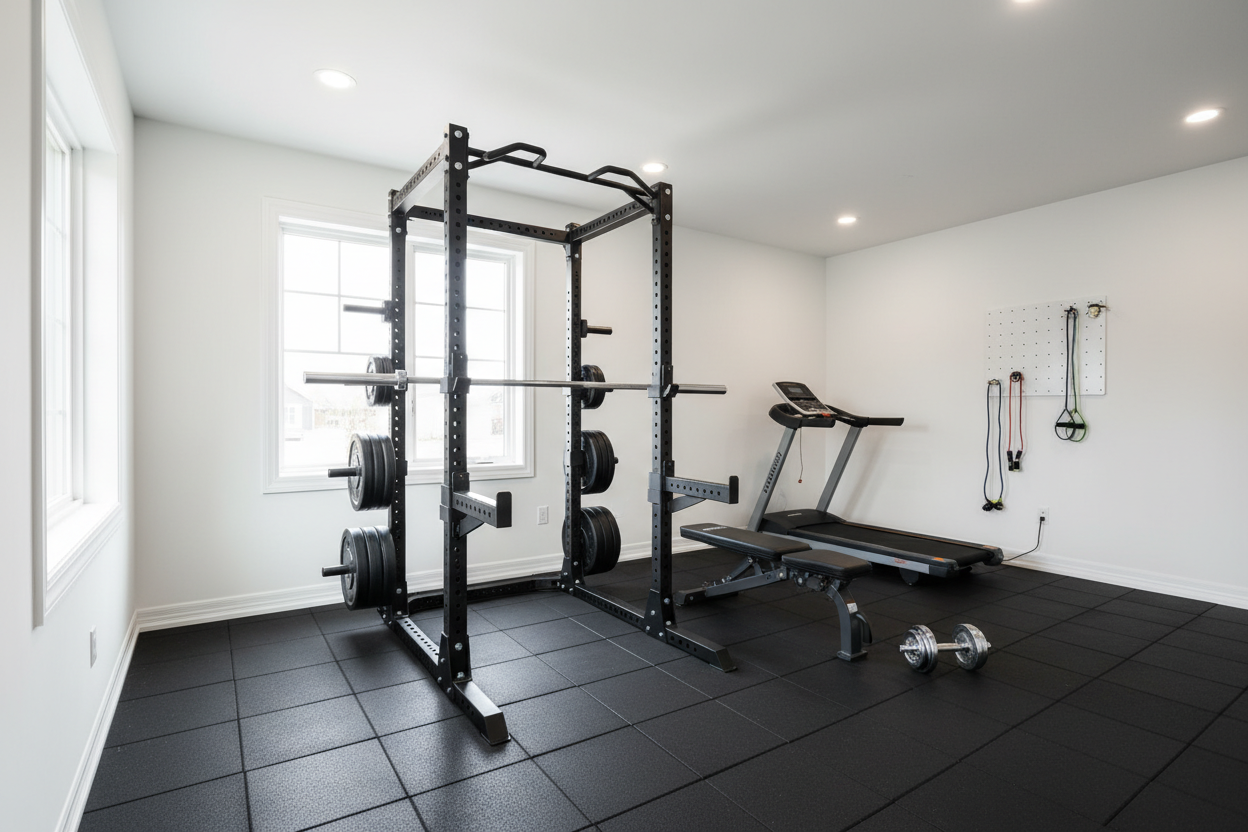
For the home lifter, setup is everything. You don't have the luxury of thirty different machines. You have to make your space work for you. When I'm doing heavy Romanian deadlifts or floor-based dumbbell presses, I make sure I'm working on a stable surface like a 6X4Ft Yoga Mat Exercise Mat Gym Flooring For Home Workout. It protects the floor and, more importantly, gives your feet the grip they need so you don't slide mid-set. Stability equals force production.
A full bodybuilding course should teach you that isolation moves are the 'icing,' not the cake. Spend 70% of your energy on those big compound movements. The remaining 30% can go toward those isolation moves that target specific weak points. This ensures you're getting the systemic stimulus needed for overall mass while still sculpting the details. This is the difference between a 'fitness' routine and a professional bodybuilding style workout.
Adapting the Lifts for Your Garage Gym
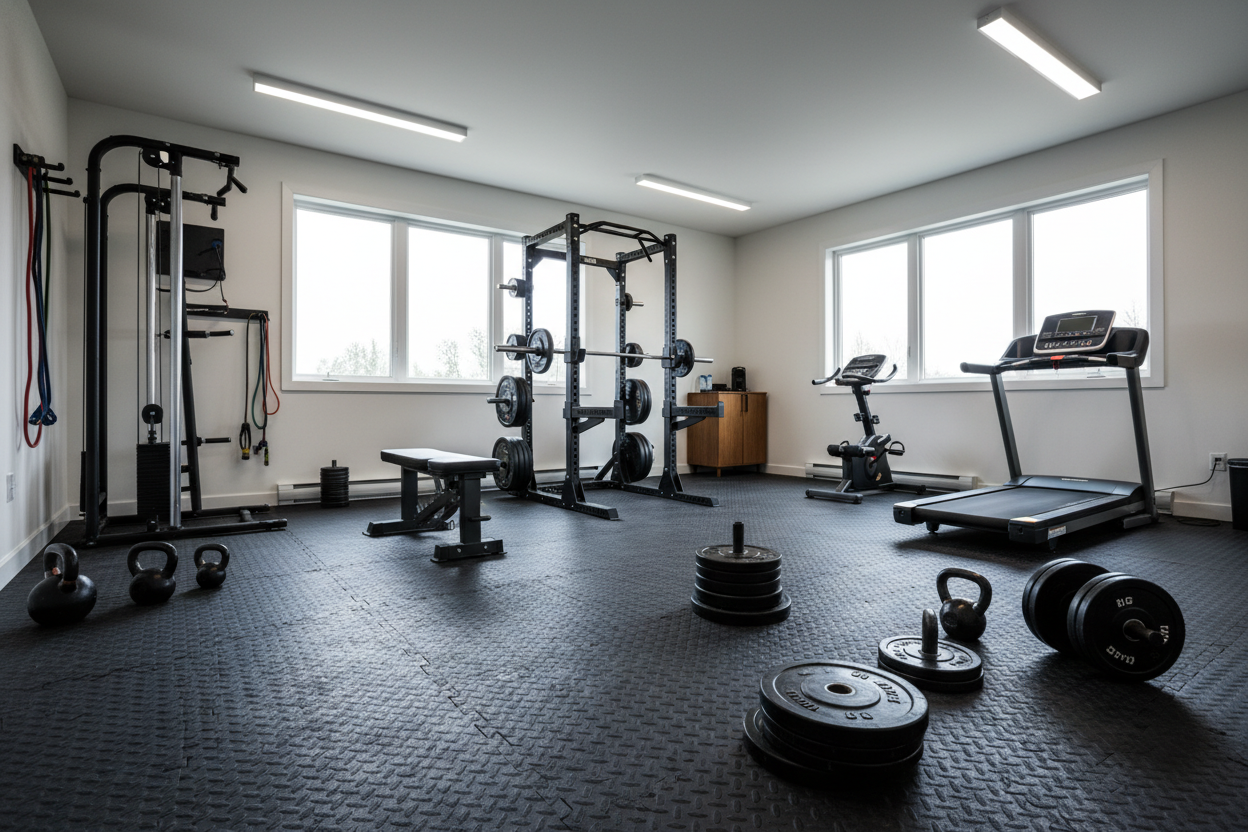
Most bodybuilding programs are written for commercial gyms with endless cable stacks and specialized machines like the hack squat or the Pec Deck. When you're in a garage, you have to get creative to maintain a complete bodybuilding workout. You don't need a $3,000 functional trainer to build big lats; a heavy set of barbell rows and some weighted chin-ups will do more for your back than any cable crossover ever could.
The challenge at home usually comes down to intensity and equipment limits. If you find yourself hitting the ceiling of your adjustable dumbbells, you need to change your variables. I’ve written before about what to do when you’re Out of Plates? How to Fix Home Workout Plans Bodybuilding Style, and the principles remain the same: slow down your tempo, decrease your rest periods, or use pause reps. You don't always need more weight to create more tension.
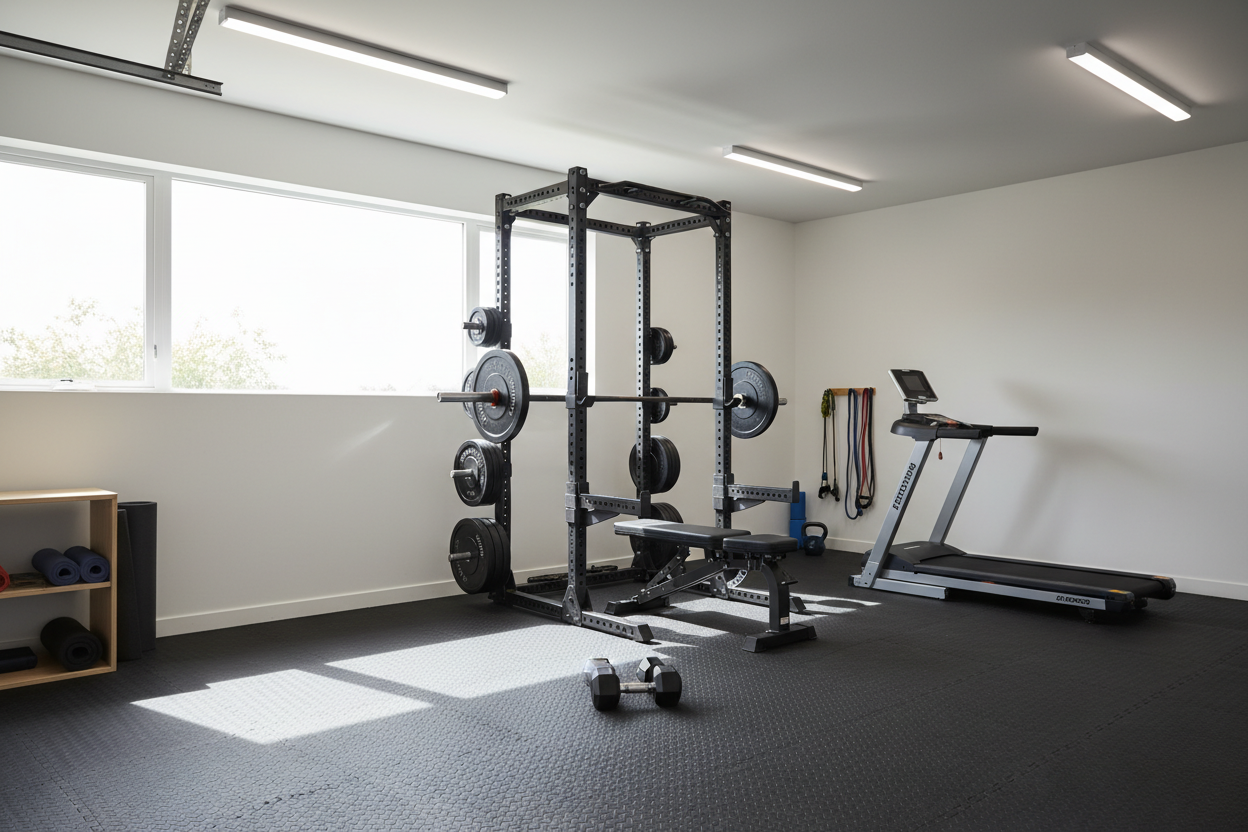
Focus on the 'feel' of the muscle, but don't let that be an excuse for light weights. Use your rack, your bench, and your floor space to mimic the angles of commercial machines. A floor press can replace a chest press machine; a Landmine row can replace a T-bar row machine. The muscle doesn't know if the resistance comes from a $5,000 Italian machine or a rusty iron plate—it only knows tension and fatigue.
Print It Out: The Power of the Bodybuilding Workout Sheet
I’m going to say something that makes me sound like a dinosaur: stop using your phone to track your workouts. Every time you open a tracking app, you’re one swipe away from an email, a text, or an Instagram rabbit hole. A physical bodybuilding workout sheet is a contract with yourself. When you write down your sets and reps on a piece of paper, you stay locked into the session. It becomes a bodybuilding steps chart that you must complete before you leave the room.
There is a psychological win in physically crossing off a set. It keeps the intensity high and the distractions low. Your bodybuilding workout sheet doesn't need to be fancy—a simple spiral notebook or a printed PDF works perfectly. The goal is to see your history in ink. When you can look back and see that three weeks ago you only got 225 for six, and today you got it for eight, that is undeniable proof of progress.
My Personal Experience: The Tendonitis Lesson
A few years ago, I fell into the 'more is better' trap. I was following three different 'pro' arm routines simultaneously. I had eight different types of curls on my bodybuilding workout template. I thought I was being 'optimal.' Instead, I developed such bad distal biceps tendonitis that I couldn't even pick up a coffee cup, let alone a barbell. I had to take three months off from heavy pulling. I learned the hard way that junk volume isn't just a waste of time—it's a physical liability. Now, I do two bicep exercises a week, I do them with perfect form and maximum intensity, and my arms are bigger than they ever were during my 'Frankenstein' phase.
FAQ
How many days a week should I train for bodybuilding?
For most natural lifters, 4 to 5 days is the sweet spot. This allows for enough frequency to hit muscle groups twice a week while providing 2 to 3 full days of recovery. Remember, you grow while you sleep, not while you're lifting.
Can I build a pro physique with just a barbell and dumbbells?
Absolutely. Some of the greatest physiques in history were built in 'dungeon' gyms with nothing but basic iron. Machines are great for isolation, but barbells and dumbbells build the dense, thick muscle that forms the base of a bodybuilder man workout.
What is the best rep range for hypertrophy?
While the 8-12 range is the classic 'sweet spot,' research shows that anything from 5 to 30 reps can build muscle as long as you are training close to failure. Mix heavy sets of 6-8 with moderate sets of 12-15 for the best results.