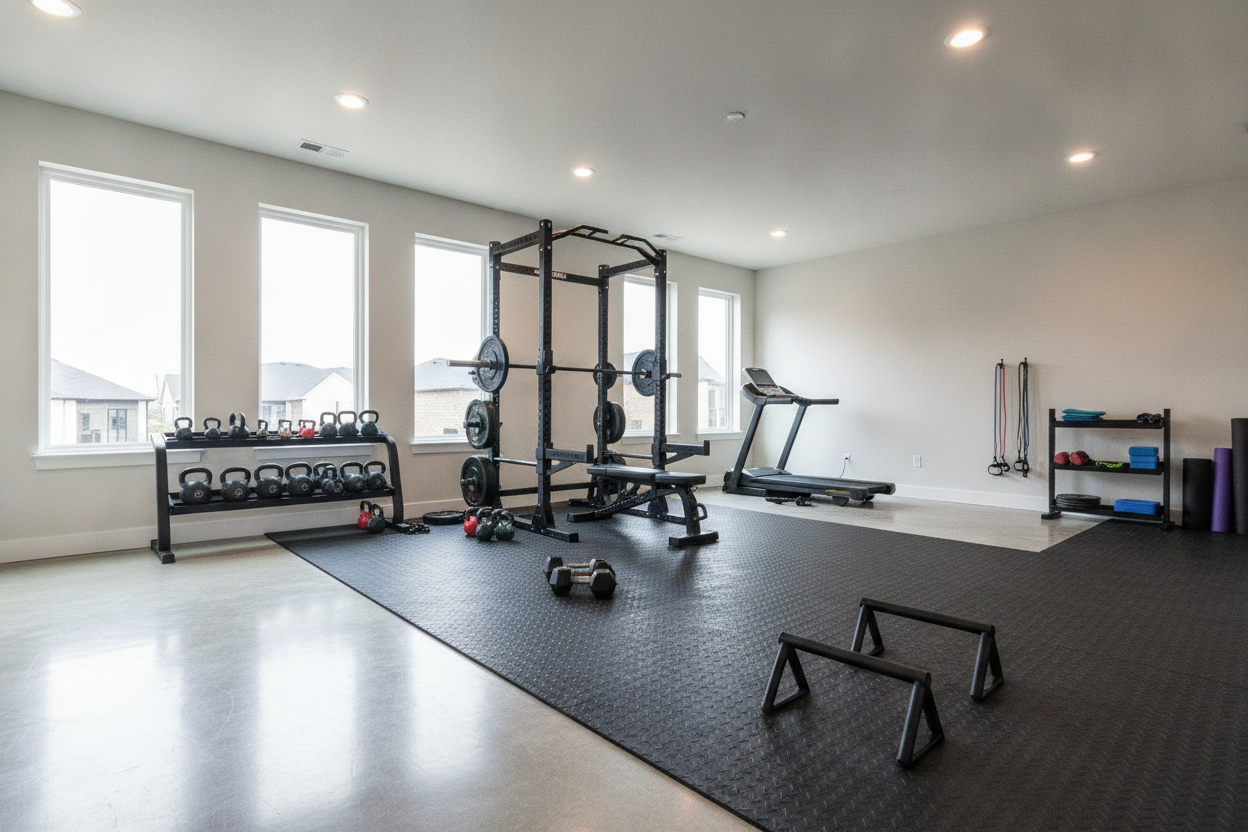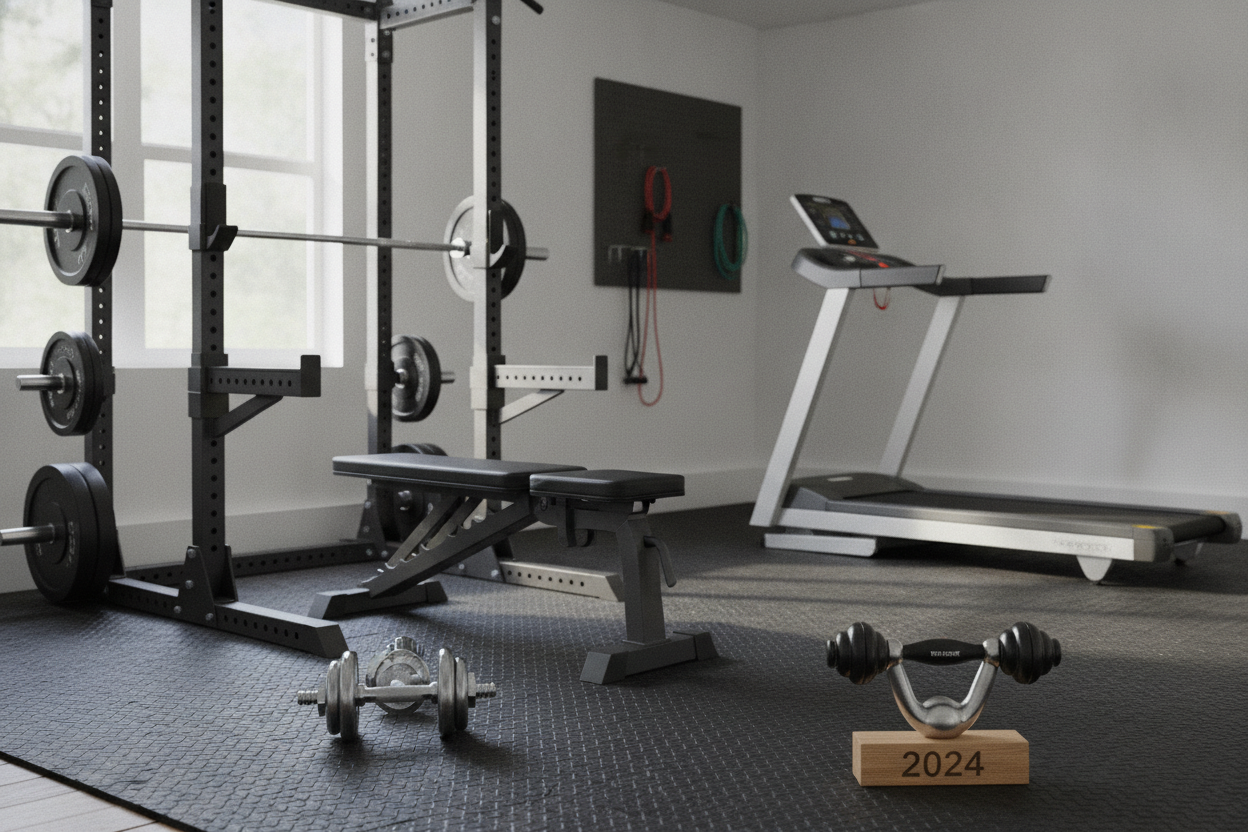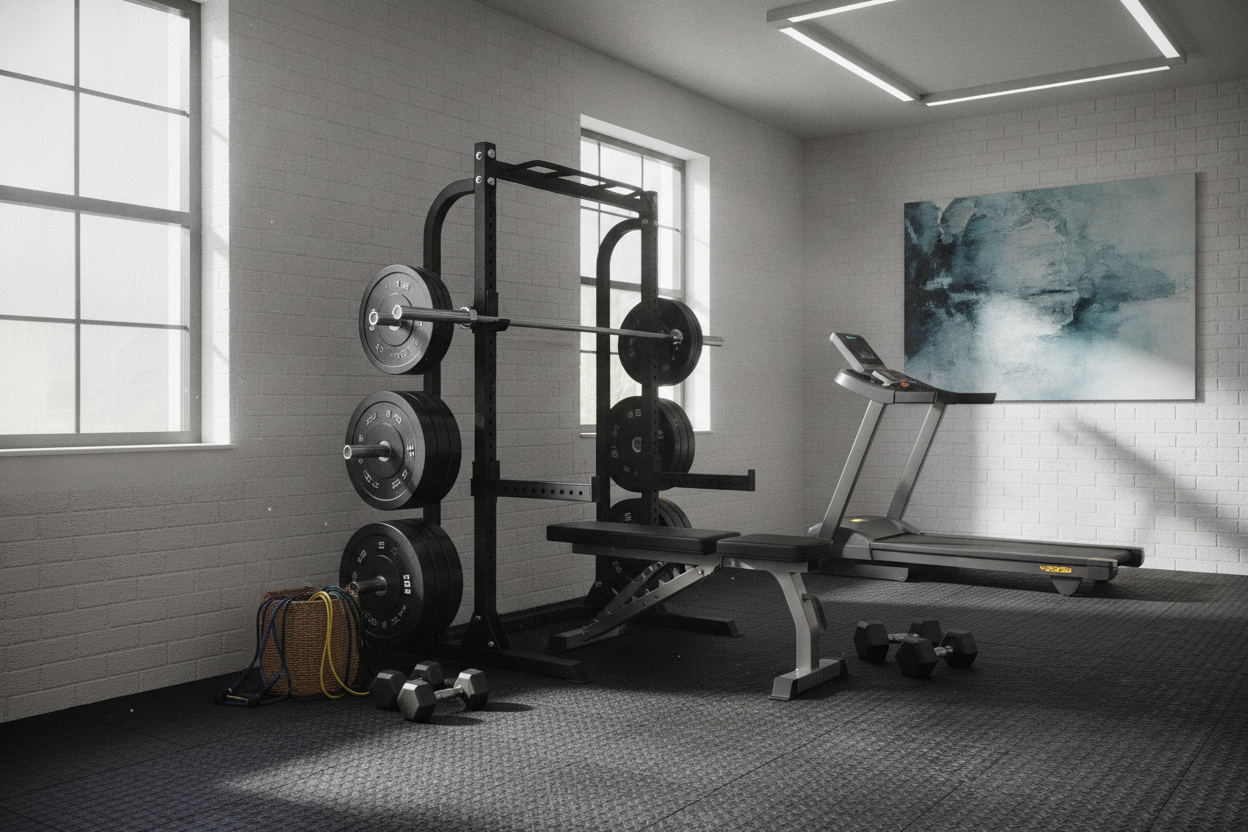
Stop Overthinking How to Use Home Gym Spaces and Do This
You spent three weeks researching 11-gauge steel versus 14-gauge. You tracked the freight carrier like a hawk. You spent a Saturday afternoon bruising your knuckles with a socket wrench. Now, you are standing in your garage, staring at 400 pounds of iron and a powder-coated squat rack, and you have no idea what to do first. It is a weirdly quiet moment that every new owner faces when learning how to use home gym setups for the first time.
The transition from a commercial club to a personal space is jarring. There is no front desk person to nod at, no ambient techno music, and no guy hogging the bench to get you fired up. Learning how to use home gym equipment effectively is not just about the mechanics; it is about breaking the paralysis that comes when the structure of a public gym disappears and you are left with nothing but your own reflection and a pile of plates.
Quick Takeaways
- Set your safety pins before your first rep—don't wait until you're pinned.
- Dial in your J-cup height so you aren't doing a calf raise to unrack the bar.
- Master the 2:1 pulley ratio on your machines to avoid jerky movements.
- Follow a basic Push/Pull/Legs split to avoid getting lost in your own space.
- Wait 30 days before buying any 'cool' attachments or specialty bars.
The Intimidation Factor: Why Your Garage Doesn't Feel Like Planet Fitness
The biggest hurdle to training at home isn't the lack of a leg press; it is the lack of an environment. When you walk into a commercial gym, your brain flips a switch. The smell of cleaning chemicals and the sound of weights clanking tells your central nervous system it is time to work. In your garage, you are ten feet away from your lawnmower and a basket of laundry. It is easy to see why training in a commercial gym feels different when you first start out.
You have to build that psychological 'zone' from scratch. I tell people to treat the first week like a job. Put on your lifting shoes, turn on your music, and shut the door. If you treat your gym like a storage shed that happens to have a barbell, you will never use it. You need to curate the space. Get some posters up, fix the lighting, and maybe throw down some 3/4-inch rubber stall mats to define the lifting area. Once the floor is covered in rubber, the room stops being a garage and starts being a sanctuary.
Don't be surprised if your first few sessions feel 'off.' You are learning how to be your own coach and your own janitor. Without the social pressure of other people watching, your intensity might dip. That is normal. The goal for the first month is consistency, not a PR. Get in there, move the iron, and get out. The 'feeling' of a real gym will follow the work, not the other way around.
The 'First Day' Framework: How to Use Home Gym Equipment Properly
Day one is about logistics. Before you load a single 45-pound plate, you need to master your rack. Start with the J-cups. If they are too high, you’ll be on your tiptoes trying to unrack a heavy squat, which is a recipe for a snapped ankle. If they’re too low, you’re wasting energy doing a half-rep just to get the bar out. Find the hole that puts the bar at mid-sternum height for squats and just below lockout for bench press. Mark these holes with a permanent marker or a piece of tape. You don’t want to be guessing when you’re tired.
Next, let's talk about safety. This is how to use home gym equipment without ending up in an ER. Set your safety pins or spotter arms. For a squat, they should be about an inch or two below your deepest point of the lift. For benching alone, they are literally a life-saver. Test them with an empty bar. Drop the bar onto the pins to make sure your rack is bolted down or weighted enough that it won't tip. If you're using a light-duty rack with 2x2-inch uprights, you absolutely must bolt that thing to the floor or a stringer.
Establish a flow for your weights. Don't leave your plates in a pile on the floor. If you have a plate tree or on-rack storage, organize them by weight. It sounds trivial, but hunting for a 10-pound plate in a messy corner kills your momentum and increases your rest periods. Your home gym should be more efficient than a commercial gym because you never have to wait for equipment. If you're spending ten minutes looking for a spring collar, you're doing it wrong.
Stop Getting Tangled: How to Use Home Gym Machine Stations
If you sprung for a functional trainer or a lat pulldown, you've realized that how to use home gym machine stations is more complex than just sitting down. Most home cable units use a 2:1 pulley ratio. This means if you have 100 pounds on the stack, it feels like 50 pounds at the handle, but you get twice the cable travel. This is great for functional movements but can feel 'light' if you're used to heavy commercial stacks. Don't ego-lift; focus on the tension.
Check your cable tracking. If the cable is rubbing against the side of the pulley, it’s going to fray and eventually snap. I’ve seen cheap pulleys melt under high heat from friction. A quick spray of silicone lubricant on the guide rods every few months will make a $500 machine feel like a $2,000 one. Also, pay attention to your attachments. A standard D-handle is fine, but if you're doing heavy rows, the knurling on a stainless steel lat bar will save your grip better than the cheap rubber-coated stuff that comes in the box.
When using plate-loaded machines, load them evenly. It sounds obvious, but on many budget-friendly lever arms, loading one side more than the other causes the frame to twist. This adds friction to the movement and ruins the strength curve. If you’re doing single-arm rows, keep the unused side weighted or at least balanced to keep the machine stable. This is the 'secret sauce' to making home-grade gear last for a decade instead of a season.
Structuring a Workout Without Machines Doing the Thinking
In a commercial gym, you can just wander from machine to machine. At home, you are the architect. If you have a rack, a bar, and a bench, you have everything you need for a world-class physique, but you need a plan. Stick to the 'Big Four'—Squat, Bench, Deadlift, and Overhead Press. These should be the anchors of your week. Since you don't have a sea of machines to do isolation work, you have to get creative with your barbell and dumbbells.
A simple Push/Pull/Legs split works best for home setups. On Push day, you're hitting bench and overhead work. On Pull day, it's rows, pull-ups (use that pull-up bar on your rack!), and curls. On Legs, you're squatting and lunging. This structure prevents you from standing in the middle of the room wondering what to do next. If you have a cable station, use it at the end of your session for 'pump' work like face pulls or tricep extensions. The barbell builds the house; the machines paint the walls.
Don't fall into the trap of doing too much. Because the gym is right there in your house, it’s tempting to train for two hours every day. Don't. Your recovery is just as important at home as it is anywhere else. Keep your sessions to 60 minutes. High intensity and low fluff will keep you from burning out on your new hobby. Use a logbook or an app—tracking your numbers is the only way to ensure you're actually progressing and not just moving weight around for the sake of it.
Navigating the Space: Training With a Partner
Training with a spouse or a buddy in a garage is a logistical puzzle. You have to learn how to share fitness equipment at home without it turning into a three-hour marathon. If you only have one bar, you need to be efficient with your 'working in.' While your partner is resting, you should be doing your set. This works best if you are both at a similar strength level, or if you get really fast at swapping plates.
If you're different heights, the J-cup shuffle becomes the biggest annoyance. I recommend getting a second pair of J-cups if your rack allows it. Set one pair for the taller lifter's squat and the other for the shorter lifter's bench. It saves time and prevents you from having to strip the bar just to move the hooks. Also, mind your 'footprint.' If one person is deadlifting on the platform, the other shouldn't be doing walking lunges right next to them. Safety first—keep a clear path around the person moving the heavy iron.
The 30-Day Rule: Don't Buy Anything Else Yet
The biggest mistake I see beginners make is buying 'problem-solver' gear before they even have a problem. You do not need a multi-grip bar, a belt squat attachment, or a set of chains in your first month. Spend 30 days mastering the equipment you already have. You need to learn how your rack moves, how your floor handles the vibration, and what your actual weaknesses are. Maybe you realize your grip is fine, but your back needs more volume—then you buy a lat pulldown.
Buying gear is a dopamine hit that masks a lack of progress. If you find yourself scrolling for new attachments every night, stop. Go lift. Use that money for a better bench or higher-quality plates later on. The best home gyms are built slowly, piece by piece, based on actual training needs. Your 30-day goal should be to make your current gear look used. Scuff the powder coat, get some chalk on the bar, and actually break the equipment in.
Personal Experience
I remember my first 'real' session after moving into my garage. I had a brand new 20kg power bar with some of the most aggressive knurling I’d ever felt—the kind that leaves your palms red for an hour. I tried to jump straight into my old commercial gym routine, but I hadn't accounted for the floor slope. My rack was slightly tilted, and every time I set the bar down, it rolled toward the door. I spent more time chasing plates than lifting them. I eventually had to shim the rack with plywood. It was a humbling reminder that a home gym is a living project, not a finished product. I also realized that my 'silent' polyurethane plates weren't nearly as quiet as the marketing suggested when I dropped 315 pounds at 6:00 AM while my kids were sleeping.
FAQ
Should I wear shoes in my home gym?
If you are dropping heavy deadlifts on a concrete slab with only 3/4-inch stall mats, yes. Protect your feet. If you are doing accessories, going barefoot is one of the perks of training at home and can actually help with foot strength.
How do I keep my equipment from rusting?
Wipe down your barbell with 3-in-One oil and a nylon brush once a month. Sweat and humidity are the enemies of raw steel. If you live in a humid climate, a dehumidifier is the best investment you can make for your gear's longevity.
Is a 6x8 foot space enough?
It is tight, but doable. A standard Olympic bar is 7 feet wide. You will have 6 inches of clearance on either side, which means you better be precise when loading plates and avoid swinging them around.