
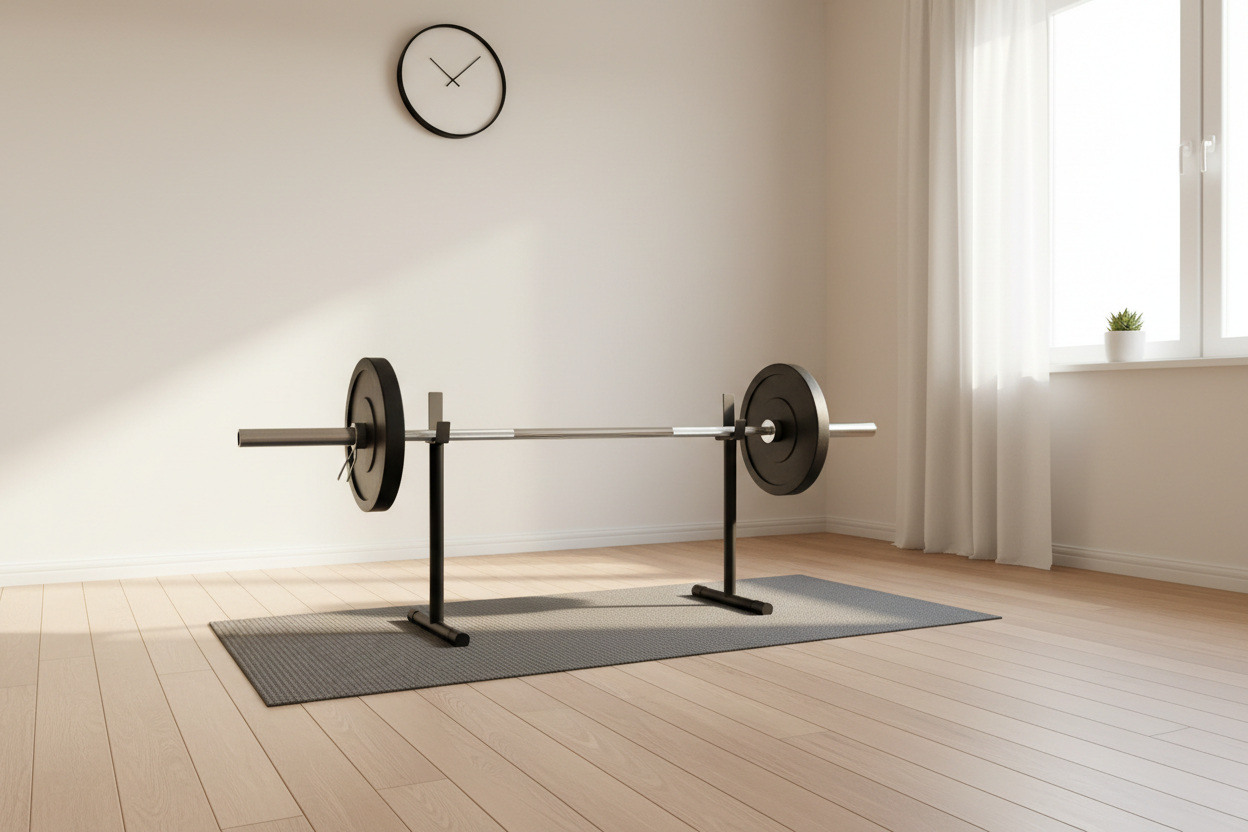
Stop Overcomplicating Your Home Gym: Why a Simple Weighted Bar is the Missing Link
Most people rush to buy adjustable dumbbells or expensive cardio machines when building a home gym, completely overlooking one of the most versatile tools available: the weight bar. Also known as a weighted aerobic bar or body bar, this piece of equipment is a steel bar covered in foam or rubber, usually ranging from 5 to 30 pounds. It bridges the gap between bodyweight exercises and heavy lifting, offering a unique way to build stability, core strength, and muscular endurance without the intimidation factor of an Olympic barbell.
I distinctly remember the first time I incorporated a body weight bar into my routine. I was recovering from a minor wrist strain that made holding dumbbells uncomfortable due to the independent stabilization required for each hand. I grabbed a 12-pound bar from the corner of the gym, mostly out of curiosity. The difference was immediate. The single, solid bar forced my weaker side to catch up, provided a stable grip that didn't aggravate my wrist, and allowed me to focus purely on the movement pattern of my lunges rather than balancing two separate weights. It was a humbling reminder that you don't need heavy iron to get a burn; you just need the right leverage.
Understanding the Different Types of Bars
Before you pull out your credit card, you need to understand exactly what you are looking for, because the terminology can get mixed up. The standard fitness bar—the one coated in foam or rubber—is a fixed-weight implement. It is a grab-and-go tool. You pick it up, do your set, and put it down. There are no clips, collars, or plates involved.
However, confusion often arises regarding weights that go on a bar. If you are looking for a bar that accepts separate plates, you are looking for a standard or Olympic barbell, or perhaps a pump set bar (often used in BodyPump classes). A true body bar is a single unit. This distinction is vital because if you buy a body bar weight set, you are typically purchasing a rack containing multiple bars of increasing weight (e.g., one 9lb, one 12lb, one 15lb), rather than a single bar with add-on plates.
The Cost Factor: Is It Worth It?
Price is often the deciding factor for home gym equipment. So, how much does a weight bar cost? Generally, you can expect to pay between $25 and $60 for a single bar, depending on the weight and the brand. A lighter 5lb bar might cost around $20, while a heavy 30lb bar can push upwards of $70.
Compared to dumbbells, the price-per-pound can seem slightly higher, but you are paying for the form factor. The length of the bar allows for rotational exercises, back-loaded squats, and balance work that a dumbbell simply cannot replicate. If you want to buy weighted bar sets (the rack mentioned earlier), the price will jump significantly, often into the $200 to $400 range, which is usually overkill for a single user but great for a family with different strength levels.
Where to Find Quality Equipment
Finding a workout bar for sale is easier than finding heavy plates, as they are easier to ship and stock. Major online retailers like Amazon carry a massive inventory, typically from brands like CAP Barbell, Yes4All, or SPRI. However, shipping heavy items can sometimes result in damaged packaging. If you want to inspect the foam coating before purchasing—which I recommend, as cheap foam rips easily—sporting goods stores like Dick's Sporting Goods or Academy Sports usually have a body bar for sale in their yoga or aerobics section.
Another excellent option is the second-hand market. Because these bars are virtually indestructible (there are no moving parts to break), checking Facebook Marketplace or Play It Again Sports can save you 50% off retail. Just check the foam for tears, as exposed steel can get slippery with sweat.
Best Exercises for the Weighted Bar
Once you where to buy weight bar equipment that suits your budget, the application is where the magic happens. This tool shines in three specific areas: mobility, rotation, and high-rep endurance.
The Weighted Good Morning
This is a posterior chain developer. Place the bar across your upper back (not your neck). With a slight bend in your knees, hinge at the hips, keeping your back flat until your torso is nearly parallel to the floor. The length of the bar helps you maintain spinal alignment better than holding a dumbbell against your chest.
Kayaking Twists
Sit on the floor with your knees bent and feet hovering off the ground (a V-sit position). Hold the bar with both hands and rotate your torso to tap the bar end to the floor on your right, then your left. This mimics the motion of kayaking and torches the obliques. The leverage of the long bar makes 10 pounds feel like 20.
Overhead Squat Therapy
Many people lack the mobility to perform an overhead squat with a heavy Olympic bar. A light weighted bar is the perfect corrective tool. Holding the bar overhead with a wide grip engages the upper back and shoulders while you perform a squat. It forces an upright torso and highlights tight areas in your hips or ankles immediately.
Making the Purchase Decision
If you are ready to buy weighted bar equipment, start with a weight that feels "too light." Because the weight is distributed over a 4-foot span, the physics of lifting it feels different than a compact dumbbell. A 12lb or 15lb bar is a universal starting point for most active adults. It provides enough resistance to be challenging for shoulder presses and rotational work but isn't so heavy that it compromises your form during high-repetition squats or lunges.
Ultimately, the best equipment is the kind you actually use. The weighted bar requires zero setup time. You don't have to screw on collars or load plates. You just pick it up and move. In a world where friction often kills fitness habits, the simplicity of the body bar is its greatest asset.
Frequently Asked Questions
What is the best weight to start with for a body bar?
For most women, a 9lb to 12lb bar is a versatile starting point for full-body workouts. Most men find 15lb to 18lb bars appropriate for general conditioning. It is better to start lighter to master the rotational movements before increasing the load.
Can I use a weighted body bar for heavy lifting?
No, these bars are not designed for max-effort powerlifting. They typically top out at 30-36 lbs. If your goal is to bench press or deadlift heavy loads, you need a standard Olympic barbell and plate set rather than a fixed aerobic bar.
Is a rubber or foam coating better?
Foam provides a more comfortable grip and is better for exercises where the bar rests on your neck or shoulders. Rubber is more durable and easier to clean, making it a better choice for commercial gyms or garage gyms where the equipment might get tossed around.


