Stop Overcomplicating At Home Weight Training for Beginners
I remember staring at a $2,500 power rack in my online cart at 1:00 AM, convinced that if I didn't have a professional-grade squat cage, my muscles would simply refuse to grow. I had three different tabs open comparing the knurling on bars I couldn't even lift yet. It was a classic case of gear-shaming myself into doing nothing. At home weight training for beginners shouldn't feel like you are trying to launch a SpaceX rocket; it should feel like picking up something heavy and putting it back down.
Quick Takeaways
- Skip the massive machines; you only need a 6x8 ft corner to start.
- Invest in one solid pair of adjustable dumbbells (up to 50 lbs) and a flat bench.
- Focus on three movements: a squat, a push, and a pull.
- Effort matters more than the 'perfect' program.
The Analysis Paralysis Trap
The fitness industry is designed to make you feel like you are missing something. If you spend enough time on social media, you will think beginners weight lifting at home requires a 12-week 'optimized' periodization schedule and a cabinet full of supplements. It is all noise. I have seen guys build more muscle with a rusty pair of 25-pounders and some grit than people with a $10,000 Rogue setup who just scroll on their phones between sets.
Stop researching 'optimal' rest intervals. Stop worrying if you should do high-bar or low-bar squats. When you are starting out, your body is incredibly responsive. Almost any stimulus will work as long as it is consistent. The goal of home weight training for beginners is to build the habit of showing up, not to win a physics award for biomechanical efficiency. Pick a weight, move it until it gets hard, and do it again tomorrow.
The Bare Minimum Gear Setup
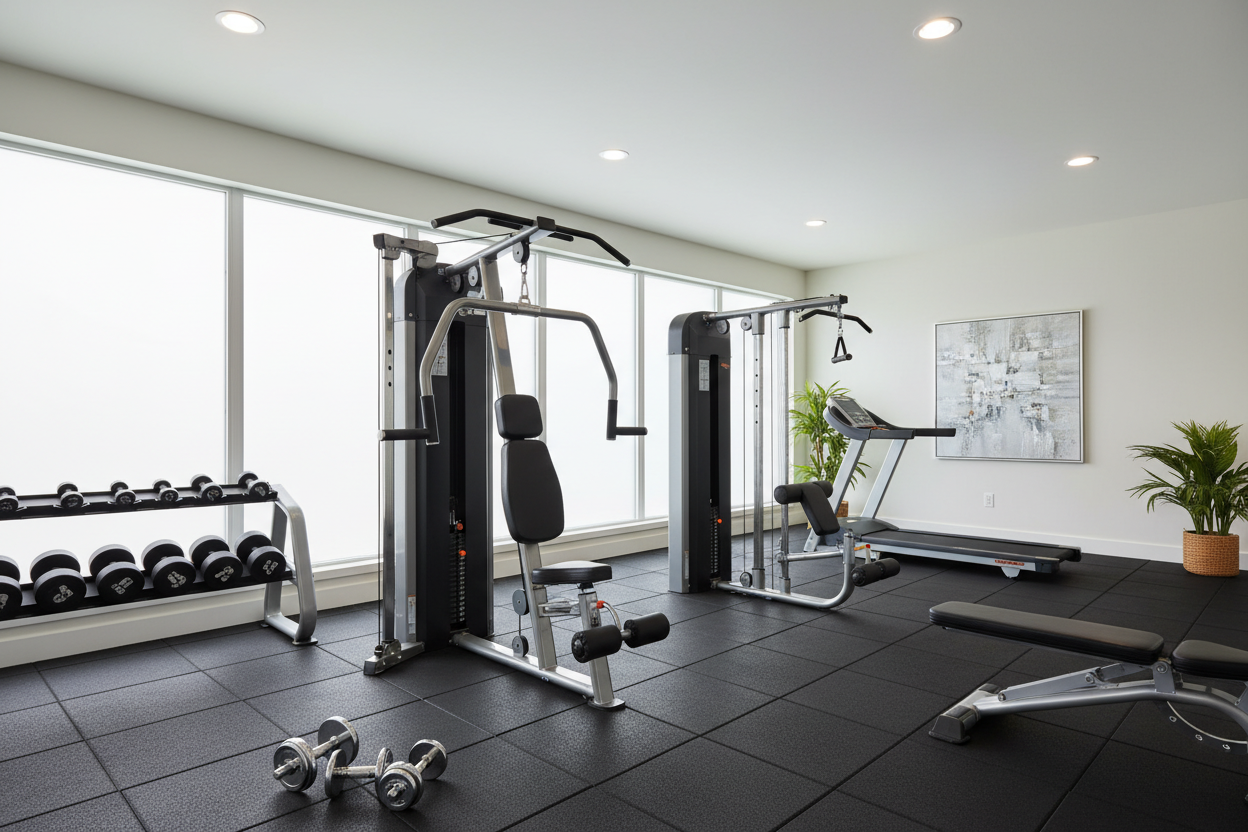
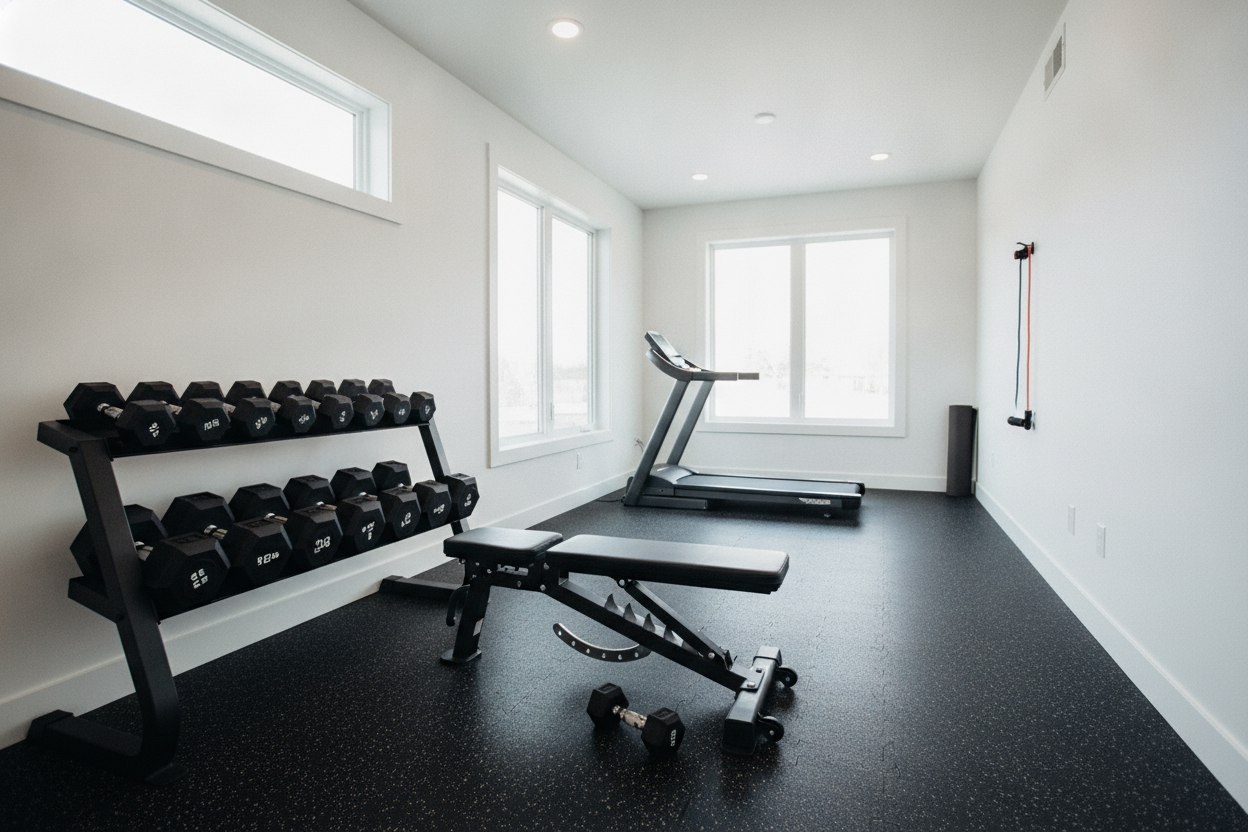
You do not need a garage full of steel to see results. In fact, beginners do not need massive weight lifting machines to see their first year of novice gains. Those machines take up a 10x10 footprint and cost a fortune. Instead, get a pair of adjustable dumbbells—something like the Loadable 52.5-lb sets. They fit under a bed and cover almost every movement you need.
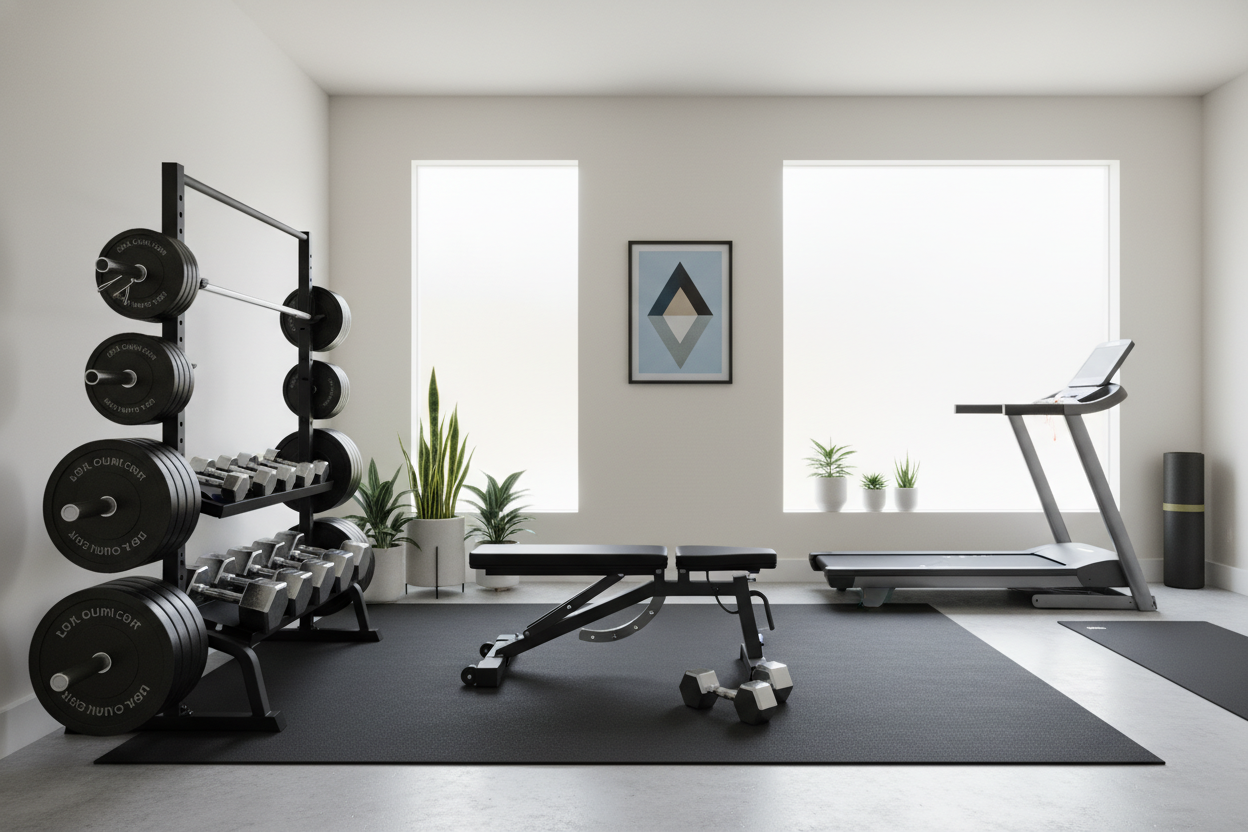
Second, get a flat bench. A sturdy 1,000-lb capacity bench is overkill for a novice, but a 300-lb rated one will feel like a wet noodle when you start getting stronger. Aim for something in the 500-600 lb total capacity range. Finally, do not overlook your floor. Using proper exercise mat gym flooring is crucial for preventing slips and protecting your floors during home weight training for beginners. I once cracked a ceramic tile dropping a 20-lb hex dumbbell; save yourself the security deposit and buy the mat.
The Only 3 Movements You Need to Start
Forget the 5-day body part splits you see in bodybuilding magazines. You do not need a 'leg day' and a 'bicep day' yet. A dirt-simple beginner strength training at home routine focuses on three things: the Goblet Squat (hold one dumbbell at your chest), the Overhead Press (push weights toward the ceiling), and the One-Arm Row (pull a weight toward your hip). That is it.
If you do those three things three times a week, you are hitting your legs, your core, your shoulders, and your back. You can skip the expensive beginner weight lifting class at the local boutique gym. At home weight lifting for beginners is about mastering these basics. Do 3 sets of 8 to 12 reps. If you can do 12 reps easily, the weight is too light. If you can't do 5, it's too heavy. Simple.
How to Know if You're Actually Trying Hard Enough
Most weight lifting routines for beginners at home fail because of a lack of intensity. People pick up a weight, do 10 reps, and stop because the paper said '10,' even though they could have done 20. This is where RPE (Rate of Perceived Exertion) comes in. On a scale of 1 to 10, your sets should feel like a 7 or 8. You should feel like you have maybe 2 reps left in the tank.
Progressive overload is the only 'secret' that exists. If you lifted 20 lbs last week, try for 22.5 lbs this week. If you can't add weight, add a rep. If you can't add a rep, slow down the movement. If you aren't tracking these numbers in a basic notebook or a notes app, you aren't training; you're just exercising. There is a difference.
When (and How) to Upgrade Your Routine
You will eventually outgrow those starter dumbbells. It usually happens around the six-month mark when your rows and squats start feeling like cardio because the weights are too light. That is the moment to look into a more robust at home weight lifting program that introduces barbells or heavier plate-loaded gear.
Don't rush the upgrade. If you can still get a skin-splitting pump and a deep burn from your 50-lb dumbbells by slowing down the tempo (think 3 seconds down, 1 second up), keep using them. Milk those beginner weight training at home gains for every ounce they are worth before you start dropping thousands on a power rack and Olympic plates.
My Honest Mistake
When I started, I bought a 'complete' home gym set from a big-box store for $150. The bar was hollow, the weights were plastic filled with sand, and the bench wobbled if I breathed too hard. It was garbage. I ended up spending more money replacing it three months later than if I had just bought one decent pair of dumbbells and a solid mat from the start. Buy once, cry once.
FAQ
Do I need a squat rack to start?
No. For at home weight lifting for beginners, a pair of dumbbells is plenty. You can do goblet squats or lunges which are more than enough to build a solid foundation of leg strength.
How many days a week should a beginner lift?
Three days a week is the sweet spot. It gives your central nervous system and your joints enough time to recover between sessions. Consistency beats frequency every single time.
Can I lose weight just by lifting at home?
Weight training is the best way to change your body composition. While diet handles the scale weight, lifting ensures that the weight you lose is fat and the weight you keep is muscle.