Stop Memorizing Muscles: A Beginner's Workout Plan Built on 4 Moves
I remember staring at a twelve-page PDF from a fitness influencer back in 2014. It had me doing 'incline cable flies' and 'preacher curls' before I could even do five solid push-ups. I spent more time looking at my phone trying to figure out which machine was which than I did actually sweating. If you are currently scrolling through Amazon at midnight comparing adjustable dumbbells or wondering which 5-day split will give you abs by Tuesday, stop. A solid beginner's workout plan doesn't need a spreadsheet or a biology degree.
Quick Takeaways
- Stop isolating muscles; start training movements.
- You only need four primal patterns: Push, Pull, Squat, and Hinge.
- A high-traction floor space is more important than a rack of weights.
- Mastering tempo is the fastest way to see results without buying gear.
The Anatomy Trap: Why Body-Part Splits Ruin Your First Month
Most novices walk into a gym and immediately try to map out a 'chest day' or 'leg day.' This is the anatomy trap. Unless you are a high-level bodybuilder with years of foundational strength, trying to isolate your biceps or your lateral deltoids is a massive waste of time. When you are starting out, your body needs to learn how to move as a single, cohesive unit. This is why a basic workout routine should be built on movements, not muscles.
Trying to follow a complex workout plan for a beginner that mimics a pro's routine leads to two things: imbalances and burnout. You end up with 'mirror muscle' syndrome where you overtrain what you can see and ignore your back and glutes. I often get asked, Do You Actually Need a Workout Plan for Beginners at Gym? The reality is that most commercial gym routines are too complex for the first 30 days. You don't need a leg extension machine; you need to learn how to stand up under load.
The Core Four: Stripping Down Your Beginner Workout Regimen
Instead of twenty different exercises, your beginner workout regimen should focus on the four primal human movements: the push, the pull, the squat, and the hinge. If you master these, you have covered 95% of what your body actually needs to get strong and look better. A 15-machine circuit at a big-box gym might feel productive, but it’s mostly fluff. These four patterns build real-world stability and functional strength.
Think about it: a squat is just sitting down and standing up. A hinge is picking up a grocery bag. A push is getting off the floor. A pull is opening a heavy door. By focusing on these, you’re not just 'working out'—you’re upgrading your body’s operating system. This beginner workout guide isn't about fancy equipment; it's about owning these movements before you ever touch a barbell.
Your Living Room Setup (No Heavy Iron Required)
You do not need a massive power rack or a 300-lb weight set to start. In fact, for a workout plan beginners can actually stick to, I recommend starting at home. The biggest barrier to entry isn't strength; it's the friction of traveling to a gym. If you have six feet of clear space, you have a gym. However, do not try to do this on a slippery hardwood floor or a dusty rug. I’ve tried doing bodyweight squats on a rug that slid out from under me—it’s a quick way to end your training before it starts.
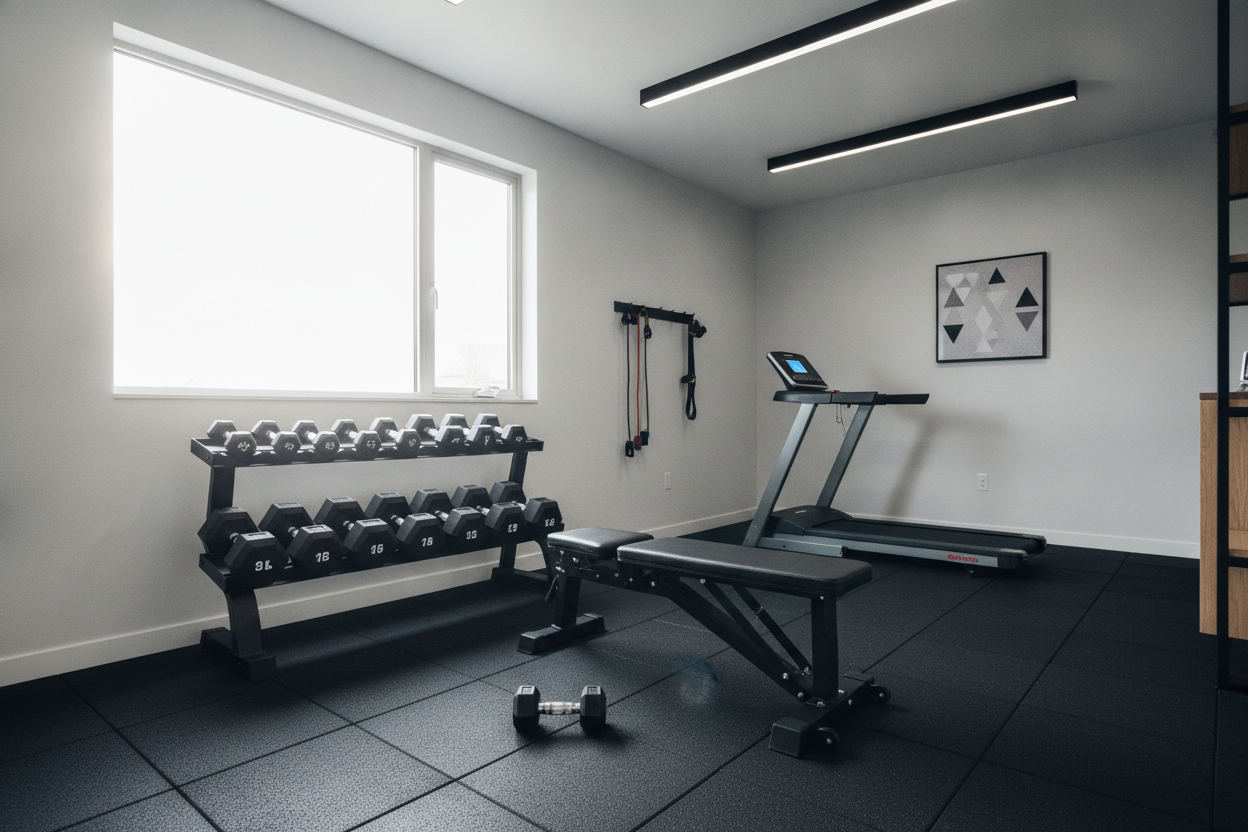
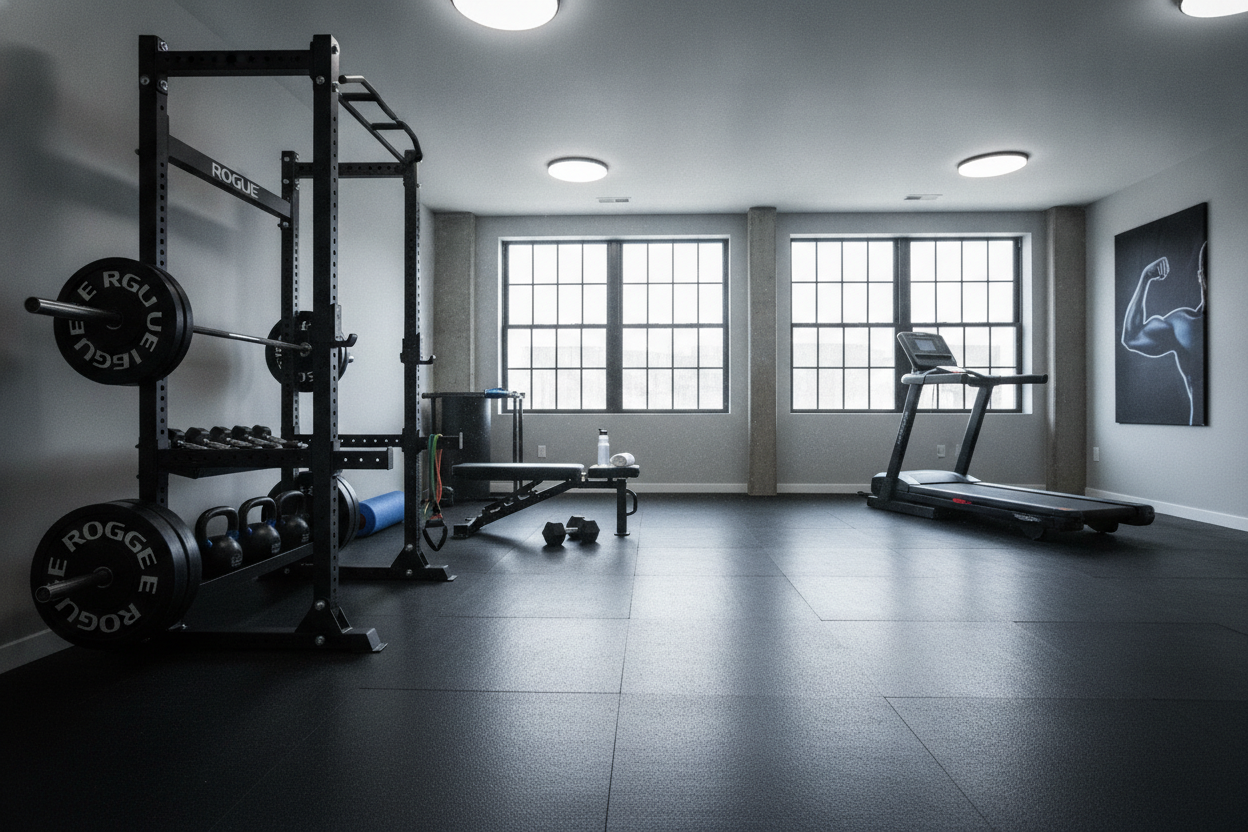
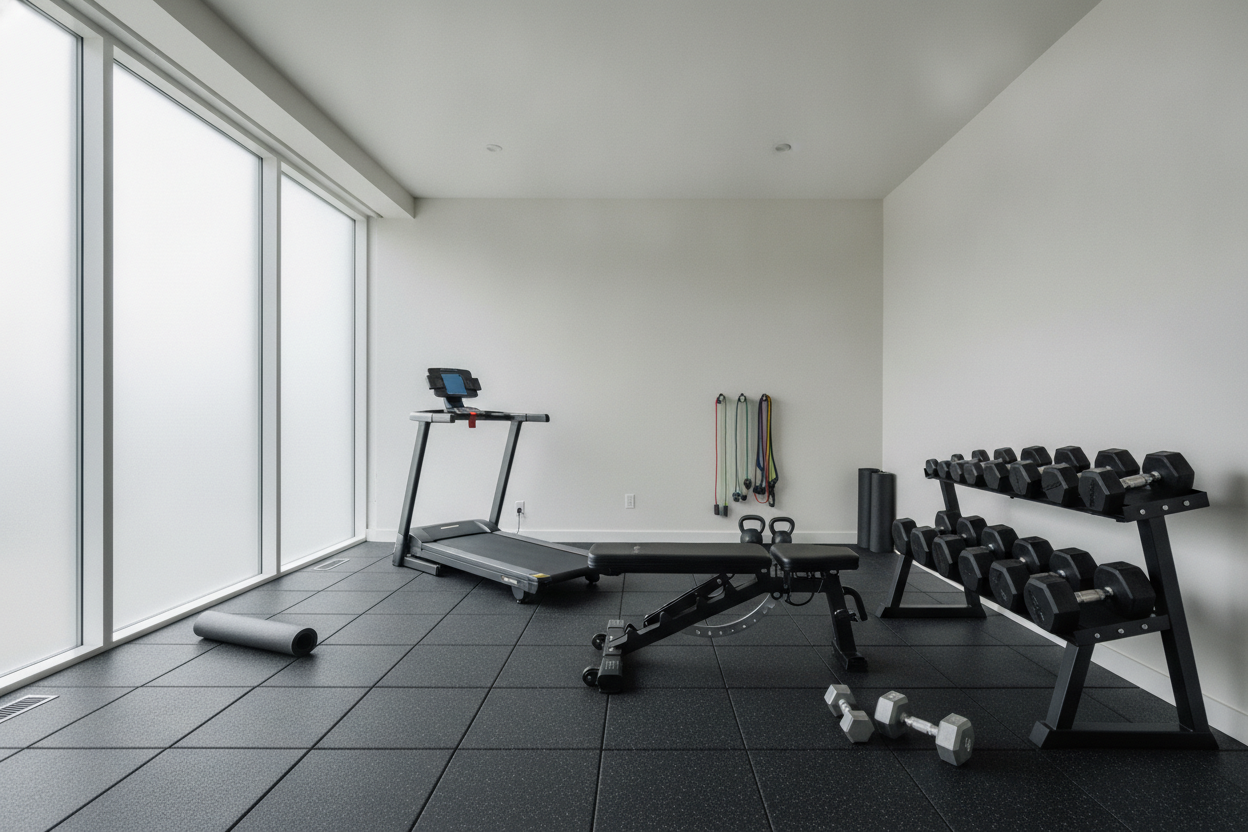
Investing in high-quality gym flooring for home workout is the single best move you can make. A thick, high-traction mat protects your joints during floor pushes and keeps your feet planted during squats. It defines your 'work zone.' When you step on that mat, the phone goes away and the work starts. It removes the excuse of 'the gym is too far' and gives you a dedicated space to fail and learn safely.
The 4-Move Beginner's Workout Plan (Step-by-Step)
Here is your actual workout plan for beginner success. Perform this day workout plan for beginners three times a week, with at least one rest day in between. Focus on a 3-0-3 tempo—that’s three seconds down, no pause, and three seconds up. This builds massive stability without needing heavy weights.
- The Squat: 3 sets of 10 reps. Keep your chest up and sit back like you're aiming for a chair.
- The Floor Push-Up: 3 sets of 8-10 reps. If you can't do a full push-up, do them with your hands on a couch or a sturdy table. Keep your elbows tucked at 45 degrees.
- The Towel Row: 3 sets of 12 reps. Wrap a towel around a sturdy pole or doorway. Lean back and pull your chest toward your hands. This is the 'pull' pattern beginners usually skip.
- The Glute Bridge: 3 sets of 15 reps. Lie on your back, feet flat, and drive your hips toward the ceiling. Squeeze your glutes like you're trying to crack a walnut at the top.
Mastering these four on the floor is the gold standard. Once you can do these with perfect form, The 'One Bench' Beginner Workout Plan for the Gym is your next logical step to introduce more resistance and equipment.
How to Progress When the Routine Gets Too Easy
A workout plan for beginners isn't meant to last forever. Eventually, your body will adapt, and 10 bodyweight squats will feel like nothing. Before you run out and buy a 50-lb dumbbell, try manipulating your 'Time Under Tension.' Slow your reps down even further. Add a 3-second pause at the bottom of your push-up. Increase your sets from three to five. These small tweaks make the beginner workout routine significantly harder without adding a single pound of external weight.
When you can comfortably perform 5 sets of 15 reps with perfect control and a slow tempo, you’ve earned the right to add iron. At that point, head over to the Workout Hub to see how to transition these bodyweight patterns into weighted movements like the Goblet Squat or the Dumbbell Row. Progression is about mastery, not just adding plates to a bar.
Personal Experience: My 'Bicep Day' Disaster
When I started training, I followed a routine I found in a muscle mag. It was all isolation moves. I spent three months doing nothing but curls and tricep extensions. One day, I tried to help a friend move a couch and realized I couldn't even lift my end. I had big-ish arms but zero functional strength. I was 'all show and no go.' I scrapped everything and spent a month on a 6x8 ft mat doing nothing but the four movements I listed above. My back pain vanished, my posture improved, and I actually felt strong for the first time. Don't make my mistake—build the foundation first.
FAQ
Do I need to do cardio too?
For the first month, focus on the movements. If you want to walk or bike on your off days, go for it, but don't let a 5-mile run exhaust you so much that you skip your strength work.
How long should this workout take?
If you're resting 60-90 seconds between sets, you should be done in about 30 to 40 minutes. It's about quality, not how many hours you can spend in the gym.
What if I can't do a single push-up?
That’s fine. Start with 'Incline Push-ups' by placing your hands on a kitchen counter or the back of a sofa. As you get stronger, move your hands lower until you are on the floor.