Stop Making Normal Bodybuilding So Ridiculously Complicated
I spent twenty minutes yesterday watching a guy on Instagram perform sixteen different variations of a cable fly. He is twenty-two, clearly 'enhanced,' and has six hours a day to kill at a commercial facility. For the rest of us—the guys trying to squeeze in a session in a cold garage before the kids wake up or after a ten-hour shift—that lifestyle is a fantasy. It is time we reclaimed normal bodybuilding as the gold standard for the home lifter.
Most of the advice you see online is tailored to people whose entire identity is their physique. If you have a job, a mortgage, and a penchant for pizza on Fridays, you need a different blueprint. You do not need a 7-day split or a spreadsheet that looks like a tax return. You need heavy weight, smart recovery, and gear that does not wobble when you rack a heavy set of squats.
- Focus on Recovery: Natural lifters grow when they rest, not when they are doing their 30th set of curls.
- Keep Gear Simple: A solid rack and a barbell will do 90% of the heavy lifting for your physique.
- Intensity Over Volume: Three hard sets beat ten 'trash' sets every single time.
- Ditch the Pros: Stop following routines designed for people on pharmaceutical assistance.
What Does Normal Bodybuilding Actually Mean?
Normal bodybuilding is the art of training for aesthetics without letting it ruin your life. It means you want the capped delts and the V-taper, but you also want to be able to go to a backyard BBQ without bringing a Tupperware container of cold tilapia. It is about building a body that looks like it belongs in a gym, while living a life that does not.
In a garage gym context, this means picking movements that offer the most bang for your buck. You are not chasing a 1,000-pound total like a powerlifter, but you are still using the big compounds to create the stimulus. You are training to look good in a t-shirt, fill out a pair of jeans, and feel strong enough to move a couch without throwing your back out. It is practical, sustainable, and honestly, a lot more fun than obsessing over 'optimal' angles.
Why You Need to Stop Copying Enhanced Pros
The biggest mistake I see in home gyms is the 'more is better' fallacy. If a pro bodybuilder does 25 sets for chest, we think we should too. But that pro has a chemical recovery system that you do not. For a natural lifter, doing 20+ sets per body part is not 'hardcore'—it is a recipe for tendonitis and stagnant gains. Your central nervous system can only take so much abuse before it shuts down the muscle-building process.
When you are training in a garage, you are often training alone. You do not have a spotter to help you through forced reps on every set. If you try to match the volume of a pro, your form will break down, your intensity will drop, and you will end up just going through the motions. Focus on 6 to 10 high-quality sets per muscle group per week. If you cannot grow on that, you are not training hard enough.
The Minimalist Setup for Garage Gym Gains
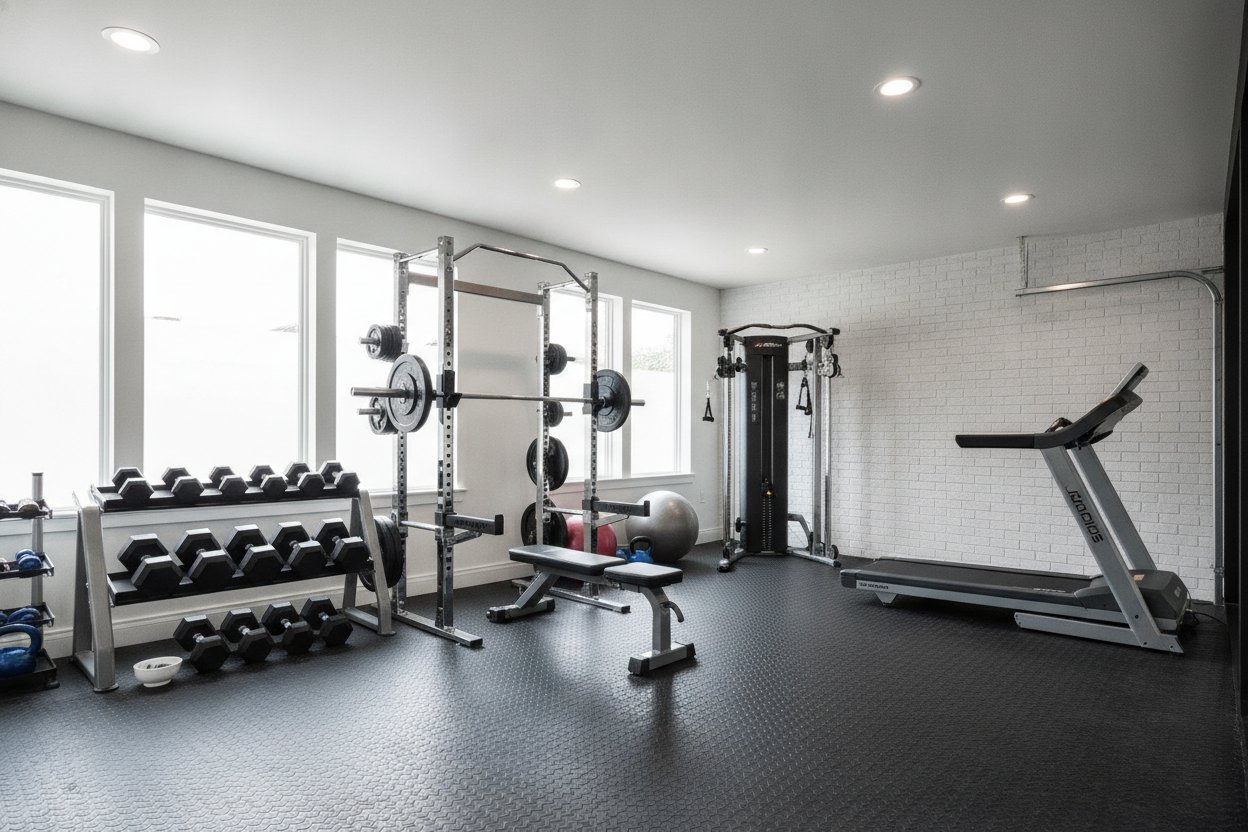
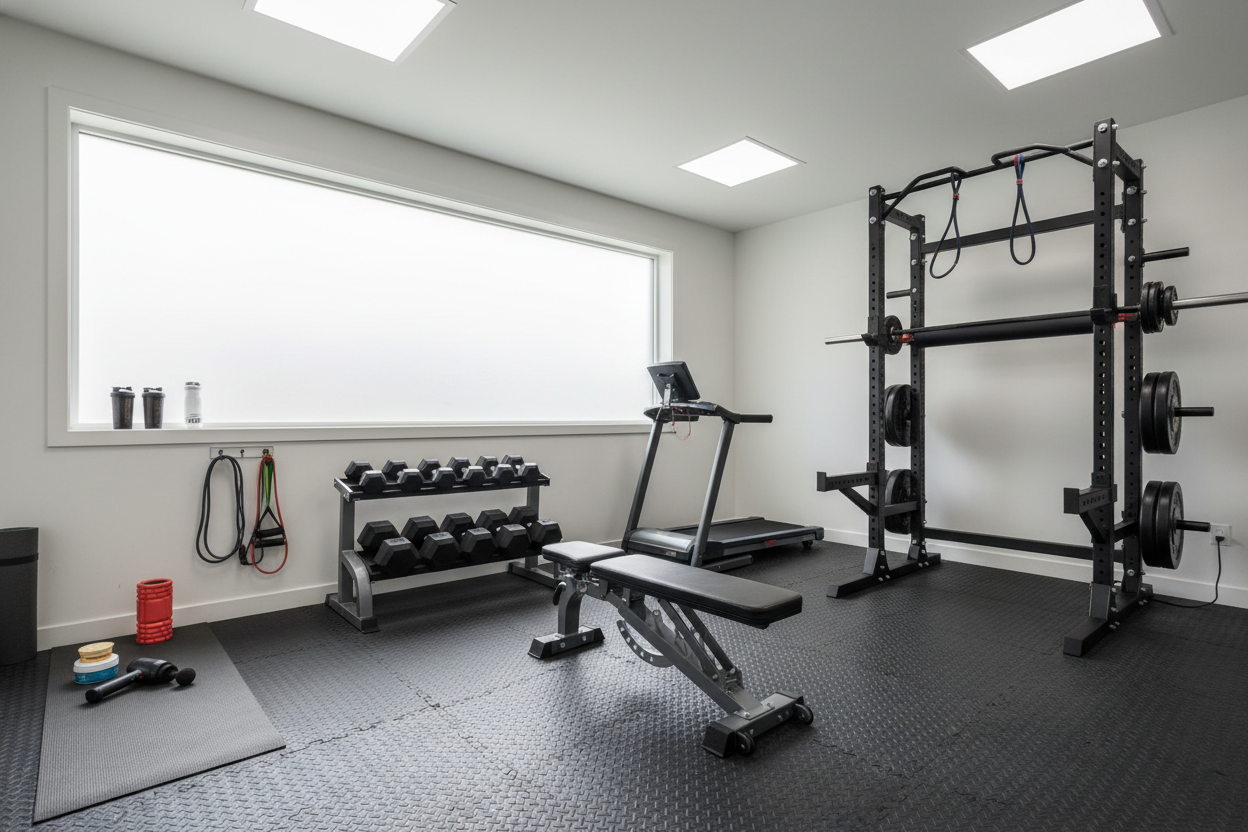
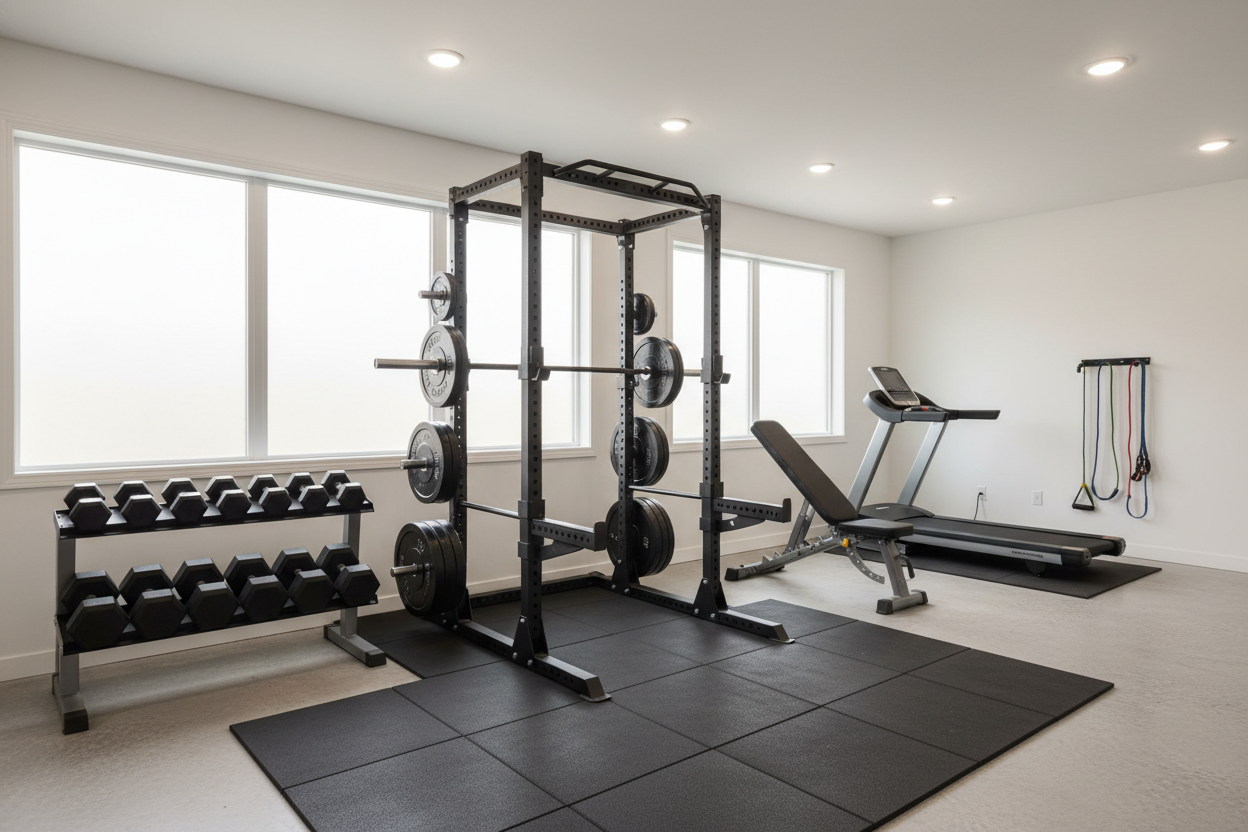
You do not need a 5,000-square-foot facility to look like a bodybuilder. I have seen guys build incredible physiques with nothing but a squat stand and some rusty plates. However, if you are serious, you want gear that feels stable. A 2x3 or 3x3 steel rack is the backbone of any serious setup. Look for a rack with a pull-up bar and 5/8-inch or 1-inch holes for attachments.
Beyond the rack, an adjustable bench and a set of dumbbells are non-negotiable. Selecting the right gym equipment for bodybuilding is about utility, not filling up space with fluff. You need a barbell with decent knurling—nothing too aggressive that tears your hands apart on high-rep sets, but enough to keep the bar from sliding during heavy rows. Plates are plates; just make sure they are within a reasonable weight tolerance so 45 pounds actually weighs 45 pounds.
When Does It Make Sense to Add Machines?
Free weights are king for building the foundation, but there comes a point where machines help you isolate a muscle without your lower back giving out first. In a garage, space is your most valuable currency. You do not want a massive leg press taking up half your floor. Instead, look for multi-functional pieces. A functional trainer or a high/low cable pulley is worth its weight in gold for face pulls, triceps pushdowns, and cable crossovers.
If you have the footprint, adding specific machines for strength and bodybuilding like a plate-loaded lat pulldown or a leg extension/curl combo can bridge the gap. These allow you to push a muscle to absolute failure safely. When I added a dedicated cable tower to my 400-square-foot shop, my back development exploded because I could finally hit high-volume rows and pulldowns without my grip or spinal erectors being the limiting factor.
How to Train Like a Regular Guy (And Still Grow)
A 3 or 4-day split is the sweet spot for the average person. Think Upper/Lower or a Push/Pull/Legs rotation. This allows you to hit every muscle group twice a week—which is the scientific 'sweet spot' for hypertrophy—while still having days off to actually be a human being. Start every session with a big compound move: Incline Bench, Squats, or Weighted Pull-ups. Do 3 sets of 5-8 reps to keep your strength base high.
Follow that up with 'pump' work. This is where the bodybuilding magic happens. Sets of 10-15 reps with shorter rest periods. Focus on the mind-muscle connection. If you are doing curls, do not just swing the weight; squeeze the life out of the dumbbell at the top. Eat 0.8 to 1 gram of protein per pound of body weight, sleep at least seven hours, and stop overthinking the 'window' of nutrient timing. Consistency over three years beats intensity over three weeks.
My Personal Experience: The Wobble Factor
Years ago, I bought a budget-tier adjustable bench because it was $100 cheaper than the one I actually wanted. The first time I tried to do heavy dumbbell presses, the thing wobbled so much I spent more energy balancing than pressing. I ended up selling it for half what I paid and buying the heavy-duty version anyway. I learned the hard way: if you are going to train hard, your gear needs to be as steady as your resolve. Don't buy equipment that makes you second-guess your safety when you're grinding out that last rep.
FAQ
How many days a week should I train for bodybuilding?
For most guys, 4 days is the perfect balance. It allows for two upper-body days and two lower-body days, giving you 72 hours of recovery between sessions. If you are slammed, even 3 days of full-body training can get you 90% of the way there.
Do I need a fancy cable machine to grow?
No, but it helps. You can do a lot with dumbbells and bands, but a cable stack provides constant tension that is hard to replicate. If you have the budget and the 3x4 feet of floor space, a cable tower is the best investment you can make for isolation work.
Can I build a bodybuilding physique with just a barbell?
Absolutely. Golden Era legends like Reg Park built massive physiques with mostly barbells. You just have to be more creative with your movements—think Landmine rows, Meadows rows, and Zercher squats to hit different angles.