Stop Leaning Your Barbell in the Corner: The Real Guide to Gym Organization
Nothing kills the momentum of a workout faster than tripping over a loaded EZ-curl bar or having to shuffle plates around just to find space for your deadlifts. If you are serious about lifting, you know that the barbell is the centerpiece of the gym. It is the tool that connects you to the weight, yet so many lifters treat it like a spare broomstick once the set is over. Leaning a precision-engineered piece of steel against a drywall corner isn't just messy; it is a recipe for damaged equipment and compromised safety.
Proper storage is often the last thing people think about when building a home gym, usually falling somewhere behind buying a new bench or upgrading bumper plates. However, how you store your equipment dictates how long it lasts. A high-quality barbell relies on intricate bushings or bearings inside the sleeves to spin freely. When you leave a bar propped at an angle for weeks on end, or worse, lying on a damp concrete floor, you invite gravity and moisture to wreak havoc on those internal mechanisms. Organizing your space is not about aesthetics; it is about protecting your investment.
Why Your Storage Method Matters for Bar Longevity
There is a misconception that steel is indestructible. While a barbell can handle 500 pounds of bend during a squat, the knurling and the sleeve rotation are surprisingly delicate. Metal-on-metal contact is the enemy. When you throw a bar onto a raw metal bracket or lean it against other plates, you chip away the protective coating—whether it is zinc, cerakote, or chrome. Once that coating is breached, oxidation begins. Rust on the shaft changes the texture of the knurling, making it slippery or overly abrasive, while rust in the sleeves seizes up the spin.
I learned this lesson the hard way a few years back. I had a beautiful black zinc power bar that I carelessly stored by leaning it against a squat stand. Over time, the vibration from racking other weights caused the bar to slide and grind against the steel bolts of the stand. I didn't notice until I went to clean it and found a deep gouge right in the center knurl—exactly where it sits on my back for squats. That scratch became a rust magnet, and every time I squatted, it irritated my skin. It was a stupid, preventable mistake that ruined the finish of a premium bar.
Choosing the Right Barbell Rack Storage
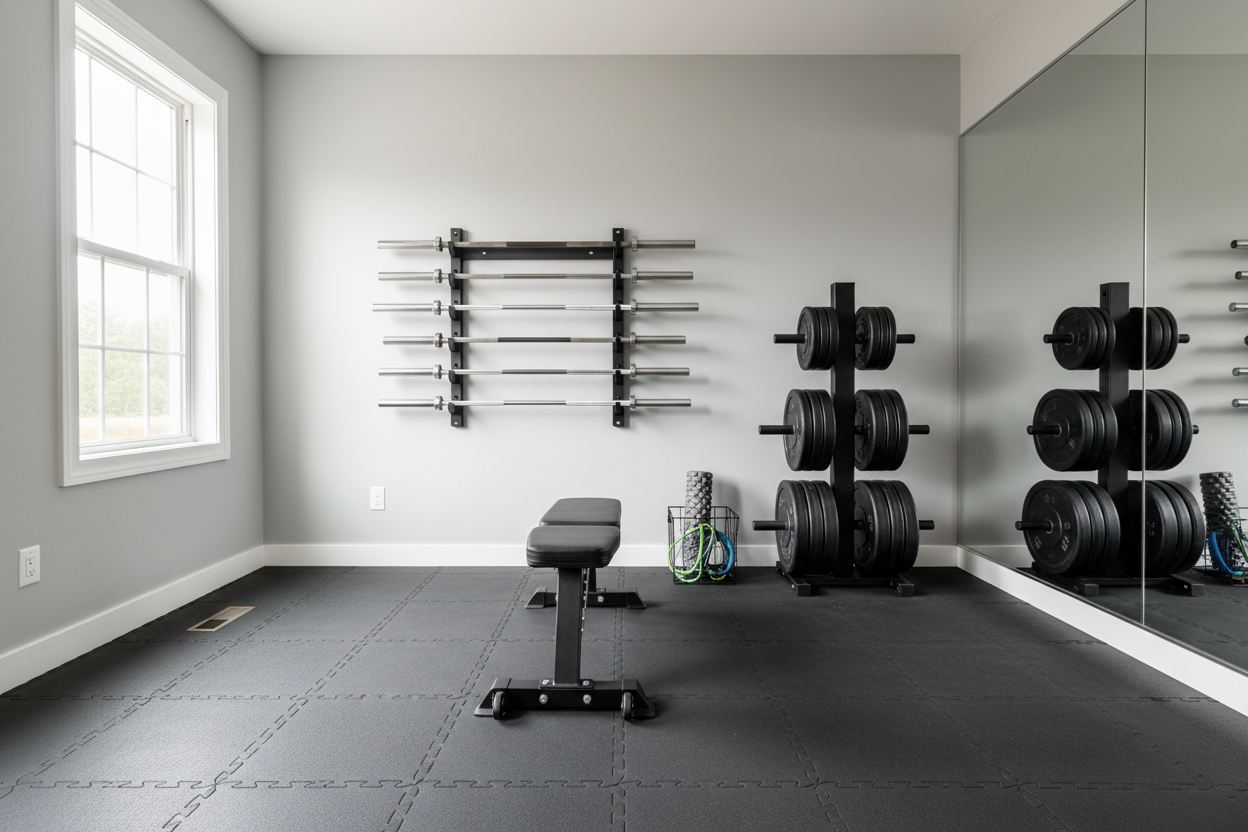
The market is flooded with options, but they generally fall into two categories: vertical and horizontal. Your choice depends entirely on your floor plan and the type of lifting you do. Horizontal storage, often mounted on the wall (commonly called a gun rack), is generally considered the gold standard for long-term bar health. By laying the bar flat across plastic-lined hooks, you prevent oil from pooling at one end of the sleeve, which can happen with needle-bearing bars stored vertically. It also turns your collection into a display piece, keeping the floor entirely clear.
However, most home gym owners are fighting for every square inch of space. This is where vertical barbell rack storage shines. These units usually sit on the floor and hold anywhere from five to nine bars in a compact footprint. If you go this route, ensure the bottom cups are lined with plastic or rubber. You do not want the end cap of your barbell slamming into raw steel every time you put it away. The downside to floor stands is that they can be tippy if you only load one side with heavy specialty bars, like a Safety Squat Bar, so balance is key.
Integrating Storage into Your Power Rack
For those with truly limited space, the most efficient solution is often attaching storage directly to the structure you already have. A rack barbell holder is typically a tube or hook attachment that bolts onto the uprights of your power cage. This keeps your primary bar within arm's reach of where you use it.
There is a nuance to using rack-mounted holders that many overlook: clearance. If you mount a vertical holder on the back of your rack, you need to make sure the bar doesn't hit the ceiling when you pull it out. Standard Olympic bars are roughly 7.2 feet tall. If you are lifting in a basement with low ceilings, a vertical rack attachment might be physically impossible to use. In that case, you have to look for horizontal hangers that mount to the exterior depth of the rack.
Protecting the Knurling: The UHMW Factor
Regardless of whether you choose a wall mount, a floor stand, or a rack attachment, there is one non-negotiable feature you must look for: UHMW (Ultra-High Molecular Weight) polyethylene liners. This is the dense plastic material used on high-end J-cups.
Cheap storage racks use bare steel or thin foam that tears away after a month. Once that protection is gone, you are grinding your bar's knurling against the holder every time you rack it. This flattens the diamond pattern of the knurl, ruining the grip. Before you buy any storage solution, zoom in on the photos. If the contact points aren't lined with thick plastic, walk away. If you already own a cheap rack, you can buy strips of UHMW tape or adhesive felt to retrofit it, but buying quality from the start is cheaper in the long run.
Organizing Specialty Bars
Standard Olympic bars are easy to manage, but as you get deeper into fitness, you inevitably acquire specialty bars. Trap bars, cambered bars, and Swiss bars are awkwardly shaped and heavy. They rarely fit into standard vertical tubes because their sleeves are too short or the frame is too wide.
For these oddities, heavy-duty wall hooks are usually the best bet. You need to anchor these into studs, not just drywall anchors. A 60-pound trap bar will rip a toggle bolt right out of the sheetrock. When planning your gym layout, dedicate a specific "heavy wall" for these items. Keep them away from the main walkway. Shinning yourself on the open end of a trap bar hurts significantly more than bumping into a standard barbell.
Maintenance of Your Storage Area
Organization requires maintenance. Dust settles on stored bars, and humidity pools in corners. Every few months, pull everything out of your barbell rack storage. Wipe down the liners to remove metal shavings or chalk buildup, which can hold moisture against the bar. If you use a vertical holder, vacuum out the bottom of the tubes. You would be amazed at how much chalk, dust, and spiderwebs accumulate down there, creating a moisture trap for the bottom sleeve of your barbell.
Treating your storage system as part of your equipment maintenance schedule ensures that when you reach for a bar to hit a PR, it is clean, spinning true, and ready to perform.
Frequently Asked Questions
Is it bad to store a barbell vertically with bearings?
Generally, it is safe for modern bars. While there is a theoretical risk of lubricant pooling at the bottom sleeve over very long periods, high-quality grease stays in place. If you use the bar weekly, vertical storage will not damage the bearings.
Can I store my barbell loaded with weights?
No, you should never store a barbell loaded with plates, even on a rack. Over time, the static weight can cause the bar to bend permanently (plastic deformation), and it puts unnecessary stress on the rack's J-cups and the bar's sleeves.
How much space do I need for a wall-mounted gun rack?
You need roughly 8 feet of horizontal wall space to comfortably rack and unrack the bars without hitting adjacent walls. Vertically, space the hooks about 12 to 15 inches apart if you plan to store specialty bars with thick frames.