
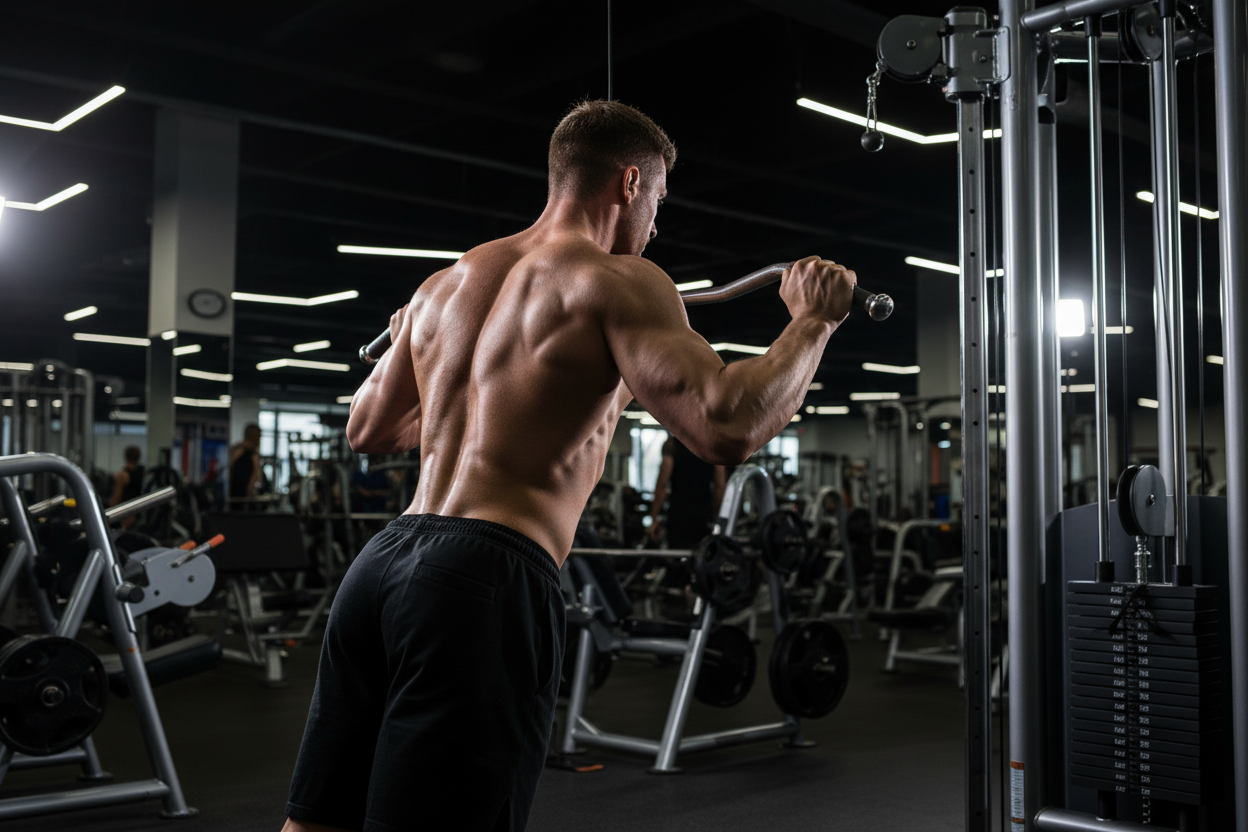
Stop Killing Your Gains on Back Row Machines (Do This Instead)
Walk into any fitness center, and you will see the same tragedy unfolding. A trainee sits down, grabs the handles, and violently yanks the weight toward their chest, using more momentum than muscle. If that sounds like you, or if you simply aren't feeling that deep burn in your lats, you are likely misusing back row machines.
The machine row isn't just a lazy alternative to the barbell row. When executed with precision, it offers stability that free weights cannot match, allowing you to isolate the back musculature without your lower back giving out first. Let’s fix your form and start building a back that actually shows through your shirt.
Key Takeaways: Mastering the Row
- Seat Height is Critical: Set the seat so the chest pad sits across your sternum, not your stomach or collarbone.
- Drive With Elbows: To engage the lats, imagine pulling your elbows toward your hips, rather than pulling your hands to your chest.
- Control the Negative: Resist the weight on the return (eccentric) phase for at least 2-3 seconds to maximize muscle tearing.
- Protraction Matters: Allow your shoulders to roll forward slightly at the start of the rep to stretch the muscle fibers.
Why the Machine Beats Free Weights (Sometimes)
There is a lingering myth that machines are inferior to free weights. That is nonsense. The primary benefit of a pull back machine gym setup is external stability.
When you do a bent-over barbell row, your lower back (erector spinae) works overtime to keep you from collapsing. Often, your lower back fatigues before your lats do. A chest-supported machine removes that limitation. It allows you to drive 100% of your neural output into the lats and rhomboids without worrying about spinal integrity.
Anatomy of the Movement
Understanding what you are trying to target changes how you pull. If you are using a pull machine for back development, you have two main paths:
1. The Lat-Focused Row
This usually involves a neutral grip (palms facing each other) and keeping your elbows tucked close to your ribcage. The goal here is to drive the elbow down and back toward the hip. This targets the latissimus dorsi, giving you that coveted width.
2. The Upper Back Row
Using a pronated grip (palms down) with elbows flared out at 45 degrees shifts the tension to the rhomboids, rear delts, and traps. This creates thickness and detail in the upper back.
The Setup: Don't Just Sit and Pull
Most people fail before they even move the weight. If the seat is too low on a pull back exercise machine, your traps will take over, leading to neck pain rather than back growth. If it's too high, you lose leverage.
Adjust the chest pad so that when you reach forward to grab the handles, your shoulders are slightly stretched, but your torso remains glued to the pad. If you have to lift your chest off the pad to complete the rep, the weight is too heavy.
Common Execution Mistakes
The Bicep Hijack
Your biceps are smaller and weaker than your back muscles. If you initiate the pull by bending your arms, your biceps will burn out long before your back does. Treat your hands like hooks. They are just there to hold the weight; the movement comes from the shoulder blade retraction.
The Half-Rep Pulse
On a pull back machine, the magic happens at the extremes of the range of motion. You need a full stretch at the bottom (let the weight stack almost touch) and a hard squeeze at the top. Cutting the rep short cheats you out of hypertrophy.
My Training Log: Real Talk
I want to share something from my actual experience using the Hammer Strength Iso-Row, which is a staple in most serious gyms. There is a specific nuance to this machine that specs don't tell you.
When I go heavy on this movement, the vinyl chest pad gets incredibly slippery once I start sweating. I found that about halfway through my third set, I wasn't failing because of muscle fatigue; I was failing because my chest was sliding down the pad, changing my leverage mid-rep.
The fix wasn't chalk or a towel. It was the foot placement. I realized I had to drive my toes into the floor plates almost as hard as I was pulling the handles. That counter-pressure locks your torso against the slippery vinyl. Also, the knurling on some of these older machines is aggressive—if you don't use straps, your grip will give out before your lats do. I started strapping up for my top sets, and the mind-muscle connection to my lower lats instantly doubled because I stopped worrying about my hands slipping.
Conclusion
Stop treating the row machine as the place to relax between sets of deadlifts. It is a primary mass builder if you respect the mechanics. Adjust your seat, check your ego at the door regarding weight, and focus on driving those elbows back. The width will follow.
Frequently Asked Questions
Should I use a wide or narrow grip on the back row machine?
It depends on your goals. A narrow, neutral grip targets the lats for back width. A wide, overhand grip targets the upper back (rhomboids and traps) for thickness. For complete development, rotate between both grips in your training cycles.
Is the pull back machine safe for lower back pain?
Yes, chest-supported row machines are generally the safest option for those with lower back issues. Because your torso is supported by the pad, there is minimal shear force on the lumbar spine compared to bent-over barbell or dumbbell rows.
How often should I use the pull back exercise machine?
For hypertrophy (muscle growth), training back twice a week is optimal. You can include 3 to 4 sets of machine rows in each session, aiming for the 8-12 repetition range with controlled tempo.


