Stop Googling 'What Exercise to Do' (Try This Floor Routine Instead)
I’ve spent more nights than I’d like to admit scrolling through forums at 11 PM, trying to figure out the exact right exercise to do while my expensive adjustable dumbbells gathered dust. It’s a specific kind of paralysis. You want the most efficient path to results, so you spend forty minutes 'researching' instead of actually sweating.
The truth is, your body doesn't care about your perfect spreadsheet. It cares about tension and consistency. If you're stuck wondering what exercises can i do to actually see a change, the answer is usually the one that requires the least amount of setup.
- Decision fatigue is the primary reason people skip workouts.
- Minimalist floor routines eliminate the 'I don't have time to go to the gym' excuse.
- A high-quality mat is the only piece of gear you truly need to start.
- Compound bodyweight movements provide enough stimulus to build a solid foundation.
Why Having Too Many Workout Options Actually Ruins Your Gains
We have access to every trainer on the planet via our phones, yet we’re collectively less active than ever. This is decision fatigue in action. When you search for workouts you can do, you’re met with a thousand variations of the same three movements. Your brain treats this search like work, and by the time you've picked a 'perfect' routine, your willpower is drained.
I’ve seen guys spend $5,000 on a home gym only to use it as a clothes rack because they couldn't decide on a program. They get caught up in the 'optimal' trap. They want exercises that work, but they forget that the most effective exercise is the one that actually happens. Stop looking for the secret hack. The secret is just starting before your brain has time to talk you out of it.
The 'Floor First' Rule for Unmotivated Days
My rule is simple: if I can't find the motivation to load a barbell, I just get on the floor. Stripping away the equipment removes the friction. You don't need to check your rack's safety pins or hunt for the 2.5lb plates. You just need a spot to move. This is why I tell people to invest in a large exercise mat before they buy a single dumbbell. It defines your territory.
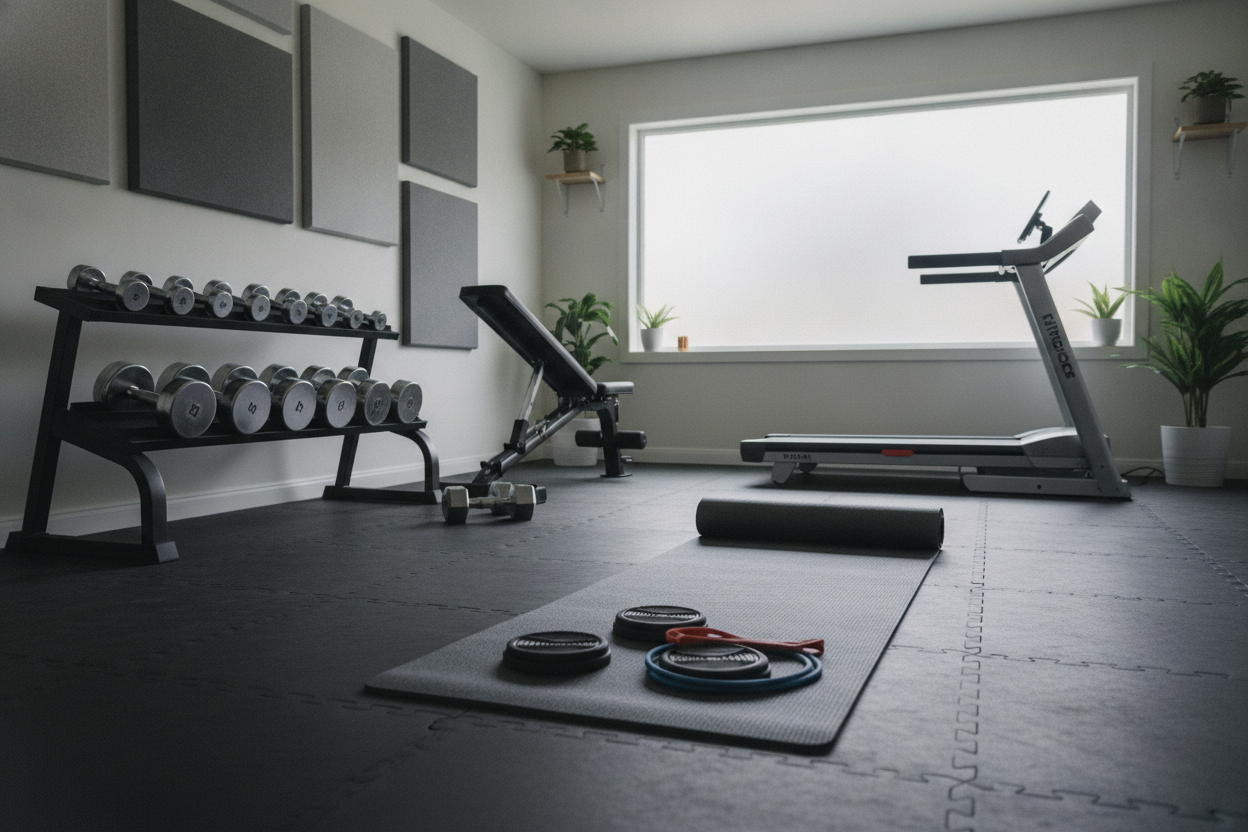
If you’re working in a cramped spare room, a 6x4 exercise mat is the sweet spot. It’s large enough for full-body sprawl but small enough to fit in most apartments. I’ve used cheap yoga mats that bunch up under your feet—they’re trash. You want something with enough density (at least 6-7mm) so your knees don't scream during lunges. Once that mat is rolled out, the workout has officially begun.
4 Simple Exercises You Can Do Right Now
When you're paralyzed by choice, run through this four-move sequence. No thinking, just doing. First, hit plank walkouts. Start standing, hinge at the hips, and walk your hands out to a high plank. It wakes up your shoulders and core immediately. It's one of those exercises you can do anywhere, from a hotel room to your garage.
Next, move to glute bridges. Lay flat and drive through your heels. If you sit at a desk all day, your glutes are probably dormant. This wakes them up. Follow this with standard push-ups. If you’re looking for easy chest exercises you can do anywhere, this is the gold standard. Focus on keeping your elbows at a 45-degree angle rather than flared out to save your shoulders. You can find more easy chest exercises you can do anywhere if you need to scale the difficulty down to your knees.
Finally, finish with dead bugs. It sounds silly, but it’s the best way to teach your core to stay braced while your limbs move. These are the to do exercises that build the 'armor' you need before you ever touch a heavy weight. Do three rounds of this, and you’ve done more for your health than someone still scrolling for the 'best' routine.
How to Graduate to the Gym When You're Ready
Once the floor routine becomes a habit, you’ll naturally want more resistance. That’s when you head to a commercial space. The transition is easier than you think. Your bodyweight push-up becomes a bench press or a dumbbell fly. You’ll want to look into chest exercises you can do in the gym to start adding plate-loaded volume to your routine.
Don't be intimidated by the machines. Most of them are just weighted versions of the floor movements you've already mastered. For example, learning the mechanics of chest exercises you can do in the gym is much simpler once you have the scapular control from months of floor work. The gym is just a tool to increase the intensity of the habits you built at home.
The Best Exercise to Do Is the One You Actually Start
We focus so much on exercises to get fit that we forget fitness is a byproduct of movement, not just planning. An imperfect floor session done today beats a 'perfect' gym session that keeps getting pushed to next Monday. Roll out the mat, get on the ground, and move for ten minutes. Momentum is a powerful thing once it's actually moving.
Personal Experience: My 'Optimizing' Mistake
A few years back, I was obsessed with finding the 'perfect' vertical pull-to-push ratio. I spent two weeks building a spreadsheet and zero hours actually training. I ended up losing strength and feeling like a fraud. I finally snapped out of it by rolling out a rubber mat in my kitchen and doing 50 push-ups. It wasn't 'optimal,' but it broke the cycle. Now, if I spend more than five minutes thinking about what to do, I default to the floor.
FAQ
Can I really get fit with just floor exercises?
Yes, especially if you're starting out. You can build significant strength and cardiovascular health using just your body weight, provided you increase the reps or decrease the rest time over time.
How many times a week should I do this?
Aim for three times a week. It’s enough to see progress but not so much that you’ll burn out or feel overwhelmed by the commitment.
What if I can't do a full push-up?
Drop to your knees or find an elevated surface like a couch or a sturdy table. The goal is to move through the full range of motion, regardless of the incline.