Stop Googling 'Leg Day Exercises Female' and Do These 4 Moves
I’ve spent the last decade in garage gyms and commercial dungeons, and nothing fires me up more than seeing the 'pink tax' applied to training advice. I’ve watched countless people scroll through endless lists of leg day exercises female looking for a secret 'toning' formula, only to find routines that wouldn't challenge a toddler. The truth is, your muscles don't have gender receptors; they respond to load, tension, and effort.
- Banded kickbacks are a finisher, not a foundation.
- Mechanical tension is the primary driver of muscle growth.
- Progressive overload is non-negotiable for real results.
- Four compound movements can replace a twenty-exercise circuit.
Why the Fitness Industry Lies to Women About Leg Day
The fitness industry loves to keep you in a cycle of 'feeling the burn' without ever actually getting stronger. If you search for a leg day workout female, the algorithm serves up high-rep, low-weight circuits featuring colorful resistance bands and 2-pound dumbbells. This isn't because women's bodies require 'special' low-impact movements; it's because it's easier to sell a '30-day booty blast' than it is to teach someone how to brace for a heavy squat. Marketing departments know that 'toning' sounds less intimidating than 'hypertrophy,' so they gatekeep the most effective tools.
When you focus on these high-rep, low-tension leg exercises for woman, you're mostly just chasing metabolic stress. That 'burn' feels like work, but it rarely leads to the structural changes you're looking for. Real growth happens when you force your nervous system to adapt to increasing loads. If you want to move past the fluff and actually build a resilient lower body, check out this definitive strength guide for women. Stop letting social media influencers convince you that you're too fragile for the squat rack. A leg program for women should look remarkably similar to one for men, because the physics of movement remain the same regardless of who is under the bar.
Biomechanics Don't Care About Your Gender
Muscle tissue is gender-neutral. Whether you are performing a gym leg workout female style or following a powerlifting program, your muscle fibers contract based on the demand placed upon them. To see actual growth in your quads, glutes, and hamstrings, you need to recruit high-threshold motor units. These are only activated when the weight is heavy enough or the movement is explosive enough to require them. Your body isn't going to build new muscle tissue because you did fifty reps of an unweighted leg lift; it builds muscle because it thinks it needs to survive a heavier load next time.
Biologically, women often have a wider Q-angle (the angle at which the femur meets the tibia) due to wider hips. This might change how you track your knees during a squat, but it doesn't change the requirement for mechanical tension. Instead of searching for 'female fitness legs' content that prioritizes aesthetics over function, focus on the mechanics of the hinge and the squat. When you master these, the aesthetics follow automatically. Your leg workout for ladies should be built on the same physiological bedrock as any elite athlete's program.
The Core 4: Stop Overcomplicating Your Lower Body Routine
You don't need twelve different machines to get a world-class leg routine women will actually benefit from. In fact, the more exercises you add, the less intensity you can bring to each one. I’ve found that focusing on four primary movement patterns allows for maximum recovery and maximum intensity. We are stripping away the fluff to focus on the heavy hitters: the hinge, the deep squat, the unilateral push, and the posterior pull. This minimalist approach ensures you aren't just tired by the end of your leg workout women session—you're actually stronger.
Heavy Hinge: Stop Being Scared of Romanian Deadlifts
The Romanian Deadlift (RDL) is the king of the posterior chain. If you want a leg workout for females that actually builds the glute-ham tie-in, this is it. Most people fail here because they treat it like a back exercise or they use weights that are far too light. You need to load this. Grab a barbell or a pair of heavy dumbbells and focus on pushing your hips back as if you're trying to close a car door with your glutes. Keep the weights tight to your shins and stop once your hips stop moving backward.
I’ve seen too many people do these with 10-pound weights for 30 reps. That’s a waste of time. Your hamstrings are incredibly strong; they can handle significant load. If your grip gives out before your legs do, get some straps. Don't let a small muscle like your forearm limit the growth of the biggest muscles in your body. When done correctly, RDLs are the most effective leg exercises for females looking to build a powerful back side without the spinal compression of a traditional deadlift.
Deep Squats: Goblet or Barbell, Just Go Heavy
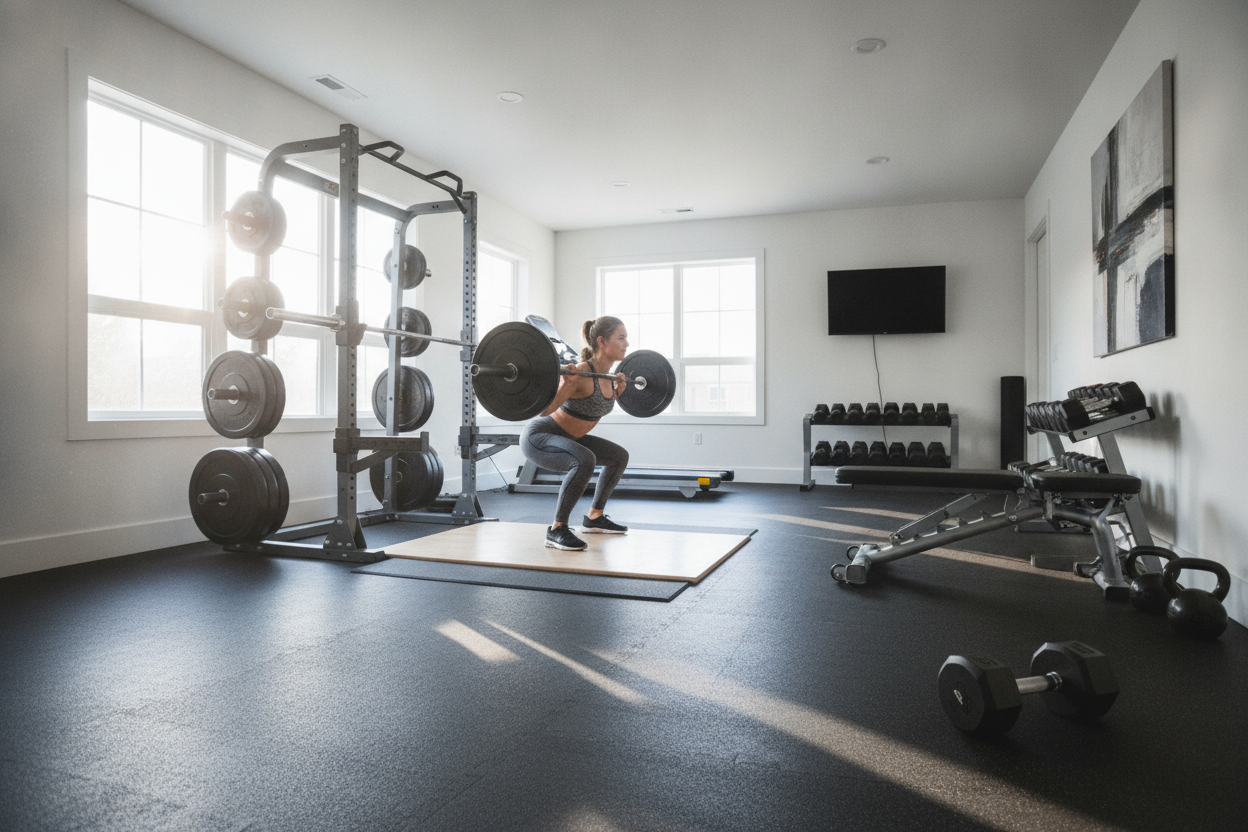
Endless air squats are a warm-up, not a workout. To develop the quads and adductors, you need depth and load. Whether you're doing a leg workout at gym for woman or training in a garage, you need to hit at least parallel depth. A goblet squat is a fantastic starting point because the front-loaded weight acts as a counter-balance, allowing you to sit deeper into your hips without falling over. Once you can goblet squat a 50-pound dumbbell for 12 reps, it’s time to move to the barbell.
A barbell back squat or front squat allows for the greatest amount of weight to be moved, which equals the greatest amount of tension. Don't worry about 'bulking'—that requires a massive caloric surplus. Focus on the strength of the movement. If you're doing a leg workout gym women routine, claim your space in the rack. Use the safety bars, learn how to bail, and start adding 2.5 to 5 pounds to the bar every week. That's how you actually see a change in your leg exercises gym woman performance.
Unilateral Misery: The Split Squat
Single-leg work is the 'secret sauce' for fixing imbalances and building stability. The Bulgarian Split Squat is notoriously hated because it’s hard, which is exactly why it should be in your leg workout routine women plan. By elevating your rear foot, you force the front leg to handle nearly all the load. This targets the glute medius and the quads in a way that bilateral squats simply can't. It also forces your core to work overtime to keep you upright.
When setting these up, don't just hop around trying to find your balance. Measure your distance, plant your foot, and stay there. If you're doing this as part of a female leg workout routine, don't be afraid to hold onto a rack for balance so you can focus entirely on the leg drive. I’ve found that people often quit these because they feel 'unstable,' but using a hand-hold allows you to push the muscle to failure rather than stopping because you wobbled. This is a staple for any serious women's lower body workout.
Your Floor Matters More Than Your Shoes
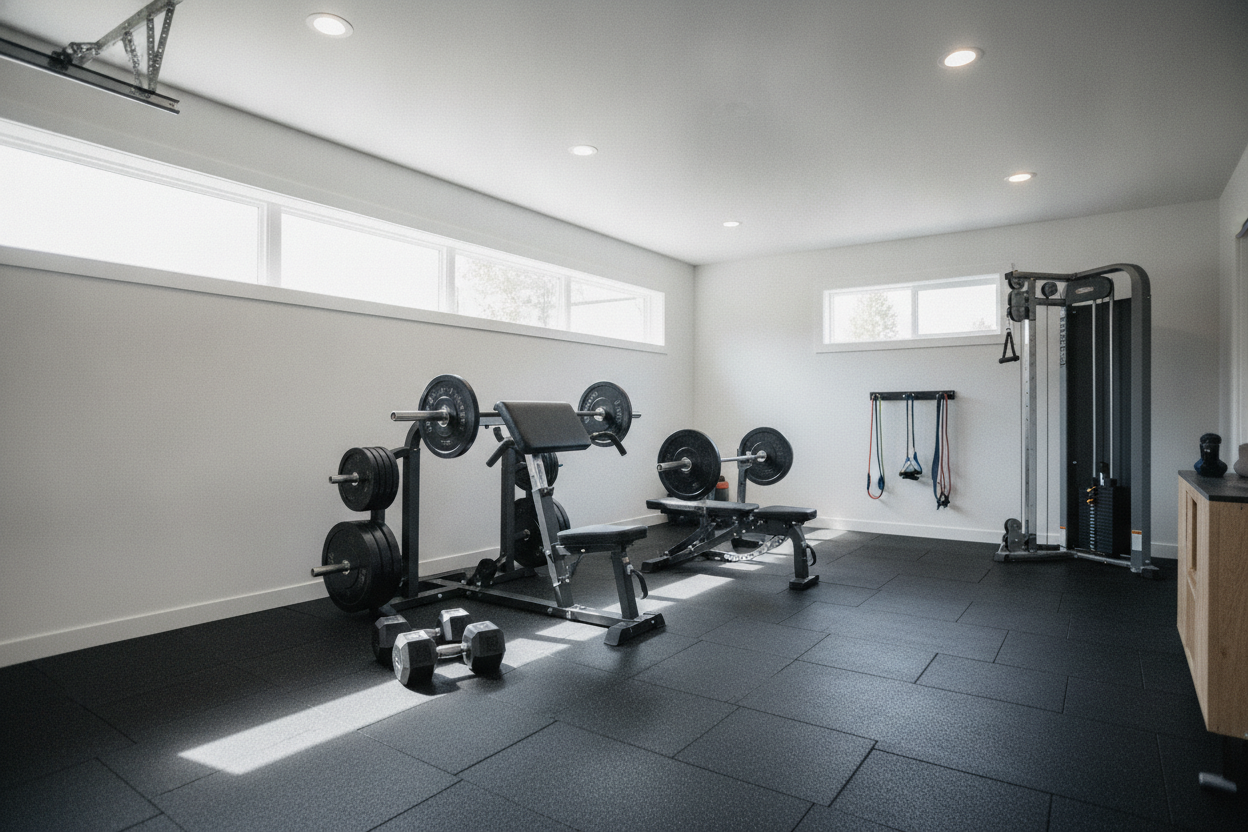
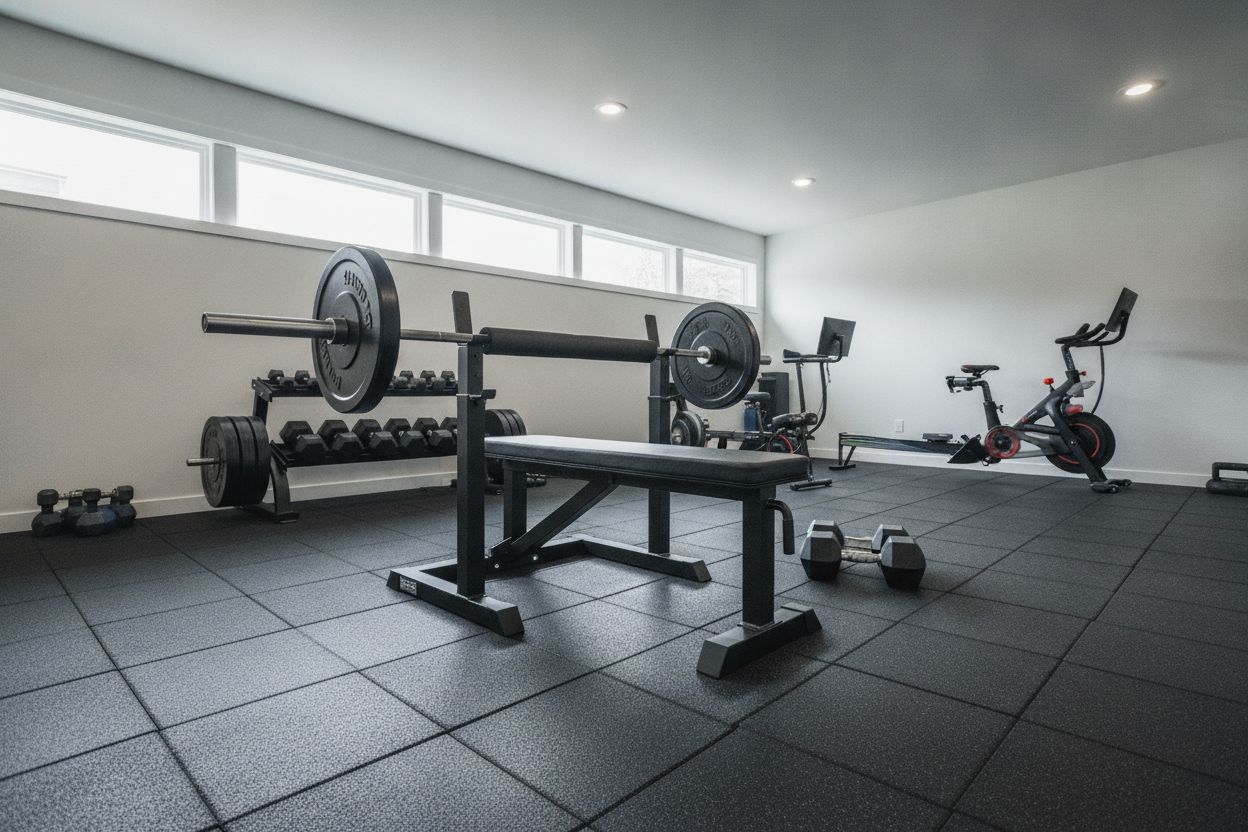
You can have the best leg workout plan for women in the world, but if you're trying to squat on a slippery hardwood floor or those squishy foam tiles from the toy aisle, you're leaving gains on the table. Stability starts at the floor. If your feet are shifting or the floor is compressing under the weight, your brain will literally 'shut off' some of your strength to prevent injury. You need a high-density surface that offers grip and zero compression.
For a home setup, I always tell people to invest in a large exercise mat for home gym use. You want something that won't budge when you're lunging. I personally recommend a 6x8ft gym flooring mat because it gives you enough runway for walking lunges without resetting every two steps. I once tried to do heavy RDLs on a cheap yoga mat, and the mat literally stretched and tore under my feet. It was dangerous and a waste of money. Buy real flooring once, and you'll never have to worry about it again.
Putting It Together: A Real Routine That Works
Here is how a real leg program for women looks when you prioritize strength over 'burn.' Perform this twice a week with at least two days of rest in between. Focus on beating your previous weight or reps every single session.
- Barbell or Goblet Squats: 3 sets of 6-8 reps (2 mins rest)
- Romanian Deadlifts: 3 sets of 8-10 reps (2 mins rest)
- Bulgarian Split Squats: 3 sets of 10-12 reps per leg (90 sec rest)
- Glute Bridges or Hip Thrusts: 3 sets of 10-15 reps (90 sec rest)
This isn't a 'circuit.' You finish all sets of one exercise before moving to the next. This allows your heart rate to settle so your muscles—not your lungs—are the limiting factor. If you want to see how this fits into a full training cycle, check out the blueprint for women's strength and tone. Stick to the basics, eat enough protein, and stop looking for 'hacks.' The hack is the heavy lifting.
Personal Experience: My 'Burn' Mistake
Early in my training, I fell for the 'more is better' trap. I would do 2-hour leg day workouts for females that I found online, featuring 15 different variations of a kickback and a fire hydrant. I was exhausted, but my squat numbers never moved, and my legs looked exactly the same. It wasn't until I cut my workout down to just four moves and doubled the weight on the bar that I actually saw muscle definition. I wasted six months on 'toning' routines; don't make the same mistake. Trust the heavy stuff.
FAQ
Do I need to do cardio on leg day?
If you're lifting with enough intensity, your heart rate will be plenty high. Save the dedicated cardio for your off days so you can put 100% of your energy into your lifts. High-intensity lifting is metabolic conditioning in its own right.
Will lifting heavy make my legs too big?
No. Building significant muscle mass requires a massive caloric surplus and years of dedicated training. For most, lifting heavy will simply make your legs look firmer and more 'athletic' because you're replacing fat with dense muscle tissue.
How do I know if the weight is heavy enough?
You should feel like you could maybe do one or two more reps at the end of a set, but definitely not five. If you finish a set of 10 and feel like you could have done 20, the weight is too light. Increase it next time.