Stop Forcing a Modern Bodybuilders Workout Into Your Garage Gym
I remember the night I tried to squeeze a commercial-grade leg press into my single-car garage. I had about 18 inches of clearance on either side, and every time I loaded a 45-pound plate, I banged my knuckles against the drywall. It was a mess. I was trying to follow a high-volume, machine-heavy bodybuilders workout I found online, and I was failing miserably because my environment didn't match the programming.
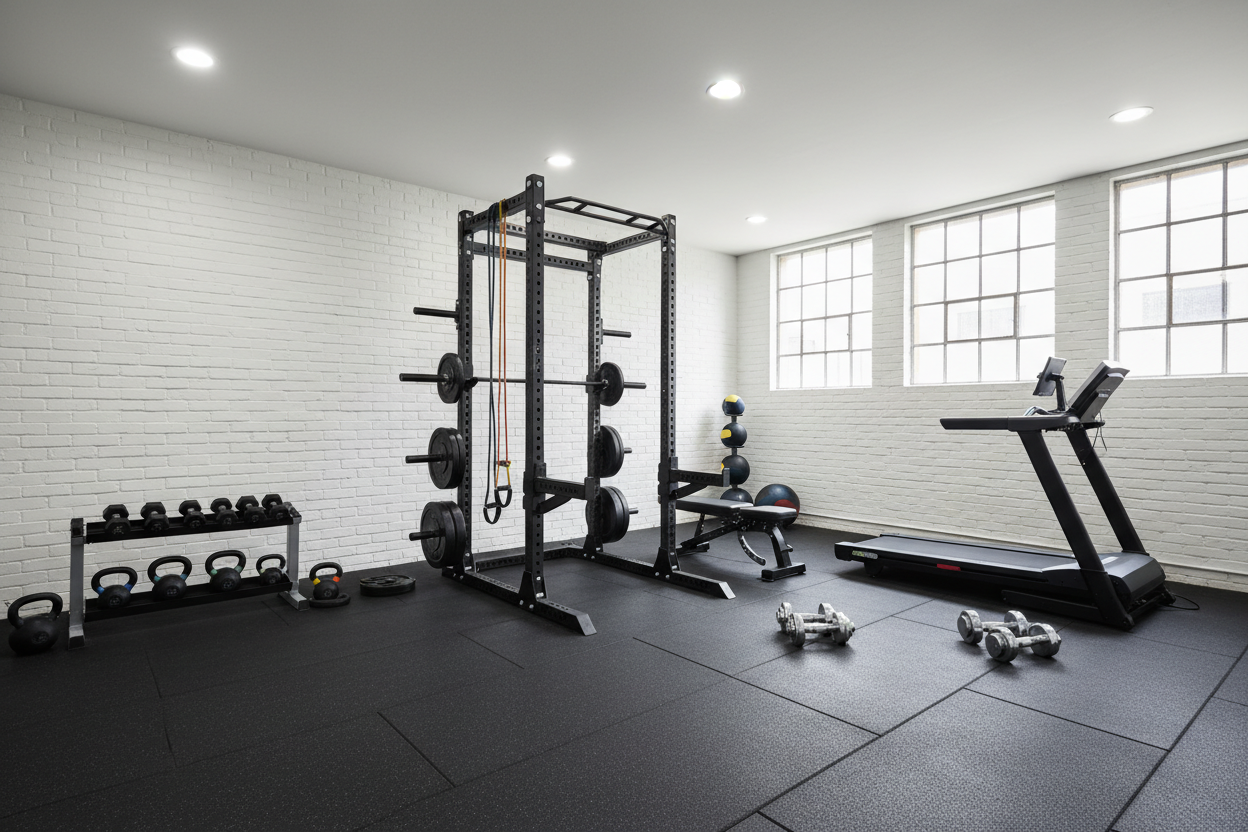
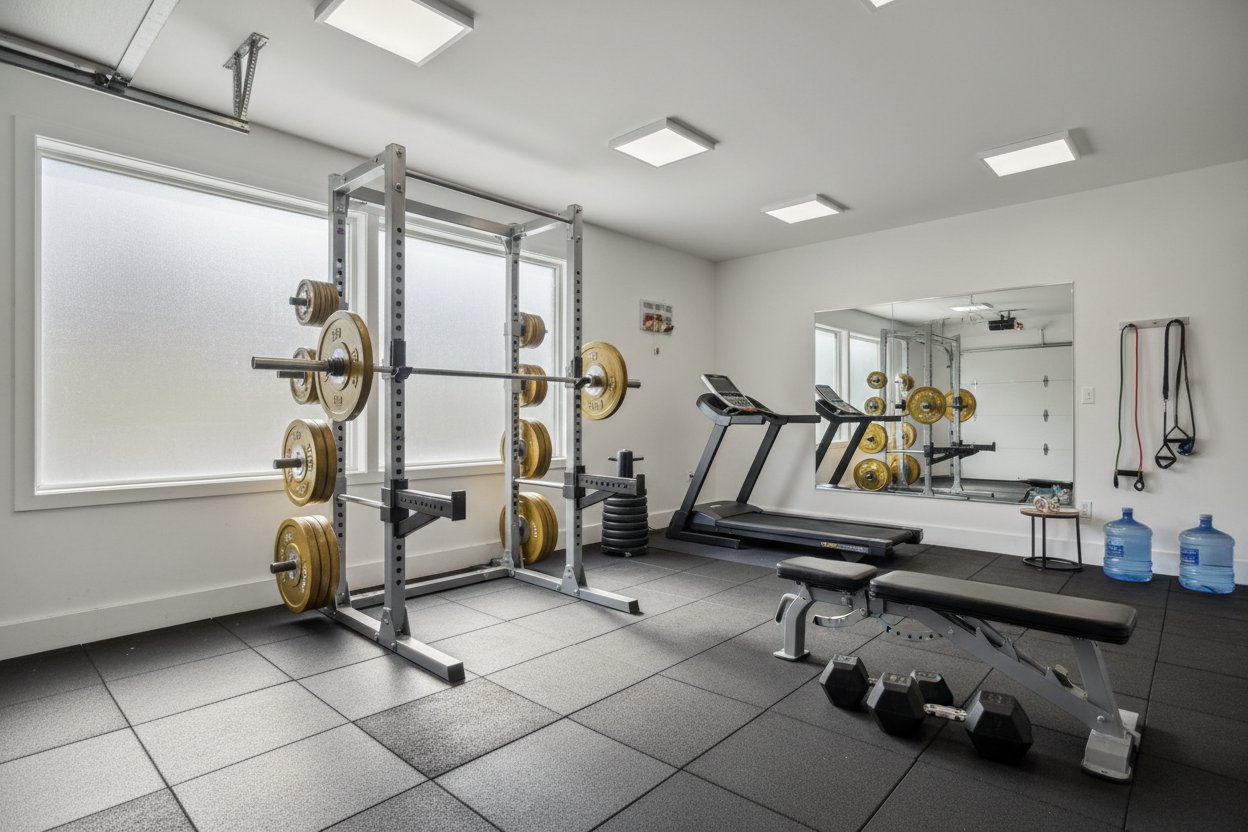
The reality of garage gym life is that you don't have 15,000 square feet of selectorized machines. You have a rack, a bar, some iron, and hopefully enough floor space to move without tripping over a leaf blower. Trying to mimic the high-tech body builder fitness routines of the modern era is a fast track to frustration and plateaus.
Quick Takeaways
- Modern bodybuilding relies on machines you don't have; Golden Era training relies on the iron you do have.
- Barbells and dumbbells are superior for hypertrophy when your space is limited to a 10x10 slab.
- Compound movements build a more rugged bodybuilder build than isolation-only splits.
- Small accessories like bands and fat grips can replace massive cable towers.
Why Your Commercial Gym Split Fails at Home
Most modern bodybuilders training programs are written for people with access to an Arsenal Strength or Panatta-equipped facility. These routines call for four different chest machines just to hit the 'upper-inner' fibers. When you try to translate that to a garage, you end up doing 20 sets of mediocre bench press variations because you feel like you're missing something. You aren't.
The disconnect is fundamental. Modern body builder fitness is built on the idea of 'tension at all costs,' often facilitated by cam-driven machines that maintain a perfect strength curve. In a garage, the strength curve is determined by gravity. If you try to force a machine-based split into a free-weight space, you'll likely overtrain your joints and undertrain your muscles. You'll spend more time 'innovating' weird setups with bands and chairs than actually lifting heavy weight.
I’ve seen guys try to rig up a leg extension using a bench and a dumbbell held between their feet. It’s dangerous, the tension is garbage, and you’re better off just doing a sissy squat. Stop trying to make your garage do things it wasn't meant to do. Accept the constraints and use them to get stronger.
The Golden Era Secret to the Bodybuilder Build
If you want a classic 1970s bodybuilder build, you have to look at how those guys actually trained. Arnold, Franco, and Zane weren't spending six hours on a seated ISO-lateral row. They were doing heavy T-bar rows in the corner of the gym with a barbell shoved into a pile of plates. They were doing heavy incline presses and deep dumbbell flyes that made their pecs look like armor plating.
This 'Golden Era' approach is the ultimate blueprint for the home lifter. These guys built world-class physiques using equipment that is actually less sophisticated than what you probably have in your rack right now. They focused on the 'big' movements and used high volume to force growth. The Chest Training Blueprint How To Actually Build A Bigger Stronger Upper Body highlights how swapping those fancy cable crossovers for heavy incline presses and deep, weighted flyes can actually lead to better sternal development.
The secret is simple: free weights require more stabilization. When you're wrestling a pair of 100-pound dumbbells for a chest press, every stabilizer in your upper body is screaming. That systemic fatigue is exactly what triggers growth in a home gym setting. You don't need a $4,000 pec deck; you need to master the art of the heavy dumbbell flye with a 3-second negative.
Swapping Machines for Raw Iron
The biggest hurdle in body builder training at home is leg day. Most people think they need a hack squat or a leg press to get big quads. That’s a lie sold by equipment manufacturers. To Build Strong Sculpted Legs Your Ultimate Guide To Lower Body Training, you need to fall in love with the movements that suck the most. Front squats, Bulgarian split squats, and Romanian deadlifts are the holy trinity of home leg growth.
If a program calls for a hack squat, grab your barbell and perform a 'landmine' hack squat or a heels-elevated front squat. The stimulus is nearly identical, and you aren't wasting 20 square feet of floor space on a machine that only does one thing. For leg extensions, try sissy squats or Nordic curls. These movements don't just build muscle; they build bulletproof knees and functional strength that a machine simply can't replicate.
I personally traded my cheap, wobbly leg press for a high-quality set of adjustable dumbbells and a sturdy step-up box. My legs have grown more in the last six months of heavy lunging and split-squatting than they did in two years of pressing. The lack of a machine forces you to use a full range of motion, which is the primary driver of hypertrophy anyway.
Don't Neglect the Small Details
Isolation work is where garage gym owners usually quit. They think because they don't have a cable crossover, they can't do rear delts or calves. This is where Strength Training Accessories become your best friend. A simple set of resistance bands can be looped over your pull-up bar to replicate nearly any cable movement, from face pulls to tricep pushdowns.
For rear delts, stop looking for a reverse fly machine. Grab a pair of light dumbbells and do chest-supported rows with an emphasis on the flare. For calves, stand on the edge of a 45-pound plate or a wooden block and do single-leg calf raises with a dumbbell in your hand. It’s not fancy, but it works. The goal isn't to look cool while you're training; the goal is to look like a bodybuilder when the shirt comes off.
Structuring Your New Garage Hypertrophy Plan
Your bodybuilders training plan at home should be built around a Power Rack. Everything else is secondary. I recommend an Upper/Lower or a Push/Pull/Legs (PPL) split. This allows you to hit every muscle group twice a week, which is the sweet spot for natural hypertrophy.
Start every session with a 'Big Rock'—a heavy compound lift like the squat, bench, or overhead press. Do 3-5 sets in the 5-8 rep range. This builds the base of your strength. After that, move into your 'Bodybuilding' work. This is where you use higher reps (10-15), shorter rest periods, and techniques like supersets or dropsets. Since you aren't fighting for a machine at a commercial gym, you can move from a barbell row directly into a dumbbell pulldover without anyone stealing your equipment.
I once tried to run a high-intensity 'Dorian Yates' style HIT program in my garage. I realized quickly that without a spotter or a Smith machine, taking every set to absolute failure on a barbell bench press was a great way to end up in the emergency room. Adapt your intensity. Use 'Rest-Pause' sets or 'AMRAP' finishers on movements where you can safely fail, like curls or lateral raises, rather than the big compound lifts.
Personal Experience: The Wobbly Leg Extension Mistake
Years ago, I bought a bolt-on leg extension attachment for my weight bench. It cost $150 and looked great in the photos. In practice, it was a nightmare. The pivot point was off, meaning the resistance vanished at the top of the rep. It shook like a leaf when I put more than two plates on it. I spent more time tightening bolts than I did training my quads. I eventually sold it for $40 and went back to Bulgarian split squats. It taught me a valuable lesson: if you can't afford a $3,000 commercial machine, don't buy a $200 'home' version. Stick to the iron.
FAQ
Can I get big without a cable machine?
Absolutely. Resistance bands provide a similar constant tension, and dumbbells allow for a more natural range of motion. Cables are a luxury, not a necessity for growth.
Is a power rack enough for a full bodybuilding routine?
Yes. With a rack, a barbell, and a bench, you can hit every major muscle group. Add a pull-up bar and some dipping handles, and you have everything needed for a pro-level physique.
How do I hit my back without a lat pulldown?
Weighted pull-ups are the king of back width. If you can't do pull-ups, use bands for assistance or perform heavy barbell rows and 'Seal Rows' to build thickness and width simultaneously.