Stop Faking It: Real Exercise for Strength at Home
I remember staring at my $120-a-month gym membership bill and realizing I spent more time waiting for the one decent power rack than actually lifting. I bought a pair of cheap 20lb dumbbells from a big-box store thinking I could 'make it work.' I was wrong. If you want a legitimate exercise for strength at home, you have to stop chasing a sweat and start chasing mechanical tension. Most people fail because they mistake fatigue for progress.
Quick Takeaways
- High reps are for endurance; heavy tension builds raw strength.
- Protective flooring is a safety requirement, not an aesthetic choice.
- Single-leg movements allow for 'heavy' loading with less total weight.
- Tempo manipulation is your best friend when you run out of plates.
Why Your Living Room Routine Feels Like Cardio
Most home workouts for strength are actually just aerobic sessions in disguise. If you're doing 30 reps of air squats and jumping jacks, you aren't building strength; you're just getting better at being tired. True strengthening workouts at home require you to challenge your central nervous system. This means lifting something heavy enough that you actually need a two-minute rest between sets.
Biology doesn't care if you're in a fancy club or your basement. To get stronger, you need to recruit high-threshold motor units. You do that by moving heavy loads or moving moderate loads as fast as possible. If you can hold a conversation while doing your strengthening workout at home, you're just going through the motions.
The Foundation: Protecting Your Floors and Your Joints
Lifting heavy in a residential space comes with risks. I've seen guys crack their foundation by dropping a 50lb kettlebell on bare concrete. You need a base that offers grip and impact absorption. A high-quality 6x8ft exercise mat is the bare minimum for a dedicated lifting area. It provides enough real estate for lunges and deadlift variations without your feet sliding.
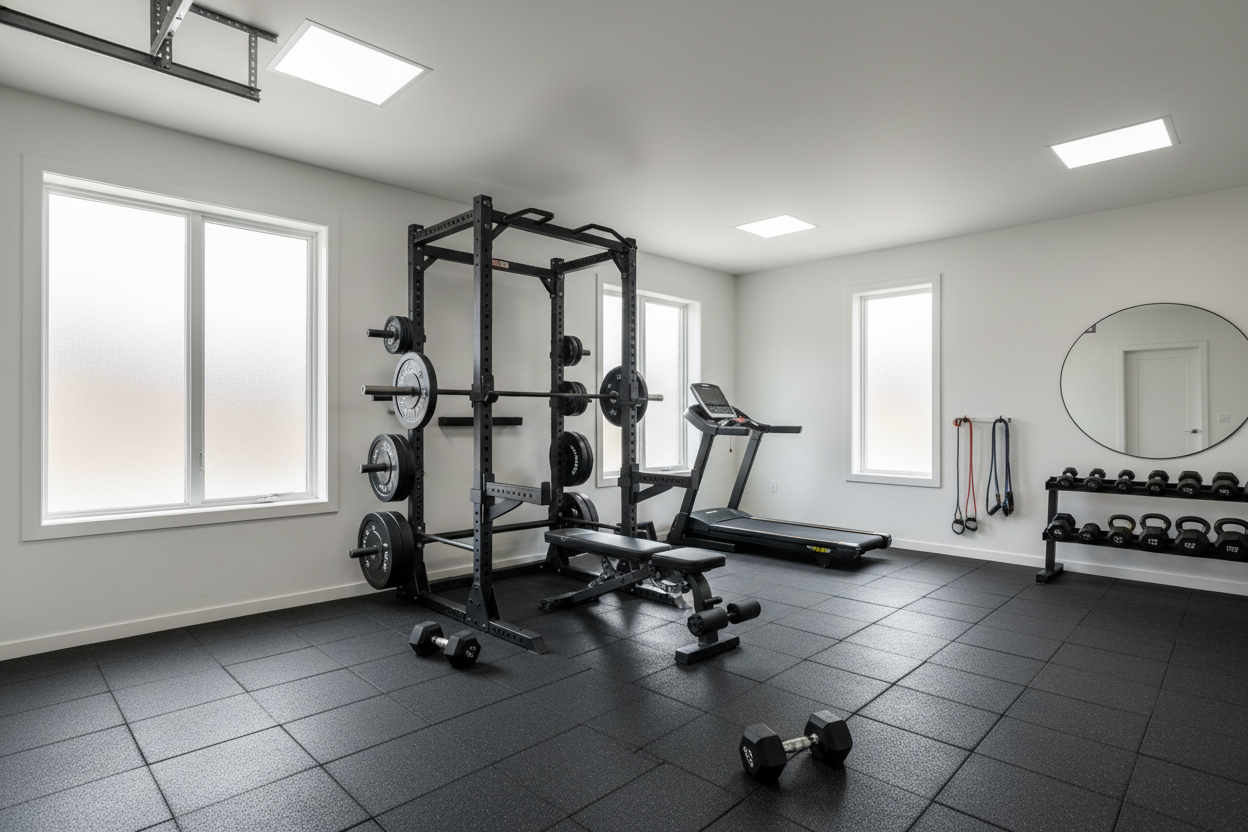
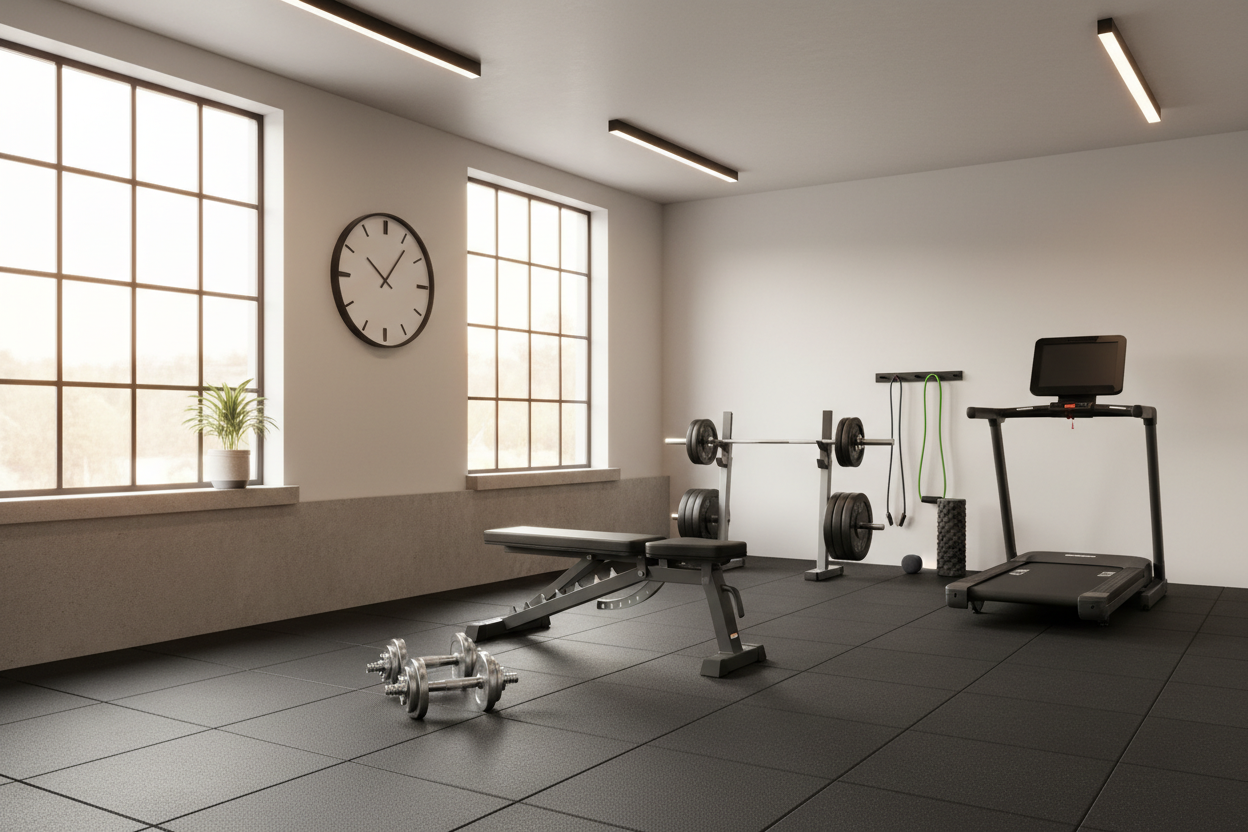
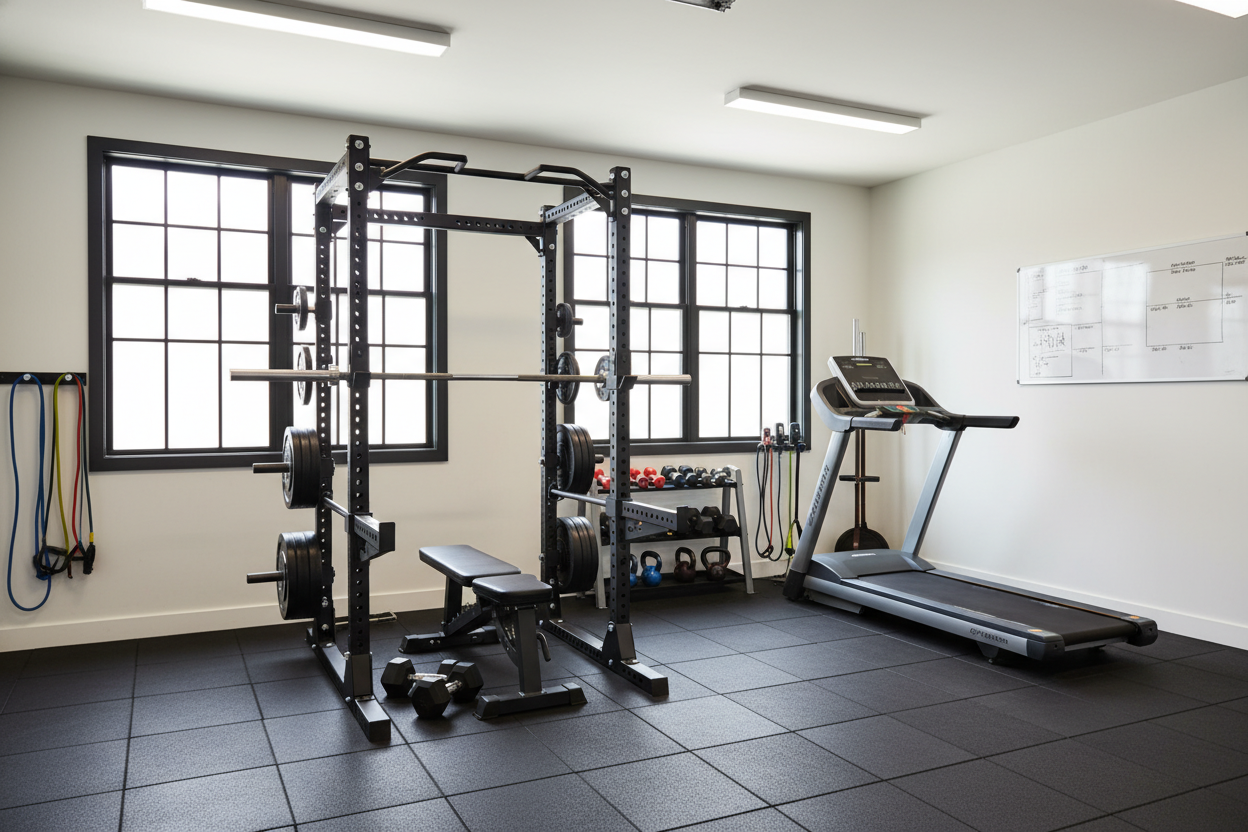
If you're turning a larger garage or basement into a permanent spot, look into a large exercise mat for home gym setups. This isn't just about the floor—it's about your joints. Doing floor presses or kneeling overhead presses on a hard surface is a fast track to bursitis. A dense mat acts as your safety net, allowing you to focus on the lift rather than the floor.
How to Pick Your Primary Exercise for Strength at Home
Without a spotter or a cage, you have to be smart about your 'Big Lifts.' You want a home exercise for strength that offers high loading potential with low 'death-by-gravity' risk. Bulgarian split squats are my top choice. By shifting all the weight to one leg, you effectively double the load on that limb without needing a 300lb barbell on your back.
Floor presses are another staple. Since the floor stops your elbows, you don't need a bench, and you can't get pinned under the weight. When selecting strengthening body exercises, prioritize movements where you can safely reach technical failure. If you can't drop the weight safely, don't lift it in your living room.
Tools of the Trade: What Actually Builds Mass
Bodyweight is a great start, but eventually, the law of diminishing returns kicks in. To keep the strengthening exercises to do at home effective, you need external resistance. The debate between dumbbells vs kettlebells for at home strength training usually comes down to your specific goals. Dumbbells are superior for incremental loading and traditional hypertrophy, while kettlebells excel at offset loading and explosive power.
I personally use adjustable dumbbells because they save space, but I keep a single 32kg kettlebell for heavy swings and carries. If you're serious about home exercise for strength, buy the heaviest thing you can safely move and grow into it. Cheap, light weights are just paperweights after the first month of a real program.
Hacking Progressive Overload With Limited Weight
What happens when your 50lb dumbbells start feeling light? You don't necessarily need more iron. You can master strength training home exercises by manipulating tempo. Try a 4-second descent (eccentric) followed by a 2-second pause at the bottom of a goblet squat. It will make 50lbs feel like 100lbs.
You can also use mechanical drop sets. Start with your hardest variation (like a rear-foot elevated split squat) and, once you hit failure, immediately switch to a standard lunge. This keeps the muscle under tension longer without needing to change plates. It's a brutal way to force adaptation when you're working with a limited kit.
Structuring a Legitimate Strengthening Workout at Home
A real session shouldn't have twenty different moves. Pick four and master them. Start with your heaviest compound movement while your CNS is fresh. For example, a heavy goblet squat or split squat for 3 sets of 6-8 reps. Follow that with an upper body push and pull, like floor presses and 1-arm rows.
Finish with a 'finisher' that targets stability, like a suitcase carry. The key is the rest period. Don't rush. If you're trying to build strength, give yourself 120 seconds between sets. This isn't a circuit; it's a focused effort to move heavy things. That is the only way to make strengthening body exercises actually work long-term.
Personal Experience: My Floor-Cracking Mistake
Early in my home gym days, I tried to do heavy deadlifts on a thin yoga mat I stole from my wife. I pulled 315lbs, got shaky on the descent, and let it drop the last two inches. I didn't just wake up the neighbors; I left two permanent divots in the subfloor. I learned the hard way that 'making do' with gear is a recipe for property damage. Invest in a real mat before you invest in heavy iron.
FAQ
Do I need a squat rack to get strong at home?
No. While a rack is nice, you can build elite leg strength with heavy split squats, lunges, and goblet squats. You are limited only by how much weight you can pick up and hold.
How often should I do a strengthening workout at home?
Three to four days a week is the sweet spot. Strength is built during recovery, not just during the lift. If you're training heavy, your nervous system needs 48 hours between similar sessions.
What is the most versatile piece of home strength equipment?
A pair of heavy adjustable dumbbells. They allow for the widest range of exercises and take up the least amount of floor space in a small apartment or garage.