Stop Doing Your Weight Lifting Booty Workout Like This
You are squatting until your legs shake. You are deadlifting until your grip fails. Yet, despite all that effort, your jeans fit exactly the same way they did six months ago. It is the most frustrating plateau in the gym: plenty of effort, zero curves to show for it.
The problem usually isn't the effort; it is the execution. A weight lifting booty workout requires a different approach than general leg training. If you are just moving weight from point A to point B, you are likely letting your quads and lower back steal all the gains. Let’s fix your mechanics and finally wake up those dormant muscle fibers.
Key Takeaways for Glute Growth
- Mind-Muscle Connection is Non-Negotiable: If you cannot feel your glutes squeezing at the top of the rep, you are just training your ego, not your muscles.
- Volume vs. Intensity: Glutes respond best to a mix of heavy compound lifts (low reps) and metabolic stress exercises (high reps).
- The Hip Hinge is King: Squats are great, but hip hinge movements (like RDLs) are superior for isolation.
- Progressive Overload: You must add weight, reps, or improve form every single session to force adaptation.
The Science: Why Weight Training for Buttocks is Different
Your glutes are the largest muscle group in your body, primarily made of Type II fast-twitch muscle fibers. This means they don't grow from endless bodyweight pulses alone. They grow from heavy resistance and explosive power.
When we talk about weight training for buttocks, we have to look at the three main mechanisms of hypertrophy: mechanical tension (heavy weights), metabolic stress (the "burn"), and muscle damage (the soreness). Most lifters focus only on the heavy weights but neglect the tension at the peak contraction.
Essential Moves: The Glutes Weight Workout Hierarchy
Stop doing random machines and focus on these movement patterns. This isn't just about lifting; it's about lifting with intent.
1. The Hip Thrust (Shortened Position)
This is the gold standard weight lift for glutes. Unlike squats, where tension drops at the top, the hip thrust places maximum tension on the glutes when they are fully shortened (the squeeze).
The Fix: Tuck your chin. Look forward, not at the ceiling. If you look up, your back arches, and your lumbar spine takes the load. Keep your ribs down and drive through your heels.
2. Romanian Deadlifts (Lengthened Position)
To build the "shelf" or upper glute, you need to stretch the muscle under load. RDLs are essential weight lifting exercises for buttocks because they tear down muscle fibers through an eccentric stretch.
The Fix: Imagine closing a car door with your butt. Do not lower the bar to the floor; lower the bar only as far as your hips can push back. Once your hips stop moving, the rep is done.
3. Bulgarian Split Squats (Unilateral Stability)
Most people have one glute that is lazier than the other. This exercise exposes and fixes that imbalance.
The Fix: For glutes, lean your torso forward slightly (about 30 degrees). A vertical torso targets the quads; a forward lean shifts the leverage to the posterior chain.
Common Mistakes in Weight Lifting for Buttocks
The "Quad Takeover"
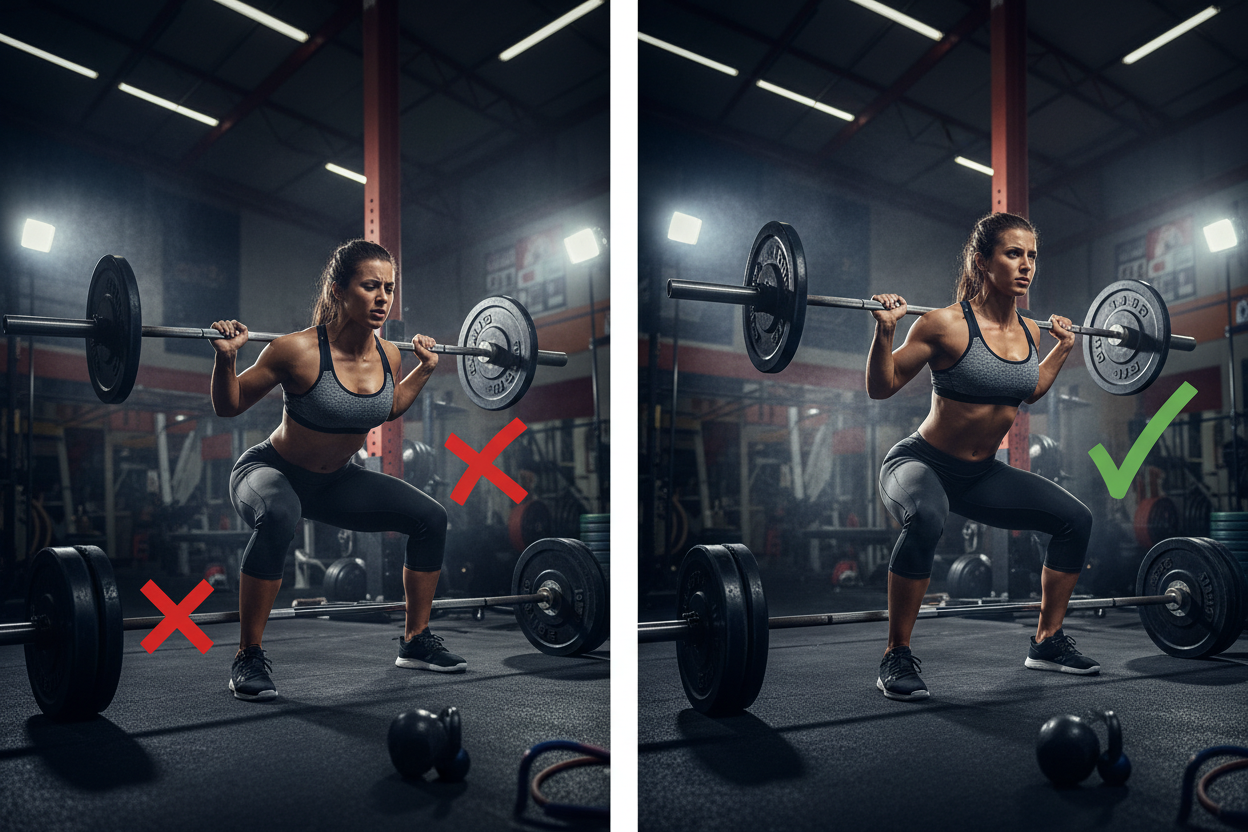
If you feel every squat in the front of your thighs, you are likely knee-dominant. To shift focus to the posterior, widen your stance slightly and focus on sitting back rather than sitting down.
Using Momentum
Swinging the weight up might look impressive on Instagram, but it kills your gains. Momentum removes tension. Slow down your eccentric phase (the lowering part). Count to three on the way down. That control is where the growth happens.
My Training Log: Real Talk on Glute Training
I want to be honest about what a serious weight lifting booty workout actually feels like, beyond the polished photos you see online. I remember the first time I truly committed to heavy hip thrusts. I was pushing 315 lbs, and despite using a foam pad, I went home with deep, dark bruises on my hip bones that looked like I’d been in a minor car accident.
But the real indicator wasn't the bruising; it was the "glute tremble." There is a specific, nauseating feeling when you finish a set of high-rep walking lunges where your glutes feel completely numb and shaky, almost like they’ve detached from your body. I also learned the hard way that if I didn't actively think about "ugly squeezing" my glutes at the top of a rep—making the most unflattering face possible—I wouldn't feel it the next day. If you look pretty while lifting heavy for glutes, you probably aren't going hard enough.
Conclusion
Building a strong posterior chain isn't about finding a magic exercise; it's about executing the basics with surgical precision. Weight lifting for buttocks is a long game. It requires heavy loads, ugly faces during the final reps, and a willingness to eat enough protein to support the repair.
Stop worrying about the weight on the bar until you can feel the muscle contracting. Once you master the connection, load it up. The results will follow.
Frequently Asked Questions
How often should I perform a glutes weight workout?
For most lifters, 2 to 3 times per week is the sweet spot. The glutes are large muscles that can handle high frequency, but they need at least 48 hours of rest between heavy sessions to recover and grow.
Can I build glutes without heavy squats?
Absolutely. While squats are great, they are not mandatory. Hip thrusts, RDLs, and lunges are often better for direct glute hypertrophy because they involve less lower back strain and higher direct glute activation.
Why do I feel my lower back during glute exercises?
This usually happens because you are arching your back to move the weight rather than using your hips. Focus on bracing your core (imagine someone is about to punch you in the stomach) and reducing the range of motion until your form is perfect.