Stop Doing the Same 3 Universal Machine Exercises Every Day
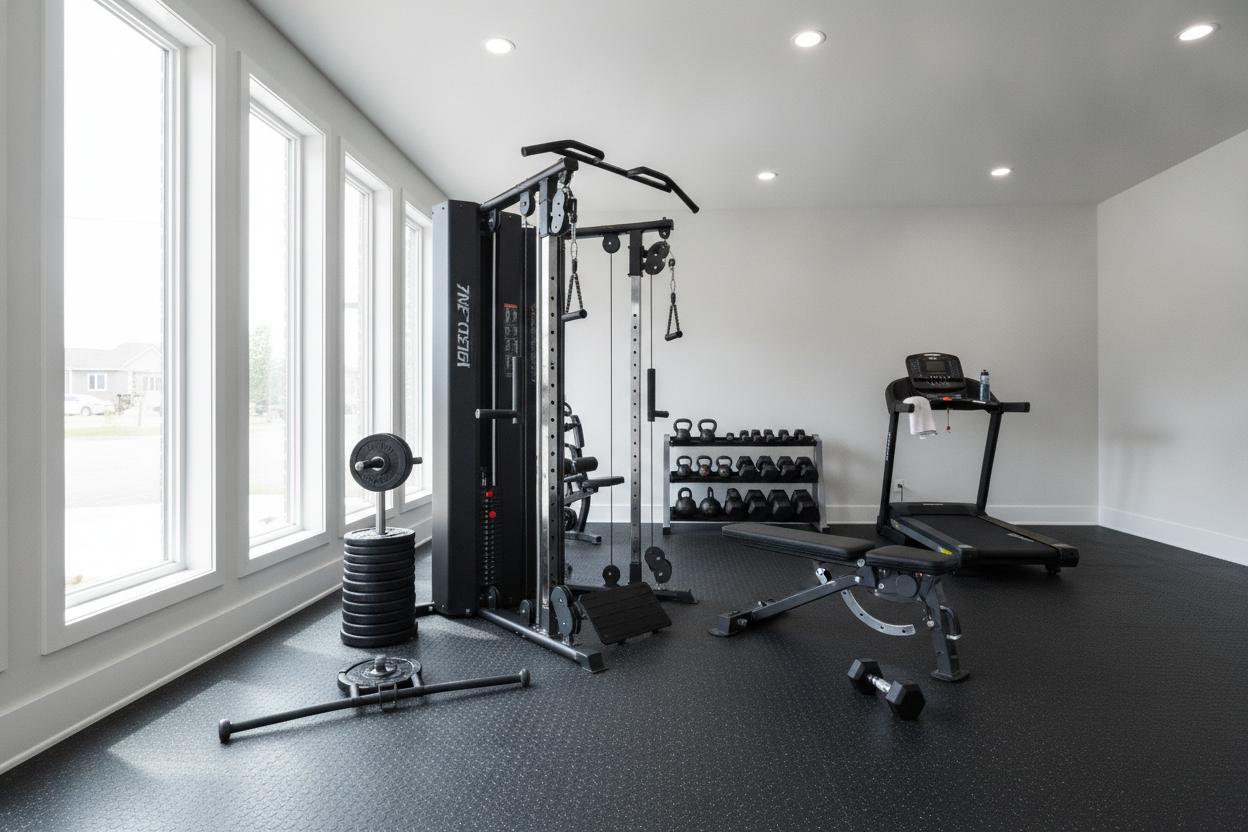
I remember the day I finally bolted my multi-station rig to the floor. I felt like I had just built a commercial gym in my basement, but three weeks later, I was only using the chest press arm and the lat bar. It is a common trap: you buy 400 pounds of steel and pulleys, yet your universal machine exercises look identical to what you did in high school gym class.
The reality is that most people treat these machines like a giant coat rack after the honeymoon phase ends. You get overwhelmed by the weird carabiners and the stack of attachments that look like medieval torture devices. But if you actually use the machine as intended, you can get a pro-level pump without ever touching a barbell.
Quick Takeaways
- Stop sticking to the seated press; use the cables for variety.
- Focus on slow eccentrics to make the machine stack feel heavier.
- Supersetting opposing muscle groups saves time and keeps intensity high.
- If you lack a specific station, use the low pulley for a DIY alternative.
Why Your Multi-Gym Feels Like a Giant Clothes Hanger
Most home gym owners fall into the 'three-exercise rut.' You do the chest press, the lat pulldown, and maybe some leg extensions. Before long, you are bored, and that massive footprint in your garage starts collecting dust and laundry. It is not the machine's fault; it is your lack of a plan.
These rigs are designed to be a one-stop-shop, but the manuals they come with are usually garbage. They show you sixty different ways to do a bicep curl and zero ways to actually build a thick back. You need to stop looking at it as one machine and start seeing it as a collection of high-quality cable stations that can hit every angle of a muscle.
The Only Universal Machine Exercises You Actually Need
Ignore the 50-page manual. You only need these six movements to build a real physique. Focus on the Seated Row (chest supported if possible), the Lat Pulldown, the Pec Fly (using the handles, not the pads), the Leg Extension, the Standing Cable Curl, and the Tricep Pushdown.
The key to making these work is all in the setup. You need to be mastering your universal machine by finding the exact pin heights that fit your limb length. If the seat is too high on a chest press, you are hitting your shoulders instead of your pecs. If the footplate is too close on a row, you lose the stretch at the bottom. Small adjustments make the difference between a wasted set and actual growth.
How to Structure a Brutal Universal Machine Workout
To turn these movements into a real universal machine workout, you have to stop resting for three minutes between sets. Machines allow you to transition instantly. I like to run an 'Antagonistic Superset' model. This means you pair a pushing movement with a pulling movement.
Try this: Hit a set of 12 on the chest press, then immediately jump into a set of 12 on the seated row. Do this for four rounds. Your heart rate will stay elevated, and you will get a massive pump in half the time it takes to load plates on a barbell. Because you are on a fixed path, you can push closer to failure without worrying about a bar crushing your neck.
What to Do When Your Rig Is Missing an Attachment
No home gym machine is perfect. Maybe yours didn't come with a dedicated low-row station or a leg curl bench. Don't sweat it. You can almost always mimic these movements using the existing pulleys. If you lack a leg curl station, try standing leg curls using a single ankle cuff on the low pulley. It feels different, but the tension on the hamstring is just as real.
The biggest mistake is ditching hypertrophy workout plans just because your specific model lacks one station. If a plan calls for a cable crossover and you only have a single stack, do one arm at a time. It takes longer, but it actually forces more core stabilization. Adapt the machine to the movement, not the other way around.
Stop Blaming the Machine for Bad Form
People love to talk trash about machines, claiming they are 'non-functional.' Tell that to the guys with 20-inch arms who grew up on Nautilus rigs. Tension is tension. Your muscles don't know if you are holding a $500 barbell or a $5 cable handle. They only know how hard they are contracting.
Stop jerking the weight. If you are using momentum on a universal machine, you are failing. Control the eccentric (the way down) for a full three seconds. Feel the stretch. If you do that, that 200-pound stack will feel like 400 pounds, and you will actually see the results you bought the machine for in the first place.
Personal Experience: The Cable Snap Scare
A few years back, I bought a budget-tier multi-gym from a local sporting goods store. I thought I was a hero and tried to max out the stack on a lat pulldown. The frame flexed so hard the top pulley started grinding against the housing. It was a wake-up call. I realized that while the machine can handle the weight, the user has to handle the maintenance. I started greasing my guide rods once a month with silicone spray, and it transformed the feel from 'clunky garage junk' to 'commercial smooth.'
FAQ
Can I build as much muscle on a machine as with free weights?
Yes. Hypertrophy is driven by mechanical tension and metabolic stress. As long as you are pushing close to failure and increasing the weight over time, your body will grow. Machines are actually better for some people because they allow for better isolation of specific muscles.
How often should I grease the guide rods?
If you use it three times a week, hit the rods with a dry silicone spray every 30 to 60 days. Avoid WD-40; it attracts dust and will make the movement feel gritty over time. Keep them clean and the machine will stay quiet.
What if the weight stack is too light for me?
Slow down your reps. Use a 4-second negative and a 2-second pause at the peak contraction. You can also buy 'stack weight adders' or pin a small 5-pound plate to the stack if the pin is long enough, though check your manual before getting too crazy with extra weight.