Stop Doing the Hip Abduction Machine Like This (Read First)
Walk into any commercial gym, and you will see a line of people on the hip abduction machine, scrolling through their phones while mindlessly flapping their legs open and closed. It is one of the most popular, yet most misunderstood pieces of equipment on the floor.
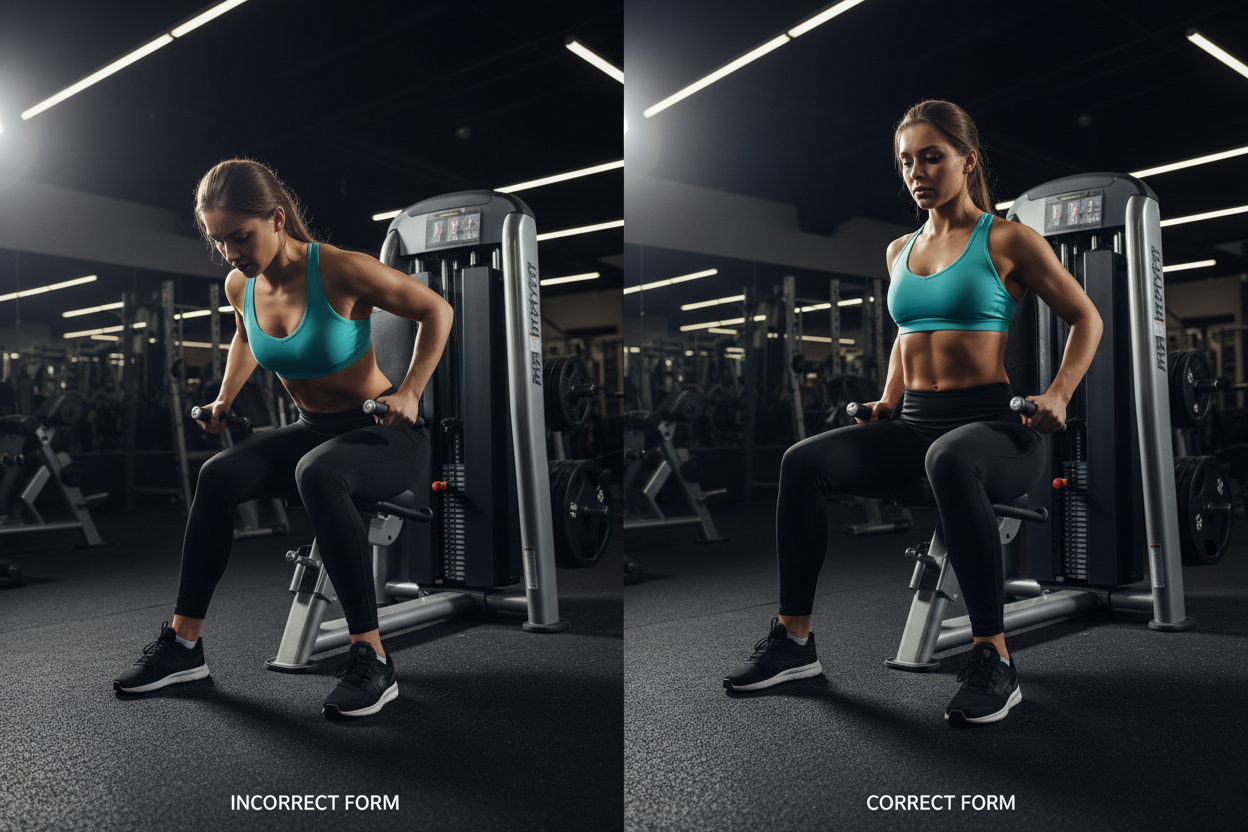
Many lifters assume that simply moving the weight stack guarantees a wider aesthetic or stronger hips. The reality? If you aren't stabilizing your pelvis or controlling the eccentric phase, you are likely just stressing your hip flexors rather than targeting the glutes. Let’s fix your form and make every rep count.
Key Takeaways: Mastering the Abductor Machine
- Primary Target: Isolates the Gluteus Medius and Minimus (side glutes), not the main Gluteus Maximus.
- The Setup: Ensure the pads rest just above the knee, not on the thigh, to maximize leverage.
- Tempo Matters: Explode out for 1 second, hold the peak contraction for 1 second, and return slowly for 2 seconds.
- Torso Position: Leaning forward slightly increases glute activation; sitting back recruits more TFL (Tensor Fasciae Latae).
- Common Error: Using momentum or "ego lifting" forces the lower back to take over, negating the benefits.
Why the Hip Abduction Machine Deserves a Spot in Your Routine
The abductor machine workout is often dismissed by powerlifters as "fluff," but that is a mistake. While squats and deadlifts build the posterior chain, they occur primarily in the sagittal plane (front-to-back movement). The hip abduction machine works in the frontal plane (side-to-side).
Neglecting these lateral movements leads to "sleepy" glutes. When your Gluteus Medius is weak, your knees tend to cave inward (valgus) during heavy squats. Using this machine as an accessory movement strengthens the stabilizers required for your heavy compound lifts.
How to Use the Hip Abduction Machine Properly
Learning how to use the hip abduction machine isn't just about sitting down and pushing. The nuance is in the setup and the squeeze.
1. Machine Adjustment and Setup
First, look at the pin placement. Select a weight that allows you to perform 12-15 reps with a distinct pause at the end. Next, check the leg pads. You want the pads to rotate outward so your legs start close together. If the machine allows, adjust the backrest so your knees are bent at roughly 90 degrees.
2. Hip Abduction Foot Placement
This is a debated topic. Some machines have foot pegs; others require you to place your feet on the bar below. The key is not to push with your feet. Your feet are just passengers. The force must come from the outer knee driving into the pad. If you push through your feet, you often engage the quads and hip flexors unnecessarily.
3. The Execution
Brace your core. Drive your knees outward against the pads. Do not just swing them open; imagine you are trying to touch the walls with your knees. At the widest point, perform a hard squeeze—this is the "money rep." Slowly return to the starting position without letting the weight stack slam.
The Great Debate: Leaning Forward vs. Sitting Back
You will see people performing hip abductor machine variations where they hover off the seat or lean heavily forward. Is this bro-science, or is it legitimate?
It is legitimate. When you sit completely upright or recline, the TFL (a hip flexor muscle) is in a prime position to assist the movement. By leaning forward at the hips (keeping the back straight, not hunched), you put the Gluteus Medius in a more lengthened position and reduce TFL involvement. If your goal is strictly glute hypertrophy, the "lean forward" method is generally superior.
Common Mistakes Killing Your Gains
The "Ego Flap"
This happens when you select the whole stack on the gym abductor machine and use momentum to swing the weight. If your torso is rocking back and forth with every rep, you aren't isolating the muscle; you are using physics to cheat.
Range of Motion Shortcutting
Partial reps have a time and place, but not here. If you can't open your legs fully because the weight is too heavy, drop the weight. The glute medius activates most intensely at the end range of abduction.
My Training Log: Real Talk
I used to hate this machine. I thought it was useless. For years, I skipped it entirely, focusing only on squats. Then, I developed a nagging pain in my right knee. My physio told me my hips were "unstable," and my knees were caving in on the ascent of my squat.
I added the hip abduction machine back in, but this time I dropped the ego. I remember the first time I did it right—leaning forward, gripping the handles until my knuckles turned white, and holding that open position for a full two seconds. The burn wasn't in the meat of the glute; it was this deep, cramping sensation right at the top of my hip bone (the iliac crest). It felt like someone was digging a thumb into my side.
Another thing nobody tells you: the machine waddle. After three sets to failure with a slow tempo, walking away from the machine feels incredibly awkward because your stabilizers are fried. If you don't feel that awkward "jelly-hip" feeling when you stand up, you probably went too light.
Conclusion
The hip abduction machine isn't just for checking your phone or cooling down. When executed with proper hip abduction form—controlled tempo, appropriate weight, and a slight forward lean—it is one of the best tools for building the upper glute shelf and bulletproofing your knees for heavy lifting. Stop swinging the weight and start squeezing the muscle.
Frequently Asked Questions
Is the hip abduction machine effective for glute growth?
Yes, but specifically for the Gluteus Medius and Minimus (the upper/side glutes). It will not build the large mass of the butt (Gluteus Maximus) as effectively as squats or hip thrusts, but it creates the rounder, wider look of the hips.
How often should I use the hip abductor machine?
Since the glute medius is a smaller muscle group with high endurance, it recovers relatively quickly. You can safely perform this exercise 2 to 3 times per week, typically at the end of a leg workout as a burnout finisher.
What is the difference between the adductor and abductor machine?
The abductor machine (pushing legs out) targets the outer hips and glutes. The adductor machine (squeezing legs in) targets the inner thigh muscles (groin). Many gyms have a dual-purpose machine where you can swivel the pads to switch between the two functions.