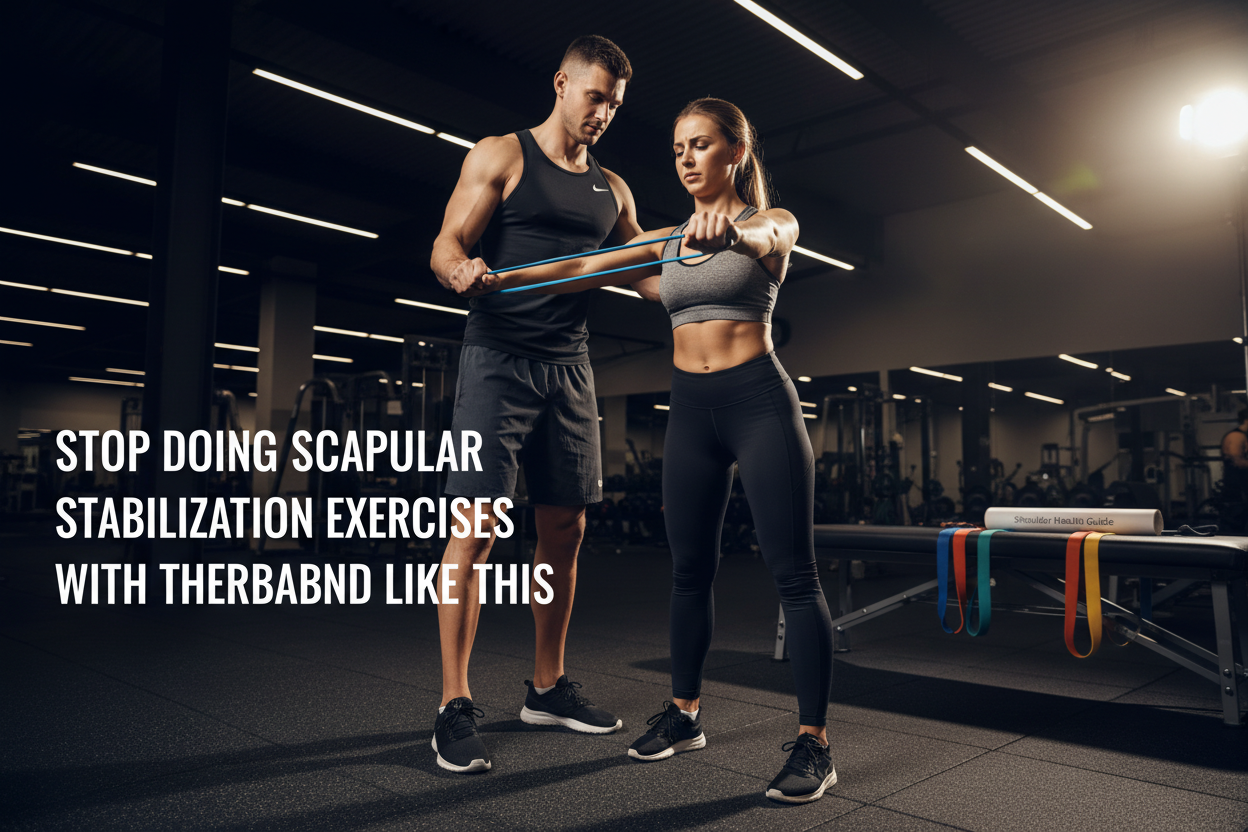
Stop Doing Scapular Stabilization Exercises with Theraband Like This
If you spend your days hunched over a keyboard or scrolling through your phone, your shoulders are likely screaming for help. You might feel that nagging pinch in the front of the shoulder or a constant ache between your shoulder blades. The solution isn't just stretching; it's stability.
Most people rush into heavy pressing movements without building a foundation. This is a recipe for injury. The game-changer for long-term shoulder health is mastering scapular stabilization exercises with theraband resistance. These movements target the neglected muscles that control the position of your shoulder blade, ensuring your arm moves efficiently without grinding the joint.
Key Takeaways: The Stabilization Protocol
If you are looking for the core components of a solid scapular routine, here is the quick summary of what works best:
- Serratus Anterior Activation: Essential for preventing scapular winging (e.g., Wall Slides, Dynamic Hugs).
- Lower Trapezius Recruitment: Counteracts the tight upper traps caused by stress and sitting (e.g., Y-Raises, Pull-Aparts).
- External Rotation Control: Strengthens the rotator cuff to keep the humerus centered (e.g., No-Moneys).
- Volume over Intensity: These muscles respond better to higher reps (15–20) with lighter resistance than heavy loads.
Why Your Scapula Needs Stability, Not Just Mobility
Think of your shoulder blade (scapula) as the launchpad for your arm. If the launchpad is unstable, you cannot fire the rocket (your arm) safely or powerfully.
Many gym-goers focus on the big mirror muscles—the pecs and deltoids. However, without a stable scapula, the ball-and-socket joint of the shoulder loses its center of rotation. This leads to impingement.
By incorporating specific theraband scapular exercises, you train the scapula to "glue" itself to the ribcage properly while the arm moves. The variable resistance of the band matches the strength curve of the muscle, providing tension exactly where you need it most—at the end range of motion.
The Essential Theraband Routine
Here is how to execute these movements correctly. Forget about speed; focus on the squeeze.
1. The "No Money" (External Rotation)
This is one of the most effective theraband exercises for scapular muscles because it targets both retraction and external rotation.
Stand with elbows tucked into your ribs at 90 degrees, palms facing up, holding the band. Rotate your hands outward while keeping elbows pinned to your sides. Imagine you are pinching a pencil between your shoulder blades. Pause for two seconds, then control the return.
2. Band Pull-Aparts
This move is often butchered. Do not just rip the band apart using your upper traps.
Hold the band with straight arms in front of you. Initiate the movement by retracting your shoulder blades, then pull the band apart until it touches your chest. Keep your shoulders down, away from your ears. If you shrug, you defeat the purpose.
3. Serratus Wall Slides
Loop a small theraband around your wrists. Stand facing a wall with forearms on the wall, elbows slightly wider than shoulders to create tension.
Slide your forearms up the wall into a "Y" shape. As you reach the top, push your forearms into the wall and protract (push forward) your shoulder blades. This fires the serratus anterior, a critical stabilizer.
Common Mistakes That Kill Progress
When performing scapular stabilization exercises with theraband, form is everything. The most common error is "Upper Trap Dominance."
When the smaller stabilizers fatigue, your body naturally wants to shrug the shoulders to help complete the rep. If you feel the burn in your neck rather than behind the armpit or mid-back, stop. Reset your posture, drop your shoulders, and try a lighter band.
My Training Log: Real Talk
I want to be transparent about my own journey with these bands. I spent years bench pressing heavy with zero warmup, thinking shoulder pain was just part of the "grind." It wasn't until a rotator cuff strain sidelined me that I took this seriously.
The first time I tried the "No Money" exercise with a simple red theraband, it was genuinely humbling. I wasn't lifting iron plates, yet my shoulders were shaking uncontrollably by the twelfth rep. It wasn't the deep burn of a heavy squat; it was a shaky, electrical fatigue in muscles I didn't know I had.
Also, a quick practical tip from experience: if you have arm hair, the rubber bands will pull it. I learned the hard way to wear long sleeves or buy the fabric-wrapped bands. And that distinct, powdery latex smell that lingers on your hands after a session? It's annoying, but it's the smell of bulletproofing your joints. I now keep a light band in my gym bag and use it between sets of pressing movements. The clicking in my right shoulder has completely vanished.
Conclusion
Shoulder health doesn't require expensive machinery. By consistently practicing scapular stabilization exercises with theraband, you can correct years of poor posture and prevent future injuries. Start with light resistance, focus on the quality of movement, and give your stabilizers the attention they deserve.
Frequently Asked Questions
How often should I do theraband scapular exercises?
Because these exercises target postural muscles which are designed for endurance, you can perform them frequently. 3 to 4 times a week is optimal, or you can use them as a daily warm-up before heavy lifting sessions.
What color Theraband should I start with?
Always start light. Usually, yellow or red bands are sufficient for scapular stabilization. If the resistance is too high, your larger muscles (deltoids and upper traps) will take over, bypassing the smaller stabilizers you are trying to train.
Can these exercises fix winged scapula?
Yes, winged scapula is often caused by a weak serratus anterior. Theraband exercises like wall slides and dynamic hugs specifically target the serratus, helping to pull the shoulder blade flat against the ribcage.