Stop Doing Endless Squats: The Real Way to Sculpt and Tighten Your Glutes
You have probably spent hours scrolling through social media, watching influencers perform complicated kickbacks or jumping exercises, promising that these movements are the secret to a firmer posterior. The reality of biomechanics is often much simpler and, frankly, harder work. If you are looking for the most effective method on how to tighten glutes, the answer lies not in doing hundreds of repetitions with zero weight, but in subjecting the muscle fibers to tension, adequate load, and progressive resistance.
Tightening a muscle is a colloquial way of describing two simultaneous processes: increasing muscle density (hypertrophy) and reducing the body fat covering that muscle. You cannot strictly "tone" a muscle without making it stronger. The gluteus maximus is the largest muscle in the human body, and it requires significant stimulus to change its shape and firmness. Wasting time on movements that do not challenge the muscle near failure will yield minimal results.
The Anatomy of the Lift
To change the shape of your backside, you must understand what these muscles actually do. The gluteal group consists of the maximus, medius, and minimus. The maximus is responsible for hip extension—moving your leg behind you or thrusting your hips forward. The medius and minimus handle abduction and rotation, which gives the hips their shape from the front and side.
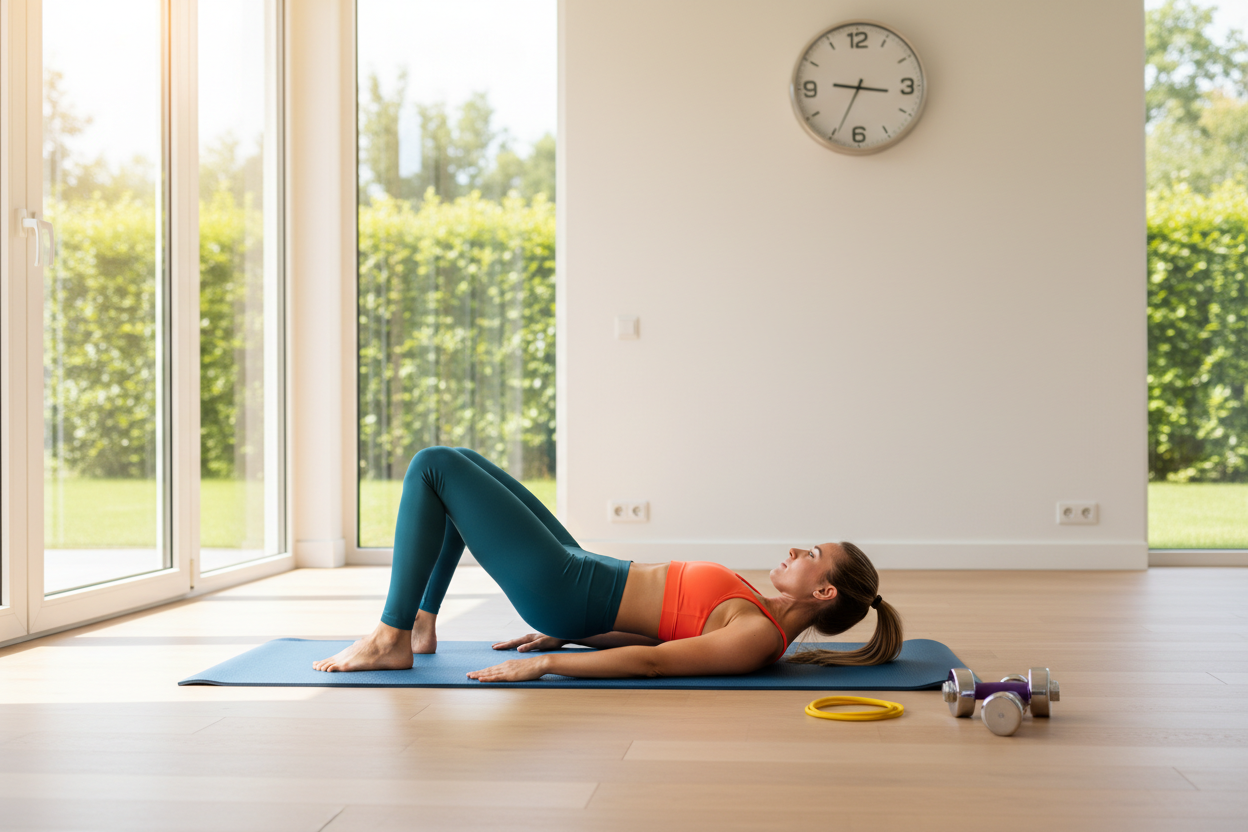
Many people suffer from what physical therapists call "gluteal amnesia." We sit on our glutes all day, cutting off blood flow and neurological connection, effectively turning the muscles off. When we go to the gym and squat, our quads and lower back often take over because the glutes have forgotten how to fire. Before you load up a barbell, you need to wake these muscles up. Simple activation exercises like clam shells or glute bridges done with high intention can re-establish that mind-muscle connection.
Compound Movements: The Foundation
Isolation exercises have their place, but compound lifts are the heavy hitters. If you want to see changes within a few months, your routine needs to center around hip extension.
The Hip Thrust
This is arguably the king of glute development. Unlike a squat, where the tension on the glutes varies throughout the movement, the hip thrust places the glutes under constant tension, specifically at the peak contraction. You can perform these with a barbell, a dumbbell, or a resistance machine.
The setup is crucial. Your upper back should rest against a bench, centered just below your shoulder blades. When you drive your hips up, your shins should be vertical. If your feet are too far forward, you will feel it in your hamstrings; too close, and your quads will take over. The goal is to fully extend the hips until your torso is parallel to the ground, squeezing hard at the top.
Romanian Deadlifts (RDLs)
While the hip thrust builds the glute in the shortened position (the squeeze), the RDL builds it in the lengthened position (the stretch). This exercise targets the entire posterior chain. Keep a slight bend in your knees and push your hips back as if you are trying to close a car door with your butt. The weight should slide down your thighs. Stop when your hips stop moving back—usually around mid-shin level. Going lower often just rounds the lower back, which is a recipe for injury, not a better physique.
My Experience with Glute Training
I spent the early years of my fitness journey running. I thought that if I just ran enough miles and ate enough salad, gravity would somehow defy itself. Instead, I ended up with what is often called a "runner's flat butt." I was losing fat, but I was also losing muscle tissue. It wasn't until I overcame my fear of heavy weights that my body composition actually changed.
There was a specific moment during a weighted lunge session where I finally felt my glute "catch" the weight rather than my knee joint. That shift in focus—moving the weight with intention rather than just moving it from point A to point B—was the turning point. It took about four months of heavy lifting three times a week before I saw significant changes in the mirror. It requires patience, but the structural change is permanent as long as you maintain it.
The Role of Progressive Overload
You cannot use the same 15-pound dumbbells for a year and expect your body to continue changing. The principle of progressive overload dictates that you must continually increase the demand on the musculoskeletal system. This doesn't always mean adding more weight. It can mean doing more reps, slowing down the tempo (time under tension), or resting less between sets.
When figuring out how to tighten your glutes, you must track your workouts. If you hip thrusted 135 pounds for 10 reps last week, aim for 11 reps this week, or try 140 pounds for 8 reps. This constant challenge forces the muscle fibers to adapt by growing thicker and stronger, creating that firm, "tight" look.
Nutrition: The Invisible Half of the Equation
Training provides the spark, but nutrition provides the building blocks. You can do all the hip thrusts in the world, but if you are not eating enough protein, your body cannot repair and build the muscle tissue. A general guideline is to aim for roughly 0.7 to 1 gram of protein per pound of lean body mass.
If you have excess body fat you want to lose, you need a slight caloric deficit. However, be careful not to cut calories too drastically. If you starve yourself, the body will catabolize (break down) muscle tissue for energy, which is the exact opposite of what you want. You want to keep the muscle while shedding the fat. This is often called "body recomposition," and while it is a slower process than a crash diet, the aesthetic results are far superior.
Common Mistakes to Avoid
One of the most frequent errors is hyperextension of the lower back. When performing kickbacks or deadlifts, many people arch their back excessively in an attempt to get the leg higher or the weight up. This takes the tension off the glute and puts it directly onto the lumbar spine. Keep your ribcage knitted down and your core braced. Your spine should remain neutral throughout these movements.
Another issue is relying solely on "the burn." High-repetition exercises with resistance bands burn because of metabolic waste (lactic acid) building up in the muscle. While this can be useful for metabolic stress, it is not the primary driver of muscle growth. Mechanical tension—lifting heavy things—is the primary driver. Use bands for warm-ups or finishers, but do not make them your entire workout.
Consistency and Frequency
You do not need to train glutes every single day. In fact, doing so can be counterproductive because muscles grow during rest, not during the workout. A frequency of two to three times per week is optimal for most natural lifters. This allows for high-intensity sessions with adequate recovery time in between.
Sleep is also a massive factor. If you are sleeping five hours a night, your cortisol levels will be elevated, which can inhibit muscle growth and encourage fat storage. Prioritize recovery just as much as you prioritize your time in the squat rack.
Frequently Asked Questions
How long does it take to see results in glute tightness?
With consistent resistance training and proper nutrition, most people begin to feel a difference in strength within 4 weeks. Visible structural changes usually become apparent between 8 to 12 weeks. Genetics play a role, but consistency is the ultimate variable.
Can I tighten my glutes without heavy weights?
You can improve muscle tone with bodyweight exercises and high repetitions, especially if you are a beginner. However, to achieve significant tightening and shaping, you will eventually need to introduce external resistance (dumbbells, barbells, or bands) to continue challenging the muscles through progressive overload.
Is cardio bad for glute growth?
Cardio is excellent for heart health and calorie expenditure, but excessive steady-state cardio (like long-distance running) can compete with muscle building if you aren't eating enough to compensate. High-intensity interval training (HIIT) or incline walking are often better choices for preserving muscle mass while burning fat.