Stop Doing Endless Squats: The Blueprint for Glutes That Actually Grow
You have likely spent hours in the squat rack hoping for a transformation that just isn't happening. The harsh reality of lower body training is that compound leg movements, while excellent for overall strength, often let the quadriceps take over, leaving the posterior chain underdeveloped. If you want to change the shape and strength of your backside, you have to prioritize hip extension over knee extension. The most effective approach involves a mix of heavy compound lifts and high-repetition isolation work, specifically targeting the gluteus maximus, medius, and minimus through progressive overload.
Understanding the Mechanics of Growth
Building muscle requires more than just showing up; it requires mechanical tension. When we look at the anatomy, the glutes are primarily responsible for hip extension, abduction, and external rotation. Many lifters fail because they rely solely on exercises where the glutes are only partially active. To build a comprehensive routine, you need to select movements that challenge the muscle at different lengths—when it is fully stretched and when it is fully contracted.
An effective glutes workout isn't about confusion or constantly changing your routine. It is about mastering a few key movement patterns and getting stronger at them over time. You need to manipulate volume and intensity to force the muscle fibers to adapt.
The Heavy Hitters: Compound Movements
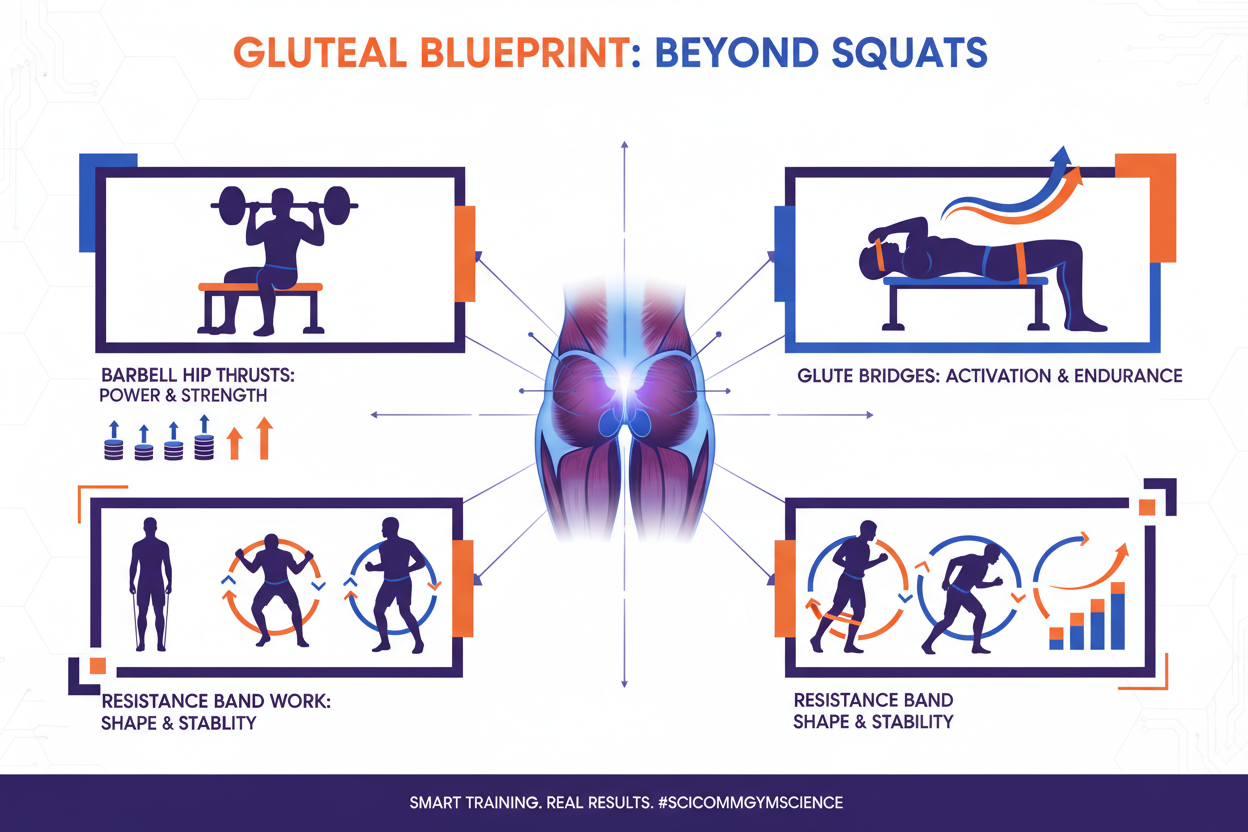
If you have limited time and need the best exercises for glutes, the barbell hip thrust reigns supreme. Unlike the squat, which places maximum tension on the glutes at the bottom of the movement (where they are stretched), the hip thrust places maximum tension at the top, where the glutes are fully shortened. This peak contraction is vital for development. Aim for a rep range of 8 to 12 with a pause at the top of every repetition.
The Romanian Deadlift (RDL) is the necessary counterpart to the hip thrust. This is a hip-hinge movement that loads the glutes in their lengthened position. The soreness you feel days after a session usually comes from these deep stretching movements. Keep your knees slightly bent, push your hips back as far as possible, and stop lowering the weight once your hips stop moving backward. This ensures the tension stays on the glutes and hamstrings rather than shifting to your lower back.
Unilateral Training for Balance
Bilateral movements are great for moving heavy loads, but glutes training exercises must include single-leg work to fix imbalances. The Bulgarian Split Squat is notoriously difficult but incredibly effective. By elevating the rear foot, you force the front glute to stabilize and drive the entire movement. To make this a good exercise for glutes rather than quads, lean your torso forward slightly and keep your shin vertical as you descend.
Reverse lunges offer a slightly more stable alternative. Stepping backward rather than forward allows you to maintain a better hip angle, placing more load on the posterior chain. These allow for a deeper range of motion without the knee stress often associated with forward lunges.
Accessory Work and Pump Exercises
Once the heavy lifting is done, you need to focus on metabolic stress. This is where high-repetition work comes in. The cable kickback is a staple for a reason. It isolates the gluteus maximus without taxing the central nervous system. Keep your core braced and kick straight back, avoiding any arching in your lower back. Controlled movement here beats heavy weight every time.
For the side glutes (gluteus medius), seated abduction machine work or banded lateral walks are essential. These muscles create the visual appearance of roundness and are crucial for pelvic stability. Neglecting them often leads to knee pain and poor mechanics in your heavier lifts.
My Journey with Glute Amnesia
I spent the first three years of my lifting career confused. I was squatting twice my body weight, yet my physique didn't reflect the numbers on the bar. My quads were overpowering my mechanics, stealing all the tension. I had what physical therapists often call "glute amnesia"—my nervous system had essentially forgotten how to fire those muscles properly. I had to strip the weight off the bar and spend weeks doing nothing but activation drills and lighter hip thrusts.
It was humbling to struggle with bodyweight bridges, but that reset was necessary. I learned that swinging the weight up isn't the same as contracting the muscle to move the weight. Once I established that mind-muscle connection, my deadlift numbers shot up, my lower back pain vanished, and I finally saw the physical changes I had been chasing. It taught me that training for glutes is as much mental as it is physical.
Structuring Your Week
Frequency matters. Because the glutes are a large, resilient muscle group, they can recover relatively quickly. However, how often your glutes train depends on the intensity of your sessions. A split that works well for most intermediate lifters involves hitting the lower body twice a week.
Day one should focus on heavy loading in the shortened position (Hip Thrusts) followed by lighter stretching movements. Day two should prioritize heavy stretching movements (RDLs or Sumos) followed by pump work. This variation prevents overuse injuries while ensuring you hit all the necessary stimulus types for hypertrophy.
Common Pitfalls to Avoid
The most common mistake in gluteal muscle building exercises is using the lower back to achieve range of motion. If you are arching hard at the top of a deadlift or thrust, you are missing the point. The goal is pelvic stability. Think about tucking your ribs down and keeping your chin tucked. This rib-to-pelvis connection locks the spine and forces the hip muscles to do the work.
Another issue is rushing the tempo. Momentum kills muscle growth. Slow down the eccentric (lowering) phase of your lifts. Taking three seconds to lower into a squat or RDL creates significantly more micro-tears in the muscle fiber than dropping quickly and bouncing out of the hole.
Selecting the Right Load
Progressive overload is the engine of growth. You cannot use the same pink dumbbell for six months and expect changes. You must add weight, reps, or improve your form every single week. Start your workout with a compound glute exercise where you can safely move heavy weight. Track your numbers. If you hip thrusted 135lbs for 10 reps last week, aim for 12 reps this week, or bump the weight to 140lbs.
Consistency in your selection of glutes training exercises is better than variety. Stick to the same 4-5 movements for at least 8 weeks. This allows your nervous system to adapt to the movement pattern, meaning more of your energy goes into contracting the muscle rather than just trying to balance.
FAQ
How often should I train my glutes for maximum growth?
For most people, training glutes 2 to 3 times per week allows for optimal frequency. This schedule provides enough stimulus to trigger growth while allowing 48 hours of rest between sessions for muscle repair and recovery.
Can I build glutes without heavy weights?
Yes, but it is more challenging and requires higher repetitions and shorter rest periods to create metabolic stress. While bodyweight exercises work for beginners, eventually adding external resistance (bands, dumbbells, or barbells) is necessary to continue applying progressive overload.
Why do I feel leg exercises in my lower back instead of my glutes?
This usually indicates poor core bracing or anterior pelvic tilt, where the lower back arches excessively to compensate for weak hip extension. Reduce the weight, focus on tucking your pelvis slightly, and ensure you are squeezing your glutes at the top of the movement rather than hyperextending your spine.