Stop Doing Endless Burpees: How to Get Strong at Home
I spent three years thinking a 20-minute HIIT session in my garage was 'training.' I’d finish drenched in sweat, gasping for air, but my actual power numbers were tanking. If you're tired of the cardio-disguised-as-strength trap, it's time to talk about how to get strong at home without turning your living room into a cheap CrossFit knock-off. Real strength isn't about how fast you can jump; it's about how much tension your nervous system can handle.
- Tension beats sweat for raw power every single time.
- Floor stability is the literal foundation of force production.
- Unilateral loading solves the 'not enough weight' problem in small spaces.
- Rest periods are for recovery, not for checking your heart rate.
Stop Confusing Exhaustion With Absolute Strength
Most home fitness apps want you to move fast. Moving fast is great for your lungs, but it’s a distraction if you want to move mountains. To get strong, you need to move slow and heavy. The biological adaptation for strength requires mechanical tension—basically, making your muscles struggle because they can't handle the load, not because they're out of oxygen. If you're doing 50 reps of anything, you aren't training for strength; you're training for endurance.
When you focus on the specific exercises to make you stronger at home, you have to prioritize movements that allow for high tension. Think pauses, slow eccentrics, and isometric holds. Sweating on a yoga mat feels productive, but it won't help you deadlift a truck. You need to signal your nervous system that it’s time to recruit more motor units, and that only happens when the load is significant. Stop chasing the 'burn' and start chasing the 'grind'—that moment where the rep feels like it's moving in slow motion because the resistance is so high.
The Setup: Securing Your Heavy-Lifting Safe Zone
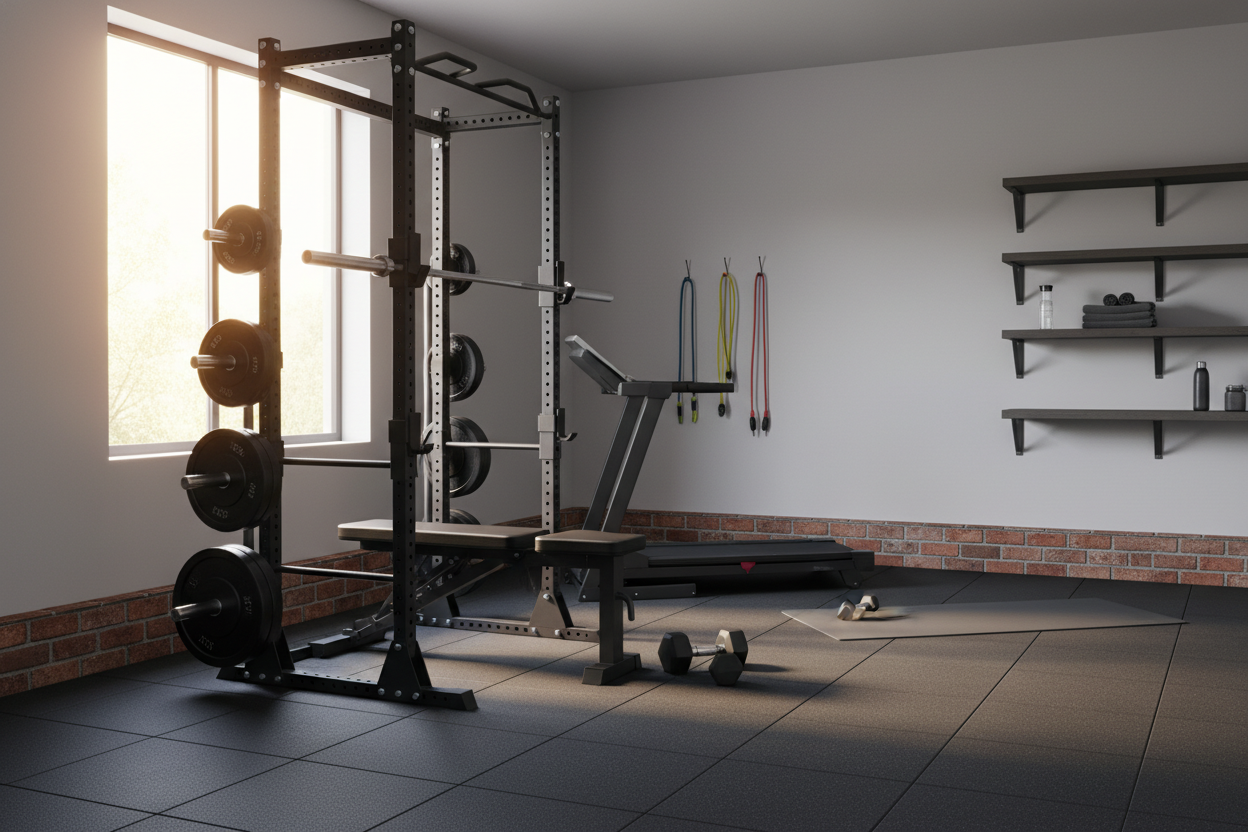
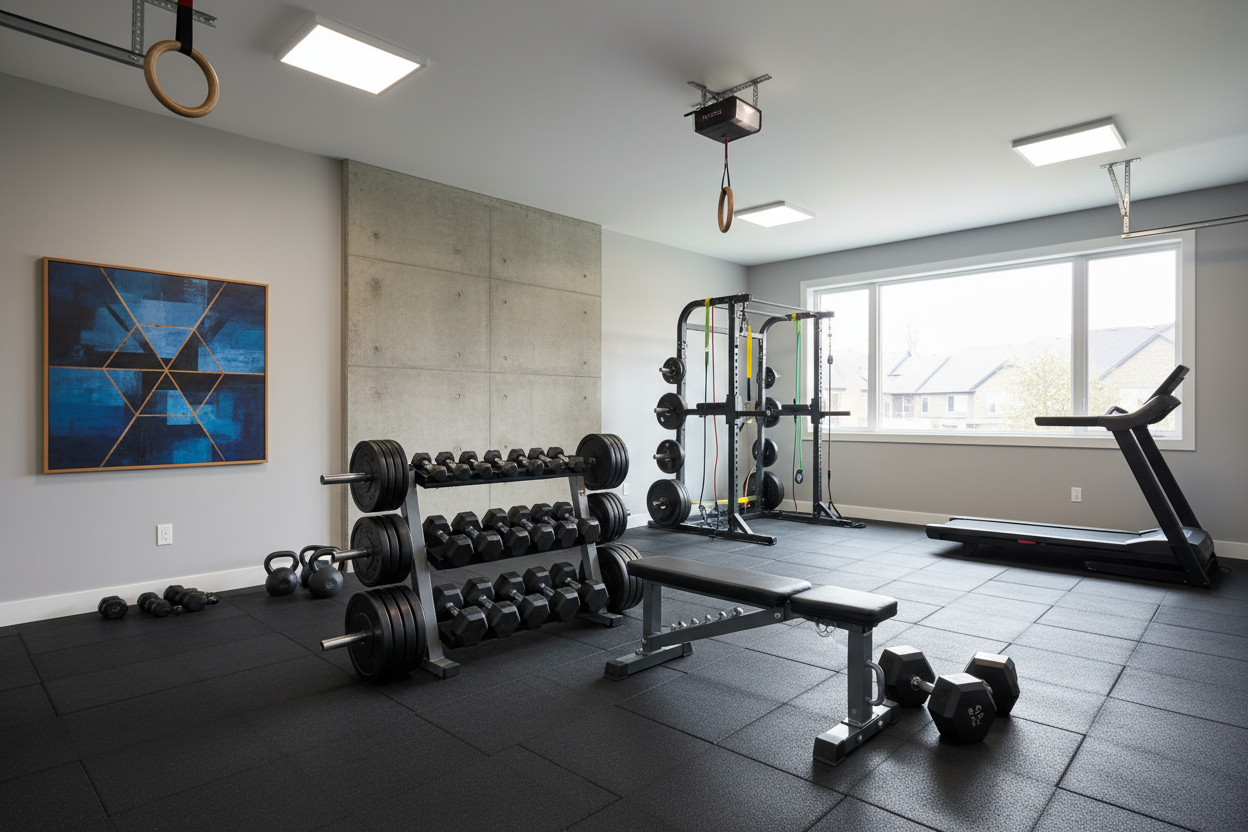
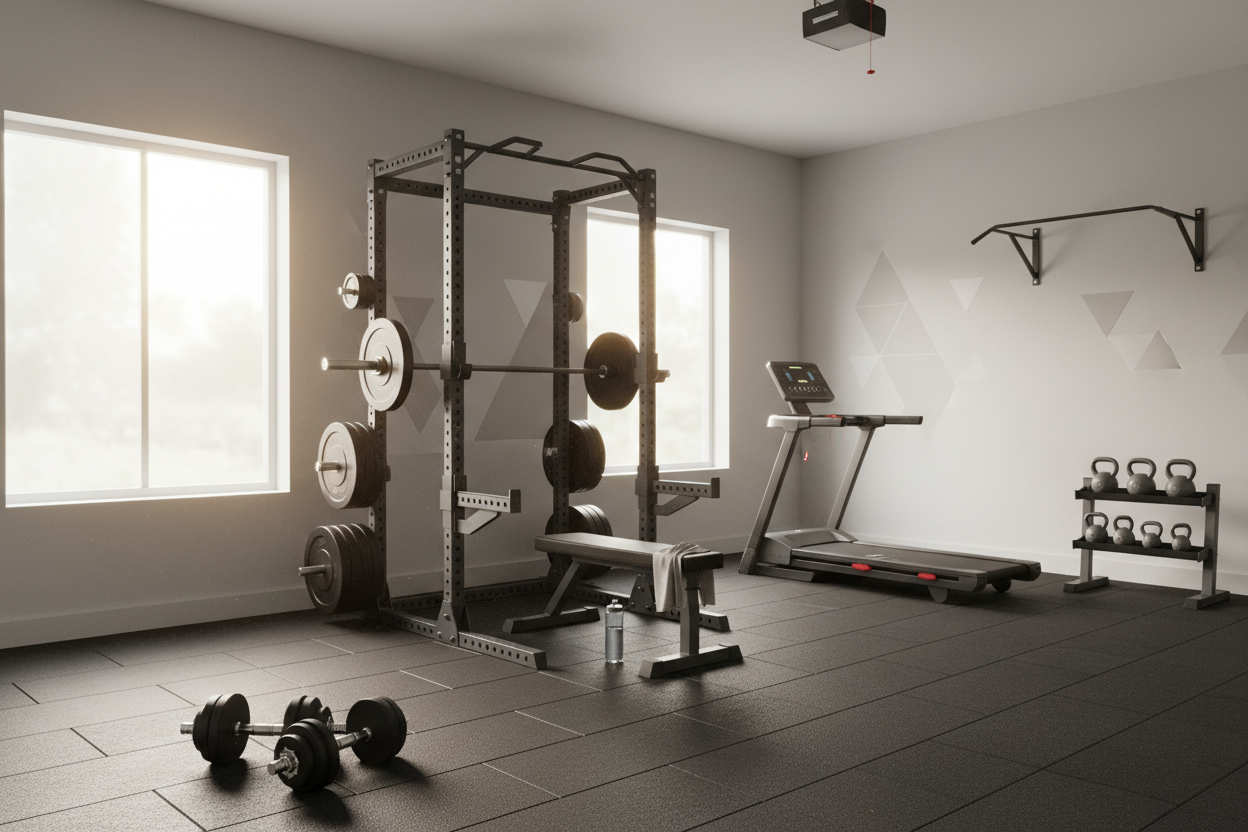
If you're trying to push 100-lb dumbbells on a hardwood floor, you're going to slide and blow an ACL. I learned this the hard way when my lead foot drifted during a heavy split squat, sending me into a forced and very painful middle split. Investing in a large exercise mat for home gym isn't just about protecting your floor from dropped iron; it's about friction. You cannot produce maximum force if your foundation is shifting.
A solid 7mm or 8mm rubber surface provides the grip your feet need to drive into the ground. It also saves your joints when you're doing high-impact landings or heavy loaded carries. Without a stable base, your brain will literally throttle your strength output to keep you from falling. It’s a safety mechanism called neural inhibition. If your floor is slippery, your body won't let you lift heavy because it doesn't trust the environment. Fix the floor, and your strength floor will rise with it.
Real Ways to Get Stronger at Home (No Gimmicks)
You don't need a $3,000 power rack to build a respectable total. You need ways to get stronger at home by making modest weights feel incredibly heavy. Unilateral (one-sided) work is the ultimate hack here. By switching from a standard squat to a rear-foot elevated split squat, you effectively double the load on the working limb without needing a single extra plate. It turns a 50-lb dumbbell into a 100-lb stimulus.
Before I touch the heavy stuff, I usually spend five minutes on easy booty exercises at home like glute bridges or bird-dogs. This isn't for 'toning'—it's for neural activation. If your glutes are asleep, your lower back is going to pay the price when you try to pull a heavy sandbag off the floor. Get the hips firing, then move to the compound lifts. Dead-stop mechanics are another favorite: starting a movement from a dead rest (like a floor press) removes all momentum and forces you to generate force from zero. That is how you build real-world power.
Lower Body Power: Overcoming the Weight Deficit
Leg day at home is usually the biggest hurdle because we lack a 500-lb barbell. However, you can master weighted squats at home by focusing on tempo and depth. Instead of bouncing out of the bottom, pause for three seconds at your deepest point. This removes the stretch reflex and forces your muscle fibers to do 100% of the work without the help of 'bouncy' tendons.
I've seen guys with 400-lb back squats crumble under a pair of 60-lb dumbbells when the tempo is controlled and the rest periods are strict. If you don't have dumbbells, use a heavy sandbag held in a Zercher position (in the crooks of your elbows). The front-loaded weight forces your core to work twice as hard and keeps your torso upright, mimicking the mechanics of a high-bar squat without the need for a rack.
The Mechanics: How to Increase Muscle Strength at Home
To understand how to increase muscle strength at home, you have to embrace the suck of 'mechanical disadvantage.' This means making the lift harder on purpose. Instead of a standard push-up, do a deficit push-up using two stacks of books to increase the range of motion. The deeper you go, the more muscle fibers you force into the fight. You can also manipulate your leverage—leaning further forward in a dip or a push-up shifts more weight onto the target muscles.
This is how to make muscles strong at home: fight the weight on the way down. A 5-second eccentric (lowering) phase on a pull-up or a press will do more for your absolute strength than 50 fast, sloppy reps. You want to push each set until you're within one or two reps of true muscular failure. If you can still hold a conversation after a set, it wasn't a strength set. Strength is a skill, and like any skill, it requires high-quality, high-focus practice, not mindless repetition until you puke.
Your Heavy 'How to Become Strong at Home' Action Plan
Stop the daily circuit training. If you want to know how to become strong at home, you need to follow a low-volume, high-intensity protocol. Pick four big movements: a squat variation, a hinge (like a single-leg deadlift), a push, and a pull. Do 3 to 5 sets of 5 to 8 reps. That’s it. If you can do more than 8 reps, the movement is too easy—make it harder by adding weight or increasing the range of motion.
The key is the rest. Rest at least three full minutes between sets. I know it feels like 'doing nothing,' but your ATP stores need that time to replenish so you can hit the next set with 100% effort. If you aren't slightly bored during your rest periods, you aren't lifting heavy enough to force a strength adaptation. Follow this for four weeks, adding a rep or a few pounds every session, and you'll see more progress than you ever did with burpees.
FAQ
Can I get strong with just bodyweight?
Yes, but you have to progress to harder variations. Once you can do 15 regular push-ups, they become cardio. You must move to archer push-ups, elevated feet, or one-arm variations to keep the tension high enough for strength gains.
How many days a week should I train for strength?
Three to four days is the sweet spot. Strength is built during recovery, not in the gym. If you're training heavy every single day, your central nervous system will fry before your muscles have a chance to adapt.
What is the one piece of equipment I actually need?
A heavy kettlebell or a set of adjustable dumbbells. Bodyweight is great, but having an external load makes the path to strength much faster, more measurable, and frankly, more fun.