Stop Buying Weight Training Equipment for Home Like a Commercial Gym
I remember the night I almost spent three grand on a commercial-grade leg press. I was scrolling through a catalog, convinced that if I didn't have a dedicated machine for every muscle group, my gains would simply evaporate. Then I looked at my single-car garage and realized I had about forty square feet of usable space. Most weight training equipment for home isn't designed for your results; it is designed to look impressive in a showroom.
- Prioritize a 7-foot Olympic barbell and 11-gauge steel power rack over any single-use machine.
- Invest in high-impact flooring before the heavy iron arrives to save your foundation and your joints.
- Adjustable dumbbells are the ultimate space-saver, replacing up to 15 pairs of fixed weights.
- Buy your plates used, but never skimp on the barbell's tensile strength.
Why Replicating a Mega-Gym is a Trap
Commercial gyms are built for throughput. They need 50 different machines so 50 different people can do 50 different things at once. When you are doing home gym weight lifting, you are the only client. You do not need a seated row machine, a lat pulldown station, and a T-bar row setup. You need one solid barbell and a place to pull it.
The biggest mistake I see is people buying body lifting equipment that only does one thing. That leg extension machine takes up 15 square feet and only works your quads. A squat rack takes up the same footprint but lets you hit legs, back, chest, and shoulders. In a garage, versatility is the only currency that matters. If a piece of gear doesn't allow for at least three different movements, it probably doesn't belong in your house.
The Foundation: Your Bare-Bones Starting Lineup
Before you buy the shiny stuff, you have to handle the boring stuff. Your first purchase should always be gym flooring for home workout. I learned this the hard way after cracking my garage slab with a 315-pound deadlift. Get at least 3/4-inch rubber stalls mats; don't trust those flimsy foam puzzle pieces for serious weight training equipment at home.
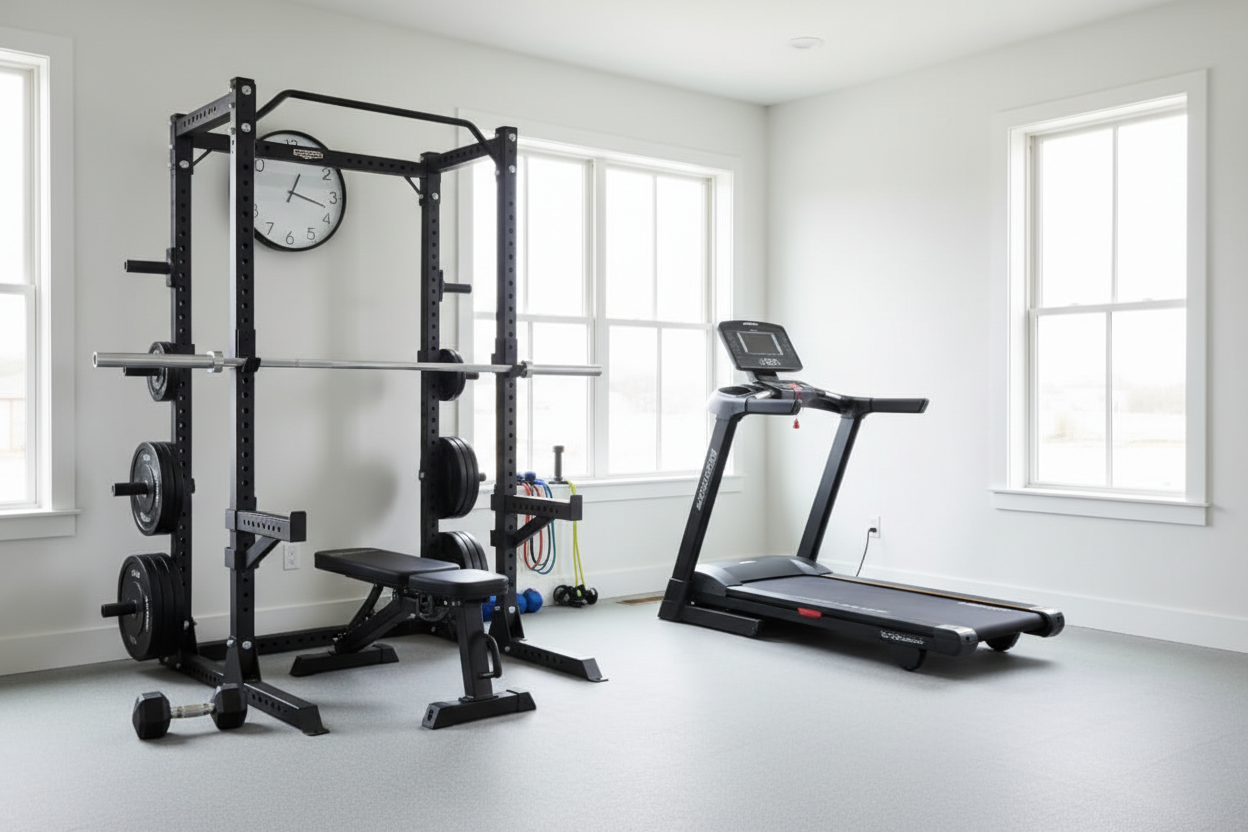
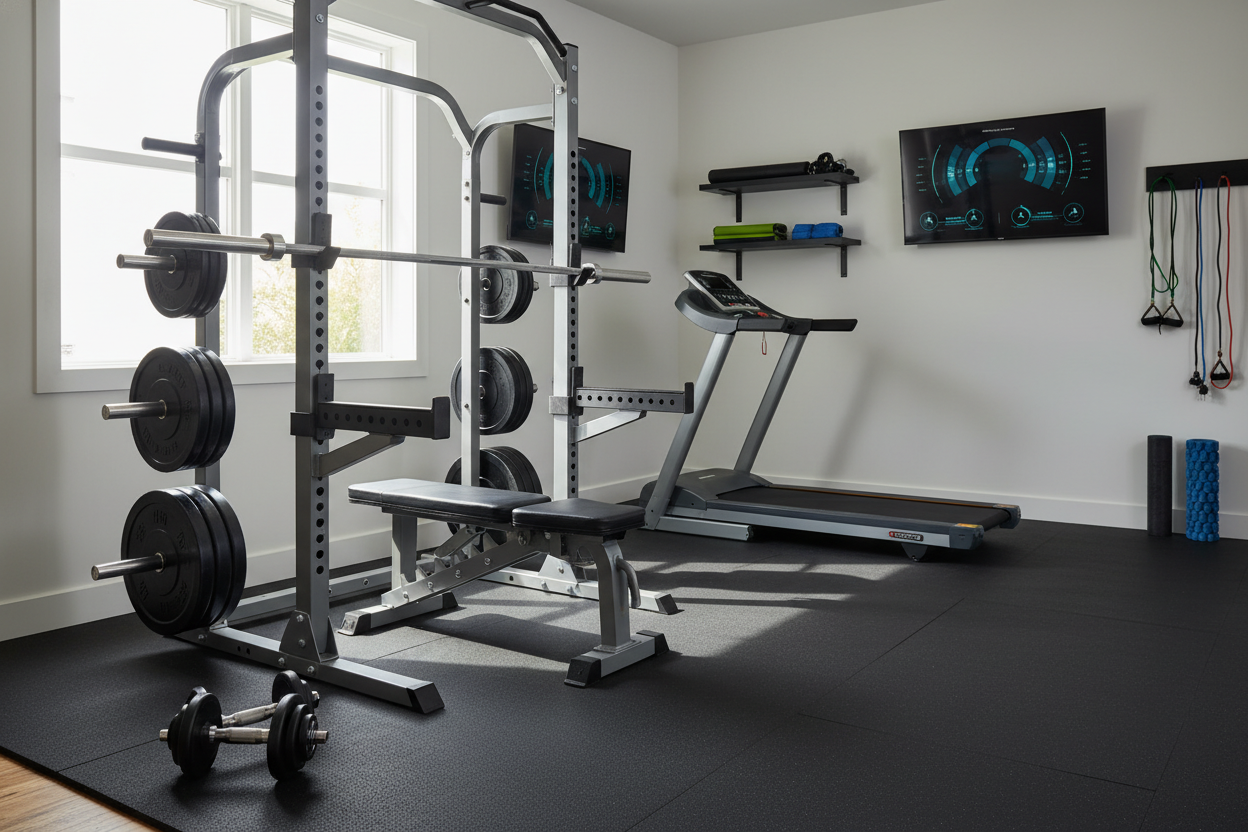
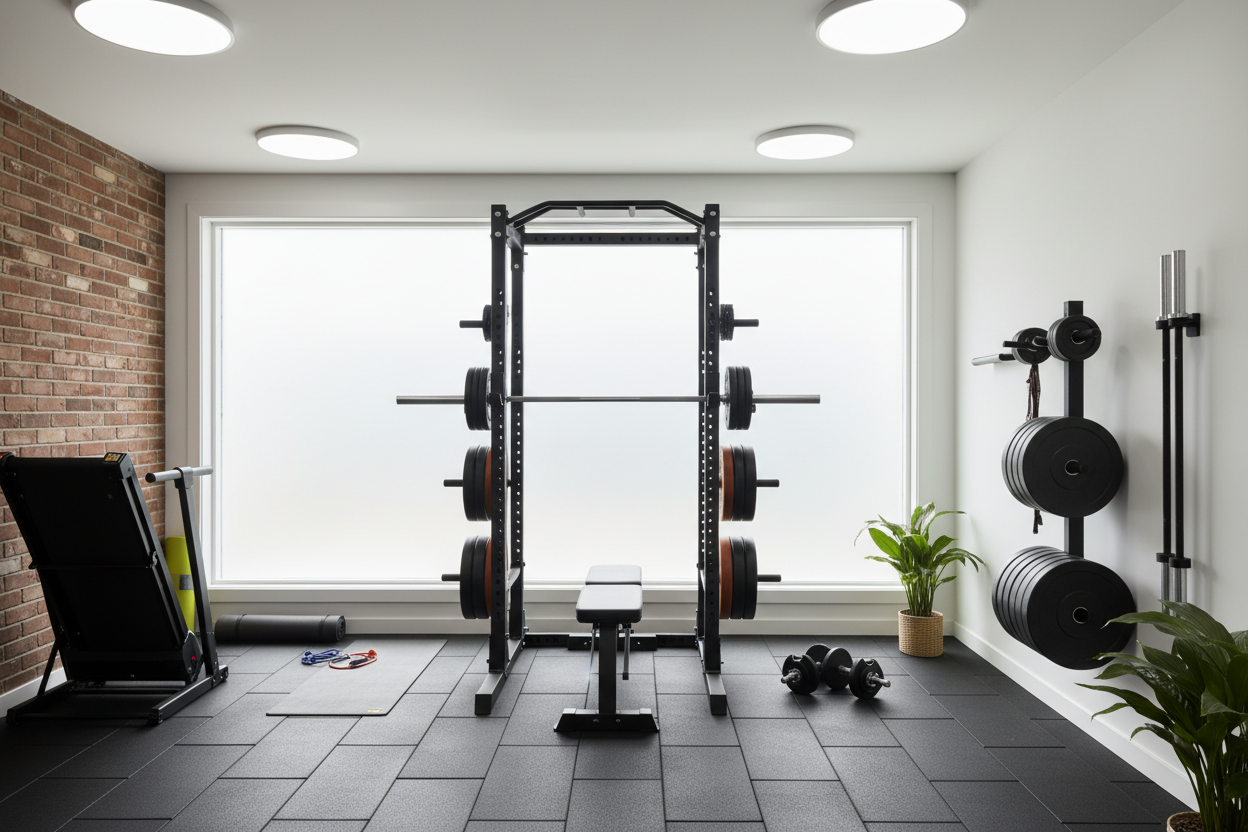
Once the floor is set, the 'Holy Trinity' consists of a power rack with a pull-up bar, a 20kg multipurpose barbell, and a flat bench. Look for a rack with 2x3 or 3x3 inch uprights. This basic weight lifting equipment is the engine of your gym. A good barbell should have a decent knurl—not so sharp it bleeds you, but enough that it doesn't slip when your hands get sweaty during a heavy set of fives. This setup fits in a 6x8 foot corner and handles 90% of your training needs.
Smart Alternatives to Space-Hogging Isolation Gear
You don't need a pec deck. I promise. If you want chest isolation, a pair of adjustable dumbbells that go up to 80 or 90 pounds will do more for your physique than a $2,000 machine. This type of workout equipment for home weights allows you to perform hundreds of movements in the space of a shoebox. It is the smartest way to build a fit home gym price-wise without sacrificing variety.
If you absolutely crave that cable feel, look into Weight Lifting Machines that utilize a plate-loaded pulley system. A wall-mounted cable station has a footprint of about 4 inches by 4 inches at the base. It replaces an entire cable crossover jungle. You get the same constant tension for your triceps and face pulls without losing half your garage to a gym machine set that belongs in a Gold's Gym.
What to Do When You Outgrow Your Starter Setup
There comes a day when the weight feels light. Your first instinct will be to browse for new weight lifting equipment to add to the pile. Resist that. Before you buy more plates, start manipulating your training variables. Try 3-second eccentrics or 2-second pauses at the bottom of your reps. It makes 225 pounds feel like 315 real fast.
I usually point people toward a structured At Home Weight Lifting Program: Scaling Past Equipment Limits when they hit a plateau. Often, you don't need more home gym lifting equipment; you need better programming. Use tempo work and increased frequency to squeeze every ounce of utility out of your home weights gym equipment before you drop another dime on iron.
How to Build This Setup Without Going Broke
Building a gym is a marathon, not a sprint. You can find plenty of cheap lifting equipment if you know where to look. Iron is iron. A 45-pound plate found on a local marketplace for fifty cents a pound weighs the same as a brand-new calibrated plate. Spend your money where the moving parts are. The barbell and the rack's safety pins are where you invest for survival.
Timing is also everything. I always tell my friends to keep an eye on Home Gym Equipment Deals during the off-season or major holidays. You can often snag a high-end bench or a set of bumper plates for 20% off if you are patient. Start with the essentials, train hard for six months, and only add gear once you have earned it through consistent sweat.
Personal Experience: The Wobble of Regret
I once bought a 'budget' power rack from a big-box store for $150. On paper, it looked fine. In reality, the first time I racked 225 pounds, the whole thing swayed three inches to the left. It was terrifying. I ended up selling it for $50 and buying a real 11-gauge steel rack. I lost $100 and a week of training because I tried to be too cheap on the one item that was supposed to keep me from getting crushed. Buy once, cry once.
FAQ
Is 11-gauge steel really necessary for a home rack?
If you plan on lifting more than 300 pounds, yes. 11-gauge steel is thicker and provides the stability you need so the rack doesn't walk across the floor when you re-rack a squat. It is a safety issue, not just an aesthetic one.
Can I do a full workout with just dumbbells?
Absolutely. You can hit every major muscle group with dumbbells. However, a barbell is superior for progressive overload because it is easier to add small weight increments (like 2.5-lb plates) which is vital for long term strength gains.
What is the minimum floor space needed for a home gym?
You can get away with an 8x8 foot area. This gives you enough room for a standard 7-foot Olympic bar (which is 84 inches wide) and a bit of clearance on the sides to slide your plates on without hitting the drywall.