Stop Buying the Wrong Mat for Workout: The Honest Truth
Most people treat their floor equipment as an afterthought. You spend hundreds on shoes and apparel, yet you settle for a slippery, paper-thin sheet to protect your joints. This is a mistake. A proper mat for workout sessions is the literal foundation of your fitness routine. If your foundation is unstable, your performance suffers, and your injury risk skyrockets.
Whether you are crushing high-intensity interval training (HIIT) or focusing on mobility, the surface beneath you dictates your stability. Let’s break down exactly what you need to look for so you stop wasting money on gear that ends up in the trash after a month.
Key Takeaways: Choosing Your Foundation
- Density Beats Thickness: A thick mat that is too soft will destabilize your balance. Look for high-density foam or rubber.
- Texture is Safety: For sweaty sessions, open-cell technology prevents slipping; closed-cell is better for hygiene but slippery when wet.
- Material Matters: TPE is eco-friendly and light; Natural Rubber offers the best grip; PVC lasts forever but can be toxic if cheap.
- Usage Dictates Type: Yoga mats are not gym mats. Do not use sneakers on a delicate yoga surface.
The Science of Thickness and Density
There is a common misconception that thicker is always better. This is false. While a 1/2-inch mat feels like a cloud, trying to hold a single-leg deadlift on one is a nightmare. It creates instability in the ankle joint.
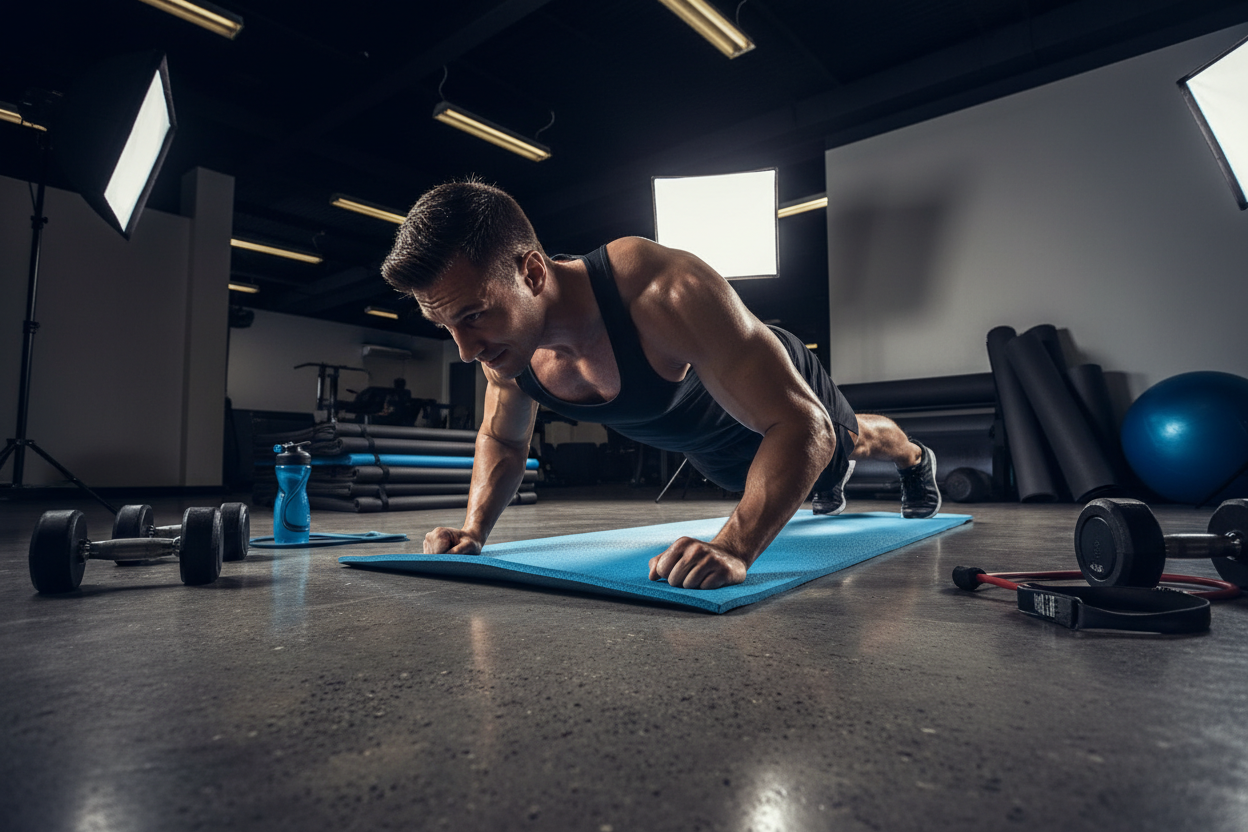
For general fitness, you want a balance. You need enough cushion to protect your knees during lunges, but enough firmness to provide feedback to your feet during squats. A standard 6mm thickness with high density is usually the sweet spot for versatility. It prevents your elbows from digging into the hard floor during planks without compromising your balance.
Material: Grip vs. Durability
The material composition defines the lifespan of the product. This is where most buyers get confused.
PVC (Polyvinyl Chloride)
This is the standard sticky mat. It is durable and easy to clean. However, it is not absorbent. If you sweat heavily, you will slide unless you use a towel.
TPE (Thermoplastic Elastomer)
If you are looking for a cheap exercise mat that is still functional, TPE is often the middle ground. It is lighter than rubber and has better traction than standard PVC. It is a solid choice for home gyms on a budget.
Natural Rubber
This is the gold standard for grip. It has a texture that holds you in place. The downside? It is heavy, smells like a tire initially, and degrades in direct sunlight.
The "Budget" Trap: When Cheap is Too Cheap
We all want to save money. Searching for a cheap workout mat is fine, but you must distinguish between "affordable" and "garbage."
If you buy the $10 mat from the discount bin at the supermarket, you are buying a disposable item. These mats usually lack an internal mesh layer (the scrim). Without this scrim, the mat will stretch out like pizza dough when you push against it in a Downward Dog or a push-up. Spend slightly more for a mat with a reinforced core. It ensures the mat stays the same size while you are using it.
My Personal Experience with mat for workout
I need to be real with you about why I despise low-density foam mats. Years ago, before I knew better, I bought a generic, thick foam mat for my garage gym. It looked comfortable.
I started a session of mountain climbers. About thirty seconds in, I noticed blue confetti all over the floor. The friction from my sneakers wasn't just scuffing the mat; it was shredding it. But the worst part wasn't the mess.
It was the stretching. Every time I drove my knee forward, the mat bunched up under my hands. I almost face-planted because the surface I trusted gave way. That specific feeling of the mat rippling under my palms broke my focus completely. I spent the rest of the workout adjusting the gear rather than training. That is when I learned: if you train in shoes, you need a high-density, abrasion-resistant surface, not a yoga mat.
Conclusion
Your equipment should disappear while you train. If you are thinking about your mat because it is slipping, bunching, or flaking, it is failing you. Invest in a surface that matches your intensity. Whether you opt for a heavy-duty rubber slab or a cost-effective TPE option, prioritize density and grip over simple cushioning.
Frequently Asked Questions
Can I use a yoga mat for HIIT workouts?
Generally, no. Yoga mats are designed for bare feet and low impact. The lateral movements and friction from sneakers in HIIT will tear up the surface of a standard yoga mat very quickly.
How do I stop my mat from sliding on the floor?
If your mat slides on hardwood or tile, it usually lacks a textured bottom layer. You can place a rug pad underneath it as a quick fix, or wipe the floor with a damp cloth right before laying the mat down to create a temporary vacuum seal.
Is a thicker mat better for bad knees?
Yes, but density is more important. A thick, soft mat bottoms out, meaning you still hit the floor. A high-density mat, even if thinner, provides better shock absorption and actual joint protection.